


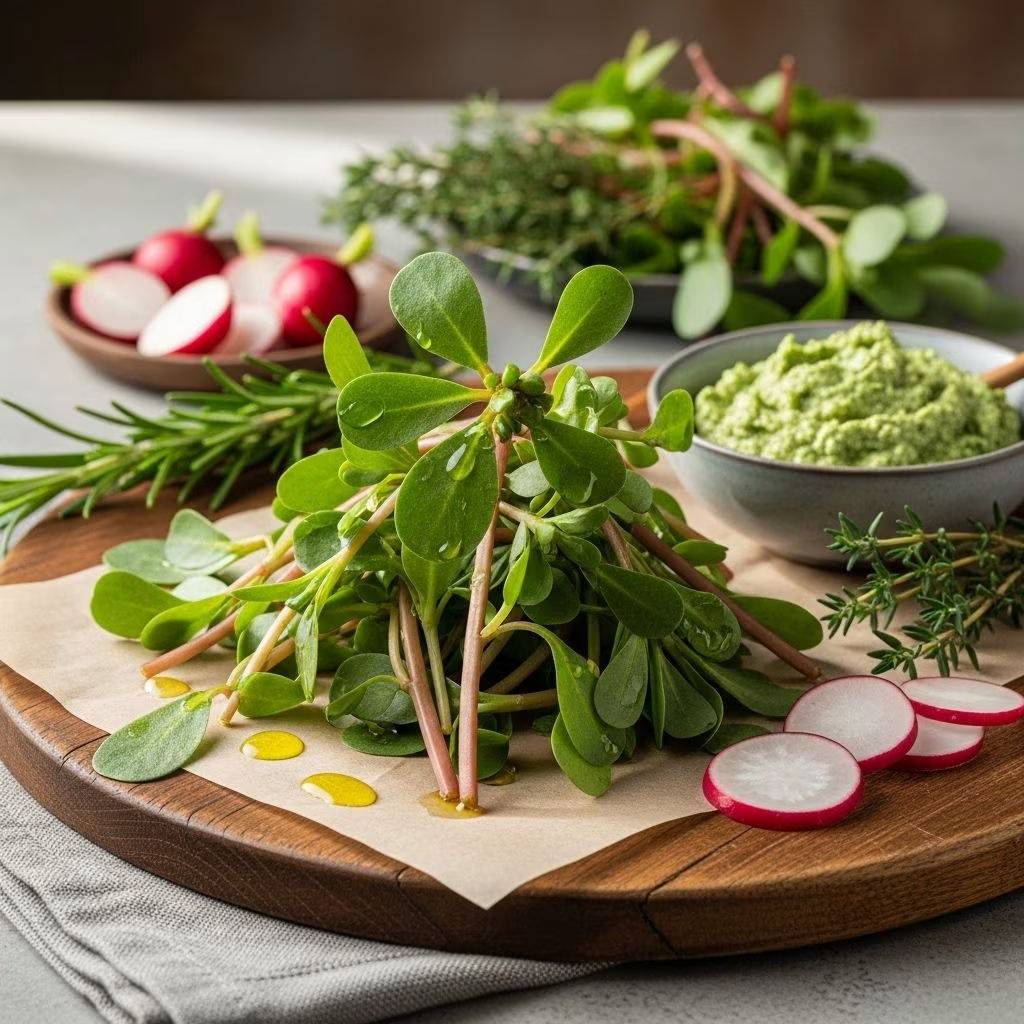
Purslane (Portulaca oleracea), often considered a common weed, is a remarkable succulent leafy vegetable that provides exceptional nutrition, robust health benefits, culinary versatility, and a unique tartness that sets it apart from other greens. As one of the oldest known leafy greens, purslane’s reputation extends from ancient medical traditions to modern health food movements, making it a truly global plant treasure.
What Is Purslane?
Purslane (Portulaca oleracea), also known as “little hogweed” or “pursley,” is a succulent, annual leafy plant found across the globe. While commonly viewed as a weed in lawns or gardens, purslane is cultivated and valued as a nutritious vegetable and traditional herbal remedy in many cultures, particularly in Europe, Asia, the Mediterranean, and the Middle East.
- Family: Portulacaceae
- Plant type: Annual (in most regions), tropical perennial
- Global presence: Found on every continent except Antarctica
- Reputation: Widely utilized as a food, weed, and medicinal plant
Historically, purslane has been consumed by cultures as diverse as the Greeks, Egyptians, Chinese, and Indigenous peoples of the Americas. Today, it is celebrated both as a wild edible and in cultivated forms, often sought by foragers and chefs alike.
Botanical Characteristics and Identification
The hallmark of purslane is its resiliency and adaptability to harsh growing conditions, from arid soils to the cracks in city sidewalks. Accurate identification is crucial, especially for wild foragers.
- Growth habit: Prostrate, mat-forming; stems are reddish, smooth, and can branch extensively, forming a low spreading carpet up to 40 cm (16 in) tall.
- Leaves: Fleshy, spatulate or oval, smooth, waxy, and often tinged with red edges; arranged alternately or in clusters at stem joints.
- Flowers: Small (up to 6 mm), yellow, five-petaled, and usually open in the morning on sunny days, appearing at the center of leaf clusters from May to September.
- Fruit: Capsule containing many tiny (<1 mm), black, glossy, oval seeds; can produce up to 240,000 seeds per plant.
- Roots: Taproot system with fibrous extensions, capable of regenerating from stem fragments.
The plant’s distinctive juicy, crunchy texture and reddish stems help distinguish it from other lookalikes. However, caution should always be exercised to avoid toxic species, such as spurge, which may grow in similar environments.
Nutritional Profile of Purslane
Purslane is celebrated as a superfood due to its unusually high levels of nutrients compared to many cultivated leafy greens. Its nutritional composition underscores why it has been favored historically as an indispensable food crop.
| Component | Amount |
|---|---|
| Water | ~92% |
| Calories | ~16 kcal |
| Protein | 1.3 g |
| Fat | 0.1 g |
| Carbohydrates | 3.4 g |
| Fiber | 2.0 g |
| Potassium | 494 mg |
| Magnesium | 68 mg |
| Calcium | 65 mg |
| Vitamin C | 26.6 mg |
| Vitamin E (Alpha-tocopherol) | 22.2 mg |
| Beta-carotene (Vitamin A) | 1.9 mg |
| Omega-3 Fatty Acids (ALA & LNA) | ~4 mg/g |
| Oxalates | 671–869 mg |
Key nutritional highlights:
- Outstanding plant-based source of omega-3 fatty acids (rare among vegetables).
- Rich in vitamin C (ascorbic acid), vitamin E, beta-carotene (precursor to vitamin A), and essential minerals.
- Provides dietary fiber, helping gut health and satiety.
- Contains mucilaginous compounds with potential medicinal value.
Health Benefits of Purslane
Purslane’s superior nutrient density and phytochemical profile support a wide range of health benefits validated by both traditional and modern research:
- Cardiovascular health: The high levels of omega-3 fatty acids (especially alpha-linolenic acid, ALA) help reduce inflammation and lower the risk of heart disease.
- Antioxidant properties: Purslane contains exceptional amounts of vitamin C, vitamin E, and beta-carotene, all powerful free radical scavengers.
- Mineral-rich for bone and muscle support: Provides potassium, magnesium, calcium, and iron, important for bone density, muscle function, and electrolyte balance.
- Anti-inflammatory and wound healing: Used in folk medicine for treating burns, headaches, and arthritis due to its anti-inflammatory compounds.
- Digestive and gut health: High dietary fiber and mucilaginous properties aid digestion.
- Potential for diabetes management: Some studies indicate hypoglycemic effects, helping regulate blood sugar.
- Traditional uses: Purslane is reputed for treating intestinal, liver, and stomach issues; as a muscle relaxant, diuretic, and cardiac tonic.
Recent nutritional analyses have confirmed purslane possesses greater concentrations of omega-3s, vitamins C and E, and carotenoids than many familiar cultivated vegetables, strengthening its reputation as a “power food.”
Culinary Uses of Purslane
Purslane has a longstanding place in the cuisines of Europe, Asia, the Mediterranean, and the Middle East. Its tender leaves and stems are both edible, raw or cooked, and feature prominently in both rustic and gourmet recipes.
Common Culinary Applications
- Salads: Fresh purslane leaves and stems add a refreshing crunch and subtle tartness to green salads and mixed herbs.
- Soups and stews: Used as a thickener due to its mucilaginous quality; adds texture to vegetable soups, lentil stews, and hearty broths.
- Sautéed or stir-fried: Cooks quickly, making a flavorful addition to sautéed greens, egg dishes, or omelets.
- Pickled: Purslane is sometimes pickled alongside cucumbers, peppers, and other vegetables in Mediterranean and Eastern European traditions.
- Filling for wraps and sandwiches: Its succulent crunch provides a fresh component to wraps, flatbreads, or sandwiches.
- Ingredient in dips: Chopped purslane is used in yogurt-based dips and spreads in Turkish and Greek cuisine.
Recipe Inspiration
- Purslane & tomato salad with lemon vinaigrette
- Greek-style purslane spanakopita
- Purslane potato soup
- Purslane and feta frittata
Its versatility, coupled with an appealing texture and flavor, makes purslane an increasingly popular edible wild plant among foragers and chefs seeking nutritious, local ingredients.
Taste Profile: What Does Purslane Taste Like?
Purslane’s taste is distinctly mild, tangy, and slightly lemony, with a crunchy, juicy texture reminiscent of watercress or baby spinach. Its mucilaginous quality gives a slight slipperiness, akin to okra or aloe vera, but less pronounced. Younger purslane leaves are milder and more tender, while mature stems may become chewy and more acidic.
- Flavor notes: Mildly sour, lemony, peppery, salt-touched, and slightly earthy.
- Texture: Crisp, succulent, and slightly mucilaginous (“slippery” when cooked).
This unique flavor profile lends itself well to both raw and cooked preparations, and its refreshing, thirst-quenching crunch is especially valued in hot climates or summer dishes.
Growing and Harvesting Purslane
Purslane thrives in poor, well-drained soils with minimal water, making it easy to cultivate for both home and commercial growers or foragers.
- Climate & soil: Grows best above 25°C (77°F) but tolerates a wide range of temperatures and soil types.
- Growth habits: Fast-growing, highly resilient, can persist through drought and poor fertilization. Capable of regenerating from stem fragments.
- Seeds: Prolific seed producer; seeds germinate best at high temperatures and in shallow soils.
- Harvest: Young stems and leaves can be harvested repeatedly throughout the growing season; older stems can be a bit fibrous.
- Regeneration: Even after pulling, roots and fragments may re-sprout, making purslane resilient in gardens or lawns.
If foraging wild purslane, ensure it is collected away from lawns or roadsides potentially sprayed with herbicides or contaminated with pollutants.
Potential Precautions and Considerations
- Oxalate content: Purslane is relatively high in oxalates (~671–869 mg/100g), which may be of concern for individuals prone to kidney stones. Cooking can reduce oxalate levels somewhat.
- Allergic reactions: Generally rare, but always try a small amount when introducing any new wild food.
- Lookalikes: Avoid confusion with other succulent-leaved plants, especially toxic spurges. Look for purslane’s red stems, star-shaped leaf clusters, and mild, mucilaginous sap.
Frequently Asked Questions (FAQs)
Q: Can you eat purslane raw?
Yes, purslane is commonly eaten raw in salads and sandwiches. Both the leaves and young stems are tender and safe to consume without cooking, provided they are properly washed.
Q: Is purslane a weed or a vegetable?
Purslane is both. While labeled a troublesome weed in some gardens and fields due to its resilience, it is also a valued, highly nutritious vegetable in many global cuisines.
Q: How does purslane compare nutritionally to spinach?
Purslane generally exceeds spinach in omega-3 fatty acids, vitamin C, vitamin E, and some minerals, making it exceptionally dense in nutrients.
Q: Is there any risk in eating wild purslane?
Provided correct identification and harvesting away from contaminated areas, wild purslane is safe. Avoid picking from areas likely sprayed with herbicides or in polluted urban environments.
Q: Can eating purslane help reduce cholesterol?
Purslane’s omega-3 content and dietary fiber may aid in lowering cholesterol levels, especially as part of a balanced diet, but it should not replace prescribed medication without medical advice.
References
- Portulaca oleracea – Wikipedia
- PMC – Purslane: A Prospective Plant Source of Nutrition, Omega-3 Fatty Acid, and Antioxidant
- Missouri Botanical Garden – Portulaca oleracea Plant Finder
- WVU Extension – Common Purslane Identification
References
- https://en.wikipedia.org/wiki/Portulaca_oleracea
- https://pmc.ncbi.nlm.nih.gov/articles/PMC3934766/
- https://www.missouribotanicalgarden.org/PlantFinder/PlantFinderDetails.aspx?taxonid=271391&isprofile=0
- https://extension.wvu.edu/lawn-gardening-pests/news/2020/08/05/common-purslane
- https://my.ucanr.edu/repository/a/?a=167059
- https://edis.ifas.ufl.edu/publication/HS1484
- https://www.milkandhoneyherbs.com/blog/the-healing-power-of-purslane
- https://gobotany.nativeplanttrust.org/species/portulaca/oleracea/
- https://cals.cornell.edu/weed-science/weed-profiles/common-purslane


