


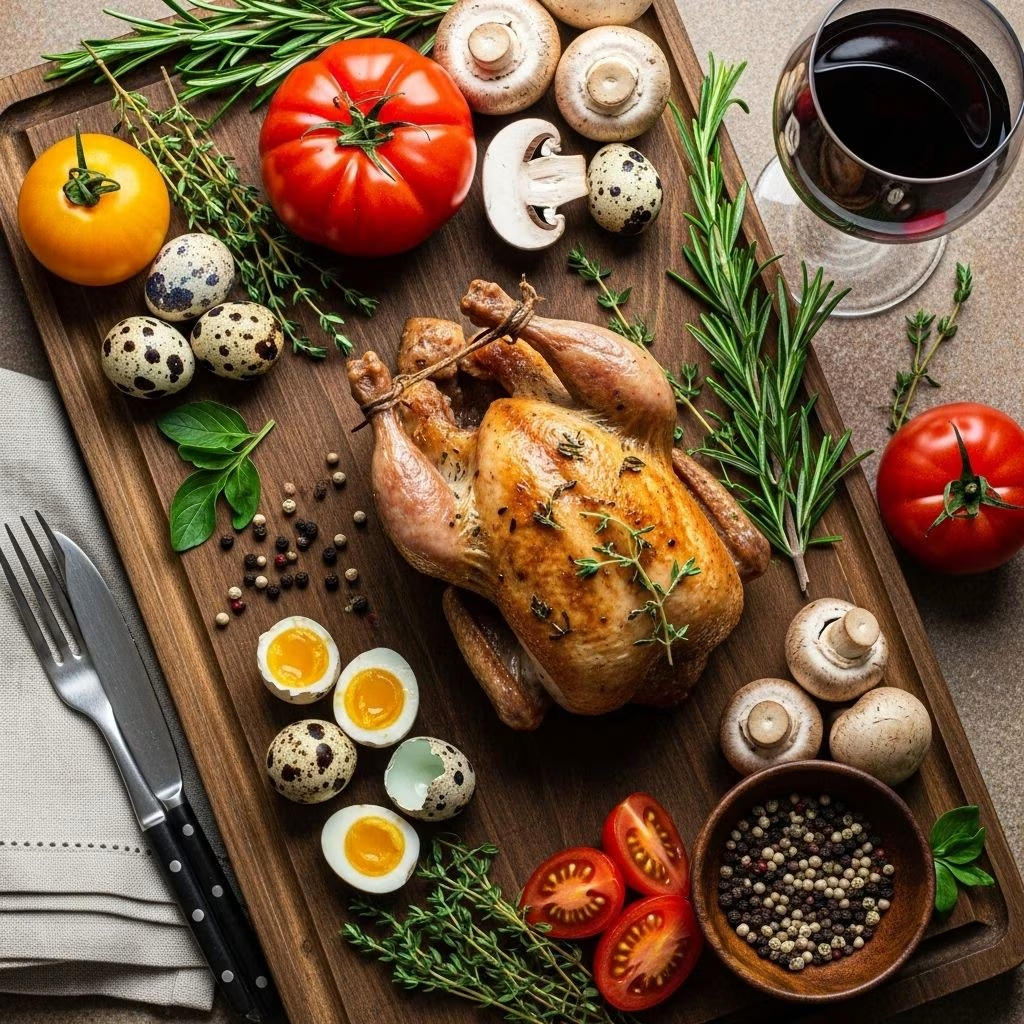
Quail is a small ground-dwelling bird cherished by nature enthusiasts, gastronomes, and health-conscious eaters alike. From its unique biology to its delicate, sought-after meat and eggs, quail continues to find relevance across cultures—as a symbol of wild beauty and an ingredient in some of the world’s most flavorful dishes.
Introduction to Quail
Quail refers to several species of small, plump birds, most of which belong to the family Phasianidae (the same family as pheasants and partridges). Known for their shy nature and ground-dwelling habits, quail have long played significant roles in both ecology and cuisine. Whether observed in the wild or raised on small farms, quail captivate both birders and food lovers with their elegance and versatility.
Biological Characteristics
Quails are small birds, typically measuring 16–18 cm in length with a wingspan of 32–35 cm. Their weight usually ranges from 70 to 140 grams, making them much smaller than chickens or pheasants. Their compact size, streaked brown plumage, and distinctive calls—often described as “wet my lips” by birders—help identify them, though they are often well-camouflaged in their grassy or brushy habitats.
- Body: Plump and rounded with relatively long wings for their size.
- Coloration: Brown upperparts with black and white streaks, lighter underparts—colors that blend into their environment.
- Calls: Each species has its own recognizable call, often used to locate mates or signal alarm.
- Lifespan: Typically 1–2 years in the wild; sexual maturity is reached within one year.
Types of Quail
There are over 130 species of quail worldwide, but only a handful are commonly encountered in the wild or used for food production. Below is a table summarizing key types:
| Common Name | Scientific Name | Distinctive Features | Distribution |
|---|---|---|---|
| Common/European Quail | Coturnix coturnix | Small, streaked brown, migratory | Europe, Asia, Africa |
| Japanese Quail | Coturnix japonica | Slightly heavier, domesticated strains | East Asia, farmed globally |
| Gambel’s Quail | Callipepla gambelii | Comma-shaped top-knot, desert dweller | Southwestern United States |
| California Quail | Callipepla californica | Forward-drooping top-knot, blue-grey body | Western North America |
| Scaled Quail | Callipepla squamata | Scaled belly, tuft of white feathers | Southwestern United States, Mexico |
Habitat and Behavior
Quail are found in diverse regions, from the Eurasian grasslands to the deserts and brushlands of North America. Habitat choices depend on species, but most prefer areas with dense ground vegetation for cover. This helps them avoid predators and provides abundant food sources. Quails are largely terrestrial, with strong legs adapted for extended walking and scratching for food.
- Grasslands and Farmland: Especially cereal crops like wheat and corn, and rough grassland.
- Brush and Woodland Margins: Many American species prefer brushy areas, where thickets offer shelter.
- Coveys: Quail are social and gather in groups called “coveys” (up to 100 birds in some cases).
- Nesting: Ground-nesting birds, often camouflaged among tall grasses to protect their clutch of eggs.
Diet and Nutrition
Quail are omnivorous, with diets ranging from seeds and grains to insects and small invertebrates. In agricultural settings, they often feed on the seeds of various crops, while wild quails are opportunistic, eating whatever is seasonally available.
- Seeds (e.g., wheat, corn, millet)
- Insects and larvae (especially in spring and summer for protein)
- Green shoots and leaves
- Berries and seasonal grains
The balanced diet makes their eggs and meat nutritionally rich, offering a good mix of proteins, vitamins, and minerals.
Quail as Food: Meat and Eggs
Quail is valued both for its meat and eggs. Its small size may surprise those accustomed to chicken, but foodies and chefs celebrate quail for its tenderness, flavor, and fast cooking times.
Quail Meat
- Texture: Tender, lean, and fine-grained
- Color: Slightly darker than chicken, akin to young pheasant
- Yield: Typically, a single quail weighs 100–140g (about 3.5–5 ounces) whole, so it is often served whole per person for a main course
Quail Eggs
- Size: About one-fifth the size of a chicken egg
- Shell: Mottled with brown/blue spots, easily cracked by hand
- Flavor: Mild but richer and creamier than chicken eggs
- Uses: Eaten boiled, fried, in salads, or pickled
Health Benefits of Quail
Both quail meat and eggs are increasingly popular for those seeking nutritious alternatives to red meats or chicken. Here are some notable health benefits:
- High in protein: Provides all essential amino acids for muscle growth and repair
- Low in fat: Leaner than chicken, making it suitable for low-fat diets
- Rich in vitamins: Vitamins B6, B12, niacin, riboflavin, and folate support metabolism and immune function
- Minerals: Excellent source of iron, phosphorus, zinc, selenium for blood health and immunity
- Egg nutrients: Quail eggs contain antioxidants, lutein, and higher yolk-to-white ratio than chicken eggs, enhancing vitamin and mineral content
- Digestibility: Some people with allergies to chicken eggs can tolerate quail eggs
Culinary Uses and Cooking Methods
Quail is appreciated in kitchens around the world, particularly in French, Mediterranean, Middle Eastern, and Asian cuisines. Its small size, succulent meat, and delicate bones lend themselves to various fast-cooking techniques and refined dishes.
Popular Cooking Methods
- Roasting: Whole quails can be roasted at high heat, often stuffed or marinated
- Grilling or Barbecuing: Marinated quail halves are grilled quickly over hot coals
- Pan-searing: Rapid searing in butter or olive oil to keep the meat moist
- Braising: Slow-cooked in aromatic liquids for tenderness and infused flavor
Classic Dishes Featuring Quail
- Roast quail with herbs and wild rice stuffing (France)
- Japanese uzura no yakitori: grilled quail on skewers
- Middle Eastern spiced grilled quail served with bulgar wheat
- Quail eggs as a high-end garnish for sushi, canapés, and salads
Quail vs. Other Game Birds
| Feature | Quail | Chicken | Pheasant |
|---|---|---|---|
| Size (adult avg.) | 100–140g | 1.5–2.5kg | 1–2kg |
| Flavor | Delicate, sweet, slightly gamey | Mild, familiar | Richer, more pronounced |
| Cooking time | Very quick (10–20 mins whole) | Longer | Intermediate |
| Eggs | Rich, creamy, small | Larger, milder | Rarely used as food |
The Taste of Quail
Quail meat is prized for its subtlety, succulence, and unique whisper of game flavor. Unlike the robust taste of wild duck or the neutrality of chicken, quail’s flavor profile balances earthy, slightly sweet notes with a clean finish. The meat remains tender when cooked properly thanks to its fine texture and moderate fat content.
- Texture: Fine-grained, moist, and never stringy
- Flavor: Milder than most game birds, ‘more flavorful than chicken’ yet not overpowering
- Eggs: Creamy and rich, often used as a gourmet accent
Pairing suggestions include light red wines, fresh herbs, and slightly sweet side dishes like braised turnips or honey-glazed carrots.
Farming, Conservation, and Sustainability
Quail farming ranges from backyard setups with a few birds to commercial operations producing meat and eggs for markets worldwide. Japanese quail, in particular, are well-suited for confined environments and prolific egg laying, making them popular for sustainable, small-scale protein production.
- Low Space Needs: Small size and rapid maturity allow for dense, efficient raising of quail versus larger poultry
- Reproduction: Fast-growing chicks, regular egg production support sustainable cycles
- Biodiversity & Conservation: Wild populations face habitat loss; some (e.g., common quail in Ireland) have decreasing trends due to changing agricultural practices and require habitat preservation
- Ethical Considerations: Their strong ground-dwelling instincts mean that densely populated, caged conditions can compromise welfare—so humane, enriched environments are encouraged for both farmed and pet quail.
Fun Facts About Quail
- A group of quail is called a covey, often containing dozens of birds.
- Some species sport top-knots or plumes—such as the comma-shaped feather of Gambel’s Quail.
- Quail can lay a clutch of up to 13 eggs at a time, and chicks are independent within days of hatching.
- The quail’s migratory instinct enables vast seasonal movements across continents.
- Quail eggs are popular in sushi and luxury appetizers due to their high yolk-to-white ratio and creamy taste.
Frequently Asked Questions (FAQs)
Q: Are quail good for small-scale farming or backyard production?
A: Yes. Quail are ideal for backyard setups due to their small size, high reproduction rate, and ability to thrive in confined but enriched environments. Japanese quail, in particular, are widely raised for both meat and eggs.
Q: Can people with chicken egg allergies eat quail eggs?
A: Some people who are allergic to chicken eggs can tolerate quail eggs, but anyone with severe allergies should consult their doctor before trying them.
Q: Is quail meat or eggs high in cholesterol?
A: Like most poultry, quail eggs do have cholesterol, but their overall nutritional profile is rich in beneficial fatty acids, vitamins, and minerals, making them a healthy part of a balanced diet in moderation.
Q: How do you cook quail so it doesn’t dry out?
A: Quail cooks quickly due to its small size and should be cooked with care—roasted at high temperatures, grilled, or pan-seared quickly to retain juiciness. Marinating and basting help keep the meat moist.
Q: Are wild quail endangered?
A: Most species are not endangered, but some regional populations face declines due to habitat loss. Globally, the common quail is listed as ‘Least Concern,’ though its numbers are decreasing in some areas due to agricultural changes.
Quail truly bridge the world of wildlife and fine dining, offering both ecological beauty and culinary delight. Their dietary value, exquisite taste, and adaptability make them an increasingly embraced bird—on the farm, in the wild, and at the dinner table.
References
- https://species.biodiversityireland.ie/profile.php?taxonId=11286
- https://wildbirdsonline.com/blogs/news/quail-behavior-traits-and-characteristics
- https://myodfw.com/game-bird-hunting/species/quail
- https://en.wikipedia.org/wiki/Common_quail
- https://animalia.bio/common-quail
- https://quailforever.org/habitat/why-habitat/quail-facts.aspx
- https://www.britannica.com/animal/quail
- https://www.rspb.org.uk/birds-and-wildlife/quail/
- https://www.allaboutbirds.org/guide/California_Quail/overview


