


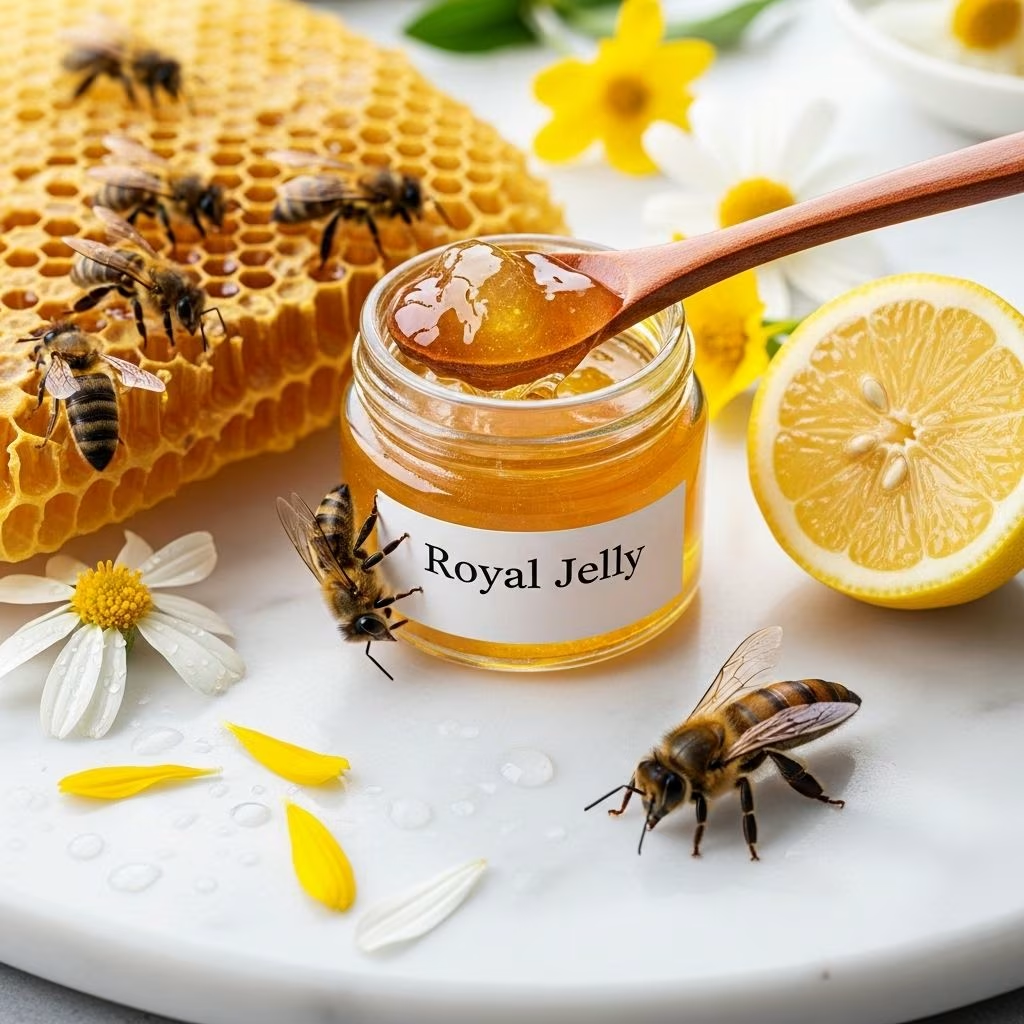
Royal jelly is a nutrient-dense secretion produced by honey bees, celebrated for its role in the hive and its perceived medicinal and nutritional benefits for humans. Used traditionally across cultures and increasingly popular in modern supplement markets, royal jelly is often claimed to promote vitality, longevity, immune strength, and more. This comprehensive guide delves into the science, uses, and sensory profile of royal jelly to provide a complete resource for health and nutrition enthusiasts.
What Is Royal Jelly?
Royal jelly is a thick, creamy, and slightly acidic secretion produced by worker bees. Its fundamental role in the hive is as the exclusive food for all bee larvae in their early days and, critically, for the queen bee throughout her life. This exclusive diet leads to the queen’s dramatically larger size, greater fertility, and significantly longer lifespan compared to worker bees—traits often attributed to the uniquely rich composition of royal jelly.
- Common aliases: Bee Milk, Bee Saliva, Gelée Royale, Royal Bee Jelly, Lait des Abeilles
- Physical characteristics: Opaque, pearly-white to pale yellow, with a gelatinous texture
- pH: Slightly acidic (3.6 – 4.2), which contributes to its stability and taste
Composition of Royal Jelly
Royal jelly’s complex nutritional makeup drives much of its biological activity—and its appeal as a supplement. While minor variations exist among beehives or regions, its general proportions remain consistent.
| Component | Typical Range (by dry weight) | Description/Notes |
|---|---|---|
| Water | 57% – 70% | Main constituent of fresh royal jelly |
| Proteins | 12% – 18% | Includes Major Royal Jelly Proteins (MRJPs), all essential amino acids |
| Sugars | 11% – 15% | Mainly fructose & glucose, traces of maltose, trehalose |
| Fatty Acids/Lipids | 3.5% – 6% (up to 19% in some samples) | High in unique, bioactive fatty acids: notably 10-HDA |
| Minerals | 2% – 3% | Potassium, calcium, sodium, zinc, iron, copper, manganese |
| Vitamins | Trace | Pantothenic acid (B5), pyridoxine (B6), traces of vitamin C |
| Bioactive Compounds | Varies | Flavonoids, acetylcholine, jelleins, antibacterial/antioxidant peptides |
The unique lipid fraction—notably the compound 10-hydroxy-2-decenoic acid (10-HDA)—is particularly linked to royal jelly’s reputed health benefits.
How Bees Produce Royal Jelly
Worker (nurse) bees produce royal jelly in their hypopharyngeal and mandibular glands between the sixth and twelfth day of adult life. This secretion is collected inside the hive and used specifically for:
- Feeding all larvae during their first three days regardless of caste
- Exclusively nourishing the queen bee throughout her larval development and adulthood
The queen bee’s exclusive royal jelly diet triggers profound physiological changes, extending her development period, fertility, and lifespan—often cited as evidence for its nutritional virtue.
Nutritional Profile
Unlike honey or bee pollen, royal jelly’s nutrition is defined not only by macronutrients but also by specific bioactive components. Key points include:
- Rich in protein (including all essential amino acids)
- Contains simple sugars (glucose and fructose)
- High proportion of rare fatty acids (e.g., 10-HDA)
- Supplies vitamins (notably B5, B6; trace vitamin C, no fat-soluble vitamins)
- Provides minerals: potassium, calcium, iron, copper, manganese, sodium, zinc
The presence of enzymes and antibacterial peptides further supports claims regarding immune-boosting and protective properties.
Purported Health Benefits
Royal jelly has been associated with a wide array of health benefits, both in folk medicine and emerging research. Not all of these claims are equally supported by scientific studies, so distinguishing tradition from clinical evidence is vital.
- Improved skin and hair health: Royal jelly features in many cosmetic products for its moisturizing, anti-aging, and healing effects.
- Immune system strengthening: Its antimicrobial peptides and antioxidants are believed to help fend off infections and support immune defense.
- Increased energy and endurance: Traditionally promoted as a natural energy booster, though robust evidence is lacking.
- Support for fertility and hormonal health: Narratives linking royal jelly to female reproductive health draw on animal studies and traditional use.
- Potential cholesterol and heart health modulation: Some data suggest royal jelly can positively affect lipid profiles.
- Anti-inflammatory effects: Attributed mainly to its flavonoids and unique fatty acids.
- Longevity and vitality: Inspired by the queen bee’s lifespan, but not conclusively demonstrated in humans.
Scientific Evidence
Rigorous human trials on royal jelly are limited, but in vitro, animal, and some preliminary clinical studies suggest possible benefits:
- Antioxidant properties: Demonstrated in laboratory studies, possibly reducing cellular oxidative stress.
- Cholesterol reduction: Some small-scale studies indicate royal jelly may reduce total cholesterol levels.
- Anti-inflammatory effect: Certain components display activity against inflammation in cell-based experiments.
- Wound healing: Topical royal jelly has shown promise in enhancing skin recovery in animal and human studies.
However, many claims—including effects on longevity, menopause symptoms, and fertility—require further clinical validation. It is crucial to interpret such benefits with caution and acknowledge the current scope of scientific research.
Traditional and Modern Uses
Throughout history and in diverse cultures, royal jelly has been used as:
- A traditional tonic in Asian and Eastern European folk medicine
- A nutritional supplement: Pill, capsule, or liquid forms; often as an ingredient in multivitamins
- A topical agent: In creams and ointments for wounds, burns, dermatitis, or cosmetic anti-aging purposes
- A food ingredient: Rarely, a specialty item in gourmet or health foods, such as smoothies or raw preparations
Increasingly, royal jelly is found in energy drinks, sports supplements, and health foods, although actual levels may be low. In Europe, it may be regulated as a food product, but elsewhere, it is largely regarded as a supplement.
Taste and Sensory Experience
Royal jelly’s unique taste and aroma are among its most notable features and may surprise first-time users:
- Taste: Tangy, slightly bitter, with a hint of sweetness; some compare it to yogurt or sour milk
- Texture: Creamy, gelatinous, and viscous—thicker than most honeys
- Aftertaste: Lingering acidity and a slightly medicinal, phenolic finish
Taste is highly individual. Many find raw royal jelly unpalatable and prefer mixing it with honey, juice, or smoothies; others develop a preference for its distinctive sharpness. Processing (drying, encapsulation) may blunt or mask the taste in commercial supplements.
Potential Side Effects and Safety
Royal jelly is generally considered safe for most people when used in recommended amounts for short durations. However, it may trigger adverse effects in some individuals:
- Allergic reactions: Especially among those with known bee product allergies, asthma, or atopic conditions (symptoms can range from mild rashes to severe anaphylaxis)
- Gastrointestinal upset: Nausea, abdominal cramps, diarrhea in sensitive individuals
- Drug interactions: Possibility of interactions with certain medications, particularly anticoagulants and immune-modulatory drugs
- Pregnancy and childhood use: Insufficient evidence on safety—use under medical supervision
As with all supplements, consulting a qualified healthcare provider is recommended, especially for those with allergies or chronic illnesses.
How to Take and Store Royal Jelly
Royal jelly is available in several forms, and proper handling preserves its bioactivity:
- Raw/fresh royal jelly: Stored refrigerated (2–5°C / 36–41°F), used by the spoonful or blended with honey
- Lyophilized (freeze-dried) powder: Encapsulated or loose, stable at room temperature, easier to dose
- Liquid extracts or mixtures: Often combined with honey or propolis for flavor and preservation
- Topical creams or ointments: For external application, often in combination with other natural skincare agents
Recommended doses vary widely (50–1000 mg per day in supplements), and no official upper limit is established. Adhere to manufacturer instructions and individualize use, noting personal tolerance and response.
Frequently Asked Questions (FAQs)
Q: What is the difference between royal jelly, honey, and propolis?
A: Honey is a carbohydrate-rich bee product used by bees for energy. Propolis is a resinous material bees use to seal and protect the hive, featuring strong antimicrobial properties. Royal jelly is a protein and nutrient-rich secretion specifically for feeding bee larvae and the queen, with a unique composition compared to the other bee products.
Q: Does royal jelly really increase lifespan?
A: The dramatic difference in queen and worker bee lifespans is linked to royal jelly, but no conclusive evidence demonstrates the same effect in humans. Most longevity claims remain anecdotal or based on animal studies.
Q: Is royal jelly vegan?
A: No. Royal jelly is an animal-derived product produced by honey bees, so it is not considered vegan.
Q: Can royal jelly be used topically?
A: Yes. It is a common ingredient in some wound care, burn ointments, and natural cosmetic formulas, often valued for its purported healing and anti-aging properties.
Q: Who should not take royal jelly?
A: People with allergies to bee products, severe asthma, or atopic dermatitis should avoid royal jelly due to the risk of allergic reactions, which can be severe.
Summary & Key Points
- Royal jelly is a nutrient-rich secretion from honey bees, reserved as the exclusive diet of queen bees and all bee larvae during early development.
- Its unique composition—particularly proteins, rare fatty acids, and antioxidants—may underlie traditional health claims and drive modern supplement demand.
- Potential benefits (skin health, immune support, antioxidant effects) are supported by preliminary studies, but robust human data is limited; use should be informed and cautious.
- The taste is distinctive—tangy, slightly bitter—which some find unpalatable unless mixed with honey or smoothies.
- Allergic reactions are possible, especially among those sensitive to bee products; consult a healthcare provider before use.
References
- https://www.fao.org/4/w0076e/w0076e16.htm
- https://en.wikipedia.org/wiki/Royal_jelly
- https://bestbees.com/royal-jelly/
- https://www.ebsco.com/research-starters/nutrition-and-dietetics/royal-jelly-nutritional-supplement
- https://www.webmd.com/vitamins/ai/ingredientmono-503/royal-jelly
- https://www.ncbi.nlm.nih.gov/books/NBK580274/
- https://www.healthline.com/nutrition/royal-jelly


