


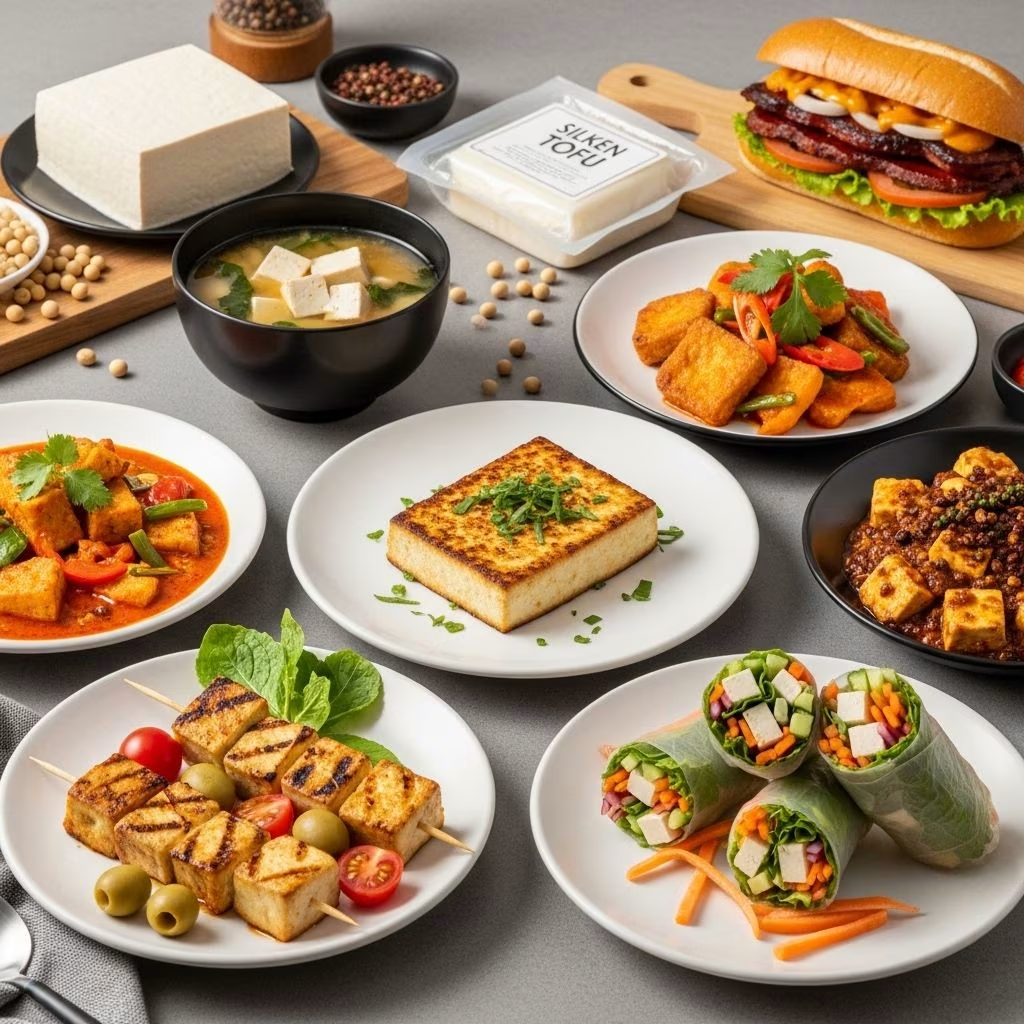
Tofu, also known as bean curd, is a staple in global cuisine, celebrated for its rich history, impressive nutrition profile, culinary versatility, and subtle but satisfying taste. From its ancient beginnings in East Asia to its place in modern plant-based diets, tofu is both tradition and trend, offering health benefits and endless creative opportunities in the kitchen.
History of Tofu: Origins and Global Expansion
Tofu’s journey began in ancient China over 2,000 years ago, likely during the Han Dynasty (206 BCE – 220 CE). It became a dietary staple thanks to its adaptability and high protein content, especially valuable in regions where dairy was scarce or absent. Multiple theories exist about tofu’s invention:
- Some trace tofu to Prince Liu An (179–122 BCE) of Anhui province, who is said to have developed it during the Western Han period.
- Another view suggests tofu resulted from the accidental coagulation of soybean milk with impure sea salt or natural nigari.
- Other scholars point to influences from Mongolian cheese-making and Indian dairy processes, showing the shared heritage of culinary innovation in Asia.
Tofu spread to Japan around the 8th century (via Buddhist monks), became common in Vietnam and Korea by the 10th and 11th centuries, and has since become a global food. In each new culture, tofu adapted, creating a vibrant diversity of flavors, textures, and preparations.
How Tofu Is Made
Tofu production is both ancient and ingeniously simple. The standard process is:
- Soaking and Grinding: Soybeans are soaked in water overnight, then finely ground with fresh water to create soymilk.
- Cooking and Filtering: The mixture is boiled, then filtered to separate soy milk from the remaining pulp (okara).
- Coagulation: Traditionally, a natural coagulant—commonly magnesium chloride (nigari) or calcium sulfate—is added to the soy milk. This causes the proteins and oils to curdle and form soft curds, similar to the cheesemaking process.
- Pressing: The curds are gently pressed into molds, with different amounts of pressure used to produce various textures, from silky soft to extra firm.
- Cooling and Packaging: Tofu blocks are cooled in water, cut, and packed. Some types are stored in water-filled cartons to maintain freshness.
Types of Tofu and Their Uses
Tofu comes in an array of types, each suited to particular culinary purposes. The classification is generally based on water content and firmness:
| Type | Description | Common Uses |
|---|---|---|
| Silken Tofu | Very soft and delicate, custard-like texture, high water content | Soups (like miso soup), smoothies, desserts, sauces, vegan baking |
| Soft Tofu | Slightly firmer than silken; delicate but holds shape better | Soups, scrambling, blending, cold salads (Hiyayakko in Japan) |
| Firm Tofu | More compact texture; can be cubed or sliced without falling apart | Stir-fries, grilling, pan-frying, braising, curries, marinating |
| Extra-Firm/Super-Firm Tofu | Dense texture, very little water; holds up to rough handling | High-heat cooking, grilling, baking, deep-frying, skewers |
| Sprouted Tofu | Made from sprouted soybeans, often firmer with a nuttier flavor | Stir-fries, sandwiches, salads; higher in some nutrients |
| Fermented Tofu | Tofu cubes aged with salt, wine, or brine for intense flavor | Condiments, spreads, flavoring agent in dishes |
Nutritional Benefits of Tofu
- Excellent plant-based protein: Tofu contains all nine essential amino acids, making it a complete protein suitable for vegetarians and vegans.
- Low in calories: A 100g serving of firm tofu usually has around 70–90 calories.
- Low in fat and carbohydrates: Most types of tofu are low in saturated fat and carbohydrates, making them heart-healthy and suitable for low-calorie diets.
- Rich in micronutrients: Tofu provides significant amounts of iron, calcium (especially if processed with calcium sulfate), magnesium, copper, phosphorus, and manganese.
- Isoflavones (phytoestrogens): Tofu contains beneficial compounds called isoflavones, which are believed to support heart health, bone density, and have antioxidant properties.
Health Benefits of Tofu
Tofu’s nutritional profile supports broad health goals:
- Supports muscle maintenance and repair: Thanks to being a complete protein source.
- Promotes heart health: Tofu is low in saturated fat and cholesterol-free, plus its isoflavones may help lower cholesterol levels.
- Bone health: Calcium-rich tofu (processed with calcium sulfate) provides a good dose of calcium; magnesium and phosphorus contribute to bone health.
- Weight management: Its low calorie content and high protein help with satiety.
- Digestive health: Tofu is easy to digest and can fit into diets for those with lactose intolerance or certain food sensitivities.
- Potential cancer-protective effects: Some research on soy isoflavones suggests possible protective effects against certain hormone-related cancers, though more evidence is needed.
- Versatility for restricted diets: Tofu is naturally gluten-free, dairy-free, and vegan, making it suitable for most dietary needs.
How to Cook with Tofu
Tofu’s appeal comes from its chameleon-like ability to absorb flavors and morph into countless textures. Here are common cooking approaches and dish ideas:
- Stir-Fries: Cubed and sautéed with fresh vegetables and sauces.
- Grilled or Broiled: Marinate and grill for smoky flavor and crispy edges.
- Baking: Bread and bake for a healthy snack or salad topper.
- Frying: Shallow- or deep-fry for golden, crunchy texture.
- Scrambled: Crumble firm tofu and sauté with vegetables and spices for a vegan take on scrambled eggs.
- Soups and Stews: Add cubes to miso soup, noodle pots, or curries.
- Smoothies and Desserts: Blend silken tofu into smoothies, mousses, cheesecakes, or puddings for creamy consistency.
- Salads: Baked, chilled, or marinated tofu enhances salads well.
Tip: For best results, press your tofu to remove excess water (especially for fried or baked dishes), allowing it to absorb marinades and flavors more deeply.
How to Press and Store Tofu
- To press tofu: Remove tofu from its packaging, drain liquid, wrap in a clean towel or paper towels, and place a weight on top (like a heavy skillet). Press for 15–30 minutes; pour away the drained liquid.
- For ready-to-cook tofu: Many supermarkets now offer pre-pressed, high-protein tofu or vacuum-packed varieties that require minimal preparation.
- For storage: Once opened, tofu should be covered in fresh water in a container, kept refrigerated, and the water changed daily. Use within 3–5 days. Cooked tofu can be stored for up to a week, and tofu can also be frozen (altering its texture for a chewier bite).
What Does Tofu Taste Like?
Tofu’s flavor is best described as subtle, mild, and neutral. In its natural state, tofu has a barely perceptible, slightly nutty or beany flavor, allowing it to assume the taste of spices, sauces, and seasonings in any dish.
- Silken tofu: Smooth and creamy, with a gentle, pleasant taste—blends well with sweet or savory flavors.
- Firm/extra-firm tofu: Slightly nuttier, can develop a crust or chewy surface when cooked, but does not have a strong taste of its own.
- Fermented tofu: Pungent, salty, comparable to strong cheeses. Used as a condiment or flavor bomb in certain Asian cuisines.
When properly seasoned, marinated, or cooked, tofu transforms into a flavorful and delicious ingredient that elevates any recipe.
Common Misconceptions About Tofu
- “Tofu is bland and boring”: On its own, tofu is neutral, but that’s what makes it so versatile. Proper seasoning, marinating, or cooking techniques can deliver dishes as satisfying as their meat-based counterparts.
- “Tofu is only for vegetarians or vegans”: While tofu is central in plant-based diets, it’s embraced by omnivores worldwide for its health benefits and culinary creativity.
- “Tofu isn’t nutritious”: Contrary to this myth, tofu provides high-quality protein, essential amino acids, iron, calcium (when processed appropriately), and many micronutrients.
- “Soy is unhealthy”: Scientific consensus supports that moderate soy intake is safe and may provide health benefits for most people, though those with soy allergies must avoid it.
Frequently Asked Questions (FAQs)
Q: Is tofu good for weight loss?
A: Yes, tofu is low in calories and fat but rich in protein, making it filling and a smart addition to weight-loss diets when combined with other healthy lifestyle practices.
Q: Can tofu replace meat in recipes?
A: Absolutely! Tofu’s protein content, texture, and ability to absorb flavors make it a popular plant-based alternative in most dishes that use meat, including stir-fries, burgers, and casseroles.
Q: How should I store leftover tofu?
A: Cover unused tofu with fresh water, refrigerate, and change the water daily. Use within 3–5 days. You can also freeze tofu for a firmer texture.
Q: Does tofu contain gluten?
A: Plain tofu is naturally gluten-free. However, check flavored, marinated, or processed varieties for added gluten-containing ingredients.
Q: Is tofu safe for kids and pregnant women?
A: For most people, including children and pregnant women, tofu is safe and healthy as part of a balanced diet. However, those with soy allergies should avoid it.
Q: Are there sustainable or organic tofu options?
A: Yes, many manufacturers offer organic, non-GMO, and sustainably produced tofu. Check packaging labels and local health food stores for your preferred options.
References
- https://www.soyinfocenter.com/HSS/tofu1.php
- https://tofuture.com/blogs/about-tofu/what-is-tofu
- https://en.wikipedia.org/wiki/Tofu
- https://nihaoma-mandarin.com/culture/the-rich-history-of-tofu-in-china-from-ancient-origins-to-modern-delicacy/
- http://www.tofu-as.com/english/tofu/history/05.html
- https://discovermagazines.com/issues/post/tofu-a-journey-through-its-origins-nutritional-benefits-and-culinary-versatility/
- https://www.merriam-webster.com/dictionary/tofu
- https://union.ces.ncsu.edu/2021/01/the-origins-and-health-benefits-of-tofu/
- https://www.chhs.colostate.edu/fsi/food-articles/complex-food/tofu/


