


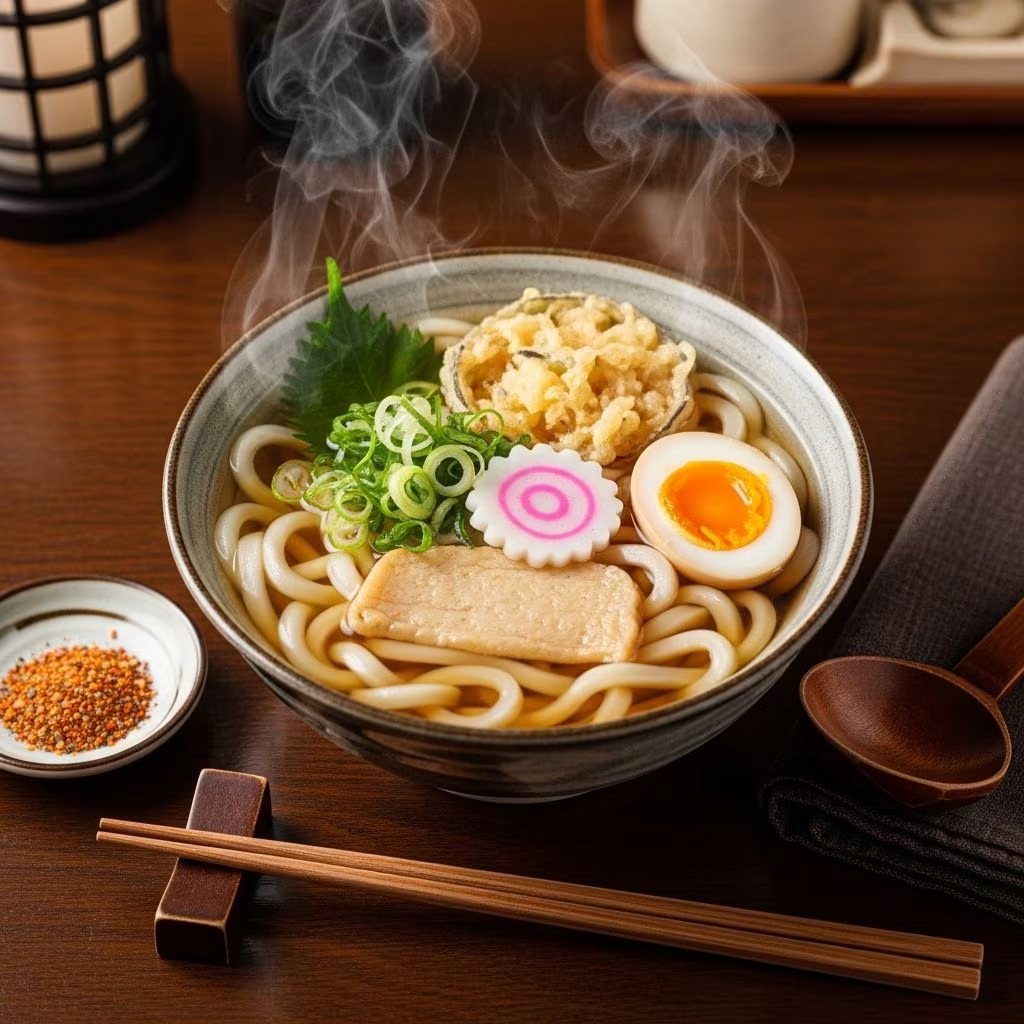
Udon and udon soup captivate both the palate and the imagination as essential comfort foods in Japanese cuisine. Recognized for their thick, chewy texture and the warming broths they often accompany, udon noodles carry a story that intertwines culinary innovation with regional Japanese heritage. This article explores the origins of udon, its health benefits, diverse culinary uses, and the sensory experience it provides, offering a comprehensive introduction to one of Japan’s favorite dishes.
What Is Udon?
Udon refers to thick, chewy Japanese noodles made primarily from wheat flour, water, and salt. They are distinctive for their substantial width and satisfyingly firm texture. Udon can be enjoyed either in hot broth (the most common presentation) or cold, served with dipping sauce, making it highly adaptable to the seasons and preferences.
- Appearance: Smooth, glossy, and round with a diameter of 2–4 mm.
- Texture: Soft, elastic, and chewy, holding their shape in soup.
- Main Ingredients: Wheat flour, water, and salt—sometimes with kansui (alkaline water) for added springiness.
The History and Origins of Udon
The story of udon’s origin is closely linked with both Japanese aristocracy and Buddhist culture, and dates back well over a millennium.
- Early Introduction: Udon is believed to have arrived in Japan from China during the Heian period (794–1185), where Chinese wheat-based noodles inspired local adaptations.
- Legend of Kukai: Among the most famous legends, the 9th-century monk Kukai (Kobo Daishi) reportedly brought noodle-making techniques to Kagawa after his travels to China. His innovations contributed to the distinctive kneading and cutting processes found in udon making.
- Commoners’ Food: Udon became increasingly popular from the Kamakura period onward, transitioning from aristocratic fare to an everyday staple for the masses.
- Regional Flourishing: With improvements in agriculture and transport in the Edo period, distinct local styles emerged, with countless variations in soup, toppings, and presentation.
- Industrialization and Modern Spread: The mechanization of noodle production in the post-war era democratized udon, making it a staple nationwide and introducing instant and packaged variations for convenience.
Udon vs. Soba: A Quick Comparison
| Feature | Udon | Soba |
|---|---|---|
| Main Ingredient | Wheat flour | Buckwheat flour |
| Typical Thickness | 2–4 mm (thick) | ~1–2 mm (thin) |
| Texture | Chewy and soft | Firm, earthy, slurpy |
| Common Broth Base | Dashi (fish stock), soy sauce, mirin | Dashi (lighter), soy sauce |
| Presentation | Hot or cold, various toppings | Hot or cold, minimalistic toppings |
Popular Types and Regional Varieties of Udon
Japan boasts a remarkable diversity of regional udon styles—each reflecting local tastes, ingredients, and culinary customs.
- Sanuki Udon (Kagawa): Celebrated for its firm, chewy texture, Sanuki udon is often served in a light fish-based broth or with a rich soy-based dipping sauce. It remains one of Japan’s most famous varieties.
- Inaniwa Udon (Akita): These are thinner, hand-stretched, and pressed, characterized by a slippery, delicate texture.
- Miso Nikomi Udon (Nagoya): Features udon simmered in a deep, reddish miso broth, often with chicken, egg, and seasonal vegetables.
- Kyoto Udon: Offers a gentle, light broth, frequently topped with local seasonal vegetables.
- Kitsune Udon: Popular everywhere, this version includes a topping of sweet fried tofu (aburaage).
- Tempura Udon: Served with crispy shrimp or vegetable tempura on top, blending textures and flavors.
What Is Udon Soup?
Udon soup is the most common way to enjoy udon noodles, featuring a hot, savory broth filled with freshly cooked noodles and an assortment of toppings. While standards exist, the soup adapts readily to local tastes and seasonal ingredients.
- Broth base: The traditional Japanese soup stock called dashi is combined with soy sauce, mirin (sweet rice wine), and sometimes a touch of sake. Dashi is typically made from kombu (kelp) and katsuobushi (dried bonito flakes).
- Noodles: Fresh or cooked dried udon are boiled until perfectly chewy and serve as the foundation for the soup.
- Toppings: Common choices include green onions, kamaboko (fish cake), tempura, egg, nori (seaweed), and aburaage.
Ingredients and Preparation of Udon Soup
The basic method for making traditional udon soup involves just a few core steps and ingredients, making it simple and accessible even for home cooks.
- Udon noodles: Fresh, frozen, or dried
- Dashi: Traditional Japanese stock from kombu and katsuobushi (vegetarian versions use only kombu and shiitake mushrooms)
- Soy sauce and mirin: For depth, saltiness, and mild sweetness
- Toppings: Sliced green onion, tempura, seasoned egg, mushrooms, vegetable slices, seaweed, and tofu. Regional ingredients or preferences often add further variety.
Preparation is generally as follows:
- Boil udon noodles until al dente, then rinse briefly to remove excess starch.
- Prepare dashi broth, seasoning to taste with soy sauce and mirin.
- Combine noodles with hot broth and arrange selected toppings artfully atop the dish.
Health Benefits of Udon and Udon Soup
Udon, enjoyed as part of a balanced diet, offers several notable health advantages:
- Easily digestible energy: Udon noodles, made from wheat flour and water, are low in fat and provide a readily available source of complex carbohydrates for sustained energy.
- Low in cholesterol: Traditional udon contains essentially no cholesterol, particularly when made without fried toppings or fatty additions.
- Nutrient boost from broth: Dashi-based broths contribute minerals like iodine and trace nutrients from seaweed, bonito flakes, and mushroom components.
- Natural hydration: Udon soup is hydrating due to its high water content and can be soothing when one is unwell.
- Customizable nutrition: By selecting healthy toppings—such as lean proteins, tofu, green onions, seaweed, and vegetables—udon soup’s nutritional profile improves to meet individual dietary goals.
However, most udon broths are moderately high in sodium due to the presence of soy sauce and dashi, so those watching their salt intake may wish to consume it in moderation or use low-sodium substitutions.
Culinary Uses: How Udon Is Enjoyed
Udon’s exceptional versatility allows it to be savored in a variety of settings and preparations:
- Hot udon soup: The classic comfort food in cold weather or as a revitalizing meal, often eaten for breakfast, lunch, or dinner.
- Cold udon (zaru udon): Served chilled with dipping sauce, especially enjoyed during hot summer months for its refreshing qualities.
- Stir-fried udon (yaki udon): Featuring thick noodles swiftly sautéed with meat, vegetables, and sauces.
- Nabe-style udon: Simmered in large communal pots for festive group dining or wintertime gatherings, paired with a variety of meats, tofu, and vegetables.
- Instant udon: Widely available as instant noodle packets or cups for a quick, convenient, and flavorful meal on the go.
Taste and Texture: What to Expect
One of the main draws of udon is its unique combination of taste and mouthfeel:
- Chewy, Silky Texture: The noodles have a satisfying bounce and pleasing chewiness, providing substantial heft compared to thinner noodles like soba or ramen.
- Mild, Comforting Flavor: Udon noodles themselves are relatively neutral in flavor, serving as the perfect vehicle for absorbing the umami-rich essence of the soup or dipping sauce.
- Savory, Fragrant Broth: Traditional dashi-based broths are aromatic and umami-laden, with notes of seaweed and bonito flakes. Regional flavors can add miso, curry, or even spicy elements.
- Balance and Lightness: Despite its heartiness, udon soup is rarely greasy or heavy. The combination of gentle noodles and clear, savory broth creates a balanced bowl, both nourishing and satisfying.
Frequently Asked Questions (FAQs)
Q: Is udon gluten-free?
No, traditional udon noodles are made from wheat flour and therefore contain gluten. Those requiring a gluten-free diet should avoid standard udon or seek specialty gluten-free options.
Q: What is the difference between udon soup and ramen soup?
Udon soup uses thick wheat noodles and a clear, umami dashi broth typically flavored with soy sauce and mirin. Ramen soup uses thinner noodles and richer, frequently pork-based broths with added fat, garlic, miso, or soy.
Q: Can vegetarians enjoy udon soup?
Yes, vegetarians can enjoy udon soup by using vegetarian-friendly dashi (made from kombu and shiitake mushrooms) and selecting plant-based toppings such as tofu, mushrooms, and vegetables.
Q: How can I make udon soup healthier?
Choose fresh vegetables, lean proteins, and low-sodium broth ingredients. Limit fried toppings and control portions of soy sauce to manage sodium intake.
Q: Why is Sanuki udon so famous?
Sanuki udon from Kagawa Prefecture is celebrated for its firmer, chewier texture achieved through specific kneading and resting techniques, as well as its role in popularizing udon culture in Japan.
References
- https://rizing-japan.com/news-articles/udon-noodles-and-its-history/
- https://kamereo.vn/blog/en/udon-noodles/
- https://artsandculture.google.com/story/how-udon-noodles-became-a-japanese-favorite-ministry-of-agriculture-forestry-and-fisheries/3gVRhdIURgh7Jg?hl=en
- https://www.japan.travel/en/ph/guide/udon-soba/
- https://en.wikipedia.org/wiki/Udon
- https://www.masterclass.com/articles/what-are-udon-noodles
- https://www.yamatonoodle.com/noodle-master-labs/sanuki-udon-noodles/
- https://edibleschoolyard.org/resource/udon-noodle-soup
- https://www.japan-guide.com/r/e105.html


