


Introduction: The Essence of Water
Water is more than just a transparent, tasteless liquid we drink daily. It lies at the core of life itself, comprising over 60% of the human body and nearly 71% of Earth’s surface. Water’s remarkable molecular structure and distinct properties empower it to support life, shape landscapes, enable industrial processes, and provide essential hydration and nutrition. This article explores water’s chemical nature, benefits for health, myriad uses, variations in taste, and practical considerations for water quality and safety.
Chemical Structure and Physical Properties of Water
Molecular Formula and Structure
The chemical formula for water is H2O, representing two hydrogen atoms covalently bonded to one oxygen atom in each molecule. This arrangement results in a bent molecular geometry, with an angle of approximately 104.5°, as the oxygen atom’s two lone electron pairs push the hydrogens closer together.
Polarity and Hydrogen Bonding
Water is a highly polar molecule due to the difference in electronegativity between oxygen and hydrogen. This creates a partial negative charge near the oxygen atom and a partial positive charge near the hydrogen atoms. These charges allow water molecules to aggregate, forming strong intermolecular hydrogen bonds. Each molecule can form up to four such bonds—two as a donor and two as an acceptor—resulting in open, cage-like, and dynamic three-dimensional structures.
Physical Properties Table
| Property | Value/Description |
|---|---|
| Molecular Formula | H2O |
| Boiling Point | 100°C / 212°F at 1 atm |
| Melting Point | 0°C / 32°F at 1 atm |
| Color | Colorless (light blue in large volumes) |
| Taste | Tasteless (in pure form) |
| Odor | Odorless |
| Density | 1 g/cm3 (at 4°C) |
| Polarity | Highly polar molecule |
| Hydrogen Bonds | Up to four per molecule |
Unique Properties Making Water Essential
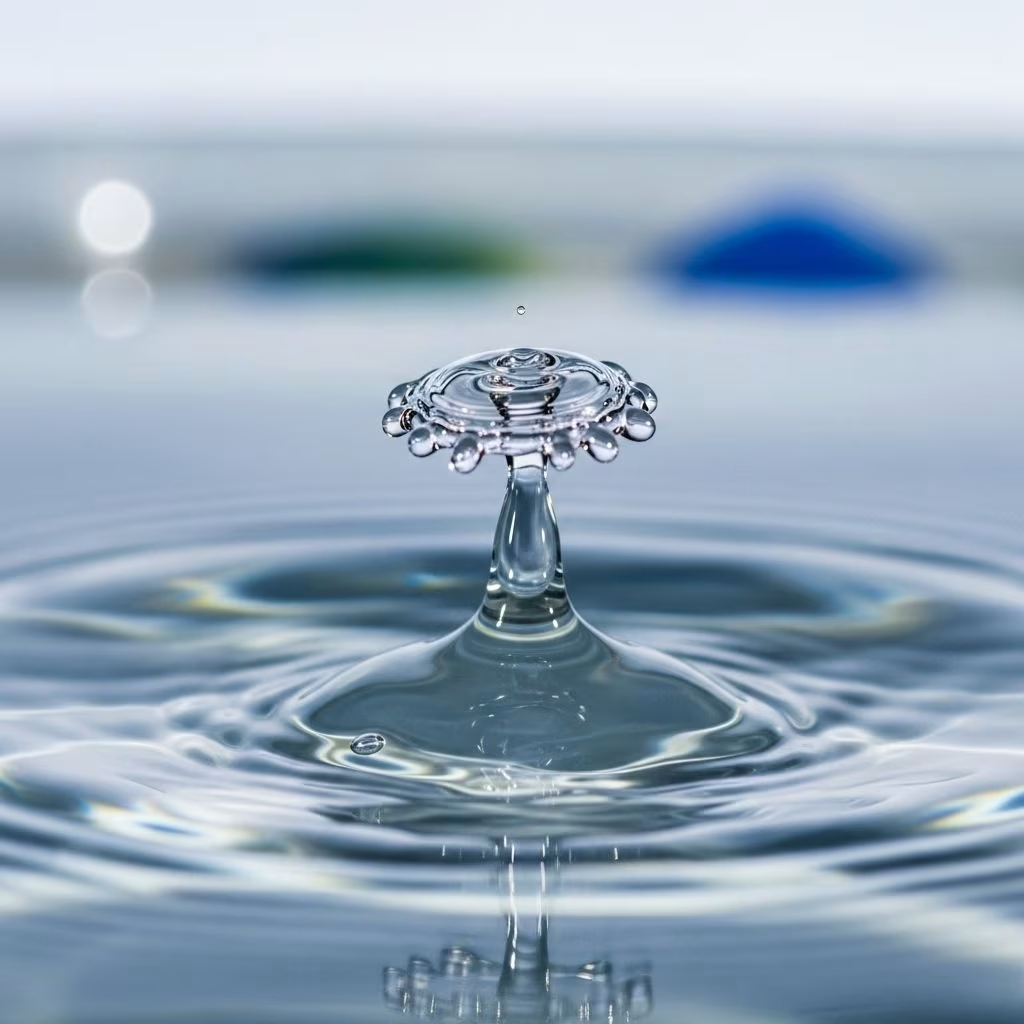
- High Cohesion: Water molecules strongly attract each other via hydrogen bonds, giving water surface tension and enabling droplets to form.
- High Specific Heat: Water’s ability to absorb and retain heat stabilizes temperatures in living organisms and environments.
- Universal Solvent: Its polarity allows it to dissolve a wide range of substances, aiding chemical reactions and nutrient transport.
- Density Anomaly: Ice floats because water molecules in solid state arrange in an open, lower-density lattice.
- Transparency: Water’s transparency allows sunlight to penetrate, supporting aquatic photosynthesis and ecosystems.
Chemical Properties
Water’s unique chemical features include:
- Amphoteric Nature: Acts as both acid and base, participating in acid-base reactions.
- Redox Activity: Can be reduced to hydrogen or oxidized to oxygen, as in photosynthesis.
- Strong Hydrating Ability: Dissolves ionic and some covalent compounds, facilitating metabolic processes through hydrolysis.
Biological Importance and Health Benefits
Role in the Human Body
- Cellular Hydration: Water maintains cell shape, structure, and nutrient transport.
- Temperature Regulation: High specific heat buffers body temperature changes.
- Metabolic Processes: Involved in digestion, absorption, and respiration.
- Waste Removal: Supports kidney function, flushing out toxins via urine.
- Joint Lubrication: Helps cushion and lubricate joints.
- Electrolyte Balance: Dissolves electrolytes critical for nerve, muscle, and heart function.
Why You Need Water: Key Health Benefits
- Prevents Dehydration: Ensures all body systems operate efficiently.
- Boosts Skin Health: Hydrates skin, reducing dryness and improving elasticity.
- Supports Digestion: Aids in breaking down food and absorbing nutrients.
- Facilitates Detoxification: Carries away waste products and toxins.
- Enhances Mental Performance: Proper hydration improves focus, mood, and cognition.
- Promotes Cardiovascular Health: Maintains blood volume and pressure.
Recommended Intake
Most adults should consume 2–3 liters of water daily (about 8–12 cups), but needs vary by age, activity, climate, and health status. Water from food and beverages collectively counts toward daily totals.
Table: Symptoms of Dehydration
| Severity | Symptoms |
|---|---|
| Mild | Thirst, dry mouth, headache, mild fatigue |
| Moderate | Dizziness, rapid heartbeat, concentrated urine |
| Severe | Confusion, lack of sweating, fainting, organ impairment |
Common and Special Uses of Water
Essential Domestic Uses
- Drinking: Primary source of hydration for health and survival.
- Cooking: Prepares and cleans food, dissolves flavors, and supports food safety.
- Cleaning: Used for bathing, laundry, washing utensils, and household sanitation.
- Sanitation: Enables proper waste disposal and hygiene in toilets, sinks, and bathing.
Industrial and Agricultural Uses
- Agriculture: Irrigates crops, hydrates livestock, maintains soil health.
- Manufacturing: Coolant, solvent, and cleaning agent in various industries (electronics, chemicals, food processing).
- Energy Production: Powers hydroelectric plants, steam turbines, and is utilized in some renewable energy sources.
- Firefighting: Essential for controlling and extinguishing fires.
Environmental Uses and Ecological Significance
- Habitats: Oceans, rivers, lakes, and wetlands sustain plants and animals.
- Climate Regulation: Evaporation, condensation, and precipitation drive global weather patterns.
- Soil Formation: Erosive forces shape landscapes, create sediment, and recycle nutrients.
Taste Profile and Factors Affecting Water’s Flavor
Pure Water Taste
Pure water is described as tasteless and odorless. Humans do not detect the chemical taste of water itself; what we perceive as taste is typically the result of dissolved minerals, gases, and impurities.
Factors Influencing Water’s Taste
- Minerals: Calcium, magnesium, sodium, and potassium add subtle flavors often perceived as ‘fresh’ or ‘hard’.
- Dissolved Gases: Oxygen and carbon dioxide impart slight freshness or flatness to the taste.
- Impurities: Chlorine, sulfur compounds, and organic matter can introduce undesirable tastes or odors.
- Source: Spring, well, tap, rain, and bottled waters all possess distinct profiles based on origin and treatment processes.
- Temperature: Cold water tastes crisper and more refreshing, while warm water may intensify mineral notes.
Table: Taste Characteristics by Water Type
| Water Type | Main Taste Notes |
|---|---|
| Distilled | No taste; may taste ‘flat’ |
| Spring | Fresh, slightly mineralized |
| Tap | Varies (may be chlorinated, sometimes earthy or metallic) |
| Well | Mineral-rich, sometimes chalky or bitter |
| Bottled | Clean, mild, sometimes with added minerals |
Water Safety and Quality Considerations
Water Purity Standards
- Microbial Safety: Free from harmful bacteria, viruses, and parasites.
- Chemical Safety: Low levels of heavy metals, nitrates, pesticides, and industrial pollutants.
- Mineral Balance: Contains beneficial minerals but not in excessive quantities.
- Treatment: May include filtration, disinfection (e.g., chlorination, UV), and mineral adjustment.
How to Improve Water Quality and Taste
- Use charcoal or ceramic filters to remove impurities.
- Chill water to enhance freshness and mask undesirable flavors.
- Let tap water stand uncovered for a while to dissipate chlorine.
- Pick bottled or filtered water for sensitive palates or health concerns.
Frequently Asked Questions (FAQs)
Q: Why is water called the ‘universal solvent’?
A: Water’s polarity and hydrogen bonding let it dissolve more substances than any other liquid, making it vital for transporting nutrients, minerals, and chemicals in nature and biology.
Q: Can you drink too much water?
A: Yes, excessive intake can dilute blood minerals and electrolytes, leading to hyponatremia or ‘water intoxication’. Balance is essential for health.
Q: What gives some water a ‘hard’ taste?
A: ‘Hard’ water contains high levels of calcium and magnesium, which lend it a chalky or mineral-rich mouthfeel and flavor.
Q: How do I know if my tap water is safe to drink?
A: Local municipal sources release water quality reports. Where unregulated, have water tested for contaminants, bacteria, and mineral content.
Q: Why does ice float on water?
A: Ice is less dense than liquid water due to its open, lattice-like arrangement of molecules. This anomaly is crucial for aquatic life in cold climates.
Conclusion: Water’s Vital Role in Life
Water is a wonder of chemistry and life—a small molecule with massive influence. Its molecular structure underlies properties essential for biology, environmental stability, industry, and daily comfort. From its role as a universal solvent and heat regulator to its subtle influences on taste and wellness, water is integral to every aspect of our existence. Maintaining water quality, understanding its benefits, and appreciating its subtle taste nuances empower us to make healthier, more informed choices in our lives. As global demand rises and environmental pressures mount, valuing and protecting our water resources is more important than ever.
References
- https://bio.libretexts.org/Bookshelves/Human_Biology/Human_Biology_(Wakim_and_Grewal)/03:_Chemistry_of_Life/3.11:_Biochemical_Properties_of_Water
- https://byjus.com/chemistry/physical-and-chemical-properties-of-water/
- https://en.wikipedia.org/wiki/Properties_of_water
- https://pubs.acs.org/doi/10.1021/acs.chemrev.7b00259
- https://pubchem.ncbi.nlm.nih.gov/compound/Water
- https://chemistrytalk.org/properties-water-physical-chemical/
- https://www.usgs.gov/water-science-school/properties-water
- https://www.dwi.gov.uk/the-physical-and-chemical-properties-of-water/
- https://www.youtube.com/watch?v=3jwAGWky98c


