


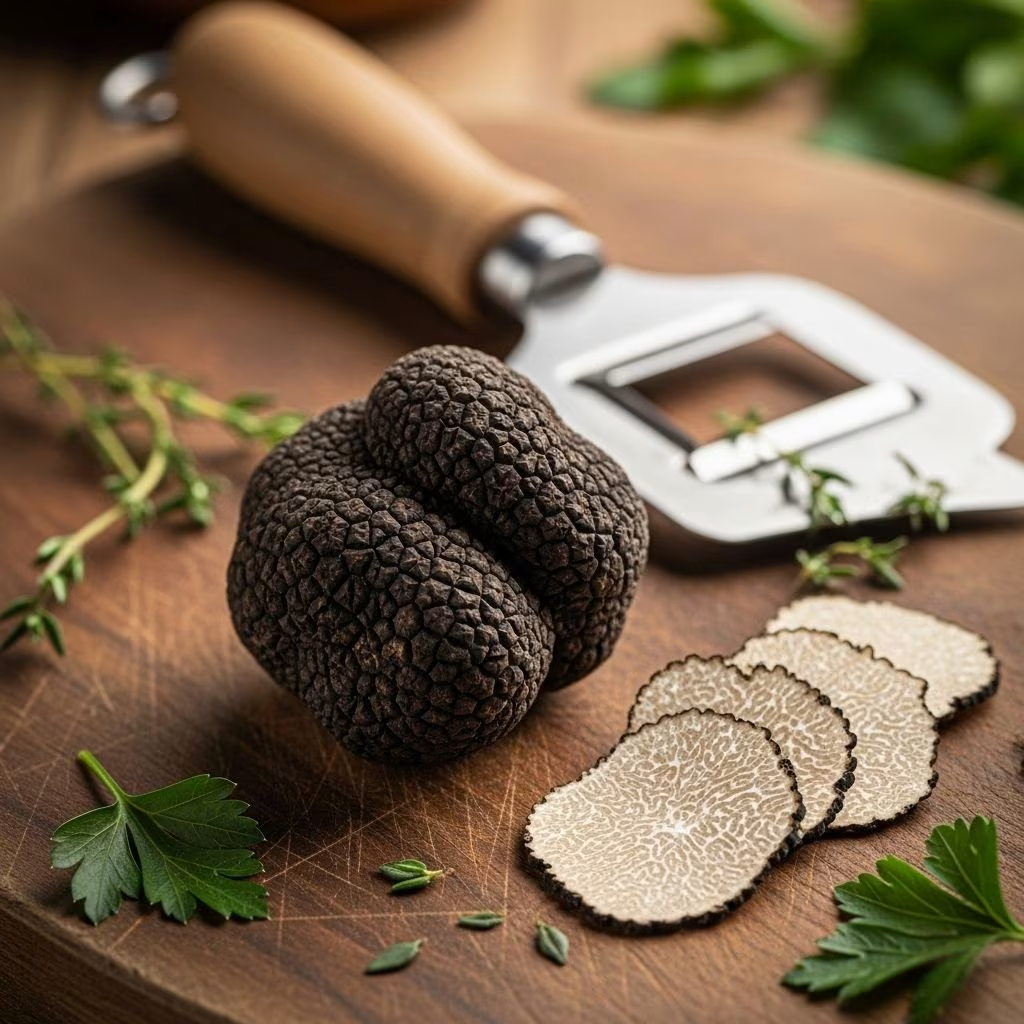
Truffles are one of the culinary world’s most prized ingredients—revered for their rarity, complex flavor profile, and the luxurious touch they add to gourmet dishes. Whether freshly shaved over pasta or infused into oils and butters, truffles evoke an aura of exclusivity and tradition. But what exactly is a truffle? What makes it special, how is it used, and what does it taste like? This comprehensive guide dives into the mysterious world of truffles, unraveling their history, varieties, benefits, culinary uses, and the unique sensory experience they offer.
What Is a Truffle?
A truffle is the underground fruiting body of certain fungi belonging primarily to the genus Tuber and a few other related genera. Unlike most mushrooms that fruit above the surface, truffles grow beneath the soil in close symbiosis with tree roots, forming specialized networks called ectomycorrhizal relationships.
- They appear as small, lumpy spheres—often likened to potatoes.
- Composed of a dense, spore-producing mass surrounded by a protective layer.
- There are hundreds of truffle species worldwide, but only a select few are considered edible and luxurious.
History of Truffles
Truffles have captivated imagination and appetites for thousands of years.
- Ancient Egypt: Truffles were consumed with goose fat and surrounded by myths.
- Ancient Rome & Greece: Considered to possess mystical, aphrodisiac properties and believed to be formed by lightning striking tree roots.
- European Renaissance: They emerged as luxury ingredients in the courts of France and Italy.
- Truffle legends often cite their powers—enhancing fertility, luck, and even being gifts from the gods.
Throughout history, truffles remained mysterious, shrouded in folklore and highly sought-after by royalty and gourmands alike.
Varieties and Types
Truffles come in several varieties, each with distinct seasonality, flavor, and culinary allure. The most prized types include:
| Truffle Type | Color | Season | Origin |
|---|---|---|---|
| White Truffle (Tuber magnatum) | White to pale brown | Sep-Jan | Italy (Piedmont, Tuscany) |
| Black Truffle (Tuber melanosporum) | Black w/ white veins | Nov-Mar | France (Périgord), Spain |
| Summer Truffle (Tuber aestivum) | Black exterior, lighter inside | May-Aug | Europe |
| Burgundy Truffle (Tuber uncinatum) | Dark brown | Sep-Dec | Europe |
| Oregon White Truffle | White | Dec-Mar | USA (Pacific Northwest) |
| Pecan Truffle | Brown | Fall | USA (Southern) |
White truffles are considered the most aromatic and expensive, commanding prices that can exceed thousands of dollars per kilogram. Black truffles are revered for their earthy depth and are frequently used in haute cuisine.
How Truffles Grow
Truffles are highly unusual among edible fungi due to their hidden habitat and complex relationships with trees.
- Truffles form ectomycorrhizal relationships with specific tree species—oak, hazelnut, chestnut, and beech are preferred hosts.
- They rely on their tree partner for sugars, while supplementing the tree’s nutrient and water absorption capabilities.
- Growing truffles requires perfect soil, moisture, pH, and sunlight conditions—making their cultivation challenging even for expert farmers.
Because they grow underground, truffles are traditionally harvested with the aid of trained dogs or pigs, who can sniff out the aromatic tubers from beneath the earth.
Nutritional and Health Benefits
Beyond their gourmet status, truffles offer noteworthy nutritional and health benefits.
- Low in calories: Truffles are a low-energy food, making them suitable for gourmet diets.
- Rich in nutrients: They contain protein, fiber, vitamins, minerals (such as iron, phosphorus, calcium, magnesium), and antioxidants.
- Good source of amino acids important for cellular functions and metabolism.
- Some studies suggest truffles have anti-inflammatory and antimicrobial properties due to their bioactive compounds.
- No cholesterol: Ideal for heart-conscious consumers.
Because truffles are consumed as a condiment or in small quantities, their overall dietary impact is moderate but their phytonutrient and taste contribution is unique.
Culinary Uses
Truffles are regarded as a culinary treasure. Their intense flavor and aroma can transform simple dishes into gastronomic masterpieces.
- Fresh Truffles: Shaved over pasta, risotto, scrambled eggs, potatoes, and meat dishes. Because heat diminishes their aroma, truffles are typically added raw or right before serving.
- Truffle Oil & Butter: Used as finishing touches to enhance the truffle aroma in dishes year-round.
- Truffle Salt & Cheese: Infused salts or dairy products impart subtle truffle notes.
- Truffle Sauces & Creams: Popular in Italian and French cuisine.
- Pair well with mild and creamy flavors which allow their aromas to shine.
Chefs recommend simple preparations to highlight the truffle’s unique taste, reserving complex cooking for less aromatic varieties.
Taste and Aroma
The singular appeal of truffles lies in their flavor and aroma—complex, evocative, and mysterious.
- White Truffle: Pungent, garlicky aroma with notes of shallot, deep musk, earthy sweetness, intense flavor.
- Black Truffle: Rich, earthy, slightly nutty and chocolatey, with peppery undertones.
- Summer/Burgundy Truffle: More subtle, mild, and nutty flavor.
The truffle’s aroma is so powerful that it can perfume an entire room. Described variously as musky, woody, or reminiscent of rich earth after rain, the taste is unmatched and considered an acquired delicacy for many. Truffles are rarely cooked, as heat destroys their signature bouquet.
Truffles vs. Mushrooms
Despite both being fungi, truffles and mushrooms differ in notable aspects:
| Truffles | Mushrooms |
|---|---|
| Grow underground (subterranean) Form symbiotic relationships with trees Rare, difficult to cultivate Prized for aroma and rarity | Grow above ground Break down organic matter Easy to cultivate; many edible types Used fresh, cooked in variety of ways |
Truffles are considered a special subset of mushrooms—unique because of their habitat and the sensory experience they provide.
Harvesting and Finding Truffles
Truffle hunting—an intriguing tradition—is practiced across forests in Europe and North America.
- Methods: Trained dogs (and occasionally pigs) use their keen sense of smell to locate mature truffles below ground.
- Region: Northern and central Italy, southern France, Spain, and Oregon are key truffle-producing regions.
- Challenges: Wild truffles cannot be reliably cultivated and are found only under very specific environmental conditions, making them among the world’s most expensive foods.
Truffle Products
Because fresh truffles are rare and seasonal, several truffle-derived products extend their culinary pleasure throughout the year:
- Truffle-infused oil
- Truffle butter
- Truffle salt
- Canned or jarred truffle slices
- Truffle sauces and creams
- Truffle cheese
While these products offer a taste of luxury, it is essential to check the ingredient list, as many commercial items use artificial flavors. For the gourmet experience, genuine truffle ingredients are best.
Frequently Asked Questions (FAQs)
Q: Are truffles and mushrooms the same thing?
A: Truffles are a type of underground mushroom and thus a subset of fungi. However, they differ in where and how they grow, their flavor, and culinary uses.
Q: Why are truffles so expensive?
A: Truffles’ scarcity, specific habitat requirements, short harvest seasons, and complex growth cycles make them difficult to find and farm, driving their high market value.
Q: How do you store fresh truffles?
A: Fresh truffles should be wrapped in paper towels, placed in air-tight containers, and kept in the fridge. They should be consumed within a week for best flavor.
Q: What is the difference between white and black truffles?
A: White truffles are usually more aromatic and rare, found mainly in Italy, with strong garlicky notes. Black truffles, found in France and Spain, have an earthier, nutty taste and are slightly less expensive.
Q: Are truffles healthy?
A: Yes, truffles are low in calories and rich in fiber, protein, and minerals. They are eaten in small quantities for their flavor more than for direct nutritional impact.
Q: Can truffles be cultivated?
A: Cultivation is possible but very challenging. Establishing a truffle plantation (truffière) requires specific trees, soil, and years of careful management. Wild truffles remain more common.
Conclusion
Truffles remain one of the world’s culinary treasures—coveted for their enigmatic aroma, complex taste, and rarity. From ancient myths to modern-day gourmet kitchens, their allure endures. Whether enjoyed fresh or as infusions in everyday foods, truffles offer more than flavor; they provide a sensory experience steeped in history, biology, and the artistry of fine cuisine.
References
- https://www.eataly.com/us_en/magazine/culture-and-tradition/truffles-v-mushrooms
- https://en.wikipedia.org/wiki/Truffle
- https://www.trufflehill.com.au/blog/is-truffle-a-mushroom/
- https://www.nwf.org/Educational-Resources/Wildlife-Guide/Plants-and-Fungi/Truffles
- https://nojamobile.com/a-history-of-truffle-mushrooms/
- https://www.britannica.com/science/truffle-fungus


