


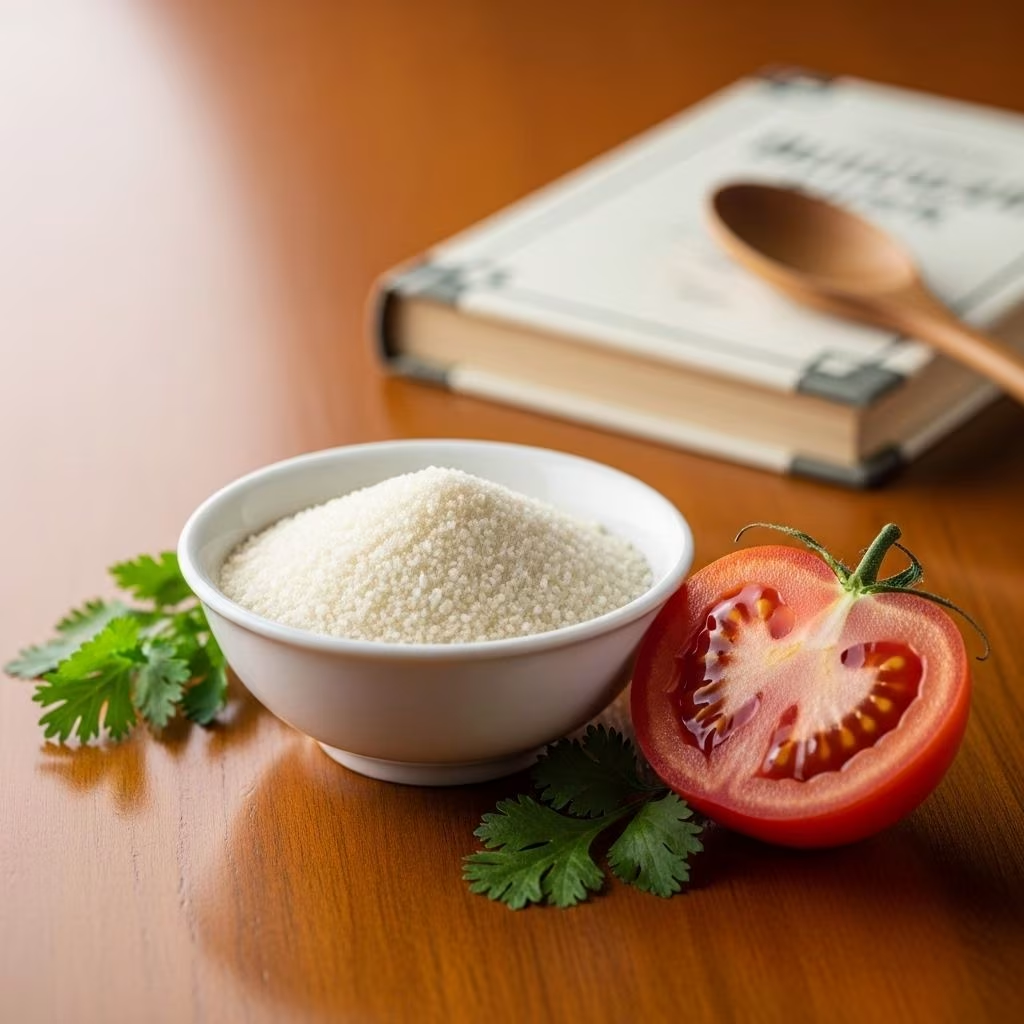
Monosodium glutamate (MSG) is a popular yet sometimes misunderstood ingredient in the world of food science and culinary arts. From its discovery in early 20th century Japan to its widespread use as a flavor enhancer in international cuisines and processed foods, MSG plays a crucial role in shaping the taste experiences we cherish. This comprehensive article explains the chemistry, uses, safety, and unique taste attributes of MSG, dispelling common myths and providing insight into its benefits and applications in the food industry.
Definition and Origin of MSG
Monosodium glutamate (MSG), also known as sodium glutamate, is the sodium salt of glutamic acid, a naturally occurring non-essential amino acid. It was first isolated and identified as a substance responsible for the umami taste, one of the five basic tastes alongside sweet, sour, salty, and bitter. The process of isolating MSG from kombu seaweed was pioneered by Japanese biochemist Kikunae Ikeda in 1908, marking an important milestone in food science and culinary innovation.
Since its discovery, MSG has become widely used as a flavor enhancer and is renowned for its ability to intensify and balance savory tastes in foods.
Chemical Structure and Properties of MSG
- Chemical Formula: C5H8NO4Na
- Molar Mass: 169.11 g/mol (anhydrous), 187.12 g/mol (monohydrate)
- Physical Appearance: White, odorless, crystalline powder
- Solubility: Highly soluble in water (up to 740 g/L), almost insoluble in organic solvents
- Melting Point: 232°C (decomposes upon melting)
- pH: Solutions usually range from 6.7 to 7.2
MSG dissociates in water into sodium ions (Na+) and glutamate anions. In its solid form, it exists as a zwitterion, balancing positive (amino group) and negative (carboxyl group) charges within its glutamate molecule.
Table: Key Properties of Monosodium Glutamate
| Property | Value |
|---|---|
| Chemical Formula | C5H8NO4Na |
| Molar Mass | 169.11 g/mol (anhydrous) |
| Melting Point | 232°C (decomposition) |
| Appearance | White crystalline powder |
| Solubility in Water | Very high (up to 740 g/L) |
| Odor | Odorless |
How Is MSG Made?
MSG has historically been made via various methods:
- Protein hydrolysis using hydrochloric acid to break down vegetable proteins
- Chemical synthesis from acrylonitrile
- Bacterial fermentation of starch, sugar beets, sugar cane, molasses, or cassava (the most common modern method)
Today, the fermentation process—similar to how some dairy products and soy sauce are produced—is the standard for commercial MSG. It is sustainable, cost-effective, and yields a highly pure final product. Most MSG sold in food markets around the world is the monohydrate form obtained from this process.
Natural Occurrence of MSG
Glutamic acid (glutamate) is abundant in many foods. Some natural sources include:
- Tomatoes
- Cheese (especially aged varieties like Parmesan)
- Mushrooms
- Seaweed (kombu)
- Soy sauce
- Meats, seafood, and certain vegetables
When glutamate is naturally present or released during fermentation, curing, or ripening processes, it enhances the umami taste just as artificial MSG does. The glutamate in naturally occurring foods is scientifically and biologically identical to the manufactured additive.
Culinary Uses of MSG
MSG is widely used as a flavor enhancer in various foods. It is especially popular in:
- Asian cuisine (Chinese, Japanese, Vietnamese, Thai, and Korean dishes)
- Processed meats and sausages
- Soups and bouillon cubes
- Savory snacks such as chips and flavored nuts
- Canned vegetables and ready-made meals
- Restaurant dishes and fast foods
MSG is prized by chefs and food scientists due to its ability to:
- Enhance savory, meaty, and umami flavors
- Balance and blend the overall taste of dishes
- Reduce the need for added salt while maintaining flavor integrity
- Improve the palatability of low-fat or healthy foods that may otherwise taste bland
MSG is typically added in small quantities, as even a pinch can make a notable difference in flavor. It is commonly used both in commercial food manufacturing and home cooking.
Benefits of Monosodium Glutamate
- Enhanced Flavor Perception: MSG delivers a richer, more savory taste profile to food, enhancing the enjoyment of meals.
- Lower Sodium Alternative: By using MSG, the amount of table salt required in recipes can be reduced without sacrificing flavor. MSG contains about one-third the sodium per gram as table salt.
- Calorie-Neutral: MSG is not a source of calories or fat, making it a suitable additive in low-calorie or heart-healthy diets.
- Widespread Acceptance: Recognized as safe by global health authorities including the FDA (United States) and EFSA (European Union).
- No Allergenic Potential: Unlike some other additives, MSG is not known to provoke allergies or hypersensitivity in the general population.
The Umami Taste Explained
Umami (Japanese for “pleasant savory taste”) is identified as the fifth basic taste. It is triggered by the presence of free glutamate, nucleotides, and certain amino acids, which bind to specific taste receptors on the tongue and elsewhere in the mouth.
- Umami qualities: Savory, meaty, mouth-filling, brothy, and lasting taste sensations
- Food examples: Beef broth, mushrooms, ripe tomatoes, soy sauce, cheese, anchovy, and foods rich in MSG
MSG’s ability to concentrate and prolong umami sensations underlies its popularity in restaurants and packaged foods. Umami is known to round out harsh flavors, unify disparate ingredients in a dish, and create a sense of depth and completeness to the palate.
Safety, Side Effects, and Regulatory Status
- MSG is classified as “Generally Recognized As Safe” (GRAS) by the U.S. FDA.
- Global food authorities, including the World Health Organization (WHO) and the European Food Safety Authority (EFSA), evaluate MSG as a safe food additive when consumed in the amounts typically present in foods.
- No conclusive scientific evidence supports claims that MSG causes adverse health effects such as headaches or allergic reactions at normal dietary levels.
In the late 1960s, anecdotal reports described symptoms like headaches and palpitations after consuming Chinese food—a phenomenon coined as “Chinese restaurant syndrome.” Subsequent blinded studies, however, have failed to conclusively demonstrate consistent reactions to MSG when tested in controlled settings and at practical doses.
While the FDA requires MSG to be listed on ingredient labels, its presence in processed foods is not considered a health risk for the vast majority of the population. Individuals with extremely rare metabolic disorders (such as glutamate dehydrogenase deficiency) may need to avoid added glutamate, but this is not the case for the general public.
Common Myths and Scientific Evidence
- Myth: MSG causes headaches or “Chinese restaurant syndrome”.
Fact: Rigorous blinded studies show no consistent side effects in normal consumption ranges. The syndrome appears to have been based on anecdotal evidence rather than scientific fact. - Myth: MSG is made from artificial or “unhealthy” chemicals.
Fact: Modern MSG is produced by natural fermentation using plant-based materials such as sugar cane and cassava, similar to the way certain condiments or beverages are fermented. - Myth: “No added MSG” guarantees absence of free glutamate.
Fact: Foods may still contain free glutamate from natural protein breakdown or other ingredients such as yeast extract and hydrolyzed proteins.
Frequently Asked Questions (FAQs)
What does MSG taste like on its own?
In pure form, MSG itself has a distinct umami or savory taste, but when added in recommended amounts in food (typically less than 1% by weight), it does not impart its own flavor. Instead, it enhances the natural savory notes of the food without being strongly perceptible as an individual taste.
Is MSG safe for children and pregnant women?
Yes, studies indicate that MSG is safe for people of all ages, including children and pregnant women, when consumed in foods within normal dietary amounts. There is no evidence linking MSG intake to health risks in these populations.
Are there any people who should avoid MSG?
Individuals with extremely rare metabolic conditions related to glutamate metabolism, or those who experience reproducible and clinically confirmed sensitivity (very rare), may need to avoid MSG. For the vast majority, it is safe at dietary levels.
Can using MSG help reduce sodium intake?
Yes. MSG contains about one-third the sodium content of table salt. Substituting some salt with MSG in recipes can achieve similar or greater flavor with less overall sodium—an advantage for those managing hypertension or heart disease.
Does MSG naturally occur in foods?
Yes, MSG (in the form of glutamate) is naturally present in many foods, including tomatoes, cheese, soy sauce, and various meats and vegetables.
References
- BYJU’S: Monosodium Glutamate Structure and Properties
- Wikipedia: Monosodium Glutamate
- Harvard Health: Monosodium Glutamate – What it is
- Ajinomoto: What is MSG and How is it Made?
References
- https://byjus.com/chemistry/monosodium-glutamate/
- https://en.wikipedia.org/wiki/Monosodium_glutamate
- https://www.health.harvard.edu/nutrition/monosodium-glutamate-msg-what-it-is-and-why-you-might-consider-avoiding-foods-that-contain-it
- https://www.ajinomoto.com/msg/what-is-msg-and-how-is-it-made
- https://www.mayoclinic.org/healthy-lifestyle/nutrition-and-healthy-eating/expert-answers/monosodium-glutamate/faq-20058196
- https://pubchem.ncbi.nlm.nih.gov/compound/Monosodium-Glutamate
- https://www.canada.ca/en/health-canada/services/food-nutrition/food-safety/food-additives/monosodium-glutamate-questions-answers.html
- https://www.foodauthority.nsw.gov.au/food-labelling/food-production/msg


