


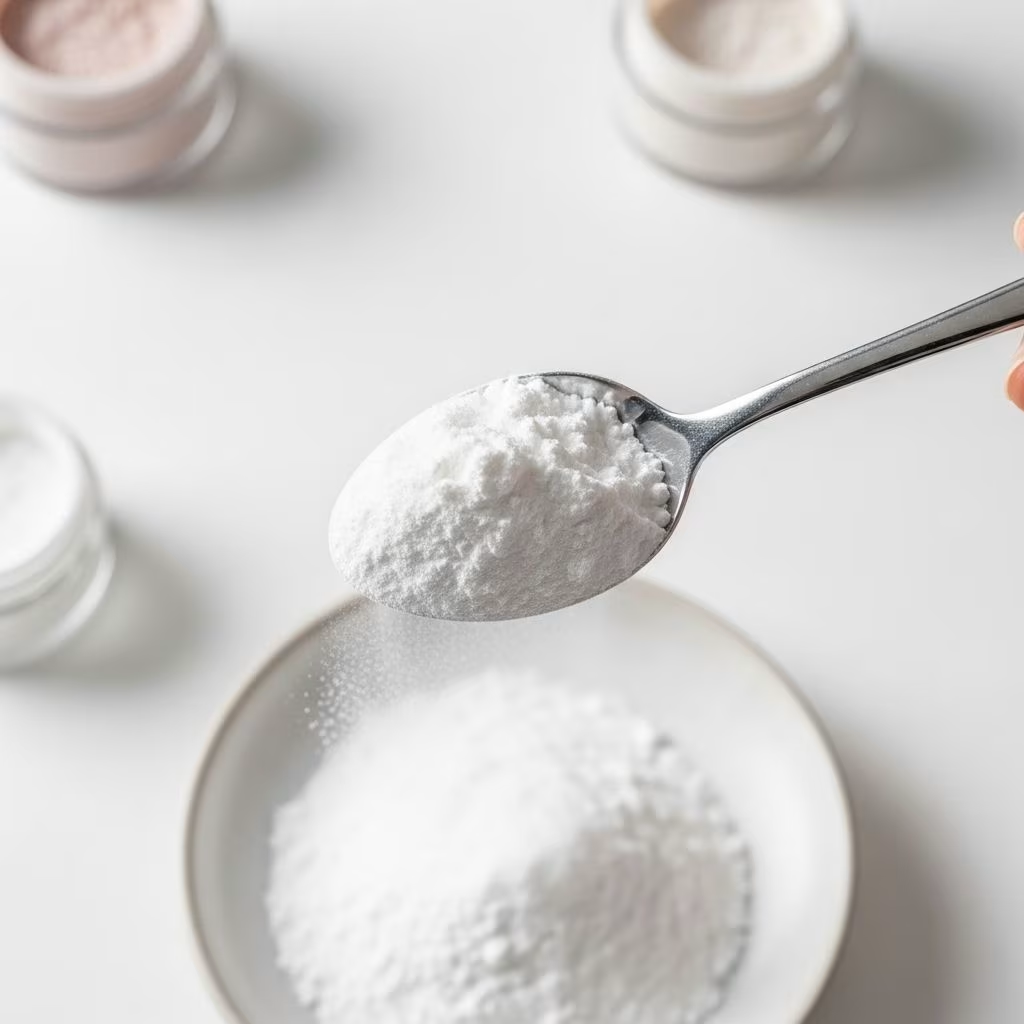
What Is Talc Powder? Benefits, Uses, and Taste
Talc powder is a widely-used mineral substance with a soft texture, unique chemical composition, and a multitude of beneficial applications across industries such as cosmetics, pharmaceuticals, plastics, and—less commonly—the culinary world. Though often debated for its safety, talc’s inert, absorbent nature and its ability to enhance product performance have made it indispensable to modern manufacturing and healthcare practices.
Definition and Origin of Talc Powder
Talc powder is a finely milled form of the mineral talc, which is primarily composed of magnesium silicate (Mg3Si4O10(OH)2). Talc is considered the softest mineral known to science, with a ranking of 1 on the Mohs scale.
Talc is formed through the metamorphism of magnesium-rich rocks and is found in veins within metamorphic rock deposits. The largest sources of talc are located in countries such as China, India, the United States, and Brazil. Mining and milling processes purify talc, ensuring grades appropriate for industrial, pharmaceutical, and cosmetic use.
Historically, talc has been recognized for thousands of years, prized for its softness and absorbency. It is most notable as the primary ingredient in baby powder and various cosmetic powders.
Composition and Mineral Structure
Talc belongs to the silicate group of minerals and is classified as a trioctahedral, layered mineral. Its crystal structure consists of sheets of magnesium hydroxide sandwiched between two silica layers. These sheets are held together primarily by weak van der Waals forces, accounting for talc’s softness and ability to be ground into a fine powder.
Talc often contains trace minerals, such as chlorite, magnesite, calcite, and dolomite, depending on its geological source. High-purity grades destined for pharmaceutical and food applications must be free of asbestos and exceed 90% purity.
Physical and Chemical Properties
- Color: Whitish-grey to pale green, often with a pearly or vitreous luster.
- Texture: Silky, greasy feel, contributing to its lubricating qualities.
- Hardness: 1 on the Mohs scale—can be scratched easily with a fingernail.
- Solubility: Insoluble in water; slightly soluble in dilute mineral acids.
- Particle size: Commercial talc is ground to a range of particle sizes; ultra-fine talc is used in cosmetics and pharmaceuticals for maximum smoothness and absorption.
- Absorbency: Excellent at absorbing moisture and oils, a key property for many consumer products.
- Chemical stability: Talc is chemically inert, non-reactive in most environments, enhancing its safety and versatility.
Industrial and Commercial Uses of Talc
Cosmetics and Personal Care
- Loose Powders: Baby powder, body powder, face powder, and dry shampoos use talc for its moisture-absorbing and smooth texture qualities.
- Pressed Powders and Foundation: Provides consistency, opaqueness, and a silky feel to makeup products.
- Eyeshadow, Blush, and Other Makeup: Prevents caking, enhances spreadability, and imparts a desirable matte finish.
Pharmaceuticals
- Excipient/Lubricant: Used in tablet manufacture for its gliding and anti-stick properties, facilitating efficient tablet processing.
- Diluent and Bulking Agent: Talc increases the volume of powders and controls product flowability in tablets and capsules.
- Topicals and Suspensions: Used in medicated powders and ointments to ease application and reduce friction.
Plastics and Rubber Industry
- Filler and Extender: Talc is added to plastics (e.g., polypropylene, polyethylene) to improve durability, stiffness, heat resistance, and dimensional stability.
- Paper Production: Used as a filler and coating material to improve printability and surface smoothness.
- Paints & Coatings: Talc enhances opacity, improves suspension stability, and helps maintain smooth finishes.
- Ceramic Manufacturing: Integral to glazes and clay compositions, boosting strength and workability.
Other Applications
- Food Industry: Talc is used in limited culinary applications, primarily as an anti-caking agent in table salt, chewing gum, and confectionery. It is inert, non-toxic, and considered safe for food contact in regulated doses.
- Agriculture: Applied as inert carrier for pesticides and fungicides, facilitating even distribution and improved application.
Benefits of Talc Powder
- Moisture Absorption: Talc effectively absorbs sweat and oils, keeping products and skin dry and reducing friction in personal care items.
- Lubrication: Its silky texture minimizes friction, making it ideal for pharmaceutical tablets and skin applications.
- Chemical Inertness: Talc does not react with most chemicals, making it safe across many industrial, cosmetic, and pharmaceutical uses.
- Stability and Durability: Talc enhances the structural integrity of plastics, paints, ceramics, and polymers, increasing product life and performance.
- Purity and Safety (when properly refined): High-grade talc is non-toxic and free from harmful contaminants like asbestos when sourced and processed according to regulatory standards.
- Improved Texture and Consistency: In food, cosmetics, and pharmaceutical powders, talc ensures smoothness, prevents caking, and facilitates even blending.
Taste and Sensory Characteristics
Talc powder is not commonly recognized or used for its taste. In fact, being largely insoluble and chemically inert, talc has a neutral taste—it is essentially tasteless under typical conditions. When talc is added to food products as an anti-caking agent, its concentration is extremely low, and it does not impart any flavor or aroma to the final product.
Larger amounts of talc powder can be chalky and slightly gritty in texture, a property sometimes noted in culinary applications or in low-quality cosmetics. However, high-purity, ultra-fine talc is smooth and nearly undetectable to taste or mouthfeel.
It is extremely important never to consume talc powder intentionally beyond regulated food-grade uses, as its inertness does not equal nutritional value, and prolonged oral exposure is not recommended.
Safety, Risks, and Regulatory Status
The use of talc has come under scrutiny due to concerns about contamination with asbestos (a hazardous mineral often co-located with talc deposits). Modern processing techniques and rigorous regulatory oversight are designed to eliminate asbestos from cosmetic and pharmaceutical talc.
- Food-Grade and Cosmetic-Grade Talc: Must be certified asbestos-free; regulatory agencies including the FDA (US) and EFSA (Europe) set strict limits on purity.
- Potential Health Risks: Some epidemiological studies have investigated associations between talc use (especially in genital hygiene) and cancers, but findings remain inconclusive for pure, asbestos-free talc. Legal cases and ongoing research continue to examine this issue.
- Inhalation Hazards: Fine talc powders should not be inhaled intentionally; excessive airborne exposure can provoke respiratory irritation.
- Regulatory Oversight: Talc powder for cosmetics and pharmaceuticals undergoes rigorous testing and certification. Only specific grades are approved for food and medicinal use.
- Consumer Guidance: Always use products as intended and consult product labels or health professionals for safety information.
Comparative Table: Talc Powder Grades and Applications
| Grade | Purity | Key Uses | Safety Requirements |
|---|---|---|---|
| Industrial | 70–90% | Plastics, ceramics, paints, paper | Low—may contain trace minerals |
| Cosmetic | > 90% | Makeup, personal care products | Certified asbestos-free; tested for skin safety |
| Pharmaceutical | 93–98% | Tablet excipient, topical powders | Stringent purity, asbestos-free |
| Food-grade | > 98% | Anti-caking agent, chewing gum, salt | FDA approval, asbestos-free |
Frequently Asked Questions (FAQs)
Q: What is talc powder made from?
A: Talc powder consists of finely ground, naturally occurring magnesium silicate mineral, combined with oxygen and hydrogen. It is the softest mineral known and is extracted from metamorphic rocks before refinement and milling for industry use.
Q: Is talc powder safe?
A: When properly sourced and processed to remove contaminants like asbestos, talc powder is considered safe for cosmetic, pharmaceutical, and regulated food uses. As with any powder, avoid inhalation and follow manufacturer guidance, especially for infants and people with respiratory sensitivities.
Q: Does talc powder have a taste?
A: Talc powder is essentially tasteless, with no flavor or aroma in regulated food and pharmaceutical applications.
Q: What is baby powder?
A: Baby powder is a commercial product typically made from talc, sometimes blended with cornstarch. It is used to absorb moisture and reduce skin friction, especially for infants.
Q: What are talc powder’s main benefits?
A: Talc powder provides moisture absorption, lubrication, texture improvement, and chemical inertness, making it versatile and beneficial for cosmetics, pharmaceuticals, plastics, and select food products.
Q: Is talc used in food safe?
A: Food-grade talc is used as an anti-caking agent and is thoroughly tested for purity and safety, making it approved for specific culinary roles in numerous countries.
Final Thoughts
Talc powder’s unique mineral structure, extreme softness, and inert profile have earned it a lasting role in industries ranging from healthcare and personal care to plastics, ceramics, and even food production. When appropriately refined and regulated, talc is a safe, effective, and tasteless ingredient that helps improve quality of life, product performance, and consumer comfort. Continued advancements in mining, purification, and testing help ensure its safety—making talc powder an enduringly valuable resource worldwide.
References
- https://eupegypt.com/blog/talc-powder-plastic-industry/
- https://en.wikipedia.org/wiki/Talc
- https://www.pharmaexcipients.com/talc-excipient/
- https://www.mass.gov/info-details/talc-in-cosmetics-and-consumer-products
- https://pubchem.ncbi.nlm.nih.gov/compound/Talc
- https://www.cancer.org/cancer/risk-prevention/chemicals/talcum-powder-and-cancer.html
- https://www.britannica.com/science/talc
- https://digitalfire.com/material/talc


