


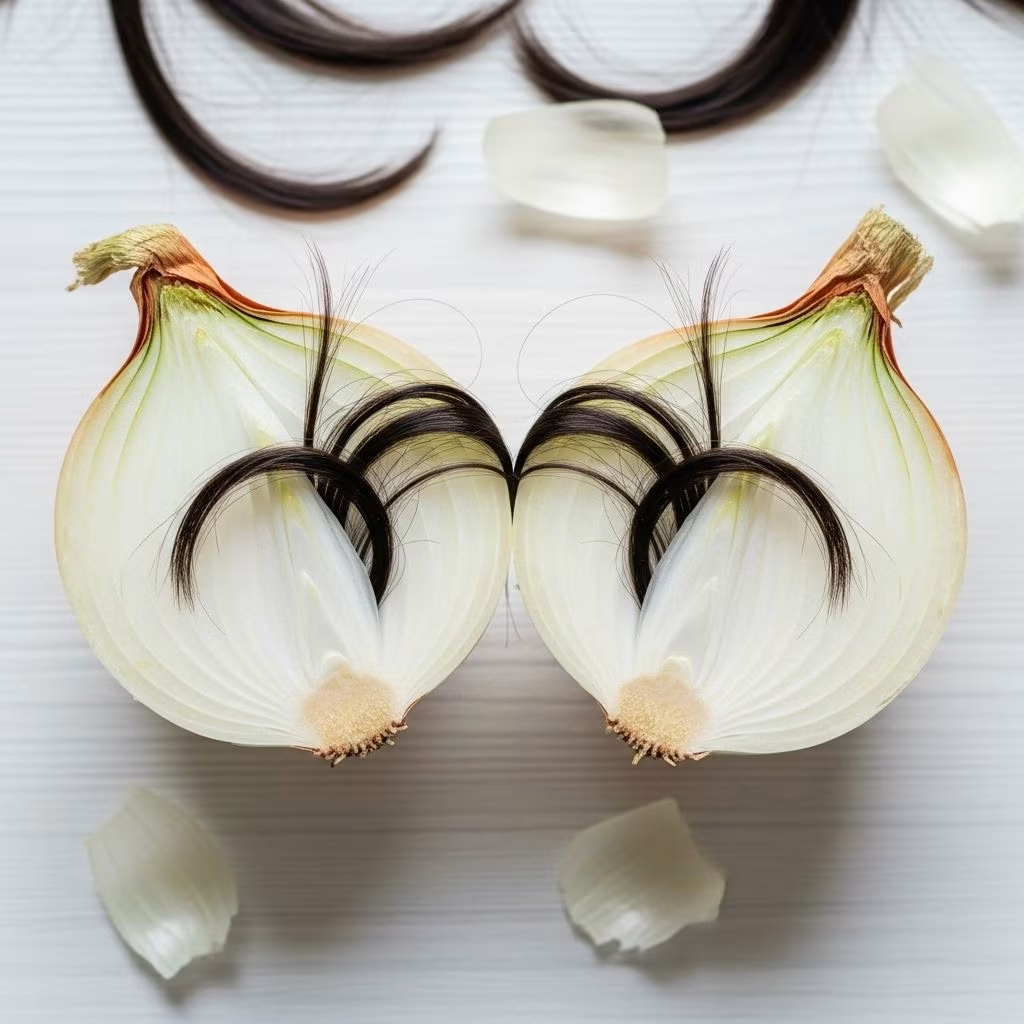
White onions have long been more than just a kitchen staple. Increasing attention from researchers and the beauty community highlights their multifaceted role in hair care, from reversing thinning hair to soothing an irritated scalp. This comprehensive article explores the proven and potential benefits of white onion for hair, guides you through practical usage, and equips you with expert tips and frequently asked questions (FAQs).
Introduction: White Onion and Hair Health
The use of white onion (Allium cepa) for hair growth and scalp wellness dates back centuries in traditional medicine systems. In recent decades, scientific research has begun validating some of these practices, particularly the use of onion juice and extracts for stimulating hair regrowth and combating common scalp conditions. White onions are especially prized owing to their high sulfur content, natural antioxidants, and antimicrobial properties, allowing them to target root causes of hair loss and scalp irritation.
Core Hair Benefits of White Onion
White onion offers several distinct advantages for hair and scalp care, including:
- Promotes Hair Growth: Rich in sulfur—a building block for keratin, the main hair protein—onion juice nourishes follicles, encouraging regrowth and thickening hair strands.
- Reduces Hair Loss: Its antimicrobial and anti-inflammatory properties help maintain a healthier scalp, preventing infections and reducing follicle miniaturization that leads to hair thinning and shedding.
- Improves Hair Shine and Strength: Nutrients and antioxidants (like flavonoids and quercetin) in white onion help repair damage, enhance hair strength, and restore natural shine.
- Counters Premature Graying: The catalase enzyme and antioxidant action in onions help neutralize hydrogen peroxide—a factor behind early graying—slowing the appearance of grey hairs.
- Soothes Itchy, Flaky Scalp: Onion’s anti-inflammatory and antimicrobial effects can alleviate symptoms of dandruff and minor scalp irritations, fostering strong, resilient follicles.
Benefits Table: White Onion for Hair
| Benefit | Description | Supporting Evidence |
|---|---|---|
| Hair Regrowth | Stimulates dormant follicles, increasing growth rate | Clinical trials on alopecia areata |
| Hair Strength | High sulfur nourishes and reinforces hair shaft | Biological sulfur role in keratin synthesis |
| Dandruff Relief | Antibacterial properties quell scalp infections and flakiness | Antimicrobial studies |
| Prevents Graying | Neutralizes oxidative stress shielding against greying | Antioxidant mechanisms |
Scientific Evidence and Clinical Studies
Modern science confirms many of the age-old claims about onion’s effects on hair. Research highlights:
- Alopecia Areata Treatment: A landmark study compared crude onion juice applied to the scalp twice daily (versus just water) in patients with patchy hair loss (alopecia areata). Results showed that after 2 weeks, most participants using onion juice experienced visible hair regrowth, with 86.9% showing significant regrowth in 6 weeks, compared to just 13% in the control group.
- Enrichment of Shampoo: A 2018 study prepared shampoo enriched with onion extract, finding it provided more nourishment to follicles, moisturized the scalp, and enhanced growth without causing irritation. Fragrances and lemon juice successfully masked the onion scent.
- Role of Sulfur and Antioxidants: Onion’s natural sulfur supports production of enzymes and proteins—especially keratin—while antioxidants help protect follicles from damage by free radicals, which can contribute to hair thinning and premature aging.
While these findings are promising, results may vary, and not all users will experience dramatic transformation.
How to Use White Onion for Hair
Getting started with white onion for hair care is accessible, but requires careful preparation for best results and safety. Here is a structured guide:
1. Choosing the Right Onion
- Use fresh white onions for optimal sulfur content and low chance of scalp irritation.
- Organic onions are preferred to avoid pesticide residues.
2. Extracting Onion Juice
- Peel 2 to 4 medium-sized white onions and chop them into small pieces.
- Blend or grate the pieces thoroughly.
- Use a muslin cloth or fine strainer to extract the juice, pressing until you have a sufficient amount (generally 2-4 tablespoons per application).
3. Application Steps
- Patch test: Apply a small amount to your forearm or behind your ear, wait 24 hours to rule out irritation.
- Section your hair and use a cotton ball or your fingers to apply juice directly to the scalp and roots.
- Massage gently for 5–10 minutes.
- Leave on for 15–30 minutes (or up to 1 hour for non-sensitive skin).
- Rinse thoroughly with lukewarm water, then shampoo as usual to remove odor and residue.
4. Frequency of Use
- Apply 2–3 times per week for best results.
5. Concealing Onion Odor
- Add a few drops of lemon juice or essential oil (like rosemary or lavender) to the juice.
- Follow with a fragrant conditioner or mask.
DIY Onion Hair Care Recipes
For more comfort and better results, combine white onion juice with other natural ingredients suited to your hair and scalp type.
Recipe 1: Basic Onion Juice Mask
- 2 medium white onions (juiced)
- (Optional) 1 tablespoon coconut oil
- Mix and apply as described above. Coconut oil enhances moisture and penetration.
Recipe 2: Onion and Aloe Vera Scalp Soother
- 2 tablespoons white onion juice
- 2 tablespoons fresh aloe vera gel
- Blend and apply to scalp for hydration and reduced irritation.
Recipe 3: Onion-Infused Shampoo
- Prepare onion extract (as outlined)
- Mix 1–2 tablespoons extract into your regular mild shampoo
- Add a few drops of essential oil for fragrance; use as a regular shampoo, leaving on for at least 5 minutes before rinsing
Recipe 4: Onion and Honey Hair Pack
- 2 tablespoons onion juice
- 1 tablespoon honey
- Mix and apply for 30 minutes; honey adds luster and counters drying.
Pro Tips for Optimal Results
- Always conduct a patch test before wide-scale use to avoid allergic reactions or irritation.
- If scalp irritation occurs, dilute onion juice with aloe vera gel, water, or base oils.
- Use only fresh extracts—onion juice loses potency and nutrients if stored for long.
- For persistent odor, rinse with diluted apple cider vinegar post-shampooing (1 part vinegar, 3 parts water).
- Combine with hair-friendly oils such as coconut, olive, or castor for extra nourishment and easier application.
- Consistency is key—visible results may take 4–8 weeks of regular use.
- If you have an active scalp infection or wounds, defer use until healed.
Possible Side Effects & Precautions
While white onion is generally considered safe when used topically, some individuals may experience side effects, especially if used frequently or in high concentration:
- Skin irritation (itching, redness, stinging)—more likely in sensitive individuals
- Contact dermatitis: Use is not advised for people with onion allergies or very sensitive/reactive skin
- Strong odor—though temporary, may persist if not washed out properly
- Rarely, increased dryness or flakiness
- Not recommended for use over open wounds or active scalp infections (without medical advice)
Frequently Asked Questions (FAQs)
Q: Can onion juice reverse baldness?
A: Onion juice can stimulate regrowth in cases of recent or patchy hair loss (e.g., alopecia areata) but is unlikely to reverse advanced, genetically driven baldness (male or female pattern baldness). Clinical improvement has been best demonstrated in patchy hair loss scenarios.
Q: How soon will I see results from using onion juice on my hair?
A: Noticeable changes may appear after 4–6 weeks, with some studies noting regrowth within 2 weeks of consistent application. However, results can vary depending on hair and scalp health, and consistency is important.
Q: Does onion juice work for all hair types?
A: Yes, but individuals with sensitive or very dry scalps should dilute the juice or combine it with soothing ingredients (like aloe vera or oil). Monitoring your scalp’s reaction is essential.
Q: Can I store onion juice, or does it need to be fresh?
A: It’s best used fresh. If you must store it, refrigerate in an airtight container for no more than 1–2 days; potency reduces over time.
Q: What’s the best way to remove onion smell from hair?
A: Wash thoroughly with a fragrant shampoo, rinse with lemon juice or apple cider vinegar dilution, and use aromatic conditioners or oils afterward.
Q: Are there situations where onion juice should not be used on hair?
A: Avoid use if you have an onion allergy, open sores or wounds on the scalp, or experience persistent irritation—even after dilution. Consult a dermatologist if unsure.
References
- Healthline. Onion Juice For Hair: Benefits, Instructions, Precautions
- The Effect of Onion Juice on Strengthening Hair and Preventing Hair Loss
- Sharquie KE, Al-Obaidi HK. Onion juice (Allium cepa L.), a new topical treatment for alopecia areata. J Dermatol. 2002
References
- https://www.healthline.com/health/onion-juice-on-hair
- https://api.researchportalcentral.com/DisplayImage/bd405878-54b0-49d2-af09-133900ea2b2a.pdf
- https://pubmed.ncbi.nlm.nih.gov/12126069/
- https://ijppr.humanjournals.com/wp-content/uploads/2025/06/16.Mr_.-Keshav-Khadke1-Ms.-Gauri-Narke2-Mr.-Harsh-Chaudhari3-Ms.-Saniya-Shaikh4-Mrs.-.pdf
- https://www.medicalnewstoday.com/articles/319515
- https://wimpoleclinic.com/blog/onion-juice-for-hair-growth/


