Trees are not just silent giants decorating our landscapes—they embody the diversity, complexity, and resilience of life on Earth. Many of these extraordinary trees are not only strikingly unusual in appearance but also among the world’s most endangered living things. Their disappearance threatens biodiversity, indigenous cultures, and even entire ecosystems. This article explores some of the most bizarre and critically endangered trees on the planet, the threats that imperil them, and why their survival is vital for the health of our planet.
Why Endangered and Strange Trees Matter
More than one in three tree species worldwide faces extinction. This crisis rivals or exceeds the extinction threats to other life forms, placing trees at the heart of global conservation efforts. While some trees are prized for their timber, fruit, or medicinal uses, others are essential because of their sheer rarity or their almost alien uniqueness.
- Biodiversity: Endangered trees shelter unique wildlife and sustain intricate food webs.
- Cultural Identity: Many cultures regard rare trees as sacred or use them in traditional medicine or rituals.
- Ecological Balance: Strange and isolated species are often keystone organisms in their habitats.
Unraveling the Threats to Unique Trees
These rare trees face a multitude of threats. The most significant include:
- Deforestation—the clearing of forests for agriculture, logging, and land development is the top driver of tree extinction.
- Climate Change—altered rainfall patterns, rising temperatures, sea-level rise, and intensified storms impact tree growth and survival.
- Invasive Species and Diseases—non-native plants, insects, and pathogens decimate vulnerable populations.
- Illegal Logging and Overexploitation—valuable woods and ornamental species are extracted faster than they can regenerate.
- Habitat Fragmentation—the breaking up of forests isolates small populations, making reproduction and survival more challenging.
Bizarre and Endangered Trees Around the World
Below, discover some of the world’s strangest and most threatened trees, each unique in physiology, history, and conservation story.
1. Pseudotsuga menziesii var. glauca—Ghostly Wollemi Pine
Once thought extinct, fewer than 100 mature Wollemi pines exist in a secret Australian canyon. Their silhouette—towering trunks topped by fern-like foliage—looks prehistoric. Discovered only in 1994, their survival was immediately threatened by fire and disease, and conservationists have since kept their exact location secret to deter poaching.
- Status: Critically Endangered
- Main Threats: Pathogens, fire, human interference
2. Adansonia grandidieri— Grandidier’s Baobab
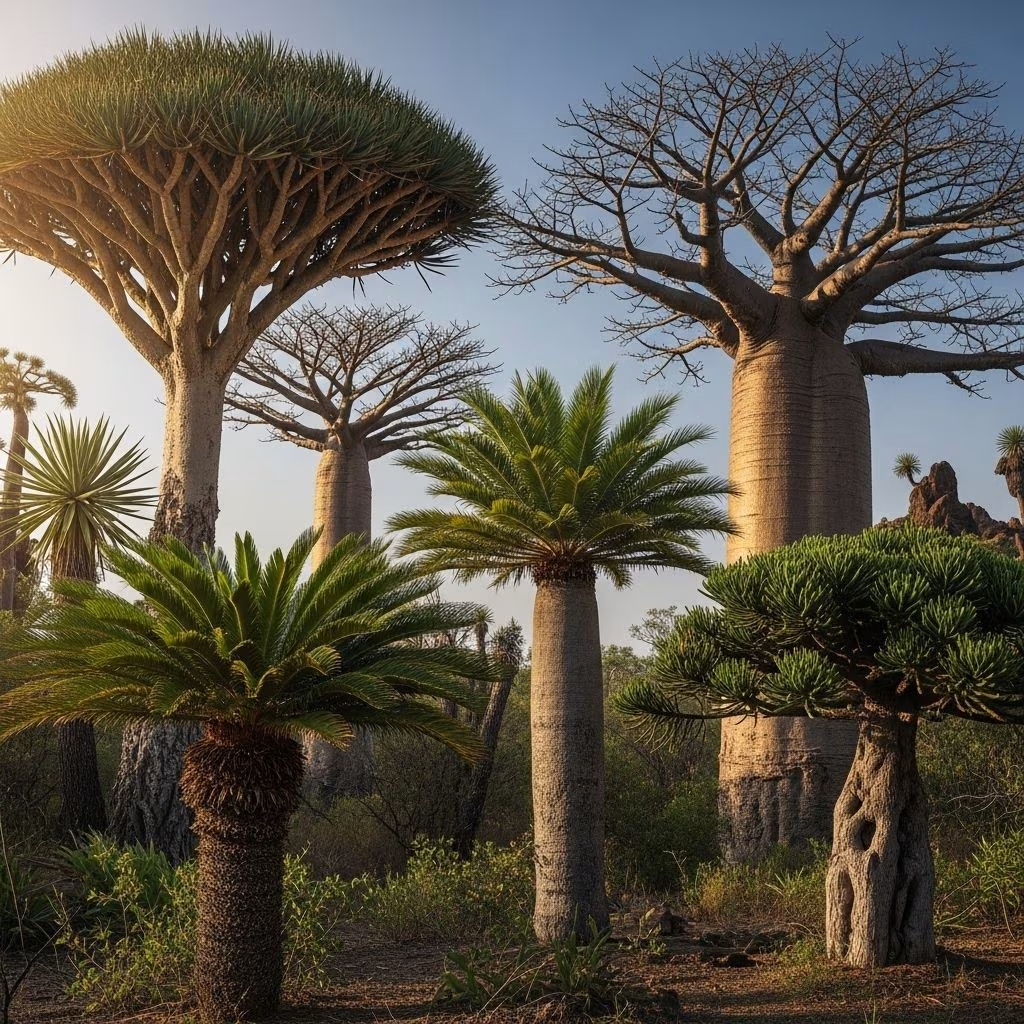
Madagascar’s “upside-down” trees, with massive trunks and tufts of leaves like roots, are among the planet’s most striking. They store thousands of gallons of water in their trunks, enabling survival in harsh climates. Only a few thousand remain, clustered in remnants of Madagascar’s distinctive dry forest.
- Status: Endangered
- Main Threats: Logging, habitat loss, climate change
3. Encephalartos woodii—Wood’s Cycad
Often likened to living fossils, cycads predate dinosaurs. The Wood’s cycad is so rare that only male specimens exist—all clones of a single plant found over a century ago. Despite efforts, no females have ever been located, making it functionally extinct in the wild. Their symmetrical, palm-like fronds are both ancient and elegant.
- Status: Extinct in the Wild
- Main Threats: Habitat destruction, overcollection
4. Dracaena cinnabari—Dragon Blood Tree
Native to Socotra Island, this tree’s umbrella-shaped crown and blood-red sap—historically prized as dye and medicine—make it one of a kind. Its distinct silhouette provides shade and moisture crucial for the island’s biodiversity. Fewer than 1,000 mature specimens survive, with goats and droughts threatening new growth.
- Status: Vulnerable
- Main Threats: Overgrazing, prolonged droughts, habitat degradation
5. Franklinia alatamaha—Franklin Tree
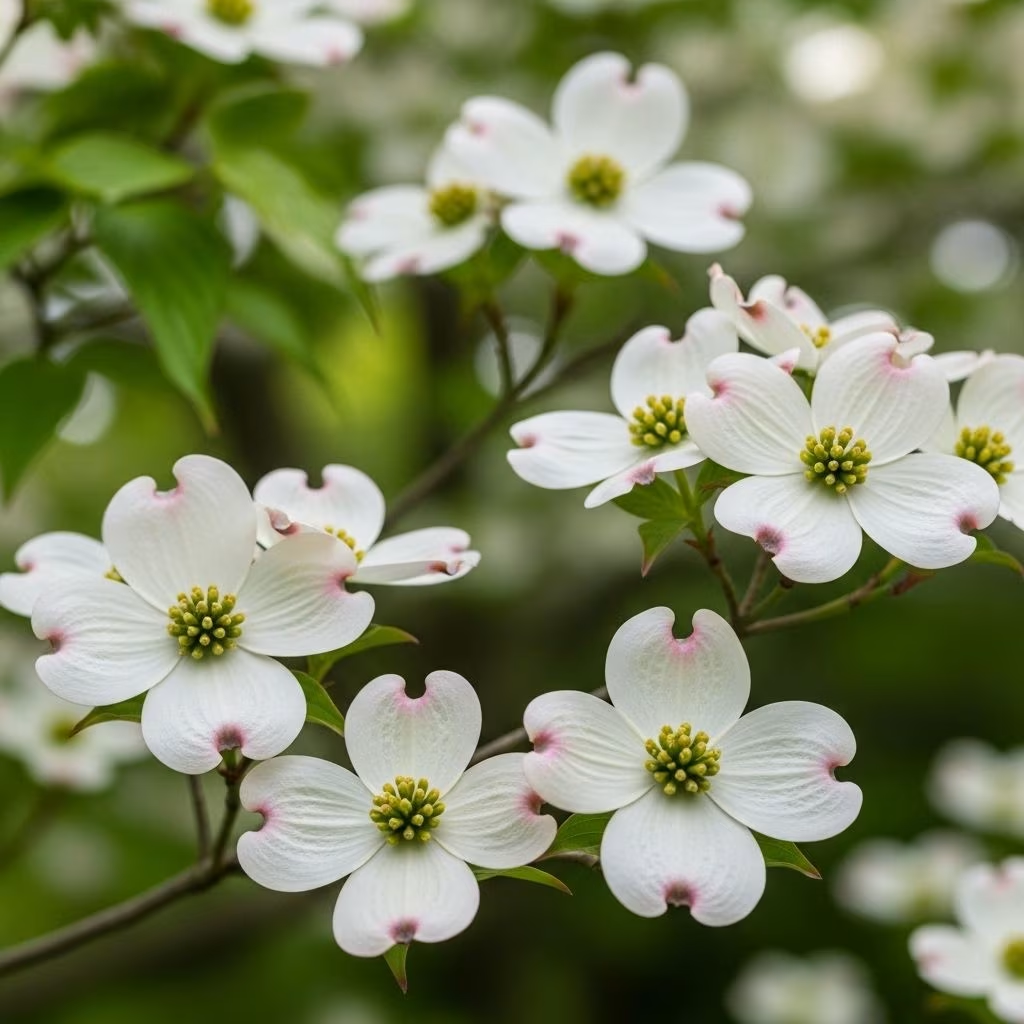
Once native to Georgia, USA, the Franklin tree has not been seen in the wild since the early 1800s. Its camellia-like white blossoms and aromatic leaves survive only in cultivation, having vanished due to disease and habitat alteration. For botanists, it is a symbol of both hope and caution.
- Status: Extinct in the Wild
- Main Threats: Extirpation from wild, unknown disease, habitat loss
6. Osteomeles anthyllidifolia—Hawaiian Uhiuhi
With beautiful pink blossoms and dense, dark wood valued by Hawaiian artisans, the uhiuhi is vanishing on the islands where it evolved. Fire, invasive weeds, and grazing animals have pushed it to the brink.
- Status: Critically Endangered
- Main Threats: Wildfire, habitat loss, invasive species
7. Metasequoia glyptostroboides—Dawn Redwood
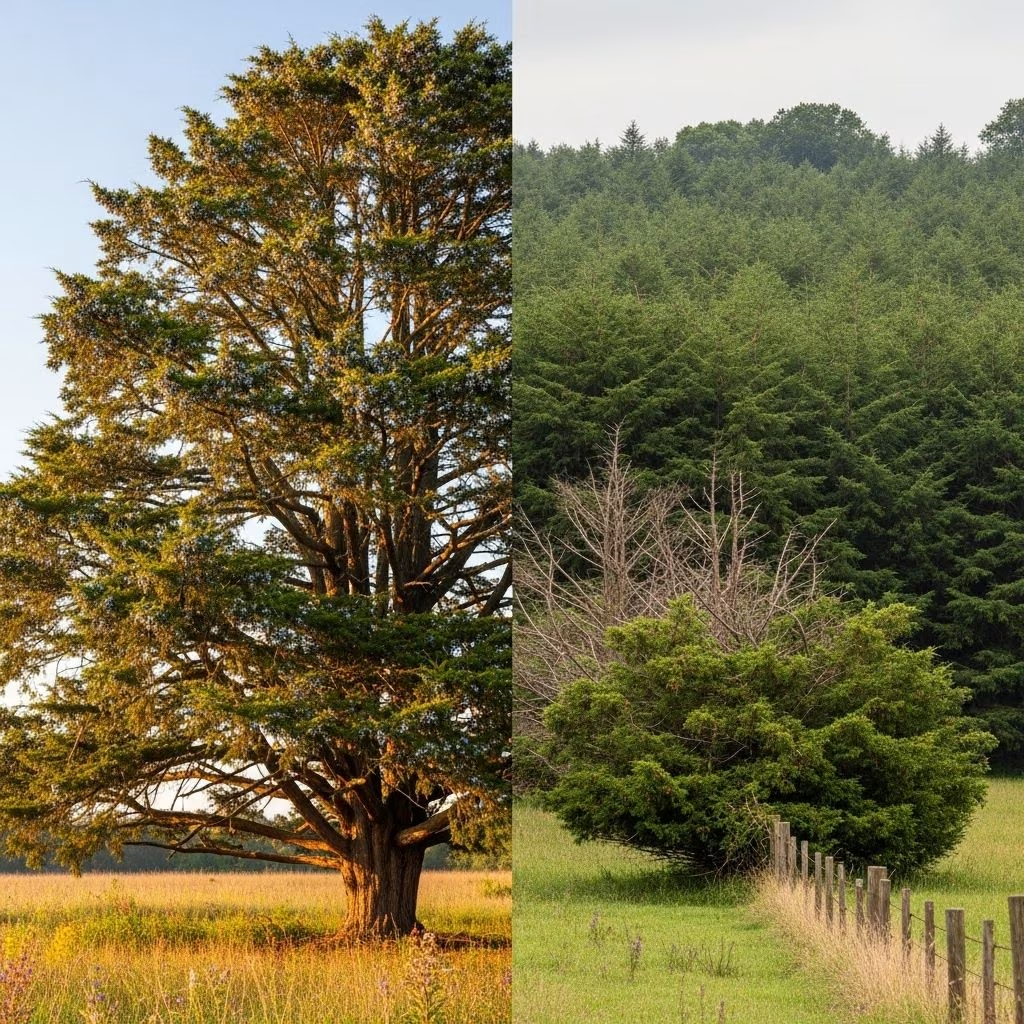
Known as a “living fossil,” the dawn redwood was believed extinct until living specimens were discovered in China in the 1940s. With feathery foliage and fluted trunks, they now survive in both cultivation and several tiny wild populations.
- Status: Endangered
- Main Threats: Logging, habitat loss
8. Dalbergia maritima—Madagascar Rosewood
Valued for its lustrous red wood, Madagascar rosewood has been driven to near oblivion by illegal timber harvesting. Efforts to control the trade often fall short, and remaining forests are shrinking fast.
- Status: Critically Endangered
- Main Threats: Illegal logging, habitat destruction
9. Taxus wallichiana—Himalayan Yew
This slow-growing evergreen, native to the Himalayas, has bark and leaves yielding compounds vital for cancer medication. Unsustainable harvesting for medicine and firewood imperils this unique conifer’s long-term survival.
- Status: Endangered
- Main Threats: Overharvesting, habitat degradation, illegal cutting
10. Cunninghamia lanceolata—Chinese Water Fir
Hailing from temperate Asia, this tree grows to impressive heights and is valued for its rot-resistant timber. As forests fall to farmland and logging, only remnants of original populations remain—some estimates suggest as little as 1% of the population survives.
- Status: Critically Endangered
- Main Threats: Logging, land conversion, habitat loss
A Table of the World’s Rare and Unusual Endangered Trees
| Common Name | Scientific Name | Status | Main Threats | Native Region |
|---|---|---|---|---|
| Wollemi Pine | Pseudotsuga menziesii var. glauca | Critically Endangered | Pathogens, fire, illegal collection | Australia |
| Grandidier’s Baobab | Adansonia grandidieri | Endangered | Logging, habitat loss, climate | Madagascar |
| Wood’s Cycad | Encephalartos woodii | Extinct in Wild | Habitat destruction, overcollection | South Africa |
| Dragon Blood Tree | Dracaena cinnabari | Vulnerable | Overgrazing, drought | Socotra (Yemen) |
| Franklin Tree | Franklinia alatamaha | Extinct in Wild | Disease, habitat loss | USA (Georgia) |
| Uhiuhi | Osteomeles anthyllidifolia | Critically Endangered | Wildfire, invasive species | Hawaii |
| Dawn Redwood | Metasequoia glyptostroboides | Endangered | Logging, habitat loss | China |
| Madagascar Rosewood | Dalbergia maritima | Critically Endangered | Illegal logging, habitat loss | Madagascar |
| Himalayan Yew | Taxus wallichiana | Endangered | Overharvesting, habitat loss | Himalayas |
| Chinese Water Fir | Cunninghamia lanceolata | Critically Endangered | Logging, land conversion | China |
Pressing Conservation Challenges and Solutions
While the threats to these trees are daunting, there is grounds for hope. Key conservation strategies include:
- Expanding Protected Areas: Establish forest reserves, national parks, and preservation zones, particularly in biodiversity hotspots.
- Seed Banking and Botanical Gardens: Backing up genetic material in collections worldwide to prevent total extinction.
- Enforcing Anti-Logging Laws: Combating illegal trade in rare woods and holding perpetrators accountable.
- Restoration Projects: Supporting active replanting, habitat restoration, and the removal of invasive competitors.
- Local and Indigenous Engagement: Empowering communities to steward their own ecosystems and benefit from sustainable practices.
- Global Collaboration: International networks of scientists, governments, and NGOs working together to track, conserve, and restore endangered trees.
How Can You Help?
- Support organizations focused on forest protection, such as BGCI, WWF, and local conservation groups.
- Buy wood products certified by sustainable forestry standards (e.g., FSC).
- Participate in or donate to tree-planting, seed-saving, or habitat restoration efforts.
- Advocate for government action to protect ancient forests and native species.
- Educate friends and family about the importance of tree diversity and conservation.
Frequently Asked Questions (FAQs)
Q: How many tree species are endangered today?
A: Over one third of the world’s nearly 60,000 tree species—almost 16,500—are considered threatened with extinction.
Q: Why do so many rare trees look so unusual?
A: Isolated evolution, adaptation to harsh environments, and unique survival strategies have led many rare trees to develop strikingly unusual shapes, colors, or reproductive habits.
Q: Are any efforts succeeding in saving these trees?
A: Some success stories exist, such as the active cultivation of Wollemi pine and dawn redwood in arboretums. However, many species are still critically endangered, and intensive action is needed to reverse the trend.
Q: Which regions have the highest proportions of endangered trees?
A: Islands, especially Madagascar and St Helena, and global biodiversity hotspots tend to have the largest share of threatened trees, due to small ranges, deforestation, and invasive species.
Q: What happens if we lose these endangered and strange trees?
A: Species loss reduces ecosystem resilience, eliminates possible sources for future medicines and crops, destroys habitats for wildlife, and erases irreplaceable natural and cultural heritage.
Q: What can individuals do to make a difference?
A: Support sustainable forestry, conservation groups, native plant gardening, and educational efforts related to tree protection. Collective action amplifies individual impact.
References
- https://iucn.org/press-release/202410/more-one-three-tree-species-worldwide-faces-extinction-iucn-red-list
- https://earth.org/30-of-the-worlds-tree-species-facing-extinction-in-the-wild/
- https://www.gviusa.com/blog/smb-endangered-tree-species-why-they-matter-and-how-to-save-them/
- https://www.nature.org/en-us/what-we-do/our-priorities/tackle-climate-change/climate-change-stories/trees-in-peril/