


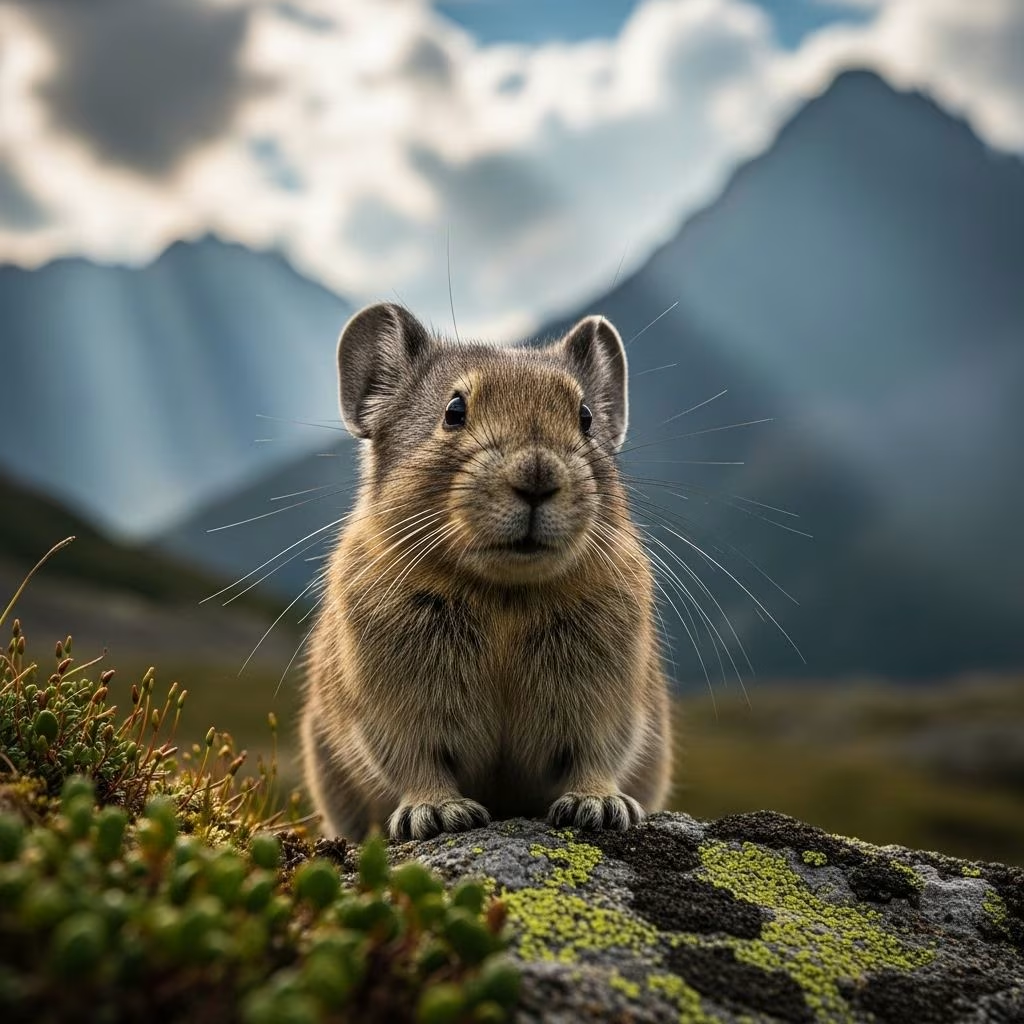
The Pika: An Icon of Alpine Habitats
Among the world’s alpine mammals, the American pika (Ochotona princeps) stands out for its endearing features and extraordinary resilience. Small, round-bodied, and equipped with oversized ears, pikas belong to the ochotonid family, closer relatives to rabbits and hares than to rodents. Unlike many of their high-elevation neighbors, pikas remain active year-round, even in freezing winters, making them an exceptional case study of survival in challenging environments.
Introducing the Mountain Pika
The American pika thrives in rocky, talus-strewn slopes found between 8,000 and 13,000 feet in the mountains of western North America. Adapted to cool, moist microclimates, they are most commonly spotted darting between boulders and emitting their distinctive, squeaky calls to warn others of predators. Pikas are herbivores, and spend summers collecting and drying plants in haypiles, which provide their only winter sustenance. This meticulous foraging is vital, as pikas do not hibernate—instead, they rely on their stores and thick fur to survive the months of snow and ice.
Why the Pika is a Climate Change Indicator
In ecology, an indicator species is one whose status provides insight into the overall health of an ecosystem. The pika’s sensitivity to temperature—with a resting body temperature just a few degrees below its lethal threshold—makes it highly vulnerable to climate fluctuations. Unlike animals that migrate or hibernate, pikas have limited options when their environment becomes inhospitable. When temperatures rise, they seek shelter in the shade of rocks, but if the heat persists, entire populations can be lost from these isolated islands of cool habitat.
- Pikas struggle with temperatures above 77ºF (25ºC).
- Heatwaves limit foraging time, as pikas risk overheating if they venture out during the day.
- Long-term warming trends have forced pikas to retreat to higher elevations or northward latitudes.
Scientific Evidence: Pika Range Shifts and Disappearances
Researchers have documented dramatic shifts in pika populations over the past several decades. Historically widespread across the western US, these animals are disappearing from the lowest and southernmost reaches of their habitat:
- Minimum elevation of pika populations has risen by more than 150 meters in the last century.
- In the Great Basin and Sierra Nevada, site temperatures have climbed, and pika colonies have vanished from locations where they were once abundant.
- By 2100, without intervention, researchers warn that pikas may be extirpated from sensitive parks such as Rocky Mountain National Park.
Climate models consistently predict warmer, drier conditions in western mountains—posing an existential threat to species adapted for cold, stable conditions.
Adaptations and Vulnerabilities
Pika adaptations center around their need for cold:
- Dense fur and a fast metabolism enable survival in low temperatures, but prevent effective heat dissipation.
- High metabolic rate requires constant food intake, heightening risks during heat waves if foraging is reduced.
- They rely on specific microhabitats—shaded rocky talus with adequate moisture—making them highly specialized and unable to thrive in most alternative locations.
This narrow habitat tolerance is both an evolutionary achievement and a limitation in a rapidly altering climate. As the cool refuges disappear or shift upward in elevation, pikas are quite literally running out of mountain.
The Ecological Role of Pikas
Pikas play a critical role as ecosystem engineers and as a food source:
- Their haypiles redistribute plant matter and nutrients, influencing plant community diversity and growth in alpine meadows.
- They provide prey for predators such as weasels, foxes, coyotes, and birds of prey.
- Their presence— or absence — signals changes propagating throughout mountain ecosystems.
Pikas’ Disappearing Habitats: Case Studies
Across the western US, field biologists and citizen scientists have chronicled both successes and losses in pika populations.
| Region | Status | Notable Trends |
|---|---|---|
| Great Basin (Nevada & Southern Oregon) | Declining | Populations disappeared from lower altitudes; sites now 900 feet higher on average. |
| Colorado Rockies | Stable (for now) | Future risk is high as warming accelerates; monitoring is ongoing. |
| Sierra Nevada | Declining | Population loss linked to warming and reduced snowpack. |
| Craters of the Moon (Idaho) | Research site | Study site to understand persistence in harsh, atypical lava flow habitat. |
Citizen Science and Pika Monitoring
Given the pika’s importance as a climate indicator, multiple organizations have developed monitoring programs involving professional scientists and volunteers alike. Initiatives like PikaNet and the Colorado Pika Project train citizen scientists to record pika sightings, collect environmental data, and submit their observations to large biodiversity databases.
- Volunteers “adopt” monitoring sites, usually visiting multiple times per season.
- Efforts help build long-term datasets on pika distribution, abundance, and habitat quality.
- Collaborative projects provide critical data for research and conservation planning.
Climate Stress and Pika Physiology
Unlike hibernating mammals, pikas stay active and above ground all winter—an adaptation with both advantages and drawbacks:
- Even brief exposure to temperatures above 78ºF (25.6ºC) can be deadly.
- Pikas avoid heat by restricting activities to cool morning and evening hours, limiting time available for gathering food.
- Shorter foraging periods may reduce haypile size, putting pika survival at risk during harsh winters.
- This heightened sensitivity to temperature is why pikas can serve as an advance warning system for the impacts of environmental change.
Conservation Efforts and Legal Status
Though alarmed by dramatic range losses, conservation biologists have struggled to secure legal protection for the pika. In 2010, the U.S. Fish & Wildlife Service declined to list the American pika under the Endangered Species Act, citing insufficient evidence of imminent extinction across its entire range.
Nonetheless, the continuing loss of pikas from portions of their habitat spurred new, region-specific conservation strategies:
- Long-term monitoring in parks and research sites, combining public and scientific data.
- Habitat restoration and protection in key alpine and subalpine zones.
- Advocacy and public education to raise awareness of the pika’s plight as an indicator of broader ecological threats.
Can Pikas Survive a Warming West?
Pikas’ fates are entwined with those of other cold-adapted alpine species, from wolverines to trout to snow-loving plants. As climate change drives temperatures higher and makes snowpack less predictable, the thin slice of the planet that supports these specialized organisms continues to shrink. Experts warn that without aggressive efforts to curb greenhouse gas emissions and safeguard mountaintop habitats, future generations may only know pikas from photographs and museum collections.
Conversely, the survival of pikas can signal the resilience of these fragile ecosystems, making them a rallying point for conservation action.
What Pikas Teach Us About the Climate Crisis
- Pikas provide an early warning system for the impacts of climate change in mountain regions.
- Disappearance from historic sites is a measurable and visible signal of environmental stress.
- Efforts to protect pikas contribute to understanding and preserving broader alpine biodiversity.
- Citizen science empowers people of all ages to contribute directly to climate and wildlife research.
Frequently Asked Questions (FAQs)
Q: Why are pikas considered an indicator species?
A: Pikas are highly sensitive to temperature changes due to their specialized physiology. Their presence—or disappearance—from a region provides insight into how rapidly warming is altering mountain ecosystems, often before other species show visible effects.
Q: What happens to pikas as climate warms?
A: As temperatures rise, pikas are forced to higher, cooler elevations. If they reach the peak or run out of connected habitat, they face local extinction. Hotter summers also reduce the time they can safely gather food, affecting winter survival.
Q: Where can I find pikas?
A: Pikas are found in high-elevation talus fields (rocky slopes and boulder piles) in mountainous regions of the western US and southwestern Canada, typically above the tree line.
Q: Are all pika populations declining?
A: Not everywhere—while most populations in the Great Basin and low-elevation sites have declined or disappeared, some areas such as the Colorado Rockies currently have stable populations, although this could change if warming continues.
Q: How can I help pikas?
A: Participate in citizen science programs like PikaNet, advocate for climate action, support habitat conservation efforts, and educate others about the importance of protecting mountain environments.
References
- https://www.nps.gov/articles/american-pika-indicators-for-climate-change.htm
- https://pikapartners.org/climate-change/
- https://blog.nwf.org/2019/02/the-pika-predicament-wildlife-the-climate-crisis/
- https://www.mountainstudies.org/pikanet
- https://www.arborassays.com/climate-stress-american-pika/
- https://www.usgs.gov/news/national-news-release/pikas-disappearing-parts-west-due-climate-change
- https://sustainability.stanford.edu/news/its-genes-potential-hope-pikas-hit-climate-change
- https://www.blm.gov/blog/2022-05-12/blm-idaho-wildlife-biologists-use-pikas-climate-change-indicators


