


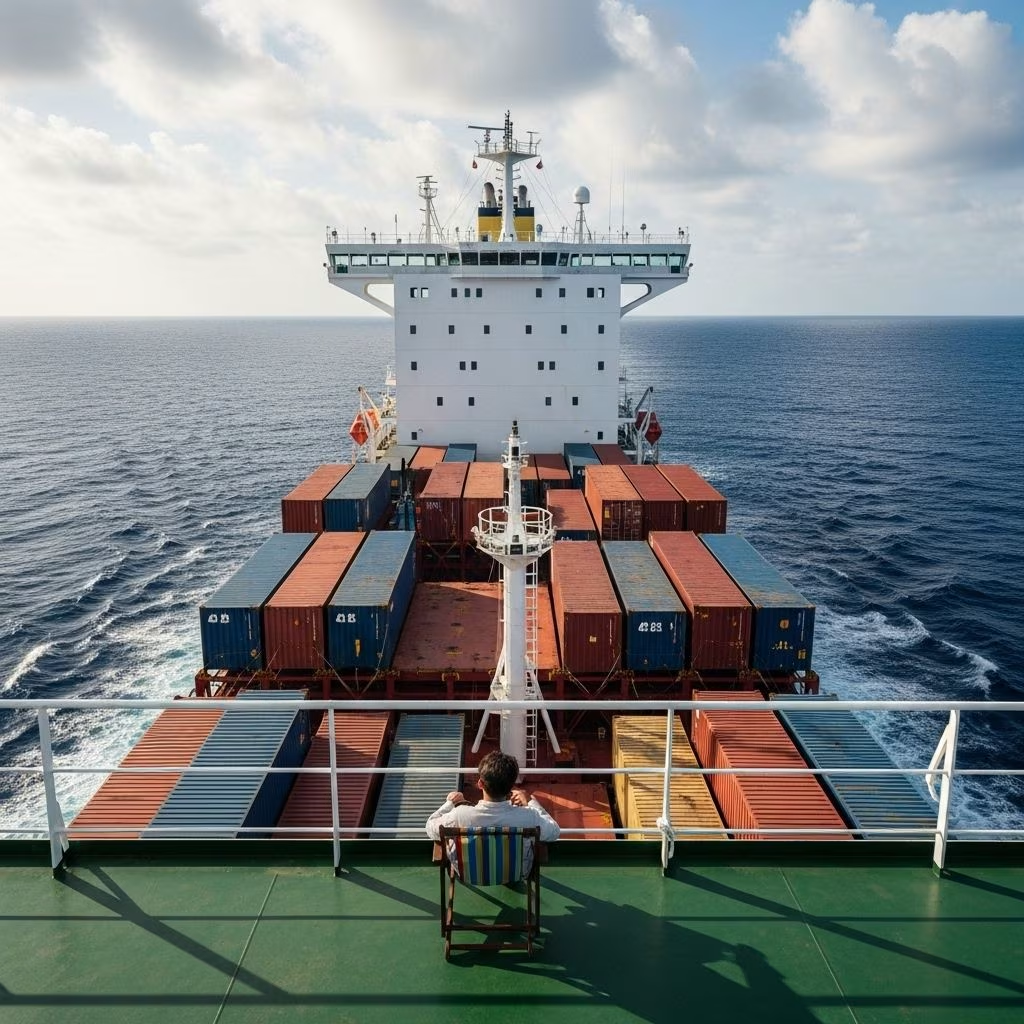
The Unlikely Allure of Cargo Ship Cruising
Traveling as a passenger aboard a cargo ship is an adventure few consider but many romanticize. Where conventional cruise liners are synonymous with comfort and constant entertainment, cargo ships offer a deeply authentic and unplugged journey—a slow travel experience rooted in the realities of maritime logistics and the unique rhythms of life at sea.
What Is a Cargo Ship Cruise?
Unlike traditional cruises, cargo ship cruises are passages on working vessels whose primary purpose is to carry freight across the world’s oceans. A limited number of paying passengers can book a cabin, sharing the journey with the ship’s crew and becoming part of the vessel’s working itinerary. Yet, this is not a luxury cruise: amenities are basic, schedules are dependent on port cargo operations, and the experience is unpredictable but profoundly immersive.
- Passengers often comprise a handful of adventurous travelers, given there are customarily only a few cabins available on any given ship.
- The journey focuses on the experience of being at sea, with minimal planned entertainment or excursions.
- Meals are taken in the officers’ or crew’s mess, fostering an atmosphere of camaraderie rarely accessible on holiday cruises.
The Practicalities and Logistics of Booking a Cargo Cruise
The process for booking a cargo cruise is markedly different from reserving a cabin on a mainstream liner. There are dedicated agencies, such as Freighter Cruises and Cargo Ship Voyages, that specialize in connecting travelers with available berths on ship lines open to passengers.
- Planning ahead is essential. Ships have fixed freight commitments, and schedules can shift with little notice in response to logistics or weather conditions.
- Voyages are long-form experiences: typical journeys can range from several days to multiple weeks, often intercontinental and determined by global freight demands.
- Paperwork and visas are the traveler’s responsibility, since cargo ships call at commercial ports rather than passenger terminals.
- Price range: Although sometimes perceived as a thrifty alternative, passage can be comparably expensive given the unique nature of the accommodation and the longer trip length.
Cabins and Amenities
Passenger accommodation typically consists of comfortable but utilitarian cabins, sometimes with en-suite bathrooms, but usually without the frills expected on a cruise liner. Public areas are limited: there may be a lounge for relaxation and, sometimes, an outdoor deck for fresh air.
- Meals are simple, usually taken with the ship’s crew.
- There are few, if any, entertainment options, and passengers should prepare for long stretches of reading, writing, or contemplation in the company of the open sea.
- Internet access, if available, is limited and expensive; digital detox is effectively enforced.
Who Cruises on Cargo Ships?
The appeal of cargo ship travel lies in its unconventional nature, which attracts a specific kind of traveler:
- Slow travelers who want to savor the journey, not just the destination.
- Maritime enthusiasts and ship lovers fascinated by the mechanics and culture of working vessels.
- Writers, artists, and deep thinkers drawn by the solitude, the absence of interruptions, and the meditative environment at sea.
- People avoiding air travel, including environmental activists or those with flight anxiety.
Many cite a desire for genuine connection with the maritime world—a means of travel where the process is not hidden behind luxury or leisure but is central to the experience.
Cargo Ship Cruises vs Traditional Cruises: A Comparison
| Cargo Ship Cruise | Traditional Cruise | |
|---|---|---|
| Purpose | Transporting freight, limited passengers | Tourism, entertainment, leisure |
| Passenger Count | Typically 12 or fewer | Hundreds to thousands |
| Amenities | Basic cabin, shared meals, no entertainment | Luxury cabins, dining, extensive entertainment |
| Schedule | Determined by freight and weather | Planned in advance for convenience |
| Ports of Call | Commercial ports; limited excursion access | Tourist-friendly ports; guided excursions |
| Social Atmosphere | Intimate, close connection with crew and few travelers | Anonymous, large groups and varied activities |
The Daily Rhythms of Life at Sea
Life aboard a cargo ship is dictated by the necessity of transporting goods and maintaining the vessel. The days merge under the influence of the horizon:
- Routine: Activities revolve around meals, navigation updates, and opportunities to interact with crewmembers.
- Socializing: The small number of passengers leads to frequent conversations and a rare sense of community.
- Port stops: These are typically focused on logistics—loading and unloading cargo, with limited shore leave for passengers.
- Weather and open sea: The awe of the ocean is unfiltered, offering both tranquility and drama depending on conditions.
Many travelers describe this routine as deeply restorative; the lack of constant activity allows for profound relaxation and introspection.
Romance and Adventure in the Slow Lane
There is an irresistible romance attached to cargo ship cruising—a blend of nostalgia, slow travel, and the physical reality of the ship itself. At its best, this is travel as a process rather than a destination, where the journey becomes the experience:
- Watching sunrises and sunsets from the deck, with nothing but water in every direction.
- Experiencing the quiet drama of logistics—cranes, forklifts, bustling port activity—and understanding the global economy at work.
- Connecting with crew members whose long sea careers offer fascinating stories and insights.
- The thrill of entering remote commercial ports, cities and islands not often seen by leisure travelers.
Sustainability and Environmental Perspective
For travelers conscious of their impact on the environment, cargo ship travel offers a nuanced option:
- Shared footprint: By riding on a vessel already making the journey for freight, passengers avoid the incremental environmental impact associated with dedicated passenger transport.
- Comparison with aviation: A transoceanic voyage avoids the emissions surge of cross-continental flights, particularly in cargo ships that maximize fuel efficiency for freight logistics.
- No luxury excess: Cargo ships resist the resource-heavy amenities common to cruise liners—pools, spas, and nightly shows—making for a lighter overall footprint.
However, container ships do consume significant fuel, and the environmental benefits depend on the traveler’s specific itinerary and choices. Some lines and ships are retrofitting engines and adopting cleaner practices, making incremental progress toward greener shipping.
The Hurtigruten Experience: Norway’s Working Cruise
One prominent example of a part-cargo, part-passenger experience is Norway’s Hurtigruten coastal voyage, which runs from Bergen deep into the Arctic Circle, stopping at over 30 ports in both directions. Older Hurtigruten ships, like the classic MS Lofoten, offer a throwback to maritime history—a tiny cabin, shared amenities, and a deeply communal experience. On these ships:
- The journey mixes breathtaking natural beauty with living history.
- Passengers witness the daily rhythm of cargo loading, docking, and navigation under sometimes challenging conditions.
- The small crew and passenger manifest foster meaningful interactions.
Hurtigruten’s blend of freight, mail, and tourism exemplifies how working ships can provide unique passage to travelers willing to embrace the trade-offs of authenticity over luxury.
The Aranui: Polynesia’s Cargo-Plus-Cruise
In French Polynesia, the Aranui 5 combines freight delivery with passenger travel, serving the remote Marquesas Islands far from Tahiti. Here, the vessel’s journey is an essential lifeline for residents while also delivering a handful of adventure seekers to one of the world’s most beautiful archipelagos.
- Passengers witness firsthand the unloading of foods, vehicles, and building materials crucial to island life.
- The itinerary blends dazzling scenery, cultural immersion, and direct observation of logistics.
- Life on board includes lectures, shared meals, and a sense of camaraderie among travelers and crew alike.
This model illustrates the essential hybrid nature of cargo ship cruising—an adventure with genuine connections to local communities and real-world logistics.
Drawbacks and Limitations
Cargo cruiser life is not for everyone. Key challenges include:
- Sparse amenities: Cabins are basic, entertainment is minimal.
- Strict itineraries: The ship’s freight schedule is primary, and delays or changes are common.
- Limited shore access: Most visits to port are short and functional, not tourist-oriented.
- Isolation: Weeks at sea without internet or phone connectivity can be daunting.
Travelers need patience, flexibility, and a true taste for adventure to embrace the positives of this experience.
Tips for Prospective Cargo Ship Passengers
- Research agencies: Use trusted booking agents focused on cargo ship travel.
- Understand the experience: Read reviews from past travelers to confirm the experience matches your expectations.
- Pack wisely: Bring books, activities, and all personal supplies needed for long sea journeys.
- Communicate: Be aware of limited opportunities to contact the outside world.
- Prepare for the unexpected: Flexibility is crucial; expect delays and last-minute changes.
FAQs About Traveling on Cargo Ships
Q: What are the main advantages of traveling by cargo ship?
A: Passengers enjoy unique access to the world’s oceans, small-group camaraderie, authentic travel, and lower overall environmental impact compared to traditional cruises.
Q: Is travel on cargo ships safe?
A: Cargo ships adhere to strict safety codes, but travelers should be aware of rough seas, unique emergency protocols, and the absence of medical facilities found on large cruise ships.
Q: How do you book a trip?
A: Bookings are usually made through specialized travel agencies rather than the ship line itself. Planning 6–12 months in advance is recommended for popular routes.
Q: Can you go ashore at port stops?
A: Shore leave is possible but often brief and dependent on cargo operations. Passengers must return promptly to avoid missing the ship.
Q: Who is best suited for freight cruising?
A: Maritimers, slow travelers, deep thinkers, and those with patience and flexibility thrive best in this environment.
Is It Worth It?
Despite obstacles and limitations, the number of travelers choosing cargo ship passage continues to grow, drawn by the promise of meaningful adventure, personal transformation, and the untamed beauty of sea travel. For those willing to accept the pace, unpredictability, and genuine engagement with shipping crew and logistics, it remains one of the last true travel adventures, reconnecting us to the forgotten rhythms of the world’s oceans.


