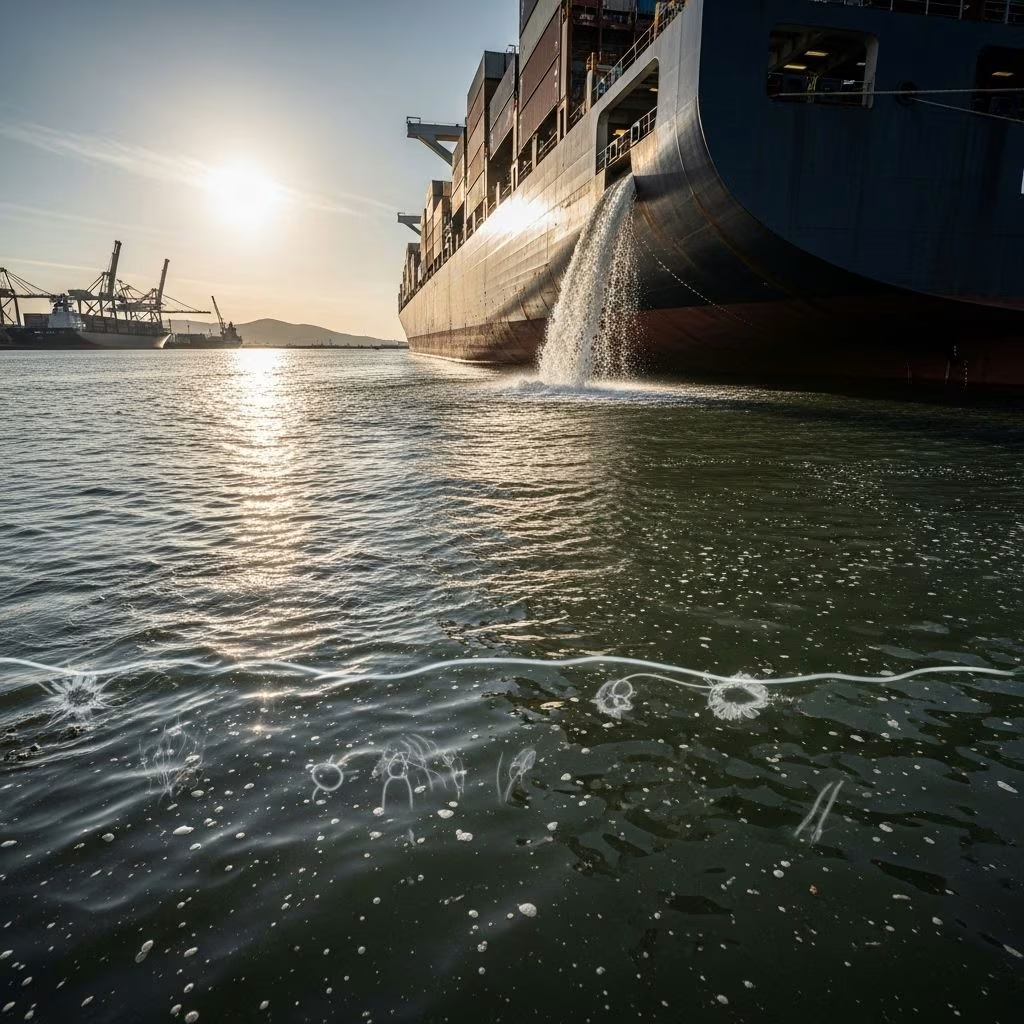
What Is Ballast Water?
Ballast water refers to water taken on board ships to enhance stability, balance, and structural integrity during ocean crossings. This water, sourced from rivers, ports, or coastal areas, is stored in ballast tanks and is critical for safe navigation, especially when ships are unladen or partially loaded.
While ballast operations are essential for maritime safety, the practice poses substantial environmental risks. When ships take in ballast water in one location and discharge it in another, they inadvertently transport countless organisms—including bacteria, viruses, larvae, plankton, and small invertebrates—across ecosystems. This global exchange of aquatic life has profound consequences, especially in coastal zones and harbors.
How Ballast Water Works in Shipping
Shipping vessels use ballast water for several functions, including:
- Maintaining Stability: Ballast water counteracts the unbalanced weight from cargo loading/unloading and improves vessel handling in heavy seas.
- Enhancing Propeller Submersion: It ensures that the ship’s propeller and rudder remain submerged, optimizing maneuverability.
- Balancing Structural Loads: By filling or emptying ballast tanks, ships mitigate excessive stress on the hull and maintain an even keel.
Despite its technical importance, the global collection and discharge of ballast water are now recognized as major facilitators of species invasions and habitat disruption.
The Environmental Issues Linked to Ballast Water
The environmental impact of ballast water discharge is significant, multifaceted, and often irreversible. Key concerns include:
- Introduction of Invasive Species: Ballast tanks often harbor aquatic organisms, including larvae and microorganisms, picked up during water intake. When released in foreign waters, these non-native species can establish themselves and outcompete local wildlife, causing declines in biodiversity and the collapse of native species populations.
- Ecological Disruption: Alien species can alter food webs, change competitive dynamics, and shift habitat structure. Rapid population growth by invasive organisms, such as zebra mussels or Asian phytoplankton algae, can crowd out native species and permanently alter local ecosystems.
- Habitat Degradation: Certain invasive species clog water intakes, damage public infrastructure, and even transform the physical landscape of aquatic environments.
- Pollution: Ballast water may contain pollutants—including oil, chemicals, and heavy metals—accumulated during collection or present as part of shipping operations. Discharging these into coastal waters contaminates the environment and endangers both aquatic and human health.
- Harmful Algal Blooms (HABs): Ballast water can introduce phytoplankton species responsible for toxic algal blooms, which produce poisons, kill fish, contaminate shellfish, and disturb ecosystem balance.
- Spread of Diseases: Disease-causing microbes hitchhiking in ballast water can create new public health challenges for humans, fish, and wildlife.
These effects are more pronounced during global shipping surges. As international maritime traffic increases, the volume of ballast water exchanged grows, intensifying environmental risks at every port and coastal area.
Real-World Examples of Invasive Species Spread
- Zebra Mussels: First detected in North America’s Great Lakes in the late 1980s, zebra mussels arrived via transatlantic ships’ ballast water. Their explosive growth led to costly infrastructure damages and ecosystem changes.
- Asian Phytoplankton Algae (Biddulphia sinensis): The North Sea was invaded by this species in the early 1900s, disrupting planktonic communities and food webs.
- Green Crab: Native to Europe, the green crab colonized North American coasts, preying on shellfish populations and impacting fisheries.
Ballast Water Impact on Biodiversity and Local Economies
The introduction of non-native organisms affects systems at multiple scales:
- Biodiversity Loss: Invasive species frequently outcompete native flora and fauna, resulting in diminished biodiversity, homogenized food webs, and sometimes extinction of local organisms.
- Economic Damage: Industries such as fisheries, aquaculture, and tourism suffer direct economic losses due to degraded water quality, sick fisheries, and infrastructure fouling.
- Public Health Threats: Organisms introduced via ballast water can carry pathogens, algal toxins, or parasites that pose risks to human health and recreation.
As a result, ballast water discharge is widely regarded as a top-four global threat to marine ecosystems, alongside pollution, habitat loss, and overfishing.
Regulating Ballast Water Discharge
Recognizing the global threat, international conventions and national agencies have implemented strict ballast water management requirements.
- IMO Ballast Water Management Convention (BWMC): Enforced since 2017, this United Nations-led treaty requires ships to manage and treat ballast water before discharge, minimizing the risk of species introductions.
- National Initiatives: Many coastal nations supplement IMO standards with local policies, additional monitoring, and enforcement in sensitive areas.
Compliance involves significant financial and technical challenges for shipping operators, including retrofitting ships and ongoing monitoring.
Ballast Water Treatment Systems
Treatment technologies are the frontline defense against the environmental impacts of ballast water. Their purpose: eliminate or neutralize harmful organisms and contaminants before discharge at the destination port.
Common Treatment Solutions
- Physical Filtration: Removes larger organisms and particles using mesh screens or filters.
- Ultraviolet (UV) Disinfection: Utilizes UV light to kill microorganisms (bacteria, phytoplankton, and invertebrate larvae).
- Chemical Disinfection: Involves flocculants, oxidizing chemicals, or biocides to eliminate living contamination.
- Electromagnetic or Electric Pulse Systems: Use magnetic fields or electrical pulses to render organisms nonviable.
- Advanced Filtration: Multi-stage filters can target sediments, phytoplankton, and viruses.
Choosing the right system depends on vessel size, available space, regulatory requirements, and economic constraints.
Advantages of Ballast Water Treatment
- Compliance: Meets IMO and national regulations, avoiding legal penalties.
- Environmental Stewardship: Protects local habitats and biodiversity.
- Operational Flexibility: Enables ships to operate globally with minimal risk of spreading invasives.
Alternatives and New Solutions for Ballast Management
Emerging innovations and operational changes may further reduce risks:
- Ballast-Free Ship Design: Some conceptual ship designs eliminate ballast tanks entirely, relying on optimized hull shapes for stability.
- Onshore Ballast Exchange: Exchanging ballast water in deep offshore waters reduces the survival rate of invasive species prior to arrival in port.
- Continuous Research: Ongoing studies seek novel treatments, monitoring technologies, and non-chemical alternatives.
Frequently Asked Questions (FAQs)
Q: Why do ships need ballast water?
A: Ballast water is essential for maintaining stability, balance, and hull integrity during cargo operations and rough seas. It helps ensure safe maneuvering and prevents structural damage.
Q: How does ballast water spread invasive species?
A: Ships collect water—including aquatic organisms—from one region and discharge it at distant ports, potentially introducing non-native, sometimes invasive species into new ecosystems. These species can outcompete local organisms and disrupt ecological balance.
Q: What are the health risks associated with ballast water?
A: Ballast water may contain pathogenic microbes, toxic algae, or pollutants, which can harm aquatic life and pose risks for humans who use or consume water from affected areas.
Q: What regulations govern ballast water discharge?
A: The International Maritime Organization’s Ballast Water Management Convention (BWMC) is the leading global regulatory framework. Many countries also have local regulations that supplement these IMO standards.
Q: Which ballast water treatment technologies are most effective?
A: Systems combining physical filtration and ultraviolet disinfection are common and effective. Chemical treatments or multi-stage systems provide additional removal efficiency, though the choice depends on ship type and port requirements.
Summary Table: Ballast Water Risks and Solutions
| Risk/Problem | Consequences | Solution |
|---|---|---|
| Species Invasion | Biodiversity loss, ecosystem disruption | Filtration, UV, chemical treatment, IMO regulations |
| Habitat Degradation | Infrastructure damage, water system clogging | Regular tank monitoring, advanced filtration |
| Pollution | Degraded water quality, health hazards | Chemical reduction, non-polluting treatment |
| Algal Blooms | Fish kills, shellfish toxicity, health risks | Disinfection, species monitoring, early detection |
| Disease Spread | Public health risks, wildlife illness | Microbial disinfection, regulatory checks |
Conclusion: The Call for Global Ballast Water Management
Ballast water is indispensable for global shipping, but its ecological footprint is huge. Managing its risks requires international cooperation, technological innovation, and strict adherence to environmental safeguards. Only by balancing maritime operations with ecosystem protection can the shipping industry ensure safer seas for generations to come.
References
- https://www.ballast-water-treatment.com/blog/what-are-the-environmental-issues-with-ballast-water/
- https://sensorex.com/how-does-ballast-water-affect-environment/
- https://pmc.ncbi.nlm.nih.gov/articles/PMC8927920/
- https://sensorex.com/environmental-concerns-ballast-water-treatment-systems/
- https://en.wikipedia.org/wiki/Ballast_water_discharge_and_the_environment
- https://www.invasivespeciesinfo.gov/subject/ballast-water
- https://clearseas.org/insights/ballast-water-management-stopping-the-spread-of-invasive-species-by-ships/
- https://www.bawat.com/faq/what-is-ballast-water/