Global Controls on Plastic Waste Shipments
The international trade in plastic waste has faced intense scrutiny in recent years. Once easily and freely exported and shipped across borders, plastic waste shipments have become a flashpoint in global environmental discussions. In response, new rules—anchored by the Basel Convention and its 2019 amendments—now empower countries to consent to or refuse these plastics shipments, dramatically altering the way waste is moved and managed worldwide.
Understanding the Basel Convention and Its Amendments
The Basel Convention, formally known as the Basel Convention on the Control of Transboundary Movements of Hazardous Wastes and Their Disposal, is an international treaty first adopted in 1989. Its goal: regulate and restrict the movement of hazardous waste, especially from wealthier, more developed nations to poorer countries ill-equipped to handle such materials. The original focus was primarily on toxic and hazardous waste, but over time, plastic pollution became a growing concern.
In May 2019, a landmark step was taken by 187 countries (out of 196 possible) to add most plastics to the list of ‘controlled’ wastes under the Basel Convention. The amendments, sometimes called the Basel Plastic Waste Amendments, became effective on January 1, 2021. From that date forward, most shipments of plastic waste require the prior written consent of all receiving and transit countries before exports can proceed.
- Contaminated, mixed, or unrecyclable plastic waste is now strictly regulated and cannot be freely shipped without approval.
- Clean, homogenous, and readily recyclable plastics are still eligible for relatively free movement but must meet very strict criteria.
Why Were These Rules Needed?
“After China banned imports of most plastic waste in 2018, developing countries, especially in Southeast Asia, saw a surge of contaminated plastic shipments that were difficult or impossible to recycle.” Many of these nations lack the necessary infrastructure to manage such waste safely, resulting in pollution, harm to communities, and mounting international tension.
The Basel amendments provide crucial legal tools for receiving countries to halt what many had simply called “waste dumping”—the offloading of rich nations’ problematic plastics on lower-income communities.
Country Consent and the ‘Prior Informed Consent’ Process
The heart of the Basel Convention is the principle of Prior Informed Consent (PIC). This means that the import or transit of controlled wastes—including most plastics—can only take place once the importing and any transit nations have provided explicit, written approval.
- Exporters must file a detailed notification describing the intended shipment, its composition, handling, and destination.
- Importers then review the request and have the right to accept or refuse the shipment.
- If no consent is given, the waste must stay in the country of origin.
As a result, nations now have real power to prevent the uncontrolled influx of unwanted plastic waste, and the incentive for exporters is to ensure their plastics are clean, sortable, and truly recyclable—or face rejection.
Categories of Plastic Waste Under the Basel Amendments
| Category | Description | Basel Requirements |
|---|---|---|
| Non-hazardous, homogenous recyclables | Pre-sorted, clean, single-polymer plastics destined for proven recycling processes | Not subject to extensive Basel controls |
| Most mixed or contaminated plastics | Mixed plastics, dirty or with food/other waste, hard to recycle | Requires prior written consent; subject to full Basel controls |
| Hazardous plastics | Plastics classified as hazardous for toxicity or risk | Requires prior written consent and stricter control |
How the Plastic Waste Trade Has Shifted Post-Amendment
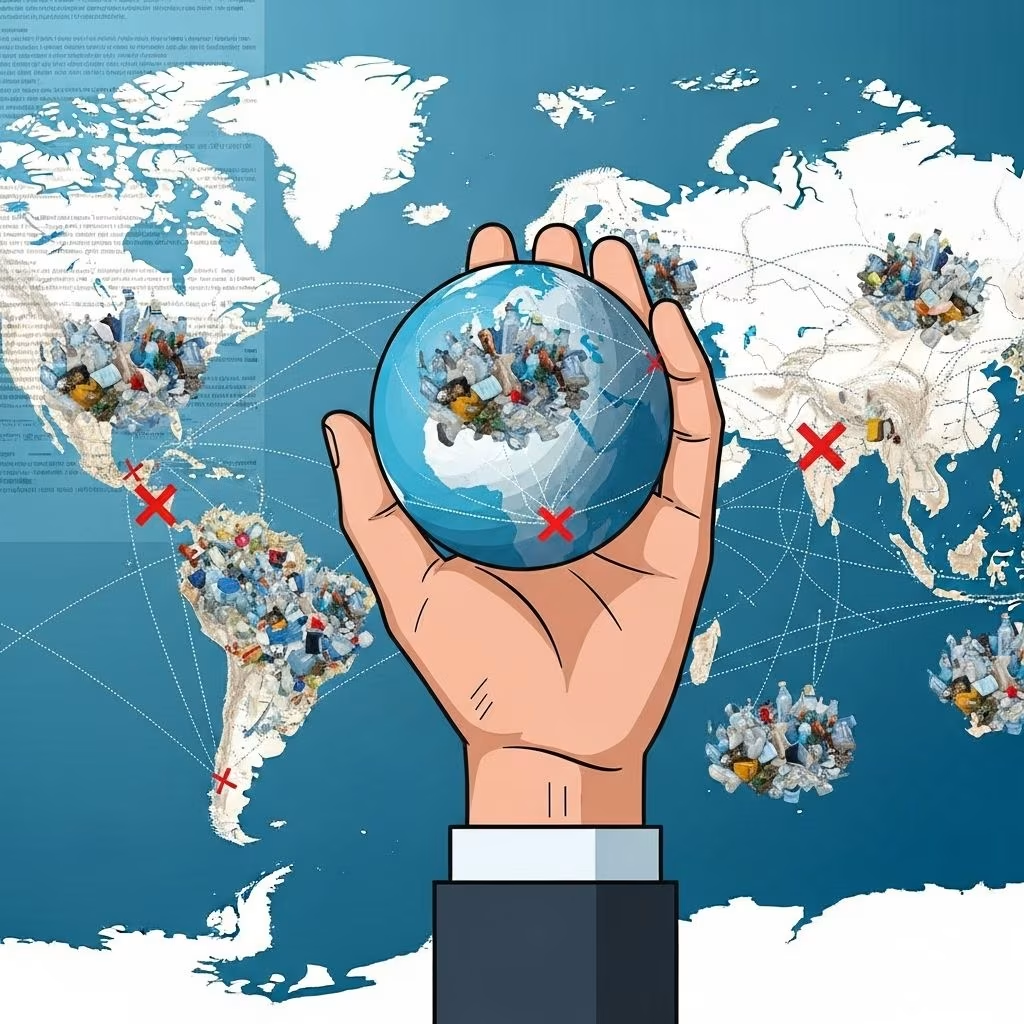
The global ban by China triggered a major shift in plastic waste flows. For years, wealthy nations relied on shipping massive quantities of low-value or difficult-to-recycle plastics to countries in East and Southeast Asia, Latin America, and Africa. When China—formerly the destination for around half of global plastic recyclables—shut its doors, waste exporters scrambled for other markets.
- Countries like Malaysia, Vietnam, Thailand, and Turkey suddenly received far more plastic waste than they could manage.
- Dramatic increases in illegal dumping, burning, and unmanaged dumpsites followed, harming local health and environments.
- Some countries responded with their own bans, rejecting shipments or returning them to exporters.
The Basel Plastic Waste Amendments put the brakes on arbitrary waste flows. In 2020 and 2021, international waste exporters raced to dispose of materials before new rules took effect. Now, shipments require formal approval and far stricter documentation.
Major Exporters and Recipients of Plastic Waste
| Top Exporters (2020-2021) | Top Recipients |
|---|---|
| European Union (combined) | Turkey |
| Japan | Malaysia |
| United States | Vietnam |
| United Kingdom | Thailand |
| Mexico |
The new regulatory landscape is slowly shifting these flows again, with some large shippers (for example, Maersk) refusing to transport plastic waste to certain countries, and nations such as Hong Kong and Turkey imposing new restrictions.
The U.S. and International Plastic Waste Regulations
The United States is an outlier in the global regulatory movement. It signed but never ratified the Basel Convention, meaning it is not formally bound by its rules. However, U.S. exporters must still adhere to the requirements of countries that have ratified the Basel amendments.
- U.S. shippers need prior consent to send plastic waste to Basel Party countries (now including Mexico, Canada, much of the EU, and most of the world).
- The United States has separate bilateral agreements for hazardous waste with some key trading partners (e.g., Canada, Mexico, Costa Rica, Malaysia, and the Philippines). However, not all of these cover plastic waste exports.
- Recent attempts to pass federal U.S. legislation (like the Break Free From Plastic Pollution Act) would force the U.S. to comply more closely with the stricter global standards. So far, these bills have not passed into law.
In some instances, U.S. plastic waste shipped to an importing nation may violate international law, even when permitted under domestic U.S. law—opening the possibility for shipments to be blocked, returned, or subject to sanctions.
Impact on Waste-Importing and Exporting Countries
The outcome of these new controls is multifaceted. For waste-importing countries, the amendments offer new power to clean up their environment and block unscrupulous shipments. For exporters, stricter rules force greater transparency and higher standards for plastics exported for recycling.
Impacts on Importing Countries
- Reduced influx of contaminated, poorly sorted plastics that create health and environmental hazards.
- Ability to refuse shipments or require return of illegal or unwanted waste.
- More opportunity to develop domestic recycling sectors—if clean, manageable plastics can be obtained.
Impacts on Exporting Countries
- Must pre-sort, clean, and verify any plastics destined for export.
- Need to establish clear, traceable supply chains to demonstrate materials can and will be recycled.
- Face higher cost, reduced options, and more scrutiny when shipping lower-value or mixed plastics.
The Future of Global Plastic Waste Management
Experts agree that while recycling regulations and export consent are critical tools, they are not enough on their own. As stated by Von Hernandez, Global Coordinator of Break Free from Plastic: “Recycling will not be enough, however. Ultimately, production of plastics has to be significantly curtailed to effectively resolve the plastic pollution crisis.”
The future will likely see:
- Further controls and regulations on transboundary shipments of waste.
- Increased bans or limits on certain non-recyclable plastics.
- Expansion of circular economy solutions: Designing products and systems that minimize plastic use, emphasize reuse and repair, and encourage reduction at the source.
- Stricter requirements for recycled content in plastic production, creating genuine markets for old plastics.
International cooperation remains essential, as plastic pollution respects no borders. The Basel Convention is only the start; many call for new treaties or global agreements dedicated specifically to ending plastic pollution and advancing sustainable alternatives.
Frequently Asked Questions (FAQs)
What is the Basel Convention?
The Basel Convention is an international treaty that regulates the cross-border movement of hazardous wastes and, since 2019, certain categories of plastic waste. It aims to protect human health and the environment by minimizing hazardous waste movements, particularly to countries that lack capacity to manage it safely.
Which plastic wastes require prior consent before export?
Most contaminated, mixed, or hard-to-recycle plastic wastes—essentially anything not clean, sorted, and destined for proven recycling—require prior written consent under the Basel Convention rules.
What countries are most affected by the new rules?
Countries that previously imported large volumes of plastic waste, such as Malaysia, Turkey, Vietnam, Thailand, and Mexico, now hold far greater power to reject unwanted shipments and tighten their own national controls.
Does this mean no plastic waste can be traded internationally?
No, but the process is far more restricted. Only certain clean, sorted, readily recyclable plastics can move freely. All others require permission from recipients and transit countries.
What is the U.S. role under the new plastic waste trade regime?
The United States is not a full party to the Basel Convention but must obtain consent from countries that have ratified the Convention for exports. Bilateral agreements and changing domestic legislation may shift U.S. practice in the future.
Will these international rules solve the plastic pollution crisis?
The new rules empower nations to reduce unwanted plastics, but experts emphasize that reducing plastic production and consumption, alongside strengthening recycling, is crucial for a lasting solution.
References
- https://www.breakfreefromplastic.org/2019/05/10/un-to-control-global-plastic-waste-dumping/
- https://www.epa.gov/hwgenerators/new-international-requirements-export-and-import-plastic-recyclables-and-waste
- https://news.mongabay.com/2021/05/as-the-rest-of-world-tackles-plastics-disposal-the-u-s-resists/
- https://ec.europa.eu/environment/pdf/waste/shipments/faq.pdf