


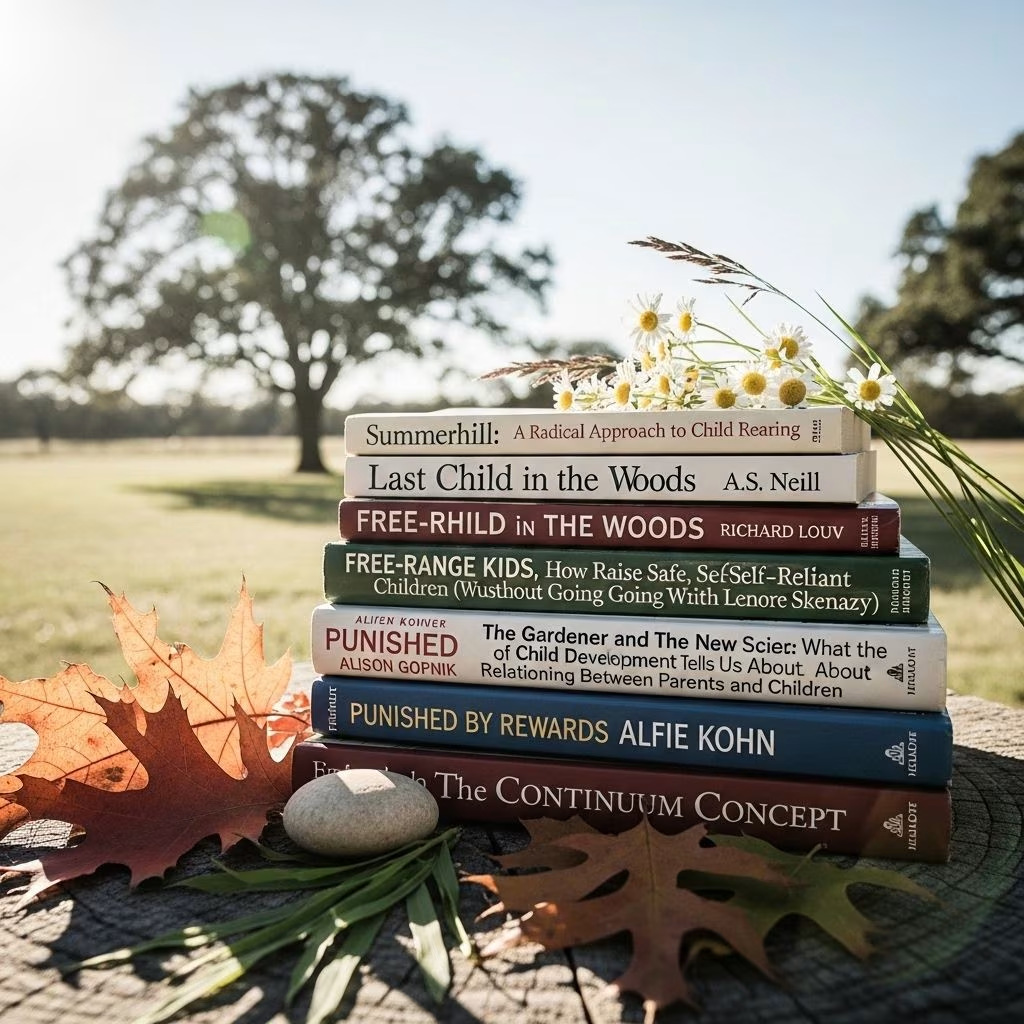
Books That Inspired the Free-Range Parenting Movement
As childhood grows increasingly supervised and structured, a wave of parents and educators are re-examining what it means to let kids be kids. Free-range parenting—the philosophy of granting children more freedom to explore their environments independently—has been shaped by a handful of influential books and writers. These works challenge modern anxieties around safety, question cultural norms, and offer practical strategies to help children develop the confidence and resilience they need for adulthood.
Understanding Free-Range Parenting
Free-range parenting is a style rooted in trust: parents encourage children to walk to school alone, make their own decisions, and solve problems without heavy supervision. This approach stands in stark contrast to the overprotective, risk-averse trends that dominate much of contemporary parenting. Proponents like Lenore Skenazy argue that allowing controlled independence nurtures children’s self-reliance, competence, and happiness, while critics raise concerns about safety and social expectations.
- Core ideas: Encouraging independence, balanced risk-taking, decision-making, and resilience.
- Philosophical roots: Pushback against rising parental fears, media-driven anxieties, and the erosion of community-based childrearing.
1. Free-Range Kids by Lenore Skenazy
Free-Range Kids: How to Raise Safe, Self-Reliant Children (Without Going Nuts with Worry) is considered the manifesto of the movement. In 2008, Skenazy made headlines for letting her nine-year-old son ride the New York City subway alone—a decision that sparked nationwide debate. Her book provides a humorous, evidence-backed, and deeply practical guide for parents seeking to create more independent, capable children.
Main Themes from Free-Range Kids
- Tackling parental fear: Uses statistics and logic to highlight that children are safer than ever, despite news and social media amplifying fears about abduction and danger.
- Balancing freedom and safety: Advocates teaching children safety skills rather than sheltering them from risk. The book details strategies for gradually increasing independence, suitable at all developmental levels.
- Questioning overprotection: Explains how excessive supervision can lead to anxiety, stunted resilience, and dependence in adulthood.
- Humor and relatability: Skenazy employs wit to expose both the pressures on modern parents and the often irrational nature of contemporary worries.
- “Commandments” of free-range parenting: The book is organized into 18 practical commandments—short, actionable chapters addressing everything from media hype about child danger to trusting your child’s instincts and decision-making.
Key Lessons for Parents
- Let children walk to school, run errands, or solve problems solo, step by step.
- Stop allowing fear of extremely rare events (like abductions) to dictate every parenting decision.
- Teach practical life skills and involve children in real-world decision-making early on.
Innovative Tools in Free-Range Kids
- The Free-Range Kids Card: A tongue-in-cheek card for children to give to inquiring adults, explaining their parents support independent exploration.
- Going Free-Range exercises: Activities and stepwise challenges for parents to gradually expand their children’s freedom and skills.
- Real world stories: Skenazy includes accounts from parents who successfully embraced a free-range mindset, offering encouragement and validation for newcomers.
2. The Broader Literature: Building the Free-Range Ethos
The free-range movement is rooted in more than a single book. It draws insight and inspiration from a wave of works—many bestsellers—questioning the wisdom of overprotection and exploring the developmental benefits of unsupervised play. While Skenazy’s book is the best-known, parents often discover a vibrant conversation across dozens of authors, psychologists, and journalists.
Essential Books that Influence Free-Range Parenting
| Book Title | Author(s) | Core Message |
|---|---|---|
| Free-Range Kids | Lenore Skenazy | How independence, not constant supervision, breeds confidence and practical skills. |
| Last Child in the Woods | Richard Louv | Argues for the necessity of nature and outdoor play in children’s lives; links ‘nature-deficit disorder’ to overprotective parenting styles. |
| How to Raise an Adult | Julie Lythcott-Haims | Explores how overparenting prevents children from developing agency and skills for adulthood. |
| The Coddling of the American Mind | Greg Lukianoff & Jonathan Haidt | Examines the psychological impact of overprotected childhoods; encourages letting children manage risk and conflict on their own. |
Common Threads Across These Books
- Exposure to challenges and uncertainty builds character and resourcefulness.
- Erring on the side of safety—when taken to extremes—can undermine real preparation for adulthood.
- Unstructured play and autonomy are vital for mental health, creativity, and self-esteem.
3. Modern Parenting Myths and Media Influence
An essential topic in the free-range literature is the pervasive role of media in amplifying parental fears. Dramatic news stories, viral cautionary tales on social media, and cultural lore (such as Halloween candy scares) all contribute to a distorted sense of risk.
- Statistically, risks like abduction or random violence are much rarer than most parents perceive.
- Focusing on rare threats leaves children unprepared to handle much more common challenges—like resolving conflicts, making decisions, and recovering from mistakes.
- Free-range literature urges a data-driven mindset: measure risk based on evidence, not sensationalism.
Public Policy and Free-Range Parenting
The mainstreaming of free-range ideas has sparked legal and societal changes. For instance, several U.S. states have introduced “free-range parenting” legislation—clarifying that allowing age-appropriate independence isn’t neglect, but good parenting. Internationally, cultural comparisons (such as Japanese children navigating their neighborhoods independently) illustrate broader support for these principles outside North America.
4. Inspiring Stories and Global Perspectives
Case studies and personal stories in these books show how children thrive when trusted with responsibility. Real-world examples include:
- Young children in Copenhagen walking themselves to kindergarten.
- U.S. children allowed to run local errands (with a parent’s trust and a “free-range” communication plan).
- Media spotlights like Japan’s “Old Enough!”: a series showcasing very young children independently negotiating daily routines in busy cities.
- Parental reflections on the mental health benefits observed after adopting a more hands-off approach.
Benefits of the Free-Range Approach
- Self-confidence: Children who feel trusted are more likely to trust their own judgment.
- Resilience: Overcoming setbacks independently helps develop perseverance and grit.
- Social skills: Navigating conflicts and cooperating without adults present builds teamwork and empathy.
- Problem-solving: Facing real-world challenges empowers children to think critically and creatively.
5. Free-Range Parenting in Practice: Tips and Tools
For parents inspired to adopt the free-range philosophy, these books offer both encouragement and specific, practical steps:
- Start small: Allow children to perform ‘mini-independent’ tasks (fetching the mail, playing unsupervised in the backyard).
- Build up gradually: Progress from small freedoms to more significant ones (walking to a nearby park, running a short errand alone).
- Teach safety skills: Focus on what to do in unfamiliar or challenging situations—such as getting lost, encountering a stranger, or handling minor accidents.
- Communicate trust and boundaries: Make your expectations and rules clear, then step back to let your child act.
Common Challenges and How to Address Them
- Social pressure: Prepare to explain your approach to neighbors, teachers, and relatives concerned about your “unconventional” parenting.
- Managing your own anxiety: Recognize that much of parental fear is driven by habit, not reality. Support from like-minded parents can help.
- Legal gray areas and school policies: Familiarize yourself with local laws and school rules about unsupervised activities to avoid unnecessary conflict.
6. Frequently Asked Questions (FAQs)
What does ‘free-range parenting’ actually mean?
It refers to granting children age-appropriate independence, allowing opportunities for self-reliance and learning through direct experience rather than constant adult intervention.
Is free-range parenting safe?
Evidence shows that many of the dangers parents fear are statistically rare. Teaching children smart safety strategies and observing thoughtful boundaries is the foundation of free-range parenting, not recklessness.
How do I deal with criticism from other parents?
Open dialogue, sharing research, and providing real-world examples can help. Many parents reconsider once they see kids thriving with greater independence; in the meantime, confidence in your philosophy is key.
At what age can children start doing things independently?
Development and maturity vary, but many free-range advocates recommend starting small around ages 5 to 7. Always tailor freedoms to each child’s capabilities and context.
Can free-range principles be applied everywhere?
Community norms, infrastructure, and cultural expectations affect how—and how much—freedom children can have. The philosophy is adaptable: what matters most is the intent to raise capable, competent kids.
7. The Lasting Impact of Free-Range Books
Free-range parenting has moved from the fringe to a legitimate movement recognized by educators, psychologists, and lawmakers. It inspires dialogue on what children need to become healthy adults: trust, responsibility, and authentic experiences. These books do more than question mainstream approaches; they empower parents to let go of excessive worry and nurture the next generation’s independence, courage, and resilience.
References
- https://psychiatryresource.com/bookreviews/free-range-kids-review
- https://parentotheca.com/2025/05/31/free-range-kids-by-lenore-skenazy-book-summary-notes-and-quotes/
- https://sobrief.com/books/free-range-kids-giving-our-children-the-freedom-we-had-without-going-nuts-with-worry
- https://www.ebsco.com/research-starters/social-sciences-and-humanities/free-range-parenting
- https://www.todaysparent.com/family/parenting/the-one-thing-about-free-range-parenting-nobody-talks-about/
- https://letgrow.org/book/free-range-kids/
- https://curtismchale.ca/2020/03/27/free-range-kids-book-review/
- https://www.ccef.org/products/book-review-free-range-kids


