


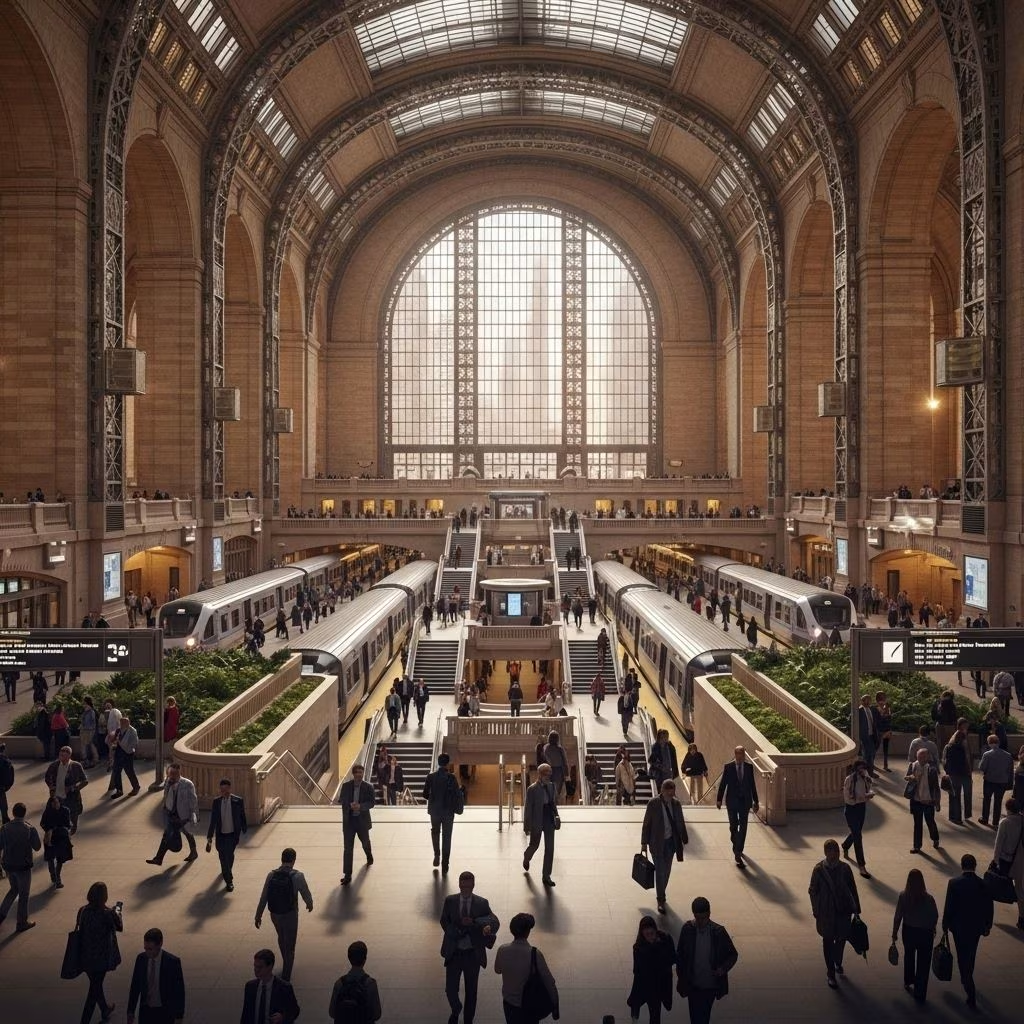
The Movement to Rebuild Penn Station: Reviving a New York Landmark
Penn Station, situated at the heart of Manhattan, has long been both a vital gateway and a source of frustration for New Yorkers and visitors alike. Once a symbol of architectural grandeur, its legacy was marred by decades of functional shortcomings and public dismay. Today, a sustained movement—gathering momentum and official backing—seeks to restore Penn Station to its rightful place as a world-class transit hub and an icon of New York City’s resilience and ambition.
The Origins of Penn Station and Its Demise
Originally completed in 1910, the first Penn Station was an architectural masterpiece designed by McKim, Mead & White. Its vast, Roman-inspired columns, soaring ceilings, and natural light made it a fitting entrance to America’s busiest metropolis. Over five decades, the station became a marvel of engineering and elegance, serving as both a transit terminal and civic monument.
However, shifting priorities and economic challenges in the mid-20th century led to a fateful decision: the demolition of the original station in 1963. In its place, a cramped, subterranean facility was erected—emphasizing function over form and, many argue, losing the soul that made the station beloved. The outcry from architects, preservationists, and the public galvanized the historic preservation movement, but for generations, a sense of loss lingered over the Penn Station site.
The Problem with Today’s Penn Station
Modern Penn Station, rebuilt beneath Madison Square Garden, is known for:
- Low, oppressive ceilings and poor lighting
- Crowded, confusing corridors prone to bottlenecks
- Lack of intuitive navigation, contributing to commuter stress
- Minimal public space or amenities for the millions who pass through each year
As Amtrak’s busiest station—handling over 12 million Amtrak passengers in fiscal year 2024, as well as even larger numbers when accounting for NJ Transit and the Long Island Rail Road (LIRR)—Penn Station is a critical regional artery. Yet, by most standards, it fails to serve New York City at the level expected for a global capital.
The Rebuild Movement Emerges
Public dissatisfaction with the status quo never waned. Over the past two decades, urban advocates, architects, civic groups, and commuters have called for not just a renovation but a wholesale reimagining of Penn Station. The movement to rebuild gained traction thanks to:
- Widespread support by New Yorkers who view a new Penn Station as essential for the city’s future
- Architectural renderings and design competitions showcasing visions of a luminous, dignified transit hub
- Political and corporate leaders recognizing the economic and civic value of a world-class station
- The successful preservation and adaptive reuse of nearby landmarks, such as the transformation of the James A. Farley Post Office into Moynihan Train Hall
Public Opinion and Political Support
The groundswell of community action has been met in recent years by a notable and bipartisan alignment among elected officials. For example, New York Governor Kathy Hochul champions the “commuter-first” vision, emphasizing that New Yorkers deserve a modern, sunlit station and a revitalized neighborhood.
At the federal level, the Trump Administration and the U.S. Department of Transportation (USDOT), in partnership with Amtrak, have committed funding, organizational leadership, and a transparent multi-year roadmap toward realizing Penn Station’s transformation.
What the Rebuild Could Look Like
While renderings and final plans are still under development, certain principles and desired improvements have come to define the vision for the new Penn Station:
- Open, bright, and inviting architecture—maximizing natural light and ease of movement
- Single-level concourses—eliminating the confusing multi-level layout that impedes navigation
- Streamlined, accessible pathways connecting to the LIRR, NJ Transit, subway lines, and Moynihan Train Hall
- Ample public space—including plazas, waiting areas, and retail, designed for both daily commuters and visitors
- Safety, sustainability, and operational modernization at every level
The finished station is expected to anchor a larger revitalization of Midtown West, catalyzing the development of new residential and commercial buildings and green public spaces spanning several city blocks.
Renderings and Design Possibilities
- Celebrated firms have released bold, glass-draped concepts, recalling the grandeur of the original station while addressing today’s needs
- Design proposals are shaped by public feedback, environmental studies, and operational requirements
- The U.S. Transportation Secretary highlighted the desire for a “gleaming, monumental station worthy of New York City”
While a final design has yet to be selected, the master developer solicitation process ensures a competitive field and high architectural standards.
The Roadmap to Rebuilding: Timeline and Next Steps
The journey toward a rebuilt Penn Station involves several key milestones outlined by federal and state agencies:
| Milestone | Date/Timeframe | Description |
|---|---|---|
| Advance Notice: Master Developer Solicitation | August 2025 | Early outreach and market engagement with industry stakeholders |
| Formal Solicitation Release | Late 2025 | Official call for proposals from developers and architects |
| Developer Selection | May 2026 | Master developer chosen via competitive process |
| Preliminary Design & Environmental Review | Summer 2026–End of 2027 | Detailed planning, design, and National Environmental Policy Act (NEPA) studies |
| Construction Start | End of 2027 | Groundbreaking and full launch of construction |
In parallel, the Federal Railroad Administration is undertaking a multi-year Service Optimization Study to ensure Penn Station’s operations can accommodate continuing passenger growth and expanded service.
Leadership and Coordination
The plan draws together:
- USDOT and federal vision and funding
- Amtrak as project lead, bringing operational expertise and a focus on the station’s complex daily demands
- State and local governments providing crucial regulatory, planning, and zoning support
- Community organizations and the general public participating through advocacy, testimonies, and design input
The Impact Beyond Transit
Revitalizing Penn Station is more than a transit upgrade; it’s a catalyst for broader urban renewal and civic pride. Anticipated benefits include:
- Economic growth—spurring investment and job creation in Midtown Manhattan
- Neighborhood revitalization—improving the quality of life and urban environment in the Penn District
- Preservation of historical memory—by restoring a sense of grandeur long lost since the 1960s
- Better daily experience—for commuters, tourists, and neighborhood residents
- Demonstration of public-private partnership—leveraging collective resources for transformative impact
Controversies and Challenges
No infrastructure project of this magnitude proceeds without hurdles. Critics of the rebuild movement raise several points:
- Complex engineering—managing construction around everyday operations without major service disruptions
- Funding and cost control—ensuring fiscal transparency and efficiency given the project’s potentially massive scope
- Balancing historic preservation and modernization—acknowledging the lessons of the past while embracing the needs of the present
- Stakeholder coordination—aligning federal, state, city, and private sector priorities
- Neighborhood concerns—addressing displacement, noise, and the surrounding area’s long-term development
Officials insist these challenges are being addressed through robust oversight, public engagement, and a phased strategy that prioritizes operational continuity.
Why a New Penn Station Matters
Penn Station’s fate has always mirrored New York’s ambitions and anxieties. In the words of architectural historian Vincent Scully, “One entered the city like a god. One scuttles in now like a rat.” The push to rebuild is, fundamentally, about:
- Restoring pride in public space
- Supporting millions of travelers and workers each year
- Making a powerful statement: that world capitals deserve world-class infrastructure
- Demonstrating the power of civic action to shape the urban environment for generations
The new Penn Station will represent not just a physical transformation, but a psychological and cultural one—a bold step toward the city’s future while honoring its illustrious past.
Frequently Asked Questions (FAQs)
Q: When will construction on the new Penn Station begin?
A: Based on the current federal and state roadmap, construction is projected to begin at the end of 2027, following the conclusion of developer selection, design, and environmental review.
Q: Who is leading the Penn Station rebuild project?
A: Amtrak, as the station owner, is taking the lead on redevelopment, in partnership with the U.S. Department of Transportation. Special Advisor Andy Byford, who has experience with large transit projects, is overseeing the effort.
Q: Will Penn Station stay open during construction?
A: The project aims to minimize disruption by phasing construction so that train service and access for commuters remain operational throughout the process, although there will be periodic changes to routes and facilities.
Q: How will the new station be different from the current Penn Station?
A: The future Penn Station will offer brighter, open spaces; streamlined, single-level concourses; improved accessibility; and easier connections to rail, subway, and nearby transit, with an emphasis on comfort, safety, and civic dignity.
Q: What role can the public play in the rebuilding effort?
A: Members of the public are encouraged to participate through community boards, design feedback opportunities, and advocacy for effective, inclusive urban development. Community input continues to shape the station’s design and neighborhood integration.
Looking Ahead: Toward a New Gateway for New York
The campaign to rebuild Penn Station is gaining unprecedented traction, uniting citizens, designers, and officials in pursuit of a transformative, forward-looking vision. With bold plans, dedicated leadership, and broad public engagement, Penn Station is poised to reclaim its stature both as a functional transit hub and as a beacon of civic pride. New Yorkers—and visitors from around the globe—can look forward to a future where Penn Station once again welcomes all who enter the city like gods.
References
- https://abc7ny.com/post/transportation-secretary-sean-duffy-reveal-penn-station-redesign-renovation-plans-schedule/17661295/
- https://media.amtrak.com/2025/08/u-s-department-of-transportation-and-amtrak-unveil-timeline-for-newyork-penn-station-transformation-project/
- https://www.governor.ny.gov/programs/new-penn-station
- https://www.youtube.com/watch?v=yRRlBsI5GzE
- https://www.mta.info/project/penn-station-access


