


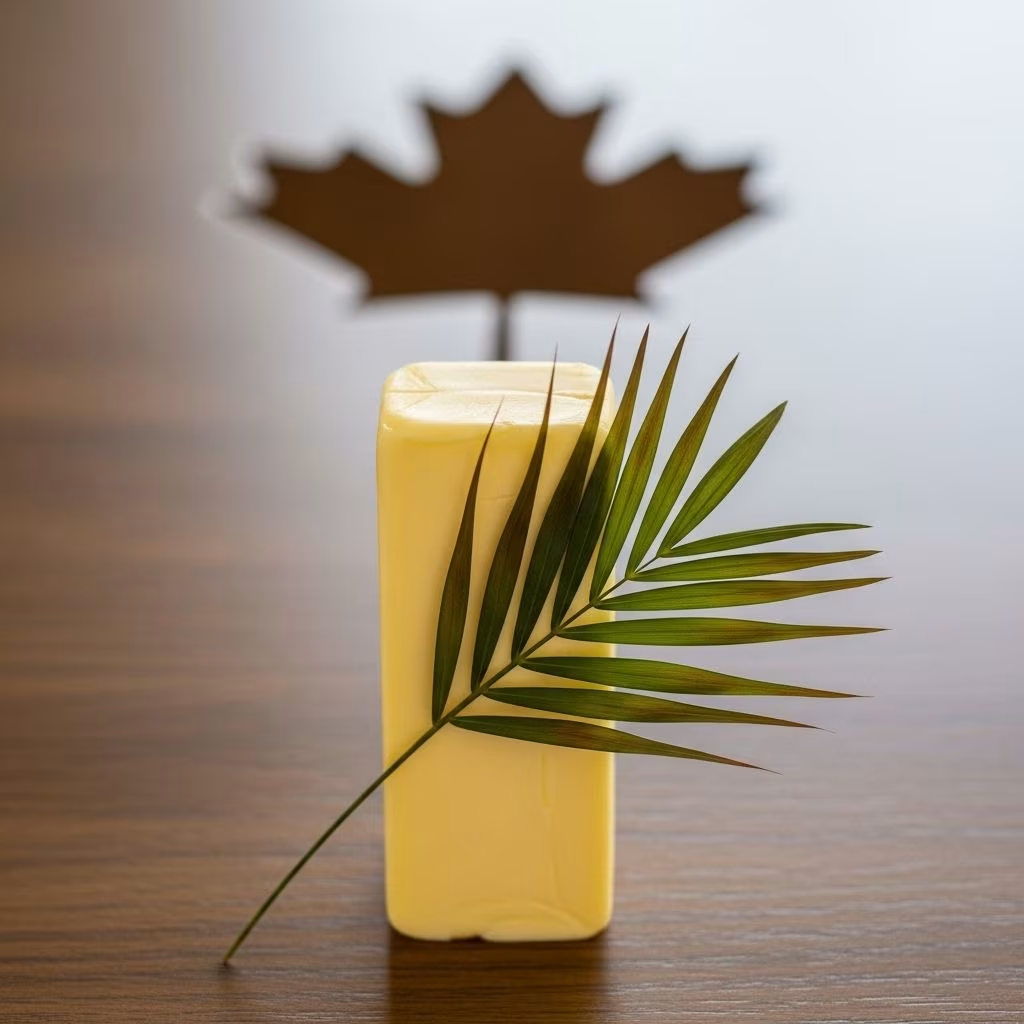
Buttergate: How Palm Oil in Cattle Feed Sparked a Canadian Outcry
In early 2021, Canadians noticed something unusual about their butter: it was harder to spread, even at room temperature. This seemingly innocent observation unraveled into a national controversy, soon dubbed “Buttergate”, leading to widespread debate about food production transparency, animal feed, and the ethics of sourcing palm oil from abroad. The story exposed how interconnected our choices as consumers, farmers, and industries truly are—and just how quickly public trust can be shaken.
The Origins of Buttergate
During the COVID-19 pandemic, Canadians spent more time baking at home. As people reached for their butter dishes, many realized that their trusted block of butter was unusually firm. The discussion began on social media and food blogs, escalating rapidly into headlines and national debate. Consumers, chefs, and food scientists alike reported the consistency shift, with skeptics initially blaming everything from cold refrigerators to changes in processing. Soon, investigative journalists and activists pointed to the dairy industry’s use of palm oil derivatives in cattle feed as a probable cause.
Palm Oil in Canadian Dairy Production
What many Canadians didn’t know was that dairy farmers had been supplementing cows’ diets with a palm oil by-product, primarily to increase milk fat content and thereby boost butter yield and firm up butter texture. This additive is rich in palmitic acid, a type of saturated fat that, when passed through the cow’s digestion and into its milk, alters the fat composition of the resulting butter. While the practice was not new, it had never received mainstream attention until Canadians encountered the harder butter phenomenon.
- Palmitic acid is highly effective at increasing the fat content in milk, which is essential in the making of butter and other dairy products.
- The ingredient is derived from palm oil, a tropical product often criticized for its environmental impact.
How and Why Palm Oil Came to the Fore
Dairy farming is an industry under economic pressure to optimize efficiency and meet demand. Palm derivatives offer a relatively inexpensive, energy-dense solution for boosting milk fat, especially when cows are not on the most ideal forage diets. When pandemic-driven baking trends created a surge in demand for butter, the use of palm oil feed supplements helped dairy farmers keep up production. However, unlike other feed supplements, palm oil imports carry complicated social and environmental connotations that most Canadians associated with deforestation and loss of natural habitats, not local dairy products.
The result: many Canadians felt blindsided. Consumers trust nationally produced dairy to be free from controversial global ingredients. The public’s expectation was for natural, local, and transparent sourcing—ideals embedded in the Canadian Dairy branding and the “Blue Cow” logo. The revelation of palm oil feeding practices struck many as a violation of a social contract between farmers and consumers.
Consumer Reaction and Trust Issues
The backlash was swift and fierce. Criticism came not from fringe or anti-industry voices but from everyday Canadians committed to dairy, many of whom value the purity and perceived sustainability of Canadian products. Prominent food writers, chefs, and even some farmers expressed shock and disappointment.
- Canadians demanded transparency, wanting full disclosure of feed practices and their impact on product quality.
- Concerns ranged from the health effects of palm by-products to their influence on taste and consistency.
- Social media played a significant role in fueling speculation, anecdotes, and outrage.
Trust, once broken, can be difficult to repair. The discovery of undisclosed palm oil use prompted a re-examination of what other aspects of food production might be hidden from consumers. Even though palm oil feed is approved and widely used in global dairy, the damage to public trust was real and lasting.
Industry and Government Response
The response from the Dairy Farmers of Canada (DFC) and provincial boards evolved quickly:
- Initial statements defended the use of palm oil by-products, emphasizing their effectiveness and lack of documented adverse effects.
- Quebec’s dairy producers were the first to call for a moratorium, urging members to halt the use of palm fats.
- Within a month, the DFC recommended that members discontinue palm oil supplementation while launching a national scientific review.
This marked a rare U-turn for a sector more accustomed to defending established practices. Industry leaders acknowledged that public perception matters as much as scientific evidence. The controversy also forced government representatives to clarify that palm oil is an approved cattle feed additive, though they largely sidestepped taking a position on its appropriateness in the Canadian context.
Inconsistencies and Communication Breakdown
- The early days of the controversy were marked by inconsistent messaging from industry, government, and academia.
- Some researchers suggested palm oil was the likely culprit for harder butter, while others published findings that downplayed or refuted the connection, further confusing the public.
Ultimately, dairy associations committed to transparency, launching a formal investigation into the impacts of feed additives on butter quality and pledging to involve consumer voices in future policy decisions.
Environmental and Ethical Questions
The Buttergate scandal raised not just concerns about consumer trust but also ethical and environmental questions:
- Is it ethical for a nationally branded industry to import feed derived from rainforest-destroying agriculture to produce a local product?
- What about the carbon footprint of shipping palm oil to North America?
- How does this fit with Canada’s sustainability and animal welfare goals?
Environmental groups argued that importing palm oil to feed cattle is at odds with the sustainable, natural image the Canadian dairy sector projects. Palm oil production is a primary driver of deforestation in Southeast Asia, contributing to habitat loss for threatened species such as orangutans, and to climate change through the release of stored carbon in tropical forests. The realization that a daily staple might be connected to environmental harms halfway around the world proved sobering for many Canadians.
Sustainability and the Supply Chain
- The controversy highlighted the hidden globalization of food production, even in products marketed as local.
- Consumers increasingly expect supply chain transparency not just for what’s on the label but for every input, including animal feed.
Comparisons to Global Dairy Practices
Canada is not alone in grappling with these issues. New Zealand, another major dairy exporter, faced a similar controversy over the use of palm kernel extract (PKE) in cattle feed. In response to public outcry, Fonterra, New Zealand’s largest dairy company, implemented a milk testing and demerit system to limit PKE use, prioritizing both product quality and brand perception.
Key differences emerged, however:
- New Zealand’s controversy was primarily driven by concern over tropical deforestation and labor abuses in palm oil production regions.
- Canada’s Buttergate was rooted more in unexpected changes to a familiar product and a sense of betrayal over a lack of transparency.
Both cases underline how modern food systems are interconnected and how quickly local issues can reverberate globally.
Lessons Learned and the Road Ahead
The Buttergate episode exposed vulnerabilities and opportunities in Canada’s food system:
- Transparency is key. Consumers want—and increasingly demand—to know what goes into their food, including animal feed and processing aids.
- Public trust can evaporate quickly if industry and government are not proactive, honest, and forthcoming about practices that might diverge from public expectations.
- Industries built on national branding must align their entire supply chain, including imported inputs, with the values their marketing promotes.
- Real sustainability requires scrutinizing even seemingly minor practices and ingredients for their broader social and environmental impact.
The dairy sector responded with pledges of transparency and scientific inquiry. Researchers were tasked with determining the actual impact of palm-based feed on butter hardness, health, and other qualities. Processors also began to develop technology to better track fat sources in milk supplies, reinforcing the need for end-to-end traceability.
Where Do We Go From Here?
- The future of palm oil in Canadian animal feed remains uncertain. If public opinion continues to turn, palmitic acid may be replaced by alternative, locally sourced supplements.
- Canadian dairy’s core value proposition—local, pure, sustainable—will require consistent verification and public engagement moving forward.
- The case has set a new standard for the food industry at large: unforeseen problems can quickly escalate into major scandals unless there is robust, transparent, and responsive communication from all stakeholders.
Frequently Asked Questions (FAQs)
Q: What exactly caused the Canadian butter to become hard?
The increased use of palm oil-derived feed supplements in dairy cattle diets boosted the palmitic acid content in milk fat, leading to firmer butter at room temperature. Other factors may also contribute, but palmitic acid content was identified as a key player in this case.
Q: Does palm oil in cow feed harm human health?
Current research hasn’t established direct health risks from trace palm-derived fats in dairy. The main issue is with saturated fats in general, which are already present in butter, regardless of palm oil supplementation.
Q: Why do dairy farmers use palm oil in cattle feed?
Palm oil by-products are rich in energy and help increase milk fat, which is essential for butter production. They are a practical solution for keeping up butter supply, especially when forage is limited or of lower quality.
Q: Is palm oil feed practice unique to Canada?
No, the use of fatty acid supplements, including palm derivatives, is common in the global dairy industry. However, not every country faces the same level of consumer scrutiny or controversy.
Q: What changes have been made since the Buttergate scandal?
The Dairy Farmers of Canada initiated a recommended halt on using palm oil supplements and launched a wide-ranging scientific investigation into their impact. The incident has also led to more intense dialogue about food system transparency and sustainability.
Conclusion
The Buttergate scandal was more than a quirky problem with spreadable butter. It became a lightning rod for debates over transparency, sustainability, and food ethics in a globalized world. For Canadians, it was a reminder that even the most familiar products can have complicated backstories, and that maintaining public trust requires openness, responsiveness, and shared values every step of the way.
References
- https://www.dairyglobal.net/health-and-nutrition/nutrition/hard-butter-hard-questions/
- https://farmtario.com/news/lessons-learned-from-public-reaction-to-palm-oil-in-dairy-rations/
- https://www.newfoodmagazine.com/article/139862/buttergate-was-years-in-the-making/
- https://niche-canada.org/2021/03/24/hard-butter-times-in-canada-what-buttergate-reveals-about-environmental-and-food-history/


