


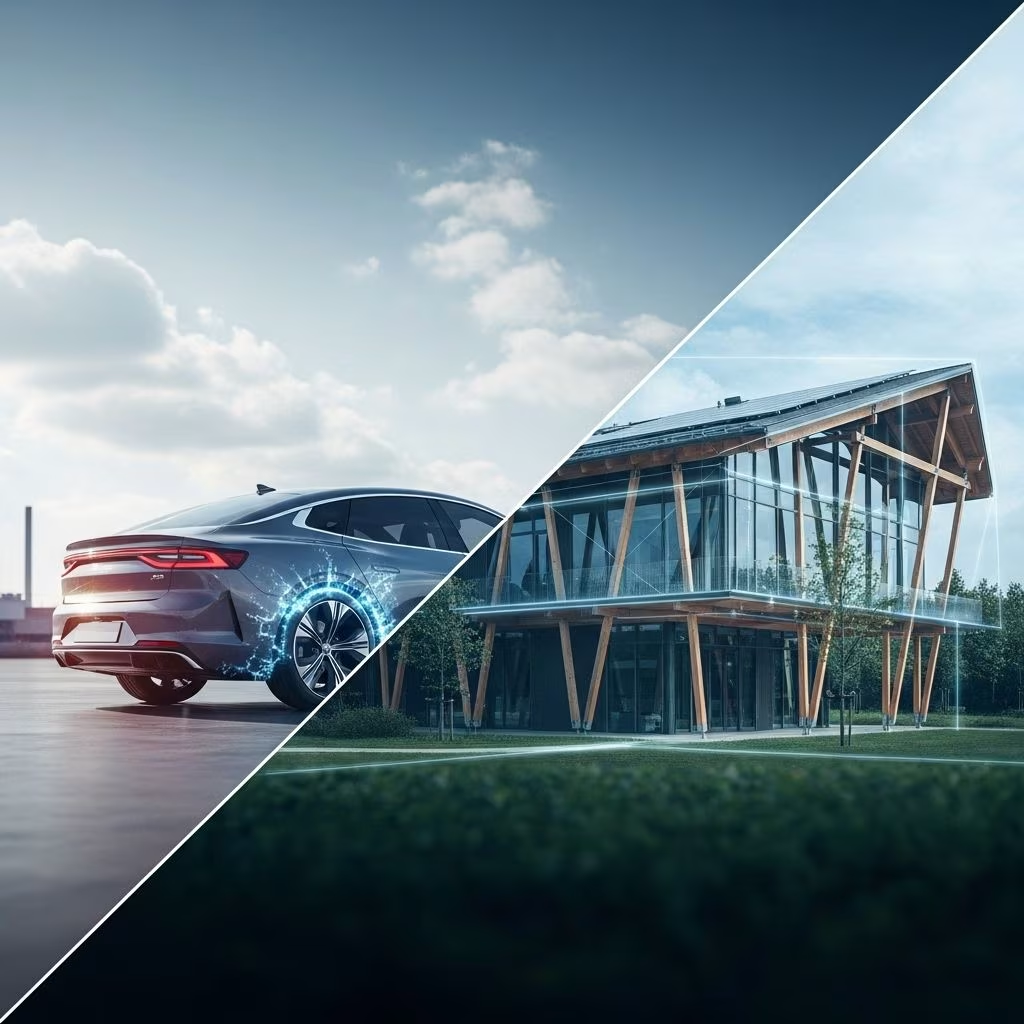
When discussing climate change and carbon emissions, the spotlight often lands on the energy used throughout the lifespan of buildings and vehicles. Yet, an underappreciated but equally pressing factor is the embodied carbon—the emissions generated before a car or building even becomes operational. With electrification and cleaner grids making operational carbon less dominant, the significance of embodied carbon is coming into sharp focus across industries.
Understanding Embodied Carbon: Not Just an Architecture Issue
Embodied carbon refers to all the carbon dioxide (CO2) emissions released during the extraction, production, and transportation of raw materials, manufacturing processes, and the construction or assembly of a product—in this context, a building or vehicle—before it’s put to use. Unlike operational carbon, which spreads emissions over decades, embodied carbon represents an immediate release of greenhouse gases that contribute directly to current atmospheric concentrations.
- For buildings, this includes mining materials like cement and steel, manufacturing components, and on-site construction activities.
- For cars, it covers mining metals, refining lithium and cobalt for batteries, manufacturing steel and aluminum parts, and assembling vehicles.
Globally, the built environment accounts for nearly 40% of annual CO2 emissions, with approximately 13% coming from the immediate upfront, or embodied, carbon released before buildings are ever occupied.
Operational Carbon vs. Embodied Carbon: Shifting Ratios
For decades, climate mitigation efforts centered around operational carbon—the emissions arising from the heating, cooling, powering, and eventual operation of buildings, factories, and vehicles. Improved efficiency standards, renewable energy integration, and electrification of heating and transport have steadily cut these emissions over time.
As electricity grids get cleaner and operational emissions decrease, the proportional share of embodied carbon is rising sharply. Industry analyses project that by mid-century, almost half of the carbon footprint of new buildings will stem from embodied carbon.
- Some countries, like Canada, Sweden, and Norway, already see a nearly 50/50 split between embodied and operational carbon due to aggressive decarbonization of their electricity grids.
- The same principle applies to cars, especially electric vehicles (EVs), where operational emissions can drop to negligible levels but the carbon intensity of battery and vehicle production can dominate the life-cycle carbon budget.
How Embodied Carbon Accumulates in Buildings
Understanding where embodied carbon comes from in buildings helps clarify why it matters so much alongside operational carbon:
- Material extraction and production: Cement, steel, aluminum, glass, and plastics require vast energy inputs and emit CO2 at every stage.
- Transportation: Moving materials from mines and refineries to factories and building sites often involves long distances powered by fossil fuels.
- Manufacturing: The transformation of raw materials into usable products—steel beams, concrete panels, insulation, windows—adds more emissions.
- Construction: Assembly on-site, frequently involving diesel-powered vehicles and machinery.
Major studies have estimated that 20–50% of a new building’s entire life-cycle carbon emissions may be embodied in its initial materials and construction.
Ranking of Building Materials By Embodied Carbon
| Material | Notes on Embodied Carbon |
|---|---|
| Steel | High energy use for smelting and processing; substantial contributor |
| Concrete | Cement production alone is responsible for ~8% of global CO2 emissions |
| Aluminum | Extremely energy-intensive, especially during initial smelting |
| Copper | Used for wiring, also adds to the tally |
| Glass | Energy used in melting, shaping, and stabilizing glass |
| Wood | Comparatively less, but forest management and processing still emit CO2 |
Embodied Carbon in Cars: The Hidden Emissions
Though cars are often seen as a major source of operational emissions due to fuel consumption, the carbon embedded in their materials and manufacturing is often overlooked. For internal combustion vehicles (ICEs), manufacturing can constitute about one-third of their lifetime emissions. For electric vehicles, with minimal or zero tailpipe emissions, embodied carbon can equal or even exceed the operational carbon over the car’s use phase.
- Electric vehicles (EVs): Battery manufacturing, particularly for lithium-ion packs, is highly carbon intensive due to energy-hungry mineral extraction and chemical processing.
- Lightweighting: Use of aluminum and composite materials to reduce vehicle mass improves energy efficiency but often drives up embodied carbon if material sourcing isn’t decarbonized.
- Supply chain complexity: Vehicles are assembled from hundreds of suppliers worldwide, with each component carrying hidden emissions from mining, processing, and assembly.
As the auto industry transitions to EVs and touts zero-emissions driving, it’s critical to factor in the emissions tied to making each car when measuring their true climate impact.
Front-Loaded Emissions: Why Upfront Carbon Is So Critical
Whether in cars or buildings, embodied carbon is all released before the product is even used. This “front-loading” of emissions is crucial:
- Immediate contribution: Carbon released today has a greater effect on short-term warming than carbon spread out over decades.
- Urgency: The next decade is vital for limiting temperature rise. Delaying action means atmospheric CO2 stockpiles grow more quickly.
- Grid decarbonization: As electricity gets cleaner, future operational emissions decrease naturally, but the emissions from materials and manufacturing are fixed, locking in enormous climate impacts that can’t be “cleaned up” later.
That’s why lowering upfront carbon is a powerful way to make immediate progress on climate goals.
Building Industry Innovations: Cutting Embodied Carbon
Recent years have seen a growing movement within architecture, engineering, and construction to address upfront emissions. Key approaches include:
- Material substitutions: Using responsibly sourced timber instead of steel or concrete where possible.
- Low-carbon cement: Innovative formulations greatly reduce emissions during production.
- Material efficiency: Reducing material quantities, optimizing design for minimal waste, and prefabricating components.
- Adaptive reuse: Renovating existing buildings instead of demolishing and rebuilding, preserving the carbon already “stored” in structures.
Case studies in modular and prefabricated construction show embodied carbon reductions of up to 15–21%, primarily by shortening construction timelines, reducing waste, and optimizing material use.
Auto Industry: How to Address Embodied Carbon in Cars?
Minimizing the embodied carbon in vehicles requires a similarly holistic strategy:
- Greener battery production: Localizing battery supply chains and using renewable power in mines and factories.
- Recycled materials: Increased use of recycled steel, aluminum, and plastics can drive down emissions.
- Efficient manufacturing: Minimizing waste, reusing components, and shifting assembly plants to renewable energy.
- Product longevity: Designing for durability and upgradability prolongs the useful life of cars, spreading embodied emissions over more miles and years.
Greater transparency through life-cycle assessments (LCA) allows manufacturers and consumers to make informed choices about the true carbon cost of their vehicles.
Why Cars Are Like Buildings: The Parallels
The building and automotive sectors, despite their differences, mirror each other in their journey towards lower-carbon futures:
- Both front-load a large share of total emissions—increasingly so as operational emissions decline through renewable electrification.
- Both require material innovation and low-carbon supply chains as a core part of climate action.
- Both need strong policy support for carbon accounting, embodied carbon labeling, and incentives to retrofit or reuse existing assets.
With operational emissions on track to drop, ignoring the embodied portion would mean losing half the low-carbon potential of these industries.
Strategies for a Low-Embodied Carbon Future
Tackling embodied carbon in buildings and cars isn’t just about incremental efficiency—it requires a mindshift towards circularity, resource efficiency, and immediate emissions-cutting:
- Comprehensive carbon accounting that includes both operational and embodied emissions for all major projects and products.
- Rapid build-out of low-carbon material supply chains and clean manufacturing.
- Upgrade policies for procurement and standards, aiming to phase out high-carbon materials and reward low-carbon construction and automotive practices.
- Public awareness and demand for products—cars as well as buildings—that have lower upfront carbon footprints.
- Reuse, refurbishment, and upcycling as integral parts of both industries, maximizing the value of materials already invested.
Key Takeaways
- Embodied carbon from manufacturing and construction now rivals, and may soon dominate, total life-cycle emissions in both cars and buildings.
- Immediate action on upfront carbon is crucial—every ton of CO2 cut now prevents further warming and buys time for legacy emissions to dissipate.
- Material choices and supply chains matter as much as operations—carbon savings start long before a building is opened or a car is driven.
- Systemic change is needed: from manufacturers, designers, policymakers, and consumers alike.
Frequently Asked Questions (FAQs)
Q: What is the difference between embodied carbon and operational carbon?
A: Embodied carbon is the carbon emitted during the production, transport, and assembly of materials before a building or car is used. Operational carbon refers to emissions from day-to-day operations, such as heating, cooling, or driving.
Q: Why is embodied carbon becoming more important now?
A: As buildings and vehicles grow more energy efficient and grids decarbonize, their operational emissions decrease, making embodied carbon a much larger percentage of total emissions.
Q: Which building materials have the highest embodied carbon?
A: Steel, concrete (particularly cement), and aluminum are the main culprits, followed by copper and glass.
Q: How can car and building manufacturers reduce embodied carbon?
A: By using recycled and low-carbon materials, improving process efficiency, localizing and decarbonizing supply chains, and designing for long product lifespans.
Q: What role do consumers play in reducing embodied carbon?
A: Consumers can demand carbon transparency, choose products and buildings with lower embodied emissions, and support brands and projects with clear carbon-cutting commitments.
References
- https://oneclicklca.com/en-us/resources/articles/embodied-carbon-vs-operational-carbon
- https://community.carbonleadershipforum.org/t/embodied-vs-operational-lca-ghg-emissions-messaging/5646
- https://www.nature.com/articles/s41598-024-73906-7
- https://community.carbonleadershipforum.org/t/ranking-of-top-embodied-carbon-materials-in-buildings/7873
- https://circularecology.com/embodied-carbon-footprint-database.html


