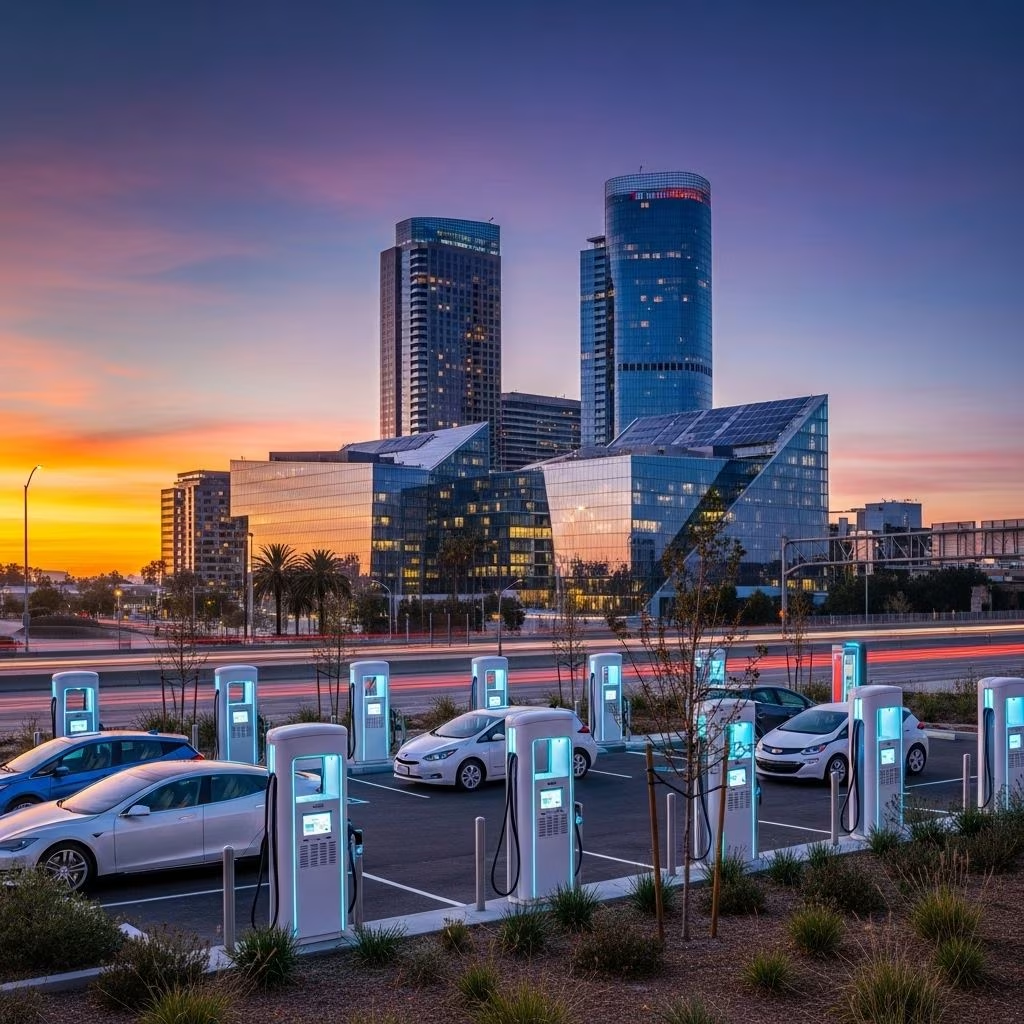
California’s Electric Vehicle Infrastructure Expansion
California has been at the forefront of promoting electric vehicles (EVs) as part of its broader strategy to reduce greenhouse gas emissions and transition towards cleaner transportation. The state has set ambitious targets, including having over 1.5 million zero-emission vehicles (ZEVs) on the road by 2025, with a goal of achieving 100% of in-state new vehicle sales being ZEVs by 2035.
Electric Vehicle Incentives in California
California offers various incentives to encourage the adoption of electric vehicles. While the Clean Vehicle Rebate Program (CVRP) has stopped accepting new applications, other programs like the Driving Clean Assistance Program (DCAP) and Clean Cars 4 All (CC4A) continue to provide financial assistance to eligible participants. These programs can offer up to $14,000 in incentives for purchasing a new or used electric vehicle.
Electric Vehicle Rebates and Tax Credits
Beyond state programs, California residents may also benefit from federal tax credits, although these have been impacted by recent federal policy changes. Additionally, utility companies offer incentives for installing home charging systems, further reducing the financial barriers to EV adoption.
Expansion of Electric Vehicle Charging Infrastructure
California has launched the $55 million “Fast Charge California Project” to enhance public EV charging infrastructure. This initiative focuses on installing fast chargers across the state, prioritizing disadvantaged communities and public sites. By 2025, California aims to have 250,000 electric vehicle chargers, including 10,000 DC fast chargers statewide.
Fast Charge California Project
The Fast Charge California Project is part of the California Electric Vehicle Infrastructure Project, which has already contributed to the installation of nearly 10,000 public EV chargers since 2017. This project not only supports the rapid deployment of EV charging stations but also ensures that they are accessible to the public, particularly in underserved areas.
California Public Utilities Commission Initiatives
The California Public Utilities Commission (CPUC) plays a crucial role in supporting EV infrastructure development. It has authorized investor-owned utilities to submit proposals for transportation electrification investments, focusing on underserved communities and reducing ratepayer costs. These initiatives include facilitating grid integration technologies and developing rate strategies to reduce demand charges for EV drivers.
Grid Integration and Demand Management
To support the increasing demand for electricity due to EV charging, the CPUC encourages the development of technologies that enhance grid integration, such as submetering for residential EV chargers. Additionally, it promotes policies that reduce the impact of demand charges and encourage EV charging during periods of excess grid capacity.
Frequently Asked Questions (FAQs)
Q: What are the current electric vehicle targets for California?
A: By 2025, California aims to have over 1.5 million zero-emission vehicles on the road, with a goal of achieving 100% of in-state new vehicle sales being ZEVs by 2035.
Q: What incentives are available for purchasing an electric vehicle in California?
A: Californians can access up to $14,000 in incentives through programs like DCAP and CC4A, along with utility incentives for home charging installations.
Q: How is California expanding its EV charging infrastructure?
A: The state is launching initiatives like the Fast Charge California Project, which provides funding for installing fast EV chargers, with a focus on disadvantaged communities.
Future Outlook for Electric Vehicles in California
As California continues to lead in EV adoption and infrastructure development, it faces challenges such as maintaining public support and navigating federal policy changes. Despite these challenges, the state remains committed to its zero-emission vehicle goals, leveraging both state and private sector investments to drive innovation and accessibility in the EV sector.
Policy Changes and Public Support
California’s efforts are also influenced by broader environmental and economic considerations. The state aims to ensure that EV charging is affordable and accessible to all drivers, addressing issues like rising electricity costs and leveraging state fleets to demonstrate the feasibility of ZEVs in large-scale operations.
References
- https://afdc.energy.gov/fuels/laws/ELEC?state=CA
- https://www.utilitydive.com/news/california-55million-incentive-ev-charging/757915/
- http://eslawfirm.com/blog/cpuc-offers-guidance-near-term-utility-transportation-electr
- https://coltura.org/electric-vehicle-rebate-california/
- https://www.latimes.com/environment/story/2025-08-19/california-officials-release-report-on-zero-emission-vehicle-goals
- https://www.energy.ca.gov/programs-and-topics/programs/clean-transportation-program/clean-transportation-funding-areas-0
- https://dot.ca.gov/-/media/dot-media/programs/sustainability/documents/transportation-electrification/nevi/2025-ca-nevi-plan-update-a11y.pdf
- https://calevip.org/fast-charge-california-project
- https://calmatters.org/environment/2025/05/california-electric-car-mandate-senate-revoke-waiver/