Rich Countries’ Imported Food Is Driving Global Biodiversity Loss
As concerns over environmental degradation deepen, mounting evidence reveals that the appetites of high-income nations for imported food and timber are fueling biodiversity loss across the globe. By outsourcing production, these countries effectively shift the consequences of their consumption onto poorer, species-rich regions, accelerating the destruction of habitats and threatening vulnerable wildlife. This far-reaching trend demands urgent attention and global policy action.
The Outsized Impact of Consumption in Wealthy Nations
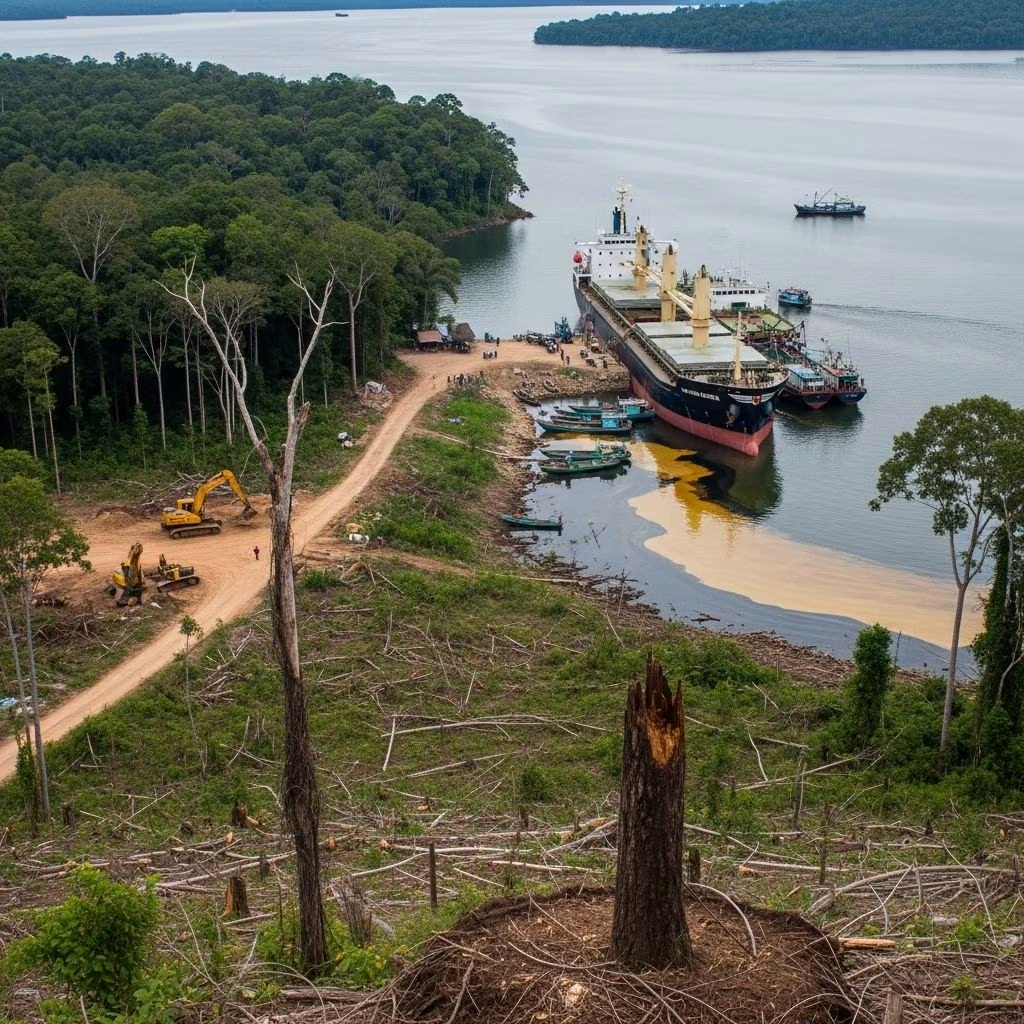
Recent research led by Princeton University finds that 24 high-income nations are responsible for 13.3% of all species range loss globally, primarily due to imported crops and timber driving deforestation outside their borders. This means that biodiversity loss is often an invisible export: while forests and wildlife seem protected at home, the environmental cost is borne elsewhere.
- Consumption-driven deforestation impacts forest-dependent vertebrates—birds, mammals, and reptiles—in tropical countries with dense biodiversity.
- On average, international biodiversity losses caused by wealthy nations are 15 times greater than their domestic impacts.
- The United States, Germany, France, Japan, and China are among the top contributors, with the U.S. having large impacts in Central America and China/Japan in Southeast Asia.
Tracing the Invisible Footprint: How Outsourcing Drives Species Extinction
Until recently, it has been extremely challenging to quantify how countries’ consumption affects biodiversity in other nations. Marrying satellite imagery of deforestation with economic trade and species range data, researchers now pinpoint “hotspots” where destructive footprints hide:
- Industrial-scale agriculture, cattle ranching, and timber production in exporting countries destroy forests to supply overseas markets.
- 25% of critically endangered species suffered over half their range loss due to international consumption from 2001–2015.
- Biodiversity pressures are ‘outsourced’ to regions with high species richness and vulnerability, especially low-income tropical countries.
“By importing food and timber, developed nations are essentially exporting extinction.”
Direct and Indirect Drivers of Trade-Related Biodiversity Loss
Biodiversity loss through trade arises from complex mechanisms spanning direct and indirect effects:
- Direct impacts:
- Deforestation for export crops and timber.
- Emissions, habitat disturbance from shipping and logistics.
- Spread of invasive species and pests through global trade channels.
- Wildlife trafficking and overexploitation.
- Indirect impacts:
- Land conversion, loss of ecosystem services.
- Intensification of monoculture and agroecosystem specialization.
- Reduced soil fertility, increased pollution, and water overuse.
- Structural shifts in agriculture favoring export-oriented production over traditional diversified farming.
International Trade: With Efficiency Comes Ecological Cost
| Aspect | Benefits of Trade | Biodiversity Costs |
|---|---|---|
| Economic Gains | Lower prices, increased efficiencies | Habitat destruction in exporter countries |
| Food Security | Diverse and abundant markets | Specialized monoculture, reduced local diversity |
| Land Use | Maximized agricultural output | Loss of native ecosystems, fragmented habitats |
| Risk Shift | Countries retain green space | Pressure transferred to less wealthy nations with weaker regulations |
Food Systems: Central Engine of Biodiversity Loss
Modern food systems are at the heart of the crisis. Conventional agricultural practices drive biodiversity loss through habitat conversion, heavy use of chemical inputs, and the replacement of diverse native landscapes with vast monocultures.
- Intensified global demand accelerates ecosystem destruction and species extinction.
- Robust biodiversity is crucial for food security, enhancing ecosystem resilience, pest control, soil fertility, and pollination.
- Transforming food systems will be vital for restoring nature: plant-based diets, sustainable farming, and ecosystem protection are all powerful levers.
Global Biodiversity Hotspots: Where the Damage Is Most Severe
The externalized pressures from high-income countries concentrate in biodiverse regions that are least equipped to withstand them. These “hotspots” are:
- Central America—primarily affected by U.S. demand for beef, soy, and timber.
- Southeast Asia—impacted by China and Japan’s demand for palm oil, rubber, tropical hardwoods.
- Tropical South America and Africa—heavily impacted by European demand for coffee, cocoa, and biofuels.
In these regions, global market forces drive large-scale landscape change, undermining both local and global biodiversity.
The Role of Trade Policies and International Agreements
Despite the clear links between trade and biodiversity, national policies rarely address these cross-border impacts. International frameworks, agreements, and summits, however, are beginning to recognize the need for sustainable food and commodity trade:
- UN Food Systems Summit: Highlights food systems transformation for health, nutrition, and sustainability.
- Biodiversity conventions: Urge stronger collaboration between importing and exporting nations.
Effective solutions require bridging the gap between economic interests and ecosystem stewardship.
What Can Be Done? Pathways Toward Sustainable Consumption
Addressing the global biodiversity crisis fueled by trade and food imports will demand coordinated, comprehensive responses. Actionable pathways include:
- Dietary Change: Shifting toward plant-based diets lowers pressure on ecosystems and supports biodiversity.
- Nature-Friendly Agriculture: Adopting polyculture, reducing inputs, and restoring native ecosystems on spared agricultural land.
- Conservation Hotspot Targeting: Mapping and protecting the most at-risk regions by linking trade data to species distribution.
- International Cooperation: Importing nations must recognize responsibility for overseas impacts and promote habitat protection and sustainable trade.
- Support for Indigenous and Local Communities: Empowering those who steward biodiversity strengthens conservation and sustainable livelihoods.
- Policy Integration: Biodiversity criteria should influence trade agreements and consumer choices.
The Urgency of Food System Transformation
Transforming food systems is central to combating biodiversity loss. Three interdependent levers shape this process:
- Changing Diets: Reduced meat and dairy consumption decreases the need for imported feed and pasture, sparing natural habitats.
- Protecting and Restoring Land: Setting aside land for nature and restoring native ecosystems offer direct, measurable biodiversity gains.
- Farming for Biodiversity: Limiting agrochemical inputs and transitioning from monocultures to diversified, wildlife-friendly cropping systems rebuild ecosystem health.
Progress will depend on political will, global collaboration, and transformative change in both consumer behavior and production systems.
Frequently Asked Questions (FAQs)
Q: How do food imports by wealthy nations cause biodiversity loss in other countries?
A: By importing agricultural products and timber, high-income nations outsource the environmental costs of production to exporting countries. This often results in deforestation and conversion of biodiverse habitats into farmland, impacting wildlife and ecosystems.
Q: Which regions and species are most affected?
A: Tropical regions in Central America, Southeast Asia, South America, and Africa host the most species-rich habitats and suffer the greatest impacts. Critically endangered vertebrates are especially vulnerable, with trade-linked habitat loss threatening their survival.
Q: Why can’t producing countries protect their biodiversity?
A: Many producer nations are low-income and prioritize economic growth over environmental protection. Weak regulations, global market pressures, and limited capacity to enforce conservation laws combine to expose their natural resources to exploitation.
Q: What role do consumers in wealthy countries play?
A: Consumer choices in high-income countries—favoring imported foods, wood, and luxury commodities—directly influence production practices abroad. Reducing demand for extinction-driving products, choosing sustainably-sourced goods, and supporting biodiversity-friendly diets all help lessen pressure.
Q: What policies are needed to address this issue?
A: International agreements, biodiversity criteria in trade deals, stronger protection for hotspots, and support for indigenous conservation are essential. Importing countries should collaborate with exporters to promote sustainable land use and restore damaged ecosystems.
Key Takeaways
- Global trade is a major driver of biodiversity loss, with rich countries’ consumption destabilizing ecosystems abroad.
- Invisible outsourcing of deforestation and habitat loss puts rare species and biodiversity hotspots at risk.
- Transformation of food systems, agricultural practices, and trade policies is urgently needed to promote sustainability.
- International cooperation, nature-friendly farming, and dietary change are among the most effective levers for protecting global biodiversity.
References
- Princeton University study on global biodiversity loss linked to imported food and timber.
- Analysis of trade’s direct and indirect effects on global ecosystems.
- Chatham House report on food system impacts and transformation for biodiversity.
- Importance of biodiversity for food resilience and security.
- UN Food Systems Summit recommendations for biodiversity and sustainability.
- Plant-based diets and nature-friendly farming as solutions for biodiversity loss.
References
- https://cpree.princeton.edu/news/2025/global-biodiversity-loss-tied-outsourced-deforestation-princeton-study-reveals-hidden
- https://ecologyandsociety.org/vol30/iss3/art1/
- https://www.ciwf.com/media/7443948/food-system-impacts-on-biodiversity-loss-feb-2021.pdf
- https://nph.onlinelibrary.wiley.com/doi/10.1002/ppp3.10492
- https://www.science.org/doi/10.1126/sciadv.abm9982
- https://proveg.org/news/fixing-food-systems-protecting-biodiversity/