


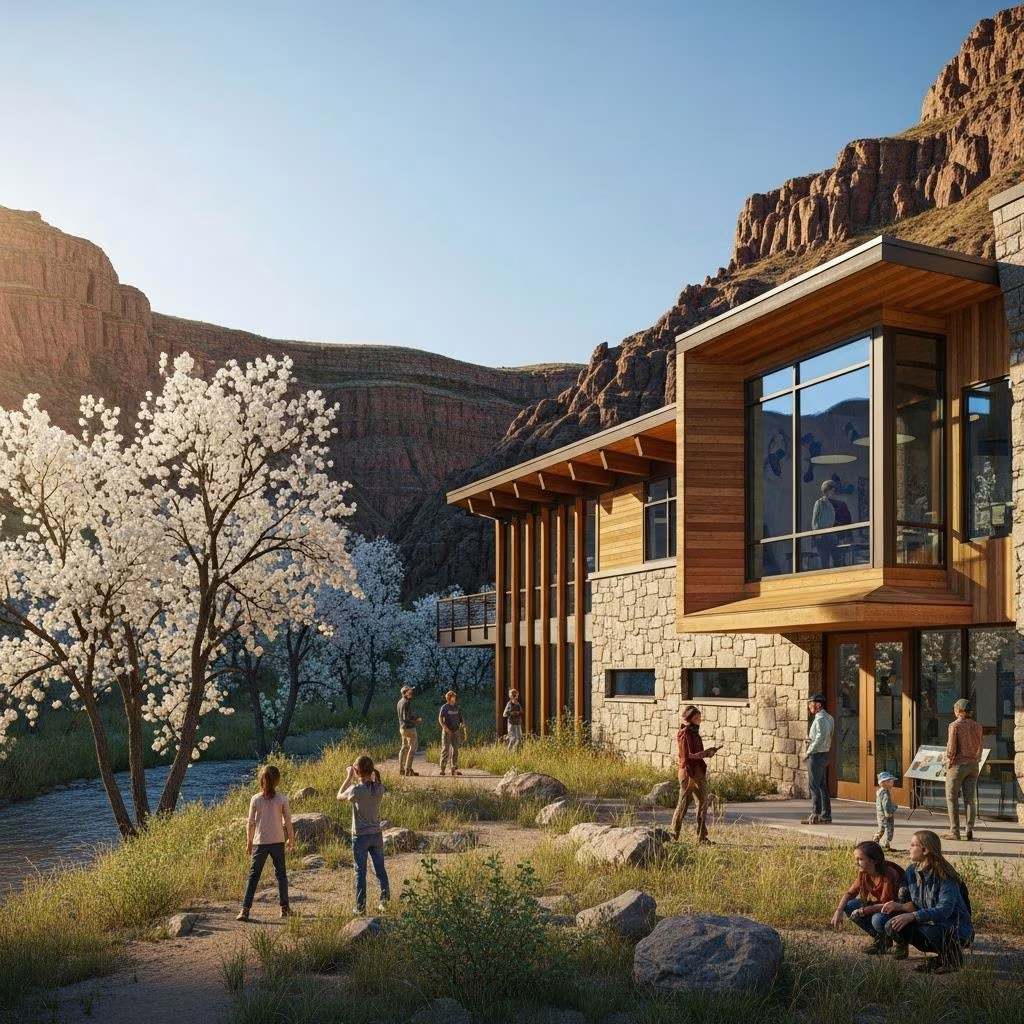
Cottonwood Canyon Experience Center: Building with Purpose and Place
Established as a celebration of landscape and natural experience, the Cottonwood Canyon Experience Center stands as a testament to thoughtful design, sustainability, and community engagement. This centerpiece of Cottonwood Canyon State Park in Oregon not only honors the site’s rich agricultural history but sets a forward-looking model for sustainable building practices by utilizing wood that is often overlooked or undervalued. From outdoor educational initiatives to innovative material use, every aspect of the center was shaped to respond to the site’s rugged ecology and its cultural legacy.
About Cottonwood Canyon State Park
Founded in 2013 and sprawling across over 8,000 acres, Cottonwood Canyon State Park is Oregon’s second-largest state park. Nestled along the iconic John Day River, the park was created as a destination and a gateway to the region’s unique wildlife, dramatic geology, and cultural history. The park landscape is marked by vertical river cliffs, arid grasslands, and historic barns, reminding visitors of its agricultural roots and the ongoing transition from private to public stewardship.
Prior to its establishment, the land was privately owned and largely inaccessible to the general public. Today, the park grants unlimited access to stunning habitats brimming with elk, deer, antelope, and a vibrant array of birds and reptiles.
Park planners envisioned a unique recreational experience that matched the scale and drama of the environment, leading to the creation of an anchoring facility — the Cottonwood Canyon Experience Center.
Design Vision and Community Relevance
The design for the Experience Center was shaped by a need to honor the region’s history, culture, and environment. The vision was to create an adaptable, multi-use structure that fosters outdoor learning, community engagement, and environmental stewardship. Walker Macy, the landscape architects, ensured that the building would stand alongside the historic barns as contemporary reminders of agrarian industry and local resilience.
Key aims included:
- Maximizing opportunities for outdoor education
- Serving as a gateway to the park’s natural wonders
- Providing spaces for classroom activities, interpretive exhibits, and community gatherings
- Integrating design elements that respond to wind, sun, and weather for year-round usability
- Embedding sustainability at every level, supporting local economies and ecosystems
Building Form and Placement
The 1,500-square-foot center’s architecture echoes the region’s barn vernacular, blending familiar forms with modern function. Placed thoughtfully within the landscape, the facility utilizes orientation, shading devices, and wind breaks to create comfortable outdoor gathering areas shielded from harsh weather. Wide walkways connect the center to the park’s camping and cabin sites, facilitating easy access and supporting communal interaction.
Interior and Exterior Flexibility
- Heavy Wall: Designed for efficient storage of program materials, exhibits, educational tools, and library media.
- Open Side: Features weather-protected doors allowing indoor activities to extend into the meadow, blurring the boundaries between inside and outside.
- Nighttime Ribbon of Light: A distinctive band of illumination signals the center’s presence and purpose, setting it apart from traditional agricultural structures and inviting visitors to engage.
Sustainability: Building with Wood Nobody Wants
One of the center’s signature innovations lies in its use of juniper wood — a local, underappreciated resource that provides environmental, economic, and aesthetic benefits. Rather than rely on conventional lumber, the project sourced juniper, a species considered invasive in some contexts. By harvesting and repurposing juniper wood, the building supports regional ecosystem management, reduces material transport emissions, and boosts local forestry economies.
Sustainability features include:
- Local sourcing: Using juniper from nearby forests to support both the environment and the local economy.
- Climate response: Large doors are concentrated on the leeward side for wind protection, with juniper shade arbors mitigating solar heat gain.
- Cross ventilation: Opposing doors enable passive cooling, minimizing the need for energy-intensive systems.
- Translucent roofing: Maximizes daylight, further reducing electrical demands.
- Durability: Exterior materials and wood interiors that age gracefully, eliminating repainting and reducing long-term maintenance.
Why Juniper?
| Characteristic | Benefit |
|---|---|
| Abundant but underused | Juniper forests are dense and expansive in the region, but the wood is seldom used commercially, making it a sustainable choice that alleviates forest crowding. |
| Rot-resistant | Ideal for exterior applications in Oregon’s climate, increasing longevity. |
| Wildlife and ecosystem support | Managing juniper benefits local habitats, improves water availability, and enhances overall ecosystem health. |
Multi-Use Facility: A Hub for Learning and Community
The Experience Center was envisioned as a resource for the entire region — not just a park commercial asset. It hosts:
- Outdoor education institutes and research programs focusing on local ecology and the John Day River
- Interpretive displays telling stories of history, geology, and wildlife
- Classroom areas for community workshops and school programs
- Library space with regional literature and educational media
- Activity and meeting areas for groups and events
- Gathering spaces for cultural and environmental events
This community-centered approach ensures that the Experience Center remains active, adaptable, and relevant for diverse audiences including park visitors, local residents, educational institutions, and traveling researchers.
Park Features and Activities
Beyond the Experience Center, Cottonwood Canyon State Park offers:
- Access to hiking, wildlife viewing, and stargazing across expansive meadows and cliffs
- Boating, rafting, and fishing opportunities on the John Day River
- Spring and fall steelhead runs, attracting anglers and naturalists
- Seasonal wildflower displays, particularly in April and May
- Opportunities for regulated hunting outside developed areas
Environmental Education and Stewardship
The Experience Center is a focal point for environmental education — offering workshops and programs that foster stewardship, safety, and science literacy. It provides curriculum support, hands-on activities, and interpretive walks focused on topics such as:
- Watershed health and hydrology
- Local wildlife and plant identification
- Geology and history of the canyon and its surroundings
Architectural Response to Landscape and Weather
Designing for rugged, rapidly shifting canyon weather was paramount. Key strategies included:
- Shaded outdoor spaces that double the building’s usable area during summer
- Wind-breaks and door placement to protect against prevailing gusts
- Material selection that is resilient, locally adapted, and visually harmonious with historic barns and meadows
- Integration with trails and pathways, enhancing accessibility and experiential flow
Honoring History and Looking Ahead
The Experience Center stands as a contemporary layer atop decades of agricultural history. The building’s form, materiality, and function reference family barns, barns along the John Day River, and the resourcefulness of early farm and ranch communities.
Yet, its orientation to science, sustainability, and outdoor learning positions it as a model for future generations — connecting visitors and regional residents to the ongoing story of stewardship, education, and ecological responsibility.
Frequently Asked Questions (FAQs)
What is the Cottonwood Canyon Experience Center?
A multi-use facility at Oregon’s Cottonwood Canyon State Park, designed for environmental education, community events, and supporting outdoor recreation.
Why was juniper wood chosen for the building?
Juniper is a locally abundant yet underutilized material with rot-resistant properties. Its use supports ecosystem management, local economies, and sustainability goals.
How does the design respond to the site’s climate?
The building uses wind breaks, shade arbors, adaptive door placement, and cross ventilation, ensuring comfortable usage in variable canyon weather.
What activities take place at the Experience Center?
Environmental education workshops, interpretive exhibits, research programs, community meetings, and cultural events.
Can the center be reserved for group events?
Yes, groups can reserve the facility for up to 50 people. Details are managed by the park office.
Key Takeaways
- The Cottonwood Canyon Experience Center is a model for sustainable rural architecture.
- Innovative use of juniper wood supports local forestry management and ecological health.
- The building integrates deeply with the historical and environmental narrative of Central Oregon.
- It serves as a gateway for outdoor learning and regional community engagement.
- Design prioritizes adaptability, climate responsiveness, and low-impact longevity.
References
- https://signalarch.com/project/cottonwood-canyon-experience-center/
- https://stateparks.oregon.gov/index.cfm?do=park.profile&parkId=195
- https://cottonwoodcanyons.org/education/public-tours-and-field-trips/
- https://www.visitutah.com/things-to-do/road-trips/scenic-byways/little-cottonwood-canyon-scenic-byway
- https://www.tripadvisor.com/Attraction_Review-g60922-d255182-Reviews-Big_Cottonwood_Canyon-Salt_Lake_City_Utah.html
- https://www.visitsaltlake.com/listing/big-cottonwood-canyon/55175/
- http://www.fs.usda.gov/r04/uinta-wasatch-cache/recreation/big-cottonwood-canyon-scenic-byway
- https://www.tripadvisor.com/Attraction_Review-g57030-d4234736-Reviews-Cottonwood_Canyon_Road-Kanab_Utah.html
- https://www.visitsaltlake.com/mountain-resorts/big-cottonwood/events/?bounds=false&view=list&sort=date


