


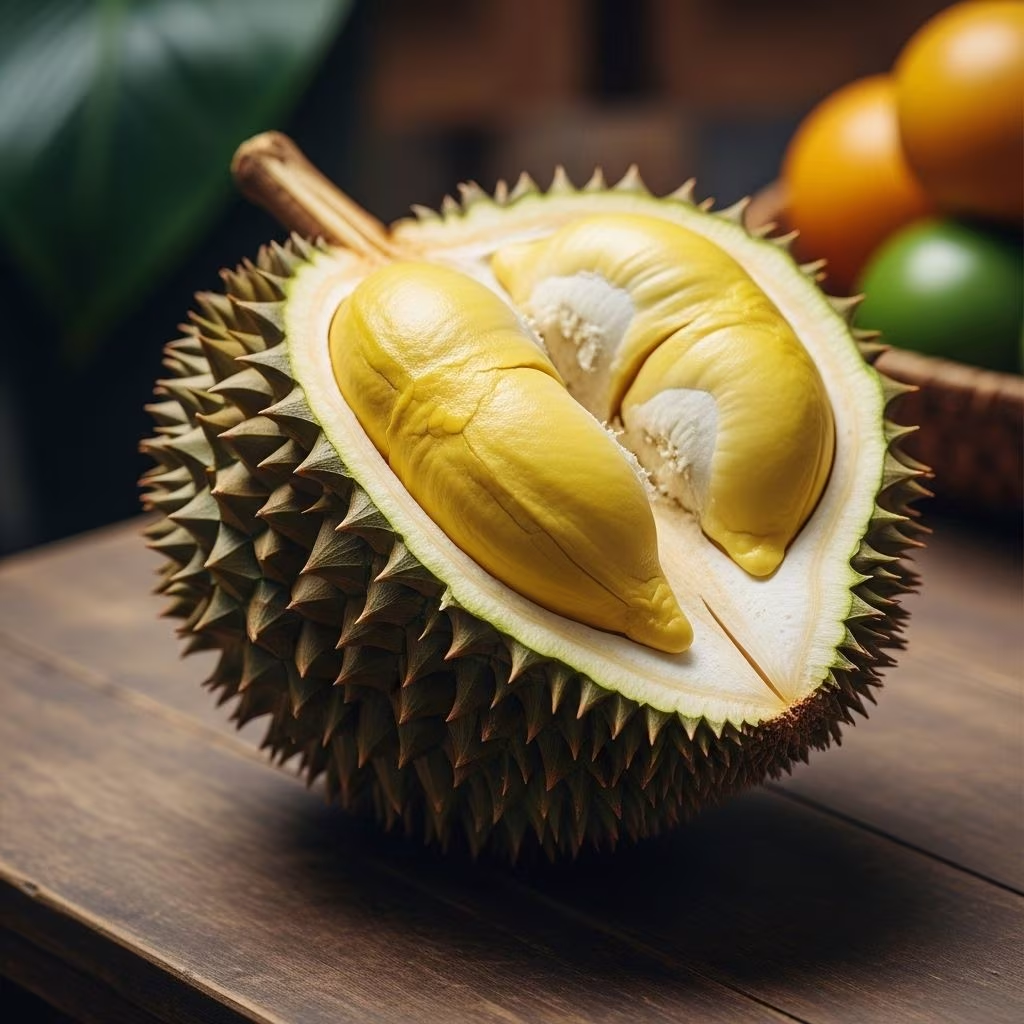
Few fruits inspire reactions as strong as durian: the so-called “King of Fruits” loved for its creamy, complex flavor and loathed for its pungent aroma. In Southeast Asia, the durian is more than just food—it’s a cultural icon, a symbol of season, abundance, and shared heritage. But for many outside the region, it’s simply the world’s smelliest fruit. This article explores the world of durian from every angle: its history, biology, cultural role, nutrition, reasons for its divisive reputation, and the ongoing debate over whether durian is a delicacy or a dare.
Introducing Durian: The Fruit That Divides
No fruit is quite as controversial as the durian. Native to Southeast Asia, the durian (Durio zibethinus and related species) is prized for its creamy flesh and detested for its notoriously powerful smell. Some describe the fragrance as a blend of sweet almonds, cheese, onion, and decaying garbage—scents so potent that it is banned from many hotels and public transit systems across the region.
- Family: Malvaceae
- Origin: Southeast Asia (primarily Malaysia, Indonesia, Thailand)
- Appearance: Large, oval or oblong; tough, thorny rind protecting pale yellow to deep gold soft flesh
- Taste: Rich, sweet, custardy flavor with notes of almond and subtle undertones of caramel and garlic
- Smell: Extremely pungent; compounds such as sulfur dominate, invoking strong—and polarized—reactions
Why People Love or Hate Durian: The Aroma and Flavor Dichotomy
Most durian newcomers react first to its odor. The scent has been compared to everything from rotting onions to gym socks and even roadkill. Chemically, this fragrance comes from a complex mix of sulfur-containing compounds, esters, and fats unique to the fruit. While some can’t get past the smell, aficionados assert that the taste is an entirely different experience: buttery, sweet, and almost reminiscent of creamy custard.
- Love it? Many Southeast Asians and durian lovers describe the taste as addictive and the scent as richly inviting.
- Hate it? Those unfamiliar often recoil, describing it as overpowering, even nauseating.
Durian’s reputation is such that some public spaces in Singapore, Thailand, and elsewhere display “No Durian” signs alongside prohibitions on smoking or pets. Airlines have banned the fruit from flights, and hotels routinely outlaw it in guest rooms.
The Botany of Durian: A Thorny Marvel
Durian trees grow up to 50 meters tall, boasting large, oval fruits covered in sharp, formidable spines. The inside reveals large seeds surrounded by custard-like pulp—the edible part. Durian trees require hot, humid conditions and are notoriously sensitive, making their cultivation an art as much as a science.
- Bloom and Fruit: Trees produce pale gold flowers pollinated primarily by bats.
- Species: Over 30 recognized species, but Durio zibethinus is the most widely grown and eaten.
The timing of harvest is crucial to achieving the perfect creamy flesh prized by aficionados; underripe or overripe fruit can taste bitter or have excessive liquid seepage.
The Cultural Significance of Durian in Southeast Asia
Durian’s importance in Southeast Asia goes far beyond its taste. The fruit is a symbol of abundance and a marker of the seasons. Festivals, street markets, and social gatherings often revolve around sharing durian. In Malaysia, Indonesia, Thailand, and the Philippines, durian season is eagerly anticipated, akin to cherry blossom season in Japan.
- Malaysia: Durian is featured in local folklore, celebrations, and is considered a national treasure.
- Thailand: Thailand supplies one of the world’s largest volumes of durian and holds festivals to celebrate the harvest.
- Indonesia: The fruit is a beloved seasonal treat, incorporated into sweets, ice creams, and even savory dishes.
- Philippines: Davao City is famous for its durian, sometimes referred to as the “Durian Capital.”
Customs and etiquette surround durian sharing; it’s common for friends and family to gather specifically to eat fresh durian, often outdoors or in designated eating spaces, due to its persistent scent.
The Chemistry of Durian’s Infamous Aroma
What makes durian so unique—and divisive—is its smell, which is the product of a complex bouquet of molecules. Scientists have identified over 50 aromatic compounds in durian, primarily a class of sulfur-containing volatiles, such as thiols and sulfides that impart an odor similar to onions, garlic, and cooked cheese. Other notable contributors include esters (which lend fruity or sweet notes) and alcohols.
| Compound Group | Odor Character |
|---|---|
| Sulfur compounds (thiols, sulfides) | Onion, garlic, rotten egg |
| Esters | Pineapple, caramel, fruity |
| Ketones | Sweet, creamy |
| Alcohols | Yeasty, fermented |
The interplay between these molecules is responsible for durian’s signature scent, which only intensifies as the fruit ripens. For fans, these compounds create a complex, heady perfume; for others, the effect is overwhelming.
Nutrition and Health Benefits of Durian
Durian isn’t just about bold flavors and strong reactions—it’s also impressively nutritious. The fruit is a rich source of:
- Vitamin C – Supports skin, immunity, and antioxidant defenses.
- B vitamins (thiamine, riboflavin, niacin, B6, folate) – Promote energy production, nerve health, and metabolic function.
- Potassium, calcium, and magnesium – Essential for heart, muscle, and bone health.
- Fiber – Aids digestion and gut health.
- Natural healthy fats – Add creaminess and enhance satiety.
Recent research and traditional medicine have linked durian to several potential health benefits:
- Rich in antioxidants that neutralize harmful free radicals and may help reduce the risk of chronic diseases
- Anti-inflammatory potential due to sulfur and polyphenolic compounds
- May promote cardiovascular health by reducing blood pressure and cholesterol levels
- Supports digestive health due to its high fiber content
- Potential anti-cancer effects as some bioactive compounds may block the growth of certain cells (mostly demonstrated in lab studies)
- Low glycemic index compared to other tropical fruits, supporting more stable blood sugar responses
- Supports immune system through vitamin C and phytonutrients
Durian is calorie-dense and should be enjoyed in moderation as part of a balanced diet. Despite persistent myths, there is no scientific evidence that pairing durian with alcohol is dangerous, although overindulgence in either is generally not recommended.
How to Eat Durian: Fresh, Frozen, Cooked, and Beyond
Durian can be enjoyed in a variety of forms, appealing to a wide range of tastes and preferences:
- Fresh: The purest way—split open the shell to reveal the custardy sections within, and dig in.
- Frozen: This mellows the smell and makes the fruit easier to transport and store.
- Desserts: Used in ice cream, cakes, pastries, mooncakes, and sticky rice confections.
- Savory dishes: Sometimes added to stews, curries, or served with rice in Indonesia and Malaysia.
- Processed products: Includes candies, chips, and even coffee or biscuits flavored with durian essence.
Owing to its intensely divisive nature, first-timers may want to sample durian in a blended dessert or sweet rather than raw for their introduction.
Ecological and Environmental Impact
As durian has become more popular beyond Southeast Asia, challenges have arisen in sustainability and environmental management. Durian trees require specific conditions, substantial land, and careful maintenance. Unsustainable expansion of orchards can lead to deforestation and loss of biodiversity in some regions. Responsible growers now emphasize traditional orchards and biodiversity to minimize these impacts, often interplanting durian with other crops.
World’s Wild Durian Craze: Export Markets and Global Demand
Durian’s international popularity has soared in recent years, especially in China and other East Asian markets, turning it into a valuable cash crop. Export demand has led to increased acreage in countries like Thailand and Malaysia, with new cultivars bred for larger size, stronger aroma, or milder taste to suit different markets. This global durian boom is not without controversy—while it brings economic opportunity to producers, it also raises concerns about ecological costs and authenticity.
Why Is Durian Banned in Hotels and Public Transport?
Durian’s legendary odor is the main reason for its ban from indoor spaces. The smell lingers for hours, sometimes days, and can permeate air-conditioning, upholstery, and clothing. That’s why:
- Public transportation systems in countries such as Singapore and Malaysia clearly prohibit durian onboard, joining the ranks of smoking, pets, and hazardous goods.
- Hotels and indoor venues similarly forbid the fruit to protect carpet, furniture, and guest comfort.
The result? Eating durian is often a social event staged outdoors, in specialized stalls or at roadside tables.
Durian Myths and Fun Facts
- Durian is rumored (incorrectly) to be deadly when eaten with alcohol—while heavy consumption isn’t advised, there’s no concrete proof of a fatal interaction.
- The word “durian” is derived from the Malay word duri, meaning “thorn.”
- The world’s largest durian varieties can weigh up to 8 kilograms (over 17 pounds).
- Ancient kings and scholars wrote poems and treatises on durian’s exceptional flavor—while colonial travelers likened it to eating custard in a latrine.
Frequently Asked Questions (FAQs)
Q: Why does durian smell so strong?
A: Durian’s famous (or infamous) smell is caused by a unique blend of over 50 volatile organic compounds, particularly sulfur-based molecules, that combine to create its intense, lingering aroma.
Q: Is durian safe to eat?
A: Yes, durian is safe when consumed as part of a balanced diet. There are no confirmed health risks unless you have allergies, and folklore about lethal consequences when mixed with alcohol lacks scientific proof.
Q: Where can I try durian for the first time?
A: Southeast Asian markets, fruit stalls, and specialty stores often sell fresh or frozen durian. If you’re new to durian, start with desserts or processed products before tasting it fresh.
Q: Are there different types of durian?
A: Yes, there are over 30 species, with many distinct cultivars. The most popular is Durio zibethinus, but others are prized for varied flavor profiles and textures.
Q: What are the main health benefits of durian?
A: Durian is high in vitamin C, B vitamins, fiber, and antioxidants. It supports heart, bone, immune, and digestive health, and may have anticancer and anti-inflammatory properties.
Final Thoughts: Should You Try Durian?
Durian is one of the most polarizing foods on earth—revered by some, reviled by others, but never ignored. It is a symbol of tradition, celebration, and culinary adventure across much of Asia. Whether you fall into the camp of lovers or haters, durian offers a sensory experience unlike any other. Brave the fruit’s formidable spines, breathe in its powerful aroma, and you might find yourself joining the legion of durian devotees—or, perhaps, vowing never to try it again.
References
- https://draxe.com/nutrition/durian-fruit/
- https://www.potsandpans.in/blogs/articles/durian-health-benefits-uses-and-important-facts
- https://www.healthline.com/nutrition/durian-fruit
- https://www.mountelizabeth.com.sg/health-plus/article/durian-benefits
- https://www.webmd.com/vitamins/ai/ingredientmono-1458/durian
- https://pmc.ncbi.nlm.nih.gov/articles/PMC6463093/


