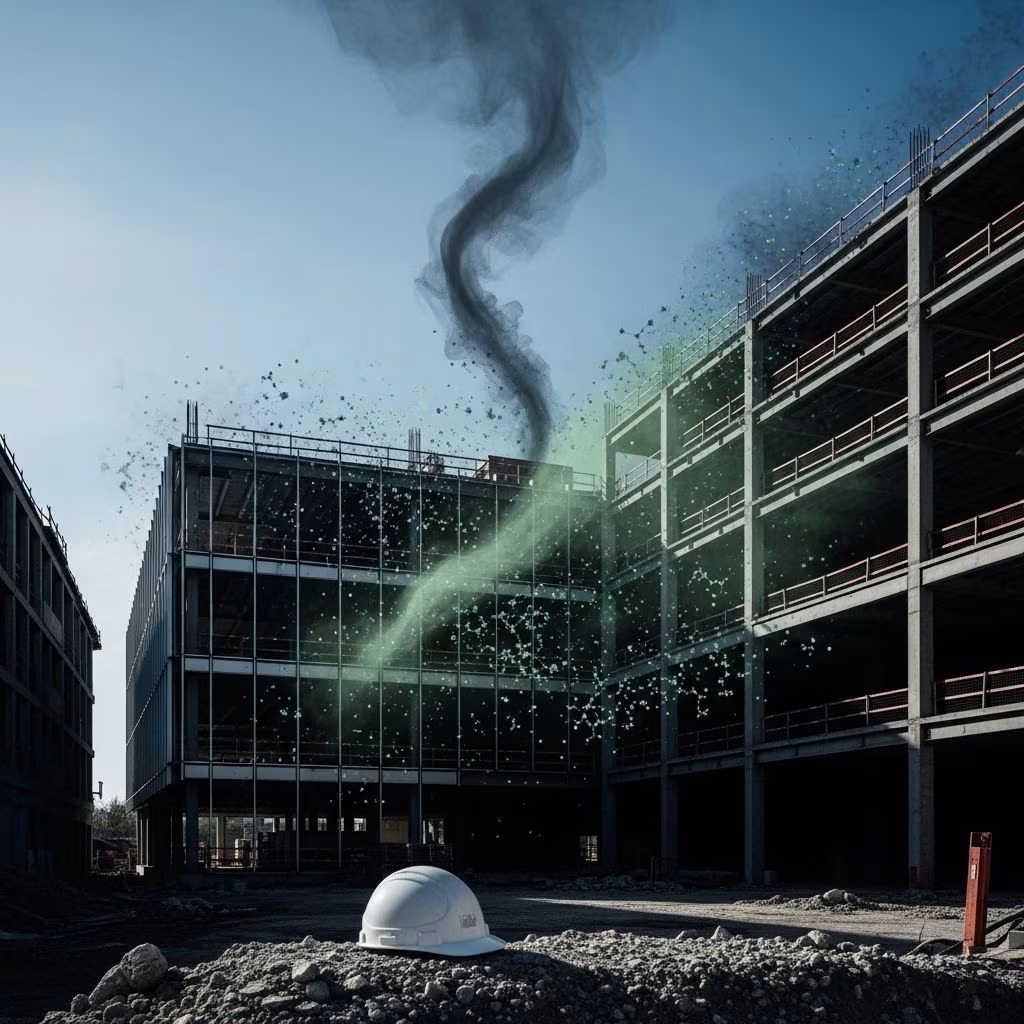
Embodied Carbon: The Blindspot in the Buildings Industry
The climate crisis has placed unprecedented pressure on the construction sector to decarbonize. While much attention has focused on reducing operational emissions — those associated with lighting, heating, and cooling buildings — a far less conspicuous but equally urgent problem has emerged: embodied carbon. Embodied carbon represents a substantial portion of a building’s lifetime emissions, yet it remains largely unaddressed in codes and policies worldwide. This article explores what embodied carbon is, why it’s critical in climate discussions, and how shifting the industry’s focus could transform the future of our built environment.
Contents
- What is Embodied Carbon?
- How Embodied Carbon Differs from Operational Carbon
- Why Embodied Carbon Matters
- Embodied Carbon in Common Building Materials
- Measurement and Accountability
- Current Blindspots in Policy and Practice
- Solutions and Industry Initiatives
- Barriers Slowing Change
- Frequently Asked Questions
What is Embodied Carbon?
Embodied carbon refers to the greenhouse gas emissions originating from the entire lifecycle of building materials — from raw material extraction and production, through manufacturing and transportation, to construction, maintenance, renovation, and finally demolition and disposal.
This “upfront carbon” is released before the building is even used. Once those emissions are released into the atmosphere during construction, they cannot be retrieved or retroactively reduced. Embodied carbon includes:
- Mining and extracting raw materials
- Refining and processing materials
- Transport of materials to factories or sites
- Manufacturing and assembly
- On-site construction practices
- Ongoing repairs, retrofits, or renovations
- Ultimately, demolition and waste management
How Embodied Carbon Differs from Operational Carbon
Historically, the buildings sector has focused on reducing operational carbon — the emissions associated with keeping the lights on, the temperature comfortable, and systems running. In contrast, embodied carbon is about the emissions spent before the doors ever open to occupants.
| Aspect | Embodied Carbon | Operational Carbon |
|---|---|---|
| Definition | Emissions from materials and construction | Emissions from energy used during building’s life |
| Timing | Locked in at construction | Spread over decades of building use |
| Reduction Methods | Material choices, efficient design, recycled content | Efficiency upgrades, renewable energy |
| Current Policy Focus | Frequently unregulated | Widely addressed in codes and standards |
As the grid gets cleaner and operational emissions decline, embodied carbon is poised to become the dominant source of emissions in new construction — making it a critical blindspot.
Why Embodied Carbon Matters
The global construction sector is responsible for roughly 40% of total annual CO₂ emissions. While operational carbon has been falling thanks to energy efficiency gains and green energy adoption, embodied carbon is gaining ground as a share of the total footprint.
- Fast upfront impact: Unlike operational emissions, embodied carbon is emitted now — precisely when emission reductions are most urgent for climate action.
- Permanence: Once embodied carbon is released, it can’t be retracted by future improvements — the “carbon debt” is incurred at construction, not occupancy.
- Magnitude: By 2050, it’s estimated that almost half of all new construction emissions will be from embodied carbon.
- Materials matter: Materials like concrete and steel are among the world’s largest industrial sources of emissions, and their use is escalating with global construction.
Cement — a key ingredient in concrete — makes up about 7% of global CO₂ emissions alone. As global population and building needs surge, particularly in developing regions, the carbon locked into today’s buildings will determine future planetary health.
Embodied Carbon in Common Building Materials
Certain materials are particularly notorious for their embodied carbon burden, including:
- Concrete: The standard building material globally, responsible for an estimated 8% of global carbon emissions. Most of this comes from cement.
- Steel: Often used in structural elements; its production involves energy-intensive processes with significant emissions.
- Insulation: Surprisingly, some high-performance insulation products have substantial embodied carbon, though they can lower a building’s operational carbon over time.
- Aluminum, glass, and plastics: Also feature high emissions from manufacturing and processing.
Lifecycle Emissions Stages:
- Product stage (raw extraction, production, and transportation)
- Construction process stage (delivery and installation)
- Use stage (refurbishment, maintenance, and operation)
- End-of-life stage (demolition, transport, disposal, and possible recycling)
The bulk of a material or product’s carbon impact often occurs before it reaches the construction site.
Measurement and Accountability
The industry now employs Life Cycle Assessment (LCA) methodologies to calculate the total embodied carbon in materials and assemblies. Results are reported using Environmental Product Declarations (EPDs), which act like “nutritional labels” for material impacts — providing transparency on global warming potential as well as other environmental harms like acidification or smog formation.
The Global Warming Potential (GWP) metric, measured in carbon dioxide equivalent (CO2e), is used to benchmark products and drive more informed material decisions. Yet, the use of EPDs and LCAs is not universal, and not all markets require their disclosure or consider them in procurement.
Current Blindspots in Policy and Practice
Despite its significance, embodied carbon remains a “blindspot” in most building codes and sustainability frameworks. Unlike operational carbon — which is well-regulated in most developed economies — embodied carbon is often unmeasured, unreported, and unregulated.
- Green certification systems (like LEED, BREEAM, or WELL) have limited, often optional, requirements addressing material carbon footprints.
- Building codes generally focus on energy efficiency, leaving embodied impacts outside their scope.
- There is a lag in widespread adoption of LCA, EPDs, and procurement standards prioritizing low-carbon materials.
- Industry inertia and lack of public awareness perpetuate business as usual.
This policy gap means that a huge share of emissions is routinely locked into new buildings — emissions that will last for decades, even centuries. This “carbon blindness” undermines climate action across the sector.
Solutions and Industry Initiatives
As the risks become clearer, leading voices in design and construction — along with governments and advocacy groups — are calling for urgent action on embodied carbon. Key solutions include:
- Design for material efficiency: Building only what is needed, minimizing material waste and selecting low-carbon materials wherever possible.
- Use of recycled and reused materials: Salvaged steel, recycled aggregates, or mass timber (from sustainable forests) can dramatically cut impacts.
- Specification of low-carbon concrete and steel: Products with reduced cement, alternative binders, or low-GWP production methods are now available.
- Material transparency: Requiring EPDs for all major material procurement and favoring those with lower GWP.
- Policy and code reforms: Cities like Vancouver, New York, and countries such as Sweden and Norway have begun introducing limits, incentives, and public procurement targets focused on embodied carbon.
Prominent initiatives driving awareness and change include:
- Architecture 2030: Calls for zero carbon buildings, including embodied carbon, by 2050.
- Carbon Leadership Forum: Provides research and resources for measuring and reducing embodied carbon.
- SE2050 Commitment: Engages structural engineers to achieve net zero embodied carbon in structures by 2050.
- World Green Building Council: Advocates for embodied carbon targets worldwide.
The combination of smart design, low-carbon procurement, robust assessments, and strong policy mandates can unlock massive, near-term carbon savings.
Barriers Slowing Change
Despite growing momentum, several key obstacles hinder widespread action on embodied carbon:
- Lack of awareness: Many stakeholders — architects, clients, policymakers — remain unfamiliar with embodied carbon or its significance.
- Data and transparency gaps: Not all manufacturers produce EPDs, and global standardization is incomplete.
- Cost and market inertia: Low-carbon materials can cost more, and market demand is still developing — especially in regions with less stringent environmental policies.
- Policy lag: Regulatory frameworks have been slow to adapt, leaving embodied carbon underregulated.
- Complex supply chains: Tracing the emissions from raw material to finished building can be challenging, particularly for large or international projects.
Nonetheless, as climate goals tighten, these barriers are being challenged by leading cities and companies who see carbon transparency as a market differentiator — and a climate imperative.
Frequently Asked Questions (FAQs)
Q: What is the difference between embodied carbon and operational carbon?
A: Embodied carbon refers to emissions from materials and construction processes before building use, while operational carbon covers emissions from a building’s everyday energy use over its lifetime (lighting, HVAC, etc.). Embodied carbon is incurred upfront, operational carbon accumulates over time.
Q: Why is embodied carbon called a ‘blindspot’ in the buildings industry?
A: While operational emissions are increasingly regulated and targeted in policies, embodied carbon is often overlooked in codes, standards, and project evaluations. This inattention means a large portion of emissions is locked into new buildings without adequate oversight or mitigation strategies.
Q: How can embodied carbon be reduced in construction projects?
A: By using recycled and reused materials, selecting products with low-carbon footprints (via EPDs), designing for material efficiency, and specifying innovative, green alternatives to high-carbon materials such as cement and steel. Policy changes and procurement standards can also push the market toward better choices.
Q: Is it possible to have a building with zero embodied carbon?
A: Achieving absolute zero embodied carbon is challenging. However, significant reductions (and sometimes net zero with offsets or carbon capture) are possible by combining material reuse, green innovations, and responsible sourcing.
Q: Which policies or standards promote embodied carbon reduction?
A: Emerging green building certification requirements, municipal and national procurement targets (such as low-carbon concrete mandates), and voluntary pledges like Architecture 2030 or SE2050 are moving the industry forward. More widespread adoption and stricter codes are needed for broad impact.
Conclusion: Making Embodied Carbon Impossible to Ignore
As the global construction boom continues, the urgency to address the “invisible” emissions locked into our built environment is paramount. Tackling embodied carbon is the missing piece in climate-smart building. Through improved measurement, innovation, policy, and collective will, the sector can transform its largest blindspot into an opportunity for meaningful, near-term climate progress.
References
- https://www.carboncure.com/blog/concrete-corner/what-is-embodied-carbon/
- https://oneclicklca.com/en-us/resources/articles/embodied-carbon-vs-operational-carbon
- https://rmi.org/embodied-carbon-101/
- https://ukgbc.org/news/what-is-embodied-carbon-in-construction/
- https://worldgbc.org/climate-action/embodied-carbon/
- https://carbonleadershipforum.org/embodied-carbon-101-v2/
- https://www.energy.gov/sites/default/files/2024-02/bto-abc-embodied-carbon-022624.pdf
- https://circularecology.com/embodied-carbon-footprint-database.html
- https://newbuildings.org/code_policy/embodied-carbon/