The process of naming hurricanes is a fascinating blend of history, science, and international collaboration. Names not only help us track these powerful storms but also play a vital role in public safety and communication. This article delves into how hurricane names are chosen, why they matter, the evolution of naming protocols, rules for retiring names, and what happens when the annual list of names runs out.
Why Hurricanes Are Named
The primary reason hurricanes and tropical storms are named is to prevent confusion and promote clear communication. Before names were widely used, storms were identified by latitude and longitude, or referred to by dates or locations—an approach that was both confusing and prone to error, especially when multiple storms occurred simultaneously.
Short, unique names help with:
- Disaster response: Ensuring emergency personnel and the public refer to the same storm
- Media coverage: Streamlining reporting and public updates
- Preparedness: Reducing misunderstandings in warnings, watches, and advisories
As the National Oceanic and Atmospheric Administration (NOAA) notes, “Storms are given short, distinctive names to avoid confusion and streamline communications.”
The Evolution of Hurricane Naming
Early Naming Methods
The tradition started long before formal systems were established. In the 19th century, Caribbean islanders often named storms after the Saint’s day the storm occurred on. In the United States, storms were sometimes called by the year or their landfall location (e.g., the Great Galveston Hurricane of 1900).
The Move Toward Standardization
- 1940s: During World War II, meteorologists in the military began giving storms women’s names informally.
- 1950: The United States officially began using the NATO phonetic alphabet (such as Able, Baker, Charlie) to name Atlantic storms.
- 1953: The National Hurricane Center (NHC) introduced its first formal Atlantic basin name list, using only female names.
- 1979: Male names were added to the naming rotation, creating the alternating male-female system we use today.
Other regions across the globe developed their own systems over time, often adopting gender-neutral, local, or culturally significant names reflective of their populations.
How Hurricane Names Are Chosen
Creating and Maintaining Name Lists
Today, hurricane and tropical storm names are selected far in advance by committees of the World Meteorological Organization (WMO) and are maintained by national meteorological agencies such as NOAA’s National Hurricane Center.
- Six lists of 21 names each are used for the Atlantic; these lists are recycled every six years, meaning the 2024 list will be reused in 2030 with any retired names replaced.
- Name selection criteria:
- Short and easy to pronounce
- Familiar to people in potentially affected regions
- Representative of local languages (English, Spanish, French in the Atlantic)
- Not already used for another storm in the same region
- No names begin with Q, U, X, Y, or Z due to the rarity and potential confusion those starting letters may cause.
- Names are assigned in alphabetical order as storms form; the first tropical storm of the season gets the ‘A’ name, the second the ‘B,’ and so on.
| Storm Number | Name |
|---|---|
| 1 | Alberto |
| 2 | Beryl |
| 3 | Chris |
| 4 | Debby |
| 5 | Ernesto |
| … | … |
| 21 | William |
When Does a Storm Get a Name?
A name is assigned to a tropical cyclone when it reaches the strength of a tropical storm, defined by sustained winds of at least 39 mph (63 km/h). If the storm intensifies to hurricane status (sustained winds of 74 mph or higher), it retains that same name for the rest of its course.
This naming convention is applied globally, though specific lists and languages differ by region.
Regional Differences in Naming
While the Atlantic name lists are the most publicized in the U.S., other ocean basins have their own name lists, each curated by regional meteorological organizations. These lists often reflect local language, culture, and norms.
- Eastern North Pacific: Similar system with six rotating lists, managed by the U.S. NHC.
- Western North Pacific: Names contributed by countries in the Pacific and Asia.
- Indian Ocean: Name contributions from bordering countries; names are not recycled.
- Southern Hemisphere: Separate lists for the South Pacific and Australia.
Retiring Hurricane Names
Why Are Names Retired?
If a storm is so deadly or costly that future use of its name would be insensitive to the survivors or confusing in discussion, the WMO committee meets annually and votes to retire that name from future lists.
Some notable retired names from recent years include:
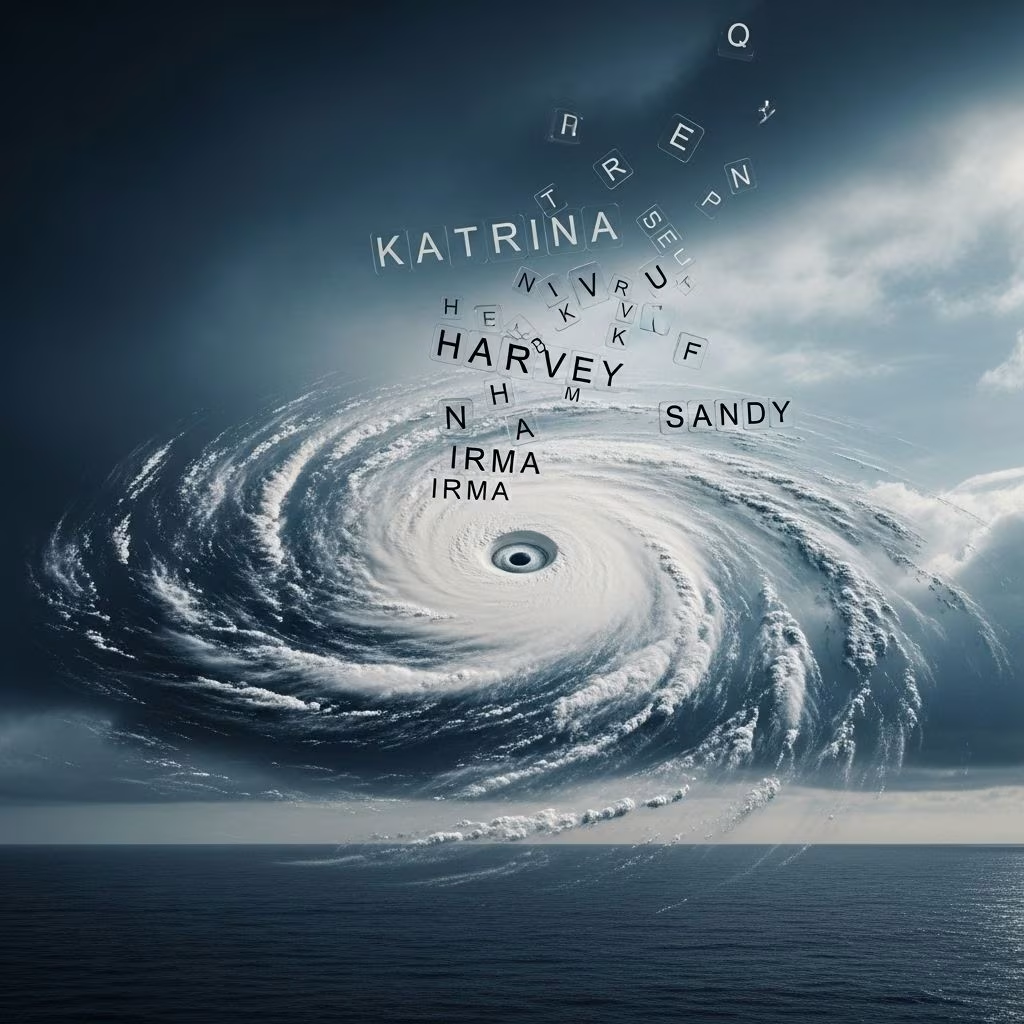
- Katrina (2005): Retired for the devastation in New Orleans
- Harvey (2017): Retired due to catastrophic flooding in Texas
- Michael (2018): Retired after causing major destruction along the Gulf Coast
- Dora and Otis (Pacific): Recent Pacific storms retired for their deadly impacts
When a name is retired, it is replaced with a new name of the same starting letter and gender in the next cycle.
What Happens If the List of Names Runs Out?
Each regional list contains only 21 names per year for the Atlantic because certain letters are omitted. In exceptionally active seasons, such as 2020 and 2005, all names have been used.
- Before 2021: Additional storms were named using the Greek alphabet (Alpha, Beta, Gamma, etc.), but this practice led to confusion due to similar-sounding names.
- Since 2021: The WMO created a supplemental list of pre-approved names that can be used if the regular list is exhausted. Some examples from the supplemental list include Adria, Braylen, Caridad, and Deshawn. This supplemental list has yet to be used, but it is ready for exceptionally active hurricane seasons.
Pros and Cons of Hurricane Naming
- Pros
- Clarity in Communication: Names are easy to remember, easier for the media and public to use, and efficiently support warnings and preparedness measures.
- Public Safety: Reduces misunderstandings and helps save lives by enhancing the transmission of vital storm information.
- Historical Record: Enables clear archiving of data and referencing of storms in research and policy.
- Cons
- Name Overlap: Occasionally, names sound similar or can be confused if tonal differences aren’t clear in some languages.
- Sensitivity Concerns: After a traumatic event, some names evoke strong negative memories for survivors, which is why retiring names is significant.
- No Q, U, X, Y, or Z: The lack of diversity in initial letters sometimes results in less variety year to year.
Frequently Asked Questions (FAQs)
Q: Who actually picks the hurricane names?
A: Committees organized by the World Meteorological Organization (WMO) select names with input from national meteorological agencies in the relevant regions. Lists are reviewed and updated as needed every year.
Q: When does a tropical system receive an official name?
A: Once a tropical cyclone intensifies into a tropical storm, with sustained winds of at least 39 mph (63 km/h), it is given the next name on the annual list.
Q: Can a hurricane name be reused?
A: Yes, unless the name is retired due to an especially destructive or deadly storm. Each list repeats every six years, except for retired names which are permanently replaced.
Q: Why are there no hurricane names that begin with Q, U, X, Y, or Z?
A: These letters have too few commonly used and easily pronounced names, so to avoid confusion and promote clarity, they are omitted from hurricane lists.
Q: What happens if all the names on the list are used up in a season?
A: Previously, the Greek alphabet was used. Now, the WMO uses a supplemental list of pre-approved names to prevent confusion.
Q: Do other regions use the same hurricane names as the Atlantic?
A: No, each ocean basin has its own set of name lists, often reflecting the languages and cultures of surrounding countries.
Fun Facts About Hurricane Naming
- In the early 20th century, some storms were named after unpopular politicians, but the practice was discontinued.
- The overwhelming majority of Atlantic hurricane names are English, Spanish, or French to reflect the linguistic diversity of the region.
- The records for most named storms in a single Atlantic season is 30 (in 2020).
- Tropical cyclones in other ocean basins, like the western North Pacific, are sometimes named after animals, flowers, or historical figures rather than personal names.
- The shortest hurricane name on record is Ana, and one of the longest is Cristobal.
Conclusion: Why Hurricane Naming Still Matters
In an age of ever-increasing climate risks and a 24-hour news cycle, the value of clear, memorable names for tropical systems cannot be overstated. Naming hurricanes aids significantly in communication, disaster response, and education—making it easier for communities at risk to take timely, decisive action. As weather patterns become more unpredictable, the humble process of naming storms continues to play a critical, often life-saving, role in storm management worldwide.
References
- https://stories.tamu.edu/news/2024/08/12/how-are-hurricanes-named/
- https://www.foxweather.com/learn/how-do-hurricanes-and-tropical-storms-get-their-names
- https://www.ecoflow.com/us/blog/hurricane-names-where-do-they-come-from
- https://bkvenergy.com/blog/hurricane-names/
- https://www.cbsnews.com/news/how-do-hurricanes-get-their-names-who-chooses-and-why-list/
- https://www.nhc.noaa.gov/aboutnames.shtml
- https://oceanservice.noaa.gov/facts/storm-names.html
- https://www.britannica.com/story/how-are-hurricanes-named
- https://community.wmo.int/en/tropical-cyclone-naming