


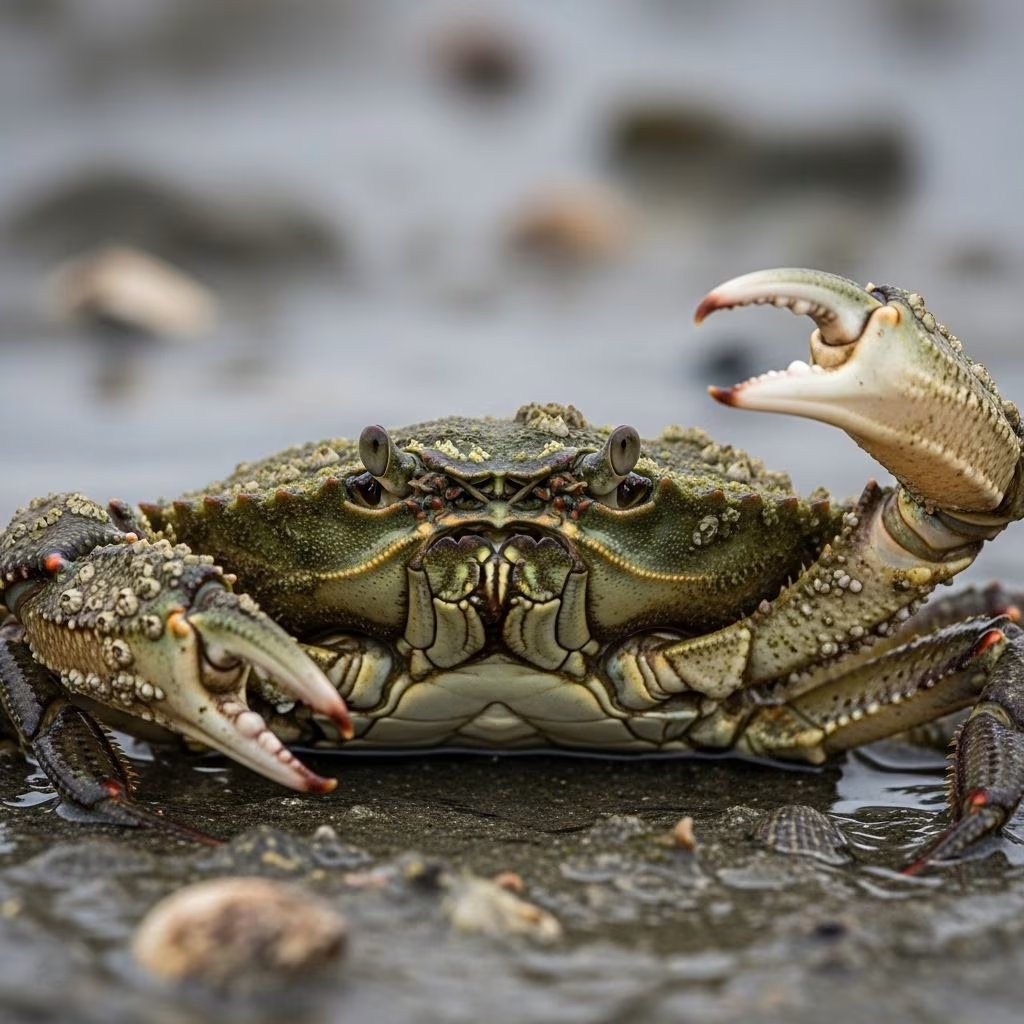
Green Crabs: The Global Threat of an Invasive Marine Species
The European green crab (Carcinus maenas), often called the shore crab, stands as a classic example of a marine invasive species that has upended ecosystems and economies across the world’s coastlines. Renowned for its adaptability, voracious appetite, and rapid spread, this small crustacean has emerged as one of the top 100 worst alien invasive species, raising alarm among scientists, conservationists, and fishermen alike.
What Is the European Green Crab?
The European green crab originates from the northeast Atlantic Ocean and Baltic Sea, where it inhabits rocky intertidal and subtidal zones. While it is native to Europe, its reach now extends to every continent except Antarctica, colonizing environments ranging from North America’s east and west coasts to South Africa, South America, Asia, and Australia.
- Scientific name: Carcinus maenas
- Common names: European green crab, shore crab, green shore crab
- Size: Carapace up to 10 cm (about 4 inches) wide
- Color: Varies from green to dark brown, grey, or red, depending on age and environmental conditions
- Distinct features: Five spines on each side of the eyes, no swimming legs, pentagon-shaped shell
How Did Green Crabs Spread Worldwide?
Green crabs first arrived in North America in the early 1800s, likely stowing away in the ballast water of merchant ships. Since then, they have traveled expansively via human activities:
- Attached to ship hulls or in ballast water
- Transported with commercial shellfish or aquaculture packing
- Moved in sea planes and other maritime equipment
Over time, populations have become established from Newfoundland to Maryland in the Northwest Atlantic and have spread along the Pacific Coast as well. Similar invasions are documented in Australia, South Africa, South America, and other regions.
Why Are Green Crabs Such Successful Invaders?
The green crab’s impressive success as an invader is attributed to several key traits:
- Diverse diet: Feeds on clams, mussels, oyster spat, worms, small crustaceans, and plant material
- High tolerance: Survives in a broad range of salinities and temperatures
- Long larval period: Larvae can drift over great distances, increasing dispersal
- Predatory skill: Fast, aggressive, and adept at opening bivalve shells
- Few natural predators: Especially in non-native habitats, allowing populations to grow unchecked
Ecological and Economic Impacts
Destruction of Eelgrass Beds
Eelgrass is a vital marine resource protecting coastlines from erosion, providing nursery habitat for fish and shellfish, and supporting biodiversity. Green crabs destroy eelgrass beds by cutting them down during feeding and burrowing activities. This leads to destabilization of sediments and the loss of habitats for numerous marine species.
Decline in Shellfish Populations
Green crabs are efficient shellfish predators. Their appetite for soft-shell clams, blue mussels, scallops, and other bivalves has caused steep declines in commercial and recreational shellfisheries in regions like New England and Maine. Economic consequences include:
- Loss of revenue for local fishermen
- Increased costs for shellfish management and restoration
- Damage to third-largest wild fisheries in states such as Maine
Competition and Predation with Native Species
Green crabs outcompete native crabs such as spider crabs and black-fingered mud crabs for food and shelter. The aggressive hunting behavior, rapid multiplication, and lack of natural predators allow green crabs to displace native species, reduce biodiversity, and upset established predator-prey relationships.
Economic and Environmental Toll
- Eelgrass beds destroyed, reducing shoreline protection and fish nursery areas
- Shellfish fisheries harmed, leading to economic downturns in coastal communities
- Direct competition and predation of native crab species, diminishing local crab populations
- Broad decline in coastal ecosystem health
Distribution and Habitat
Green crabs are now found in six major regions globally outside their native range, including:
- Northwest Atlantic: Newfoundland to Maryland
- Pacific Coast of North America
- Australia
- South Africa
- South America
- Asia
Typical habitats include rocky intertidal zones, shallow subtidal areas, estuaries, bays, and soft-bottom regions favored by shellfish.
Management and Control Efforts
Management of green crab populations is complex and ongoing. Efforts include:
- Monitoring and surveys: Scientists regularly track populations using trapping and visual assessments
- Restoration: In some areas, restoration of eelgrass beds and shellfish habitats is underway
- Removal: Targeted trapping and harvesting to reduce local numbers
- Research: Efforts are ongoing to develop biological and environmental controls
Despite local control measures, green crab populations remain resilient due to high reproductive rates and adaptability.
Case Study: Green Crabs in New England and Maine
Green crab populations have surged in New England and Maine over the last century. Warmer ocean temperatures have repeatedly corresponded with population blooms, notably in the 1950s and again in recent decades. These increases devastate soft-shell clam resources and local fisheries, followed by population decreases during colder winter cycles. The challenge of maintaining sustainable coastal fisheries and habitats continues as management responses evolve.
Key Features for Identification
| Feature | Details |
|---|---|
| Color | Green to brown, grey, or red (variation influenced by environment, age, molting delays) |
| Carapace Shape | Pentagon; 5 spines on each side of eyes |
| Size | Up to 10 cm (4 inches) wide |
| Legs | No swimming legs |
| Distinctive Markings | 3 undulations between eyes |
Frequently Asked Questions (FAQs)
Why are green crabs considered so destructive?
They disrupt coastal ecosystems by destroying eelgrass beds, outcompeting native species, and decimating shellfish populations.
How did green crabs arrive in North America?
They were likely introduced in the ballast water of 19th-century merchant ships, and further spread through human-mediated activities and aquaculture.
Are green crabs harmful to humans?
While not directly dangerous to people, their impact on fisheries and habitats can cause significant economic and ecological harm to coastal communities.
Can green crabs be eradicated?
Total eradication is impractical due to their wide distribution and adaptability, but local populations can sometimes be managed through monitoring and removal.
Do green crabs have any predators?
Outside their native range, green crabs have few natural predators. Some fish, birds, and larger crabs may predate them, but predation pressure is generally insufficient to control populations.
How Climate Change Influences the Green Crab Invasion
Warmer ocean temperatures have correlated with periodic population booms—warm cycles increase survival and reproduction, leading to dramatic spikes. During colder decades, populations will often recede, but warming trends associated with global climate change forewarn of continued and even greater green crab impact in the future.
Recent Developments: The Complicated Future of Native Species
In recent years, the ecological role of green crabs has intersected with other invaders. In certain areas, their impact on rocky intertidal habitats has been partially offset by the arrival of additional non-native species, such as the Asian shore crab (Hemigraspus sanguineus). However, this competitive displacement adds new layers of uncertainty and risk for native biodiversity.
What Can Be Done?
Managing the green crab threat requires coordinated, multifaceted strategies:
- Cross-agency monitoring and data sharing
- Rapid response to new infestations
- Research into biological control, including potential predators
- Public education and engagement to prevent introduction and spread
Ultimately, only long-term vigilance and adaptive management can mitigate the ecological and economic damage posed by green crabs.
Conclusion
The invasive European green crab has become a symbol of how a single species can rapidly alter marine environments and threaten the livelihoods of coastal communities. Understanding its biology, spread, and impacts is essential for designing effective solutions to safeguard marine biodiversity and economic interests.
References
- https://www.mariamitchell.org/the-green-crab
- https://en.wikipedia.org/wiki/Carcinus_maenas
- https://wsg.washington.edu/crabteam/greencrab/
- https://dec.ny.gov/nature/animals-fish-plants/green-crab
- http://www.maine.gov/dmr/science/species-information/invasives/green-crabs/green-crab-overview-december-2013
- https://www.invasivespeciesinfo.gov/aquatic/invertebrates/european-green-crab
- https://seagrant.unh.edu/our-work/invasive-species/nh-green-crab-project
- https://hudsonriverpark.org/the-park/parks-river-project/science/wetlab/invertebrates/green-crab/


