


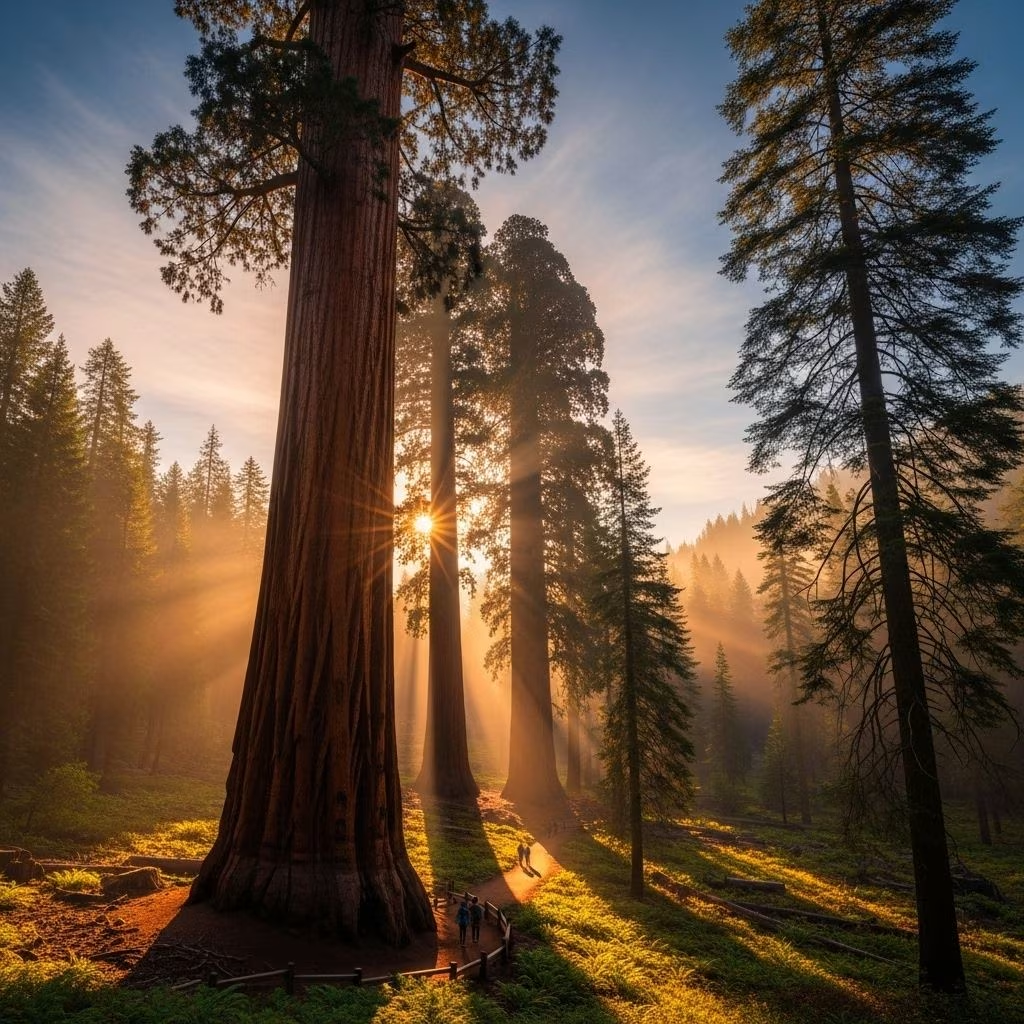
Spectacular Facts About Giant Sequoias
Giant sequoias (Sequoiadendron giganteum) are more than just trees—they are titans of nature that fascinate scientists, conservationists, and visitors alike. Known for their massive size, ancient age, and extraordinary resilience, these trees have stood as living monuments for millennia. This article takes you on an in-depth journey through the key facts, legends, and science surrounding giant sequoias, the world’s largest trees by volume. Discover why these spectacular giants deserve our admiration and protection.
What Are Giant Sequoias?
Giant sequoias are towering coniferous trees unique to California’s Sierra Nevada mountains. They are recognized as the largest living trees on the planet when measured by total wood volume. Not to be confused with their taller cousins, the coast redwoods (Sequoia sempervirens), sequoias are world-famous for their huge mass and ancient lifespans.
- Scientific name: Sequoiadendron giganteum
- Common names: Giant sequoia, Sierra redwood, big tree
- Natural range: Western slopes of the Sierra Nevada, California
- Typical environment: Moist, well-drained soils between 5,000 and 7,000 feet elevation
How Big and Old Do Giant Sequoias Grow?
Giant sequoias hold the record for largest trees by volume. Their exceptional growth makes them natural wonders unrivaled for both size and longevity.
| Feature | Typical Range | Record |
|---|---|---|
| Height | 50–85 m (164–279 ft) | 94.8 m (311 ft) |
| Diameter (at breast height) | 6–8 m (20–26 ft) | Up to 8.8 m (28.9 ft) |
| Age | 1,000–2,000 years | 3,266+ years |
| Trunk Volume | Varies | 52,508 cubic ft (General Sherman tree) |
Though many giants average a height of 250 to 300 feet, the most impressive—like the General Sherman Tree—rise even taller and wider. Some individuals, like the Grizzly Giant, are estimated to weigh nearly two million pounds, with single branches thicker than most other trees’ trunks.
Where Do Giant Sequoias Grow?
Giant sequoias are endemic to around 73 groves scattered along the western Sierra Nevada. Their natural range is limited to a narrow band between 5,000 and 7,000 feet, favoring moist but well-drained soils and frequent snowmelt runoff. Major groves include:
- Giant Forest (Sequoia National Park) – Home to the General Sherman and the President trees
- Mariposa Grove (Yosemite National Park) – Home to the Grizzly Giant
- Grant Grove (Kings Canyon National Park) – Site of the General Grant tree
- Converse Basin (Sequoia National Forest)
The Ten Biggest Giant Sequoias (by trunk volume)
Giant sequoias are ranked by the solid wood volume in their main trunks. The list below highlights the ten most massive:
| Rank | Tree Name | Grove | Height (ft) | Girth at Base (ft) | Volume (cubic ft) | Estimated Age (years) |
|---|---|---|---|---|---|---|
| 1 | General Sherman | Giant Forest | 275 | 103 | 52,508 | 2,300–2,700 |
| 2 | General Grant | Grant Grove | 268 | 108 | 46,608 | 1,650 |
| 3 | The President | Giant Forest | 241 | 93 | 45,148 | 3,200 |
| 4 | Lincoln | Giant Forest | 256 | 98 | 44,471 | – |
| 5 | Stagg | Alder Creek | 243 | 109 | 42,557 | 3,000 |
| 6 | Boole | Converse Basin | 269 | 113 | 42,472 | 2,000+ |
| 7 | Genesis | Mountain Home | 253 | 85 | 41,897 | – |
| 8 | Franklin | Giant Forest | 224 | 95 | 41,280 | – |
| 9 | King Arthur | Garfield Grove | 270 | 104 | 40,656 | – |
| 10 | Monroe | Giant Forest | 248 | 91 | 40,104 | – |
Each of these living legends is a monument of endurance, with the oldest dating back over three millennia.
Ancient Trees With Incredible Longevity
Giant sequoias rank among the oldest living trees on Earth. Many specimens are between 2,000 and 3,000 years old; the oldest dated living individuals exceed 3,200 years.
This remarkable longevity is due in part to their resistance to disease, pests, and fire—something we’ll explore in detail below.
- Oldest known living sequoia: More than 3,266 years (the President Tree)
- Fossil record: Giant sequoias have ancient relatives documented as far back as the Mesozoic era
Epic Reproductive Cycles
Despite their size, every giant sequoia starts life from a seed smaller than an oat flake. Mature trees produce up to 1,500 cones annually, each containing several hundred seeds.
Giant sequoias rely on both wind and animals like squirrels for seed dispersal. Their unique adaptations include:
- Cones may stay on branches for up to 20 years, gradually opening to release seeds over time.
- Seeds require exposed, bare mineral soil to successfully germinate—often provided by periodic wildfire.
- Fire also helps by drying and opening cones, facilitating seed release.
Special Adaptations for Survival
Giant sequoias possess a suite of adaptations that enable them to reach such immense size and age:
- Thick Bark: Sequoia bark is spongy, fibrous, and up to 3 feet thick at the base, making it highly resistant to fire, insect pests, and fungus.
- High Tannin Content: Their sap and bark are rich in tannic acid, which resists decay and deters pests.
- Butt Swell: The massive swelling at the base (“butt swell”) provides stability—think of a massive tree squat to anchor it against storms and floods.
- Epic Regrowth: If the upper part of a tree is damaged, it can often resprout from dormant buds.
Fire: Friend or Foe?
Fire has historically played a crucial role in the life cycle of giant sequoias. While fire can pose risks, for sequoias it is also an essential ally:
- Fire clears competing vegetation, giving seedlings access to sunlight and bare mineral soil.
- Bark’s thickness insulates sequoias from most ground fires, allowing them to survive and even thrive after moderate burns.
- Cones often require heat from fire to fully open and release seeds.
- Without periodic fire, dense forest understory can smother young sequoias, reducing regeneration rates.
Modern conservationists use prescribed burns to mimic natural fire cycles and promote healthy forests.
Human History and Conservation
The fate of giant sequoias has long been intertwined with human history. In the late 19th century, their discovery led to massive logging operations, but public outcry helped launch preservation efforts. Sequoia National Park, created in 1890, was among the first of its kind, inspired largely by these giants.
- Many ancient trees were lost before laws and parks protected them.
- Ongoing threats include climate change, drought, wildfire, and insect outbreaks.
- Scientists and land managers now work to balance fire, logging, and tourism with long-term conservation.
The Grizzly Giant: A Living Legend
Few individuals are as iconic as the Grizzly Giant of Yosemite’s Mariposa Grove:
- Stands 209 feet tall and has an estimated age of 2,000–3,000 years.
- Weighs close to 2 million pounds, with individual branches larger than most trees.
- Ranks 26th largest sequoia in the world by trunk volume.
- Its largest branch—95 feet overhead—is 6 feet in diameter, larger than most non-sequoia trunk trees.
- Remains one of the world’s most photographed trees.
The Grizzly Giant, like all sequoias, began from a minuscule seed.
Fascinating Features of Giant Sequoias
- Evergreen leaves: Needles arranged spirally, providing photosynthesis year-round.
- Slow tapering trunks: Maintain volume higher up, contributing to the tree’s total mass.
- Unique root systems: Sequoias have relatively shallow but wide-spreading roots, lacking a deep taproot but anchoring the huge tree against winds and erosion.
- Contribution to ecosystem: Their fallen logs remain intact for thousands of years, serving as homes and food sources for countless other organisms.
Why Are Giant Sequoias Endangered?
Despite their natural strengths, sequoias face mounting threats in the 21st century:
- Fire suppression: Decades of preventing fires have led to dense undergrowth, making wildfires hotter and more destructive when they do occur.
- Climate change: Drought, high temperatures, and changing precipitation patterns have led to significant tree losses in recent years.
- Human activity: Development, pollution, and logging still endanger groves not within protected parks.
Ecologists and park managers are working hard to monitor tree health and apply adaptive strategies to save these ancient forests for future generations.
Giant Sequoias in Culture and Inspiration
Throughout history, sequoias have inspired awe and reverence among Indigenous communities, naturalists, artists, and travelers. Their immense size and age offer lessons about endurance, adaptation, and stewardship.
Frequently Asked Questions (FAQs)
Q: Where can I see giant sequoias in the wild?
A: You can visit sequoia groves in protected areas like Sequoia National Park, Yosemite National Park, Kings Canyon National Park, and Calaveras Big Trees State Park in California.
Q: Are giant sequoias the same as coast redwoods?
A: No. While both are redwood species, giant sequoias (Sequoiadendron giganteum) are the largest by volume and found only in the Sierra Nevada, whereas coast redwoods (Sequoia sempervirens) are the tallest living trees and grow along California’s coast.
Q: What makes giant sequoias so resilient?
A: Their thick, fibrous bark, high tannin content, and ability to utilize fire for seed dispersal and soil clearing make them remarkably resilient to fire, pests, and decay.
Q: How do sequoias reproduce?
A: Sequoias reproduce via hundreds of thousands of tiny seeds released from cones, dispersing after fire or as the cones naturally dry and open over many years.
Q: Why are giant sequoias important to protect?
A: They are keystone species, supporting entire ecosystems, sequester large amounts of carbon, and provide irreplaceable windows into Earth’s ancient past.
Conclusion
Giant sequoias are truly Earth’s living skyscrapers, breathtaking in scale and story. Protecting them ensures the survival of ancient ecosystems, astounding beauty, and a legacy for generations to come.
References
- https://en.wikipedia.org/wiki/Sequoiadendron_giganteum
- https://redwoodsinyosemite.com/the-grizzly-giant-4-must-know-facts-about-yosemites-oldest-tree/
- https://www.parks.ca.gov/?page_id=1146
- https://www.srs.fs.usda.gov/pubs/misc/ag_654/volume_1/sequoiadendron/giganteum.htm
- https://www.parksproject.us/blogs/in-park/6-wonderful-facts-about-giant-sequoias
- https://www.nps.gov/yose/learn/nature/sequoia-research.htm
- https://www.fs.usda.gov/database/feis/plants/tree/seqgig/all.html


