Can Container Ships Be Too Big? A Critical Examination
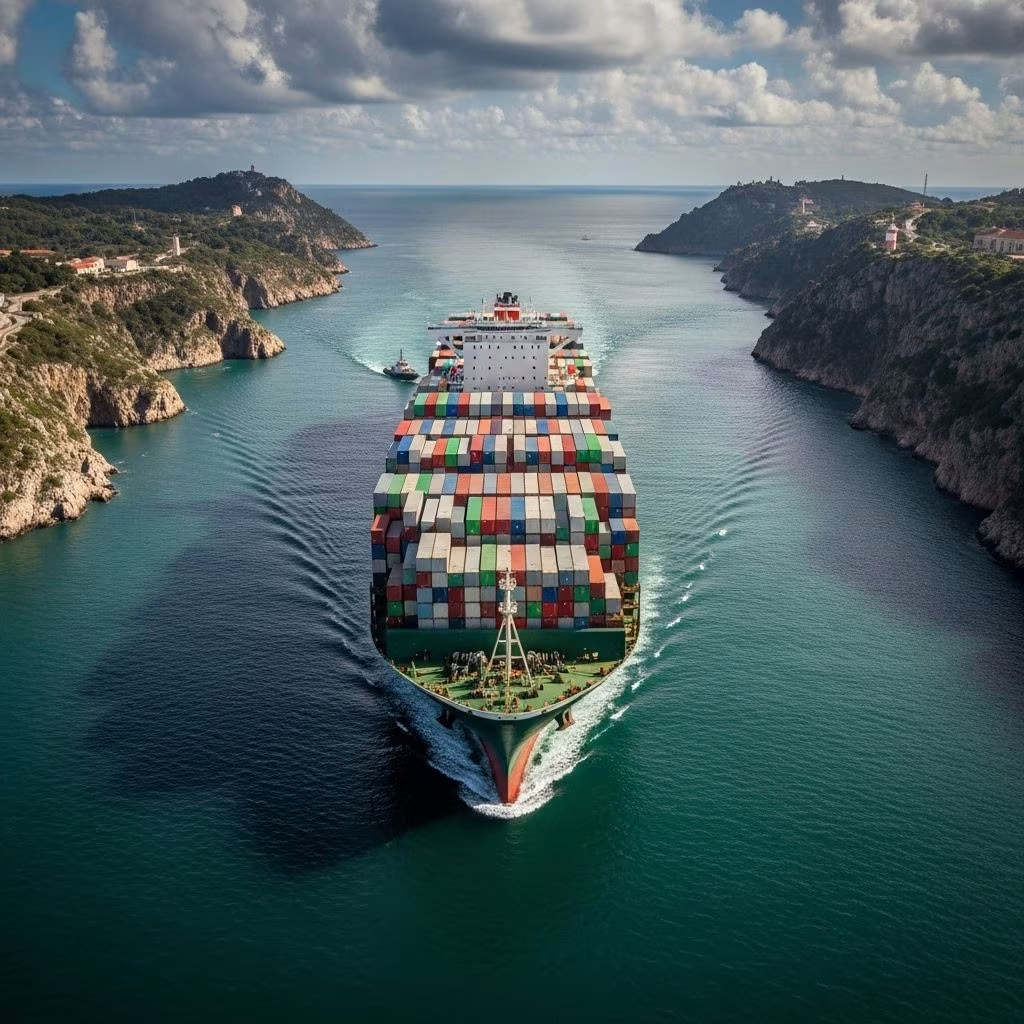
In the race for shipping efficiency, container ships have soared to unprecedented proportions. Vessels stretching over 400 meters dominate global trade today, routinely carrying more than 23,000 twenty-foot containers (TEUs) in a single voyage. But as the size of these ships increases, so do the questions: Are they truly more efficient? What are the hidden environmental and economic costs? And how sustainable is this quest for ever-larger vessels in the context of a fragile planet?
The Legacy and Business Case for Bigger Ships
Containerized shipping underpins over 90% of world trade, providing the backbone for the movement of goods ranging from electronics to food, and clothing to raw materials. The logic behind ever-larger ships seems simple: economies of scale. The more containers a vessel carries, the lower the cost per box, in theory. Shipping companies cite decreased fuel consumption per container, lower crew costs per unit cargo, and improved carbon emissions per ton-kilometer as key drivers for growth in ship dimensions.
- Recent mega-ships have capacities exceeding 23,000 TEUs, nearly a five-fold increase over ships from the 1970s.
- Larger vessels claimed to offer cost savings on a per-container basis, but these savings have been diminishing with every generation of upscaling.
- Operational improvements, not just sheer size, increasingly drive efficiency gains.
The Diminishing Margins of Scale
Despite the hype, the latest research indicates that each upsizing delivers diminishing returns. While first-generation mega-ships yielded real operational cost savings, the savings with the newest ships are now only four to six times smaller than earlier models. Much of these are attributable to advanced propulsion, hull design improvements, and slow-steaming practices, rather than to increased size alone.
| Aspect | Traditional Ships | Mega Container Ships |
|---|---|---|
| TEU Capacity | 5,000–8,000 | 18,000–24,000+ |
| Cost Savings per Container | High initial gain | Marginal subsequent gains |
| Fuel Efficiency | Lower CO2 per TEU than trucks/planes | Lower per TEU, but absolute emissions much larger |
| Port Accessibility | Most global ports | Only largest, most upgraded ports |
| Risks | Manageable | High: disasters, congestion, environmental |
Port Infrastructure: The Hidden Cost of Mega-Ships
Mega container ships cannot dock anywhere. Only a limited number of ports with deep harbors, reinforced quay walls, and extensive equipment upgrades are compatible with their enormous size. The race to accommodate them has forced:
- Large-scale dredging of seabeds—disrupting marine ecosystems and fisheries.
- Installation of bigger cranes and expanded berths, raising infrastructure costs.
- Exclusion of smaller, regional ports from the main trade routes, marginalizing local economies.
- Increased congestion and logistics challenges during loading and unloading operations.
These upgrades often require ongoing investment and environmental permitting, placing additional strain on local and national budgets, and, most significantly, on the natural environment itself.
Environmental Footprint: Ships and the Planet
Shipping is widely cited as the most efficient mode of bulk cargo transport per ton-kilometer, but that efficiency is overshadowed by:
- Absolute scale: Maritime transport emits about 3% of the world’s greenhouse gases, and is responsible for over 18% of nitrogen oxide emissions globally.
- Ultra-large ships use bunker fuel, which is both cheap and notorious for its toxicity—its release after accidents endangers marine life and contaminates coastlines.
- A single mega container ship can create pollution levels comparable to 50 million cars during its operation.
- Noisy engines, ballast water discharge — loaded with invasive species — and oil pollution further degrade oceanic and coastal health.
- Lifecycle impacts: From resource-intensive construction to hazardous scrapping using cheap labor and without safety or recycling protocols.
With emission targets set by the International Maritime Organization (IMO)—a 30% cut by 2030 and net zero by 2050—the container shipping industry faces mounting pressure to innovate or risk becoming a major climate liability.
Ecological Risks and Container Ship Disasters
The size and frequency of container ship disasters has increased alongside vessel girth and traffic. Accidents at sea involve:
- Massive oil and fuel spills, ensnaring and killing aquatic organisms.
- Physical pollutants—lost containers, plastics, metal parts—adding to marine debris each year.
- Ship strikes—the risk of collision rises with ship size, threatening endangered marine mammals and other sea life.
- Unintentional release of invasive species, altering local ecosystems through ballast water.
Each incident highlights the urgent need for enhanced environmental regulations and disaster response systems in the global shipping industry.
Social and Economic Implications
The impact of mega-ships extends beyond the environment and into the fabric of trade and society:
- Supply chain vulnerability: Giant ships mean concentrated cargo loads. If a mega-ship is delayed, lost, or stuck—like the infamous Suez Canal blockage—the impact ripples through global supply chains.
- Local exclusion: Smaller ports, unable to accommodate large vessels, are cut from main shipping routes, shrinking local growth opportunities.
- Risk of job losses: Automation and concentration may lead to fewer jobs at regional ports and support industries.
Reassessing the Pursuit of Size
The drive for ever-larger ships is increasingly questioned within maritime circles, environmental advocacy groups, and local economies. Critics note:
- Cost savings are often marginalized by the staggering expenses of port modification and ship construction.
- Environmental risks—emissions, accidents, and ecosystem disruption—far surpass the purported benefits.
- Negative social and economic impacts are felt by regions left “off the map” of mega-ship routes.
The results suggest that bigger is not always better, especially when environmental and social consequences are accounted for.
Potential Solutions and Alternatives
What might a more sustainable future for container shipping look like?
- Relocalization and shorter supply chains can reduce emissions, lower risk, and bolster community economies.
- Slower steaming (lower speeds) directly reduce fuel consumption and emissions.
- Retrofitting existing ships with cleaner fuels, upgraded ballast systems, and more efficient hull designs.
- Using renewable energy sources, such as wind-assisted propulsion, to cut down fossil fuel use.
- Stricter cargo regulations to minimize unnecessary shipments and optimize loading procedures.
- Modern vessel design—safer lashing systems, smart ballast, waste heat recovery—integrated into new builds.
Ultimately, the industry must balance scale with sustainability—prioritizing technological evolution alongside systemic change in global trade logistics.
FAQs: Container Ships, Scale, and Sustainability
Q: Are bigger container ships always more efficient?
No. While initial size gains once brought substantial cost efficiencies, recent increases produce diminishing returns. Additional savings now stem mostly from propulsion and operational improvements, not just bigger ships.
Q: What are the environmental risks associated with mega-ships?
Risks include higher total emissions, catastrophic oil spills, increased port infrastructure impacts, elevated accident frequency, release of invasive species via ballast water, and large losses to marine life and biodiversity.
Q: Why do shipping companies keep building bigger ships despite these problems?
The industry believes economies of scale reduce operating and fuel costs per container, but this rationale is being challenged by poor returns and heightened social and environmental impacts. Competitive pressures and global demand for goods also play a role.
Q: Can the environmental footprint of shipping be reduced?
Yes. Alternatives like slow steaming, fleet modernization, clean fuels, and wind-powered ships, as well as better logistics planning, can drastically improve sustainability without necessarily growing ship size.
Q: What should be considered for future shipping policies?
Policies must account for total lifecycle impacts, port accessibility, ecological protection, job security, and emission reductions under international climate agreements.
Conclusion: Balancing Scale with Sustainability
Ultra-large container ships represent both marvels of engineering and warning signs for unsustainable growth in global trade. Their increasing size challenges infrastructure, threatens ecosystems, and puts pressure on the climate. While container shipping remains essential to globalization, the world must now count the true cost of relentless expansion—and rethink strategies to ensure shipping’s benefits do not come at the expense of the planet and its people.
- More is not always better: the argument for mega-ships is being reconsidered in light of mounting costs and risks.
- Solutions lie in innovation, regulation, and systemic change—pivoting from mere size to smarter, cleaner, and more equitable shipping practices.
References
- https://nautilusshipping.com/news-and-insights/how-container-shipping-companies-can-reduce-their-environmental-footprint
- https://www.seasidesustainability.org/post/impacts-of-container-ship-disasters-in-a-surge-of-global-trade
- https://seas-at-risk.org/general-news/bigger-is-not-always-better-when-it-comes-to-shipping/
- https://en.wikipedia.org/wiki/Environmental_impact_of_shipping
- https://news.txst.edu/research-and-innovation/2023/shortcomings-in-container-ship-industry-environmental-management.html
- https://www.arnolditkin.com/blog/maritime/is-bigger-better-mega-container-ships-push-marit/
- https://pangea-network.com/an-in-depth-overview-of-container-ships/
- https://online.ucpress.edu/elementa/article/11/1/00052/197500/Perspectives-on-shipping-emissions-and-their