


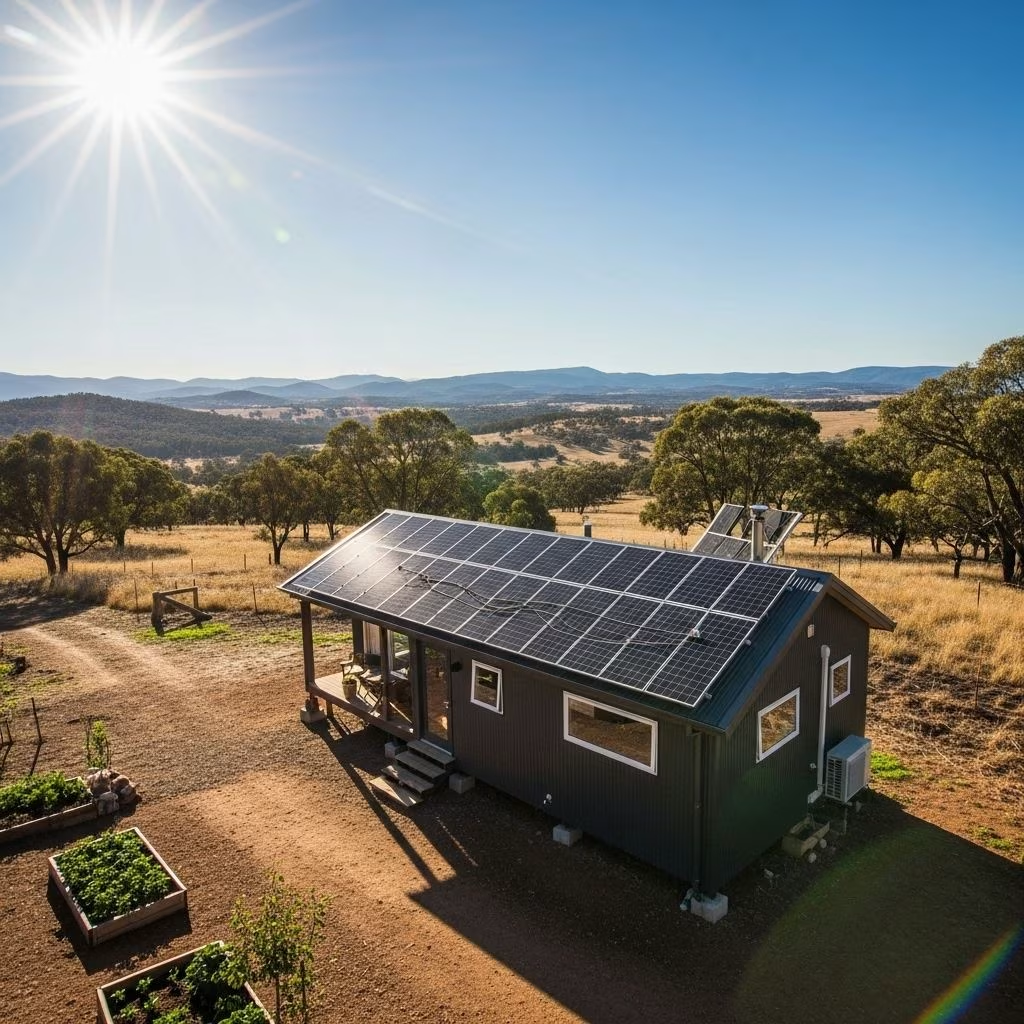
Going Off-Grid with Solar Panels: A Comprehensive Guide
Interest in living off the grid has surged in recent years as homeowners, small communities, and eco-conscious individuals seek greater independence and resilience against rising energy costs and grid vulnerabilities. At the core of this transition is the adoption of off-grid solar panels, powering everything from remote cabins to fully equipped family homes. This guide explores the steps, technology, practical considerations, and sustainability of the off-grid solar journey.
What Does Going Off-Grid Mean?
Going “off-grid” refers to living without reliance on centralized utility infrastructures, especially for electricity. The primary goal is self-sufficiency, producing and managing energy onsite using renewable resources such as the sun, wind, and sometimes water, rather than buying electricity from a utility company. It’s a solution for remote locations and a lifestyle choice for those seeking autonomy, sustainability, or cost savings.
- Energy Independence: No monthly utility bills. Control over your power source.
- Resilience: Power during outages or natural disasters.
- Environmental Benefits: Lower carbon footprint than grid electricity.
- Sustainability: Uses renewable systems that last decades.
Is It Legal to Go Off-Grid?
The legality of disconnecting from the grid varies by jurisdiction. Most places allow it, but municipal codes may require certain permits, inspections, or minimum energy/water standards. Always check with local building departments before disconnecting and installing independent solar power.
Why Consider Going Off-Grid?
For many, the motivation to go off-grid includes environmental stewardship, security, and self-reliance. The benefits include:
- Long-Term Cost Savings: After initial setup, ongoing costs are minimal, limited mainly to maintenance and part replacement.
- Reliable Power: Avoid outages from storms or utility failures.
- Remote Possibilities: Power homes or cabins far from centralized utilities.
- Lower Emissions: Solar panels emit up to 17 times less CO2 than coal-based electricity over their lifetime.
Environmental Impact of Off-Grid Solar
Solar panels generate clean energy for decades. The carbon debt from manufacturing panels is typically paid off in less than four years, after which they continue to provide emission-free power for up to 25 years or more. NREL research estimates that solar power emits just 40g CO2 per kWh, compared to 700–1,000g CO2 per kWh for coal. For a homeowner, this can result in a carbon footprint reduction up to 17 times compared to traditional grid power.
Core Components of an Off-Grid Solar System
Creating an off-grid solar-powered home requires more than just panels. Let’s break down the essential system components:
- Solar panels (photovoltaic modules): Capture sunlight and create electricity.
- Batteries (storage): Store surplus energy for use at night or in poor weather.
- Charge controller: Manages the charging and discharging of the battery bank, preventing overcharging.
- Inverter: Converts DC current (from solar/battery) into AC current (used by household appliances).
- Backup systems: Wind, generator, or even micro-hydro units for redundancy or extreme conditions.
| Component | Main Role | Expected Lifespan | Maintenance Frequency |
|---|---|---|---|
| Solar Panels | Generate electricity | 25+ Years | Low, occasional cleaning |
| Batteries (Li-ion) | Store power for later use | 7–15 Years | Medium, check and replace as needed |
| Charge Controller | Protect battery, manage charging | 10–20 Years | Minimal |
| Inverter | Convert DC to AC for appliances | 8–15 Years | Low, monitor for reliability |
Understanding Solar Batteries
Batteries are central to off-grid living. Until recently, lead-acid batteries were the norm, but lithium-ion batteries now dominate with longer lifespans, higher efficiency, more compact size, and simpler maintenance. Although costlier, Li-ion’s price has dropped sharply, and durability makes them more sustainable. Lead-acid batteries may still be practical for remote, budget-constrained settings but are less ideal for long-term sustainability in developed regions.
How Much Does It Cost to Go Off-Grid?
Costs vary based on house size, location, desired comfort, and backup systems. A basic off-grid setup for a small cabin may range from $10,000 to $20,000, while a family-sized home could require $25,000–$70,000, especially with advanced storage systems and redundancy.
- Solar panels: $1,000–$15,000 depending on system size.
- Battery bank: $2,000–$30,000 (Li-ion for large homes).
- Inverter, charge controller, wiring: $2,500–$8,000.
- Professional installation: $3,000–$12,000.
- Backup generator (optional): $800–$5,000.
Costs can be reduced through DIY installation, smaller setups, or staging upgrades over time. Incentives, tax credits, or local subsidies may further reduce upfront costs.
Estimating Daily Energy Needs
Before designing your off-grid system, assess daily consumption (in kWh). Most households in sunny regions can generate 4–7 kWh/day per kW solar panels. Track usage of major energy draws—heat, refrigeration, electronics—and plan for efficiency.
- LED lighting
- Energy-efficient appliances
- Passive heating/cooling design
- Smart consumption habits
Setting Up an Off-Grid Solar System: Step-by-Step
- Audit your energy use: List all electrical devices and their daily consumption.
- Site assessment: Measure available sunshine, shading, and orientation.
- System sizing: Decide the total wattage for panels and batteries based on consumption and solar hours.
- Select equipment: Choose high-efficiency solar panels, Li-ion batteries, reliable inverters, and charge controllers.
- Professional installation: Ensure safe wiring, code compliance, and optimal performance.
- Backup system: Optional wind, generator, or hybrid for extended cloudy periods.
- Efficiency upgrades: Insulate, seal, and choose low-energy appliances to stretch your solar investment.
Common Questions About Off-Grid Solar Living
Frequently Asked Questions (FAQs)
- Q: Is solar power alone enough for reliable off-grid living?
A: Solar is usually the main energy source but batteries and backup systems (like wind or generator) are essential for reliability, especially in less sunny climates. - Q: Do solar panels work during cloudy days or nighttime?
A: Solar panels only generate power with sufficient daylight. Batteries supply electricity at night or during low sunlight. Backup systems can help during extended outages. - Q: How long do solar panels and batteries last?
A: Modern solar panels may last 25–30 years at ~80% efficiency. Lithium-ion batteries ranging 7–15 years, lead-acid typically 5–10 years. Inverters average 8–15 years. - Q: Can off-grid households share excess power?
A: Technically possible with proper infrastructure and accounting. Microgrids are emerging in some communities, allowing local sharing and collective resilience. - Q: Is off-grid living expensive?
A: Upfront costs can be significant, but lifecycle costs are generally lower than grid electricity bills when factoring in longevity and energy savings. - Q: Do I have to grow my own food?
A: It’s optional. Many people choose off-grid gardening, raising chickens, or keeping livestock for self-sufficiency and supplemental income, but it’s not required. - Q: Where can I learn more about off-grid communities?
A: Explore resources from Treehugger, Mother Earth News, and outlets covering off-grid lifestyles worldwide. Forums and local workshops also provide valuable peer support. - Q: Can I go off-grid abroad?
A: Yes, but research local regulations, climate, available resources, and community dynamics before relocation. - Q: Are there myths about off-grid life?
A: Yes. It’s not always lonely, primitive, or extremely cheap. Modern systems enable comfort, connectivity, and social living.
Challenges and Considerations
- Initial Expense: High upfront system and battery costs may require saving or financing.
- Maintenance: Batteries and parts need periodic replacement and monitoring.
- Seasonal Variability: Solar output fluctuates, requiring system oversizing or multiple energy sources.
- Legal and Regulatory: Some municipality codes restrict off-grid modifications or require grid connection. Always check local rules.
- Lifestyle Adjustment: Changing habits and using energy wisely is key. Energy audits and efficient appliances are essential.
How Sustainable Is Stored Sunlight?
The transition from grid-connected solar systems to true off-grid solar living is driven by improved battery technology, especially lithium-ion, and evolving economic incentives. Stored sunlight is sustainable when using efficient, long-lasting batteries like Li-ion, and when systems are properly designed and maintained. Researchers highlight that off-grid systems using lead-acid batteries are less sustainable, especially in large-scale applications, but may outperform fossil-fueled generators in remote areas. Battery recycling rates remain a challenge, impacting long-term sustainability.
- Lithium-ion batteries: Superior for lifespan, maintenance, and energy density.
- Lead-acid batteries: Less efficient, shorter lifespan, but still better than diesel in remote installations.
- Recycling: Battery recycling rates influence sustainability; best results seen with rates above 90%, though some studies conservatively use 50%.
- Grid vs. Off-grid: Going off-grid can be a net positive if storage is integrated and renewable systems are maintained.
Alternatives and Backup Systems
- Wind Turbines: Supplement solar output, especially valuable during cloudy or winter periods.
- Generators: Provide backup for extended outages but may use fossil fuel. Use sparingly to maintain sustainability.
- Hybrid Systems: Combine solar, wind, and micro-hydro for maximum resilience and minimal fossil fuel reliance.
Optimizing Your Off-Grid Lifestyle
- Energy Efficiency: Use LED lighting, efficient appliances, passive solar design, and proper insulation.
- Smart Consumption: Monitor usage; prioritize activities during sunniest hours.
- Community Solutions: Share resources in local microgrids where feasible.
- Resilience Planning: Maintain backup options and emergency reserves.
- Ongoing Learning: Stay updated with solar tech advances, battery improvements, and best practices.
Final Thoughts
Going off-grid with solar panels involves careful planning, understanding your energy needs, substantial upfront investment, and periodic maintenance. For those seeking autonomy and sustainability, the rewards include lower environmental impact, predictably lower costs over time, and the satisfaction of energy independence. As battery technologies advance and costs decline, off-grid living is increasingly accessible, adaptable, and sustainable. Whether you’re considering a remote cabin, a rural farm, or a suburban home facing utility challenges, off-grid solar is a powerful pathway to self-reliance and ecological stewardship.
SEO-Optimized Frequently Asked Questions (FAQs)
Q: What does going off-grid with solar panels mean?
A: It means disconnecting from the utility grid and generating all your electricity from solar panels and battery storage onsite, achieving energy independence and resilience.
Q: How much does it cost to go off-grid with solar?
A: Costs range from $10,000 for a tiny cabin to $70,000+ for large homes, including panels, battery systems, inverters, and installation.
Q: How long do solar panels last off the grid?
A: Most high-efficiency solar panels last 25–30 years, maintaining at least 80% performance after two decades.
Q: Are batteries necessary for off-grid solar?
A: Yes, batteries store sunlight to provide power at night and during cloudy weather. Lithium-ion batteries are preferred for their lifespan and efficiency.
Q: Can off-grid solar systems power all household appliances?
A: With proper sizing and battery capacity, off-grid solar can supply most household needs, but heavy appliances may require extra planning or backup systems.
Q: Is living off the grid legal everywhere?
A: Regulations vary. Most jurisdictions allow it, but check with local authorities regarding building codes and permits.
References
- https://solar.lowtechmagazine.com/2015/05/how-sustainable-is-stored-sunlight/
- https://connectsolar.com.au/a-breath-of-fresh-air-retracing-the-carbon-footprint-of-a-solar-panel/
- https://www.greenerwisdom.com/blog/best-states-for-off-the-grid-living
- https://www.greenbuildingadvisor.com/article/contemplating-off-grid-future
- https://science.howstuffworks.com/environmental/green-science/living-off-the-grid.htm


