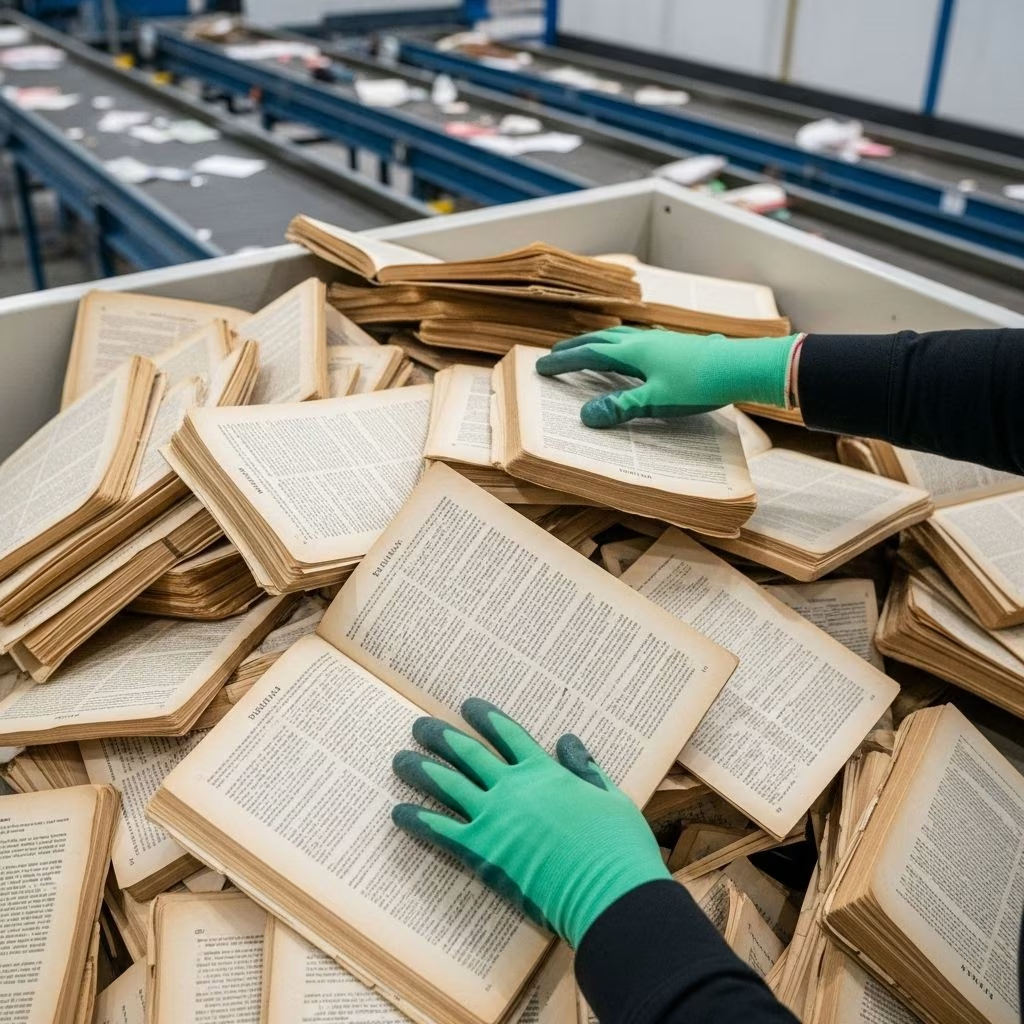
Does the pursuit of the latest gadgets, vehicles, or designs always mean progress? As society chases upgrades, there is a growing movement questioning the environmental, economic, and ethical impacts of constant renewal. In an era facing resource shortages, e-waste crises, and climate breakdown, it’s time to ask: Is newer truly better—or do durability, repair, and thoughtful design matter more?
The Cult of the New: How Consumption Drives Obsolescence
Modern consumer culture rewards the newest, thinnest, and flashiest products. Marketing, fashion, and social trends reinforce the message that progress depends on owning the latest model—be it in electronics, cars, or even architecture. This has far-reaching implications:
- Shorter product lifespans – Many devices and appliances are designed to be replaced within a few years.
- Constant upgrade cycle – Software and hardware updates make older products seem obsolete—or incompatible—sooner.
- Increased waste – Everything from smartphones to refrigerators is discarded instead of repaired, creating mountains of e-waste and landfill issues.
Yet, equating “new” with “better” ignores the environmental and ethical costs of rapid turnover. The resource and energy demands of manufacturing, shipping, and disposing of products are staggering, especially as the global population grows and developing nations aspire to similar standards of living.
The Dark Side: Planned Obsolescence and Its Consequences
Planned obsolescence—the practice of designing products to have a shortened useful life—originated in the early twentieth century and remains widespread:
- Electronics: New operating systems render older computers or smartphones sluggish or incompatible; batteries are sealed, making replacements costly or impossible.
- Appliances: White goods like washing machines or dishwashers often fail after a set period due to cheap, irreplaceable components.
- Fast fashion: Clothes are designed for trends rather than longevity and are discarded after a season.
This cycle boosts profits for manufacturers but:
- Strains landfill space and recycling systems.
- Consumes more energy and resources than necessary.
- Forces consumers into repeated purchases, disproportionately affecting those with less disposable income.
Designing for Longevity: The Timeless Alternative
Some products defy obsolescence, lasting for decades (or even centuries) thanks to robust materials, repairable parts, and simple design. Examples include:
- Classic bicycles – Basic mechanics make them easy to maintain over generations.
- Mechanical watches – Precision engineering and standardized parts allow for repairs and upgrades decades after purchase.
- Timeless architecture – Buildings designed for adaptability remain functional and valued for centuries.
Durable, repairable goods save money in the long run and reduce waste. However, these approaches often clash with business models built on continuous sales: the longer a product lasts, the less frequently customers return for more. Consumers and policymakers must therefore demand change, rewarding companies that invest in longevity and punishing those that rely on planned obsolescence.
The Environmental Toll of the Upgrade Cycle
The true cost of our obsession with novelty isn’t measured only in dollars or convenience—it’s counted in carbon emissions, depleted resources, and pollution. Consider:
- E-waste: The world generated 53.6 million metric tons of electronic waste in 2019, with only a fraction properly recycled.
- Energy consumption: Manufacturing new products (particularly electronics) requires energy-intensive mining, smelting, and assembly.
- Toxicity: Many electronics contain hazardous materials that leach into soil and water if not properly managed.
- Resource scarcity: Many components, like rare earth metals and lithium, are finite and their extraction has severe environmental and social costs.
The pressure to frequently upgrade, combined with the difficulty or impossibility of repairing modern products, escalates these issues. Extended product lifespans and repair-friendly design are not just ethical choices—they are environmental imperatives.
The Right-to-Repair Movement: Fighting Back
One of the most hopeful developments in the consumer landscape is the Right-to-Repair movement. Advocates push for laws requiring manufacturers to make parts, tools, and service information available—breaking the monopoly on repairs and empowering owners to keep products running longer. Core tenets include:
- Open documentation – Manuals and diagnostic tools should be available to customers and independent repair shops.
- Parts availability – Functional, affordable replacement parts should be offered for years after purchase.
- Modular design – Products should be constructed so key components can be easily swapped out rather than requiring full replacement.
Supporters contend that fostering a repair culture:
- Saves consumers money.
- Creates local repair jobs and business opportunities.
- Reduces waste and environmental harm.
Resistance from some manufacturers remains intense, citing intellectual property, safety, and quality concerns. But consumer demand and legislative proposals are making inroads across Europe and North America.
Case Study: Lessons from Enduring Products
Some of the best lessons about value and sustainability come from products that simply won’t die. These classics repeatedly show that ‘tried-and-true’ trumps ‘latest-and-greatest’ in terms of both performance and impact:
| Product Type | What Makes It Last? | Sustainability Advantage |
|---|---|---|
| Cast Iron Skillets | Single material, no electronics, easy to restore | Reusable for generations, nearly 100% recyclable |
| Hand Tools (e.g., hammers, wrenches) | Minimal moving parts, simple design | Decades of use, seldom break or wear out |
| Bicycles (Steel Frame) | Standard parts, serviceable, upgradable | Encourages active transportation, easily repaired |
| Mechanical Watches | Precision engineering, standardized movements | Heirloom potential, minimal resource consumption once made |
Owners of such products tend to forge deeper personal connections, take pride in maintaining them, and rarely reach for replacements unless absolutely necessary.
Design Strategies for a Longer-Lasting Future
To move beyond planned obsolescence, designers and manufacturers can adopt strategies including:
- Modularity: Enabling upgrades or replacements of key components (like phone batteries or screens).
- Universal standards: Using standardized ports, fasteners, and interfaces to simplify compatibility and repair.
- Material quality: Selecting robust, easily recycled materials over cost-cutting composites.
- Backward compatibility: Ensuring new accessories or software remain usable with older products.
Such changes can improve brand loyalty and reduce a company’s environmental footprint, though they often challenge rapid-turnover business models.
Consumer Choices: How to Resist Upgrade Pressure
For individuals seeking to align choices with sustainability, these practical strategies can help:
- Buy for longevity: Research products known for durability, support, and repairability.
- Maintain and repair: Clean, service, and fix rather than discard broken or underperforming goods.
- Support responsible brands: Favor companies that disclose repair guides, sell spare parts, and design for longevity.
- Resist marketing hype: Focus on need and long-term value, not annual style or tech trends.
- Join repair communities: Participate in repair cafés or online forums to troubleshoot and exchange tips.
Consumer demand for robust, repairable products articulates a powerful message to the marketplace.
The Role of Regulation: Pushing for Systemic Change
While conscious consumers can tip the scales, systemic interventions are crucial to transform markets:
- Mandatory right-to-repair legislation – Require manufacturers to provide parts, documentation, and repair support.
- Extended producer responsibility: Make companies financially responsible for their products at end-of-life.
- Minimum lifespan standards: Set legal minimums on how long products must function and be supported with updates.
- Tax incentives or penalties: Reward durable designs; penalize disposable ones.
In the European Union and some US states, such measures are already taking shape. They offer hope that a new standard—where products’ environmental and social impacts matter as much as price or appearance—can take root globally.
Changing the Narrative: From Status Symbols to Stories
Part of valuing longevity and rejecting endless novelty lies in shifting cultural narratives:
- Celebrating heirlooms: Cherished objects passed through families or communities embody history and experience.
- Promoting upcycling: Creative reuse and refurbishment can transform ‘old’ objects into unique expressions or art.
- Rewarding care: Sharing stories of long-lived products encourages pride in maintenance and stewardship.
By highlighting the stories and satisfaction embedded in things that last, society can push back against disposable mindsets.
Frequently Asked Questions (FAQs)
Q: What is planned obsolescence?
A: Planned obsolescence is an industrial design strategy where products are made to wear out, become outdated, or break intentionally after a certain period, forcing consumers to purchase replacements sooner than necessary.
Q: How does repair culture benefit the environment?
A: Repair culture reduces landfill waste, saves raw materials and energy by extending product lifespans, and supports local economies by creating skilled jobs.
Q: Why is modular design important for sustainability?
A: Modular design allows for easy repair and upgrades, reducing the need to discard entire products when only part is faulty or outdated, thereby minimizing waste and resource use.
Q: Are there modern examples of durable, repairable products?
A: Yes. Products like Fairphone (modular smartphones), classic bicycles, and cast iron cookware are all designed for longevity and ease of repair, showing “newer” doesn’t always mean “better.”
Q: What can policymakers do to reduce unnecessary obsolescence?
A: Policymakers can introduce right-to-repair laws, establish minimum warranty and support periods, and incentivize designs that prioritize longevity over frequent upgrades.