


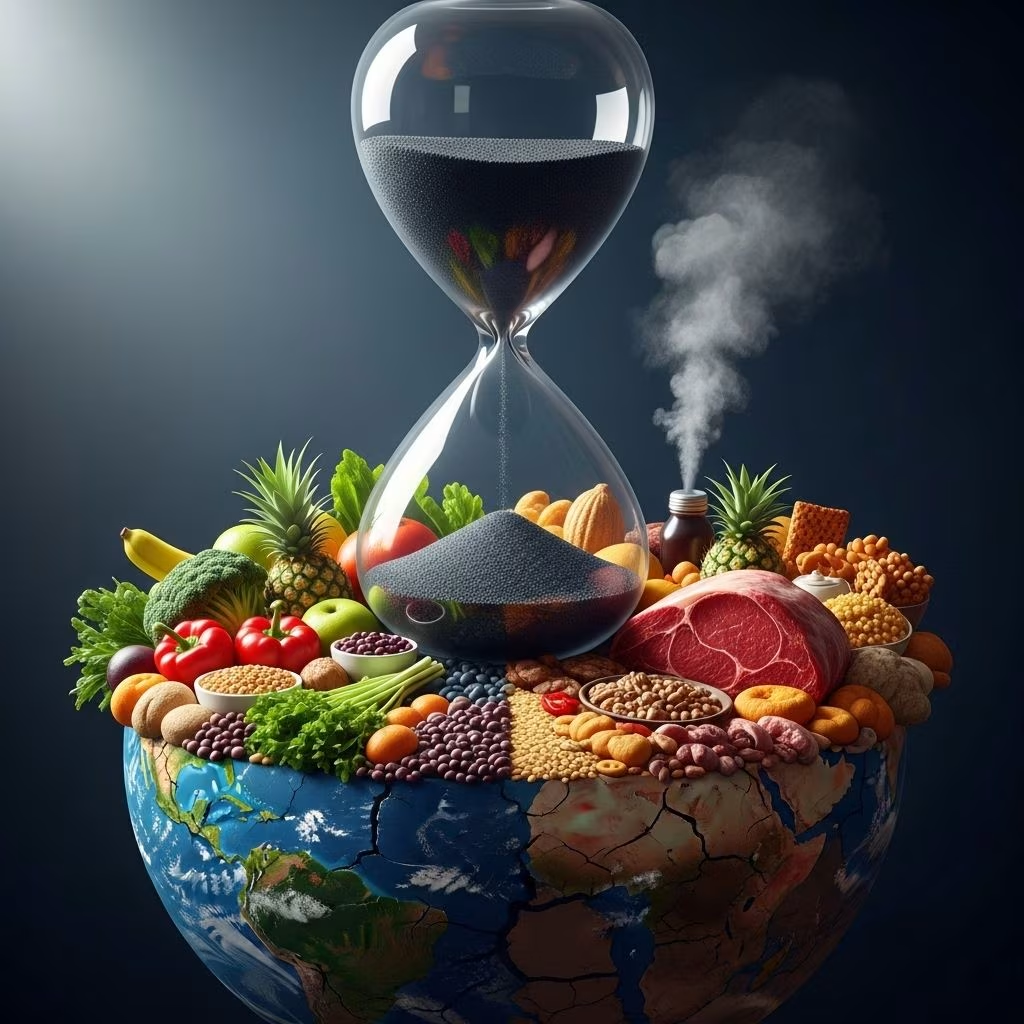
How Our Diet Choices Could Exhaust the Planet’s Carbon Budget
Greenhouse gas (GHG) emissions from our food system are a powerful force shaping the planet’s climate future. Even if we quickly decarbonize the energy system and curb fossil fuel usage, food production emissions threaten to overshoot the world’s remaining carbon budget for holding global warming to 1.5°C. How did we come to this tipping point, and what can we do to prevent emissions from our diets from derailing climate goals?
What Is the Carbon Budget for 1.5°C?
The carbon budget is an estimate of the total amount of greenhouse gases humanity can emit while still having a reasonable chance of holding global average temperature rise to a specific target—such as 1.5°C or 2°C above pre-industrial levels. The 2018 IPCC Special Report on Global Warming clarified that the carbon budget is rapidly shrinking and that every sector’s emissions must be urgently addressed, including food and agriculture.
- Staying within a 1.5°C pathway requires limiting GHG emissions to about 420 billion tons of CO2 equivalent from the start of 2018 onwards.
- The food system—encompassing agriculture, processing, packaging, transport, and consumption—currently accounts for roughly 30% of global GHG emissions.
How Does Food Production Impact the Climate?
While sectors like energy and transport often dominate climate discussions, food production is a significant emitter of non-CO2 greenhouse gases: particularly methane (CH4) from livestock and rice paddies, and nitrous oxide (N2O) from fertilizers. These gases are extremely potent, with warming effects far greater per molecule than carbon dioxide.
- Agriculture: Major source of methane (from ruminants like cows and sheep, and from rice cultivation) and nitrous oxide (from fertilizer use).
- Deforestation: Driven largely by livestock and feed production, leads to large carbon releases and loss of carbon sinks.
- Food waste: Represents unnecessary emissions across all supply chains.
Projected Impact: Food Emissions Alone Could Exhaust the 1.5°C Carbon Budget
Even under the optimistic scenario of slashing fossil fuel use, scientific studies warn that current food system emissions alone would use up the world’s entire carbon budget for 1.5°C within decades.
- Without major reforms, food emissions could result in over 1.5 trillion tons of additional CO2 by 2100—three times the 1.5°C budget.
- Over 50% of food emissions come from animal agriculture, including livestock, dairy, and animal feed production.
- If the global population grows as projected and diets continue trending toward more meat and dairy, emissions will rise even further beyond budget limits.
Breaking Down the Emissions: Foods with the Highest Climate Impact
The climate impact of foods varies tremendously. Animal-based foods—especially ruminant meats—have carbon footprints orders of magnitude higher than plant-based alternatives. The following table summarizes the typical GHG emissions associated with producing one kilogram of various foods:
| Food | CO2 Equivalent (kg per kg food) | Car Miles Equivalent |
|---|---|---|
| Lamb | 39.2 | 91 |
| Beef | 27.0 | 63 |
| Cheese | 13.5 | 31 |
| Pork | 12.1 | 28 |
| Chicken | 6.9 | 16 |
| Tuna | 6.1 | 14 |
| Eggs | 4.8 | 11 |
| Vegetables | 2.0 | 4.5 |
| Milk | 1.9 | 4 |
| Fruit | 1.1 | 2.5 |
| Lentils | 0.9 | 2 |
Meat, cheese, and eggs sit at the top of the emissions scale, whereas fruits, vegetables, beans, and nuts have much smaller footprints. This makes diet one of the most accessible levers for individual and systemic emissions reductions.
Can Diet Change Really Make a Difference?
Research consistently demonstrates that shifting to a plant-rich diet can reduce diet-related greenhouse gas emissions by 30–50%, depending on the scenario and region. A recent Danish study showed:
- Transitioning from the current average diet to a plant-rich diet consistent with national guidelines resulted in a 31% to 44% reduction in carbon footprint, depending on the calculation method.
- The carbon footprint of a vegan diet is roughly half that of a typical meat-based diet.
- If large populations reduce red meat and dairy consumption, and instead eat more whole grains, legumes, fruits, and vegetables, the cumulative emissions savings are significant.
Why Animal Agriculture Matters
Animal agriculture’s contribution to climate change stems from several unique factors:
- Methane from livestock: Cows, sheep, and goats produce methane during digestion (enteric fermentation), which is over 25 times more powerful than CO2 at trapping heat over 100 years.
- Deforestation: Vast tracts of rainforest are cleared for grazing and growing animal feed crops (e.g., soy, corn). For example, 70% of Amazon deforestation is due to cattle ranching.
- Resource intensity: Meat and dairy production require more land, water, and feed per calorie compared to plant-based foods. This amplifies their environmental impact across multiple domains.
What Policies and Global Actions Are Needed?
To keep the planet within a safe climate boundary, no single solution will suffice. Policymakers, companies, and consumers must address the emissions intensity of food from multiple directions:
- Adopt science-based dietary guidelines that promote balanced, plant-forward eating (such as the EAT-Lancet Commission’s recommendations: mainly vegetables, grains, legumes, and a much lower intake of animal protein).
- Encourage sustainable agriculture: Support farming practices that minimize emissions, restore soil carbon, reduce fertilizer overuse, and protect existing forests.
- Reduce food waste: Addressing losses throughout the supply chain—from farm to household—can reduce total food emissions by up to 10%.
- Implement consumer and industry education: Raising awareness about the emissions impact of dietary choices empowers healthier, lower-carbon decisions by individuals and food businesses.
Practical Tips for Shrinking Your Foodprint
Diet change on a massive scale requires government, industry, and personal action. Here are practical ways individuals can help:
- Prioritize plant-based proteins like beans, lentils, tofu, tempeh, and nuts over meat and cheese.
- Experiment with new vegetarian or vegan recipes, focusing on whole foods rather than processed substitutes.
- Buy local and seasonal produce to minimize transport emissions and support regional farmers.
- Plan meals and manage portions carefully to minimize waste and avoid over-purchasing perishable items.
- Eat less beef and lamb, which have the highest carbon footprints of all major foods.
- Choose whole grains, a variety of vegetables, and healthy fats as dietary staples.
Remember: If everyone made even modest shifts away from high-impact animal foods, the world could stay much closer to a safe climate future.
FAQ: Frequently Asked Questions About Food Emissions and Climate
What is the single most effective dietary change for the climate?
Eating less red meat, particularly beef and lamb, and embracing plant-based meals more often has the largest impact on your daily food-related carbon emissions.
Are “sustainable” animal products better for the climate?
Sustainably-produced animal products can somewhat reduce emissions, but their carbon footprint is still significantly higher than that of similar plant foods. The biggest reductions come from reducing animal protein overall.
Does organic food automatically have a lower carbon footprint?
Not necessarily. Organic certification focuses on pesticide and fertilizer use, soil health, and biodiversity. While important for sustainable agriculture, organic foods can have carbon footprints similar to their conventional counterparts, depending on factors like yield and transport.
How does food waste contribute to emissions?
Food waste at farms, retail outlets, and homes leads to unnecessary emissions at every stage—from resource use on farms to methane released in landfills. Cutting food waste from your kitchen is as important as choosing lower-impact foods.
Can a single person’s choices make a difference?
Yes. Individual changes, multiplied across millions of people, add up. Demand shapes markets, and personal choices influence families, communities, and policy priorities over time.
Conclusion: The Race to a Climate-Friendly Plate
Food choices are among the most powerful tools we hold for fighting climate change in our daily lives. With meaningful shifts—especially reducing resource-intensive animal agriculture—humanity can free up space in the carbon budget for a stable, livable climate. The path forward calls for both individual and collective action, urgently and at scale.
References
- https://www.greeneatz.com/foods-carbon-footprint.html
- https://www.carbonbrief.org/experts-how-do-diets-need-to-change-to-meet-climate-targets/
- https://pmc.ncbi.nlm.nih.gov/articles/PMC9030092/
- https://climatechangeresources.org/learn-more/food-agriculture/food/sustainable-eating/
- https://ourworldindata.org/food-emissions-carbon-budget
- https://www.theccc.org.uk/publication/the-seventh-carbon-budget/


