


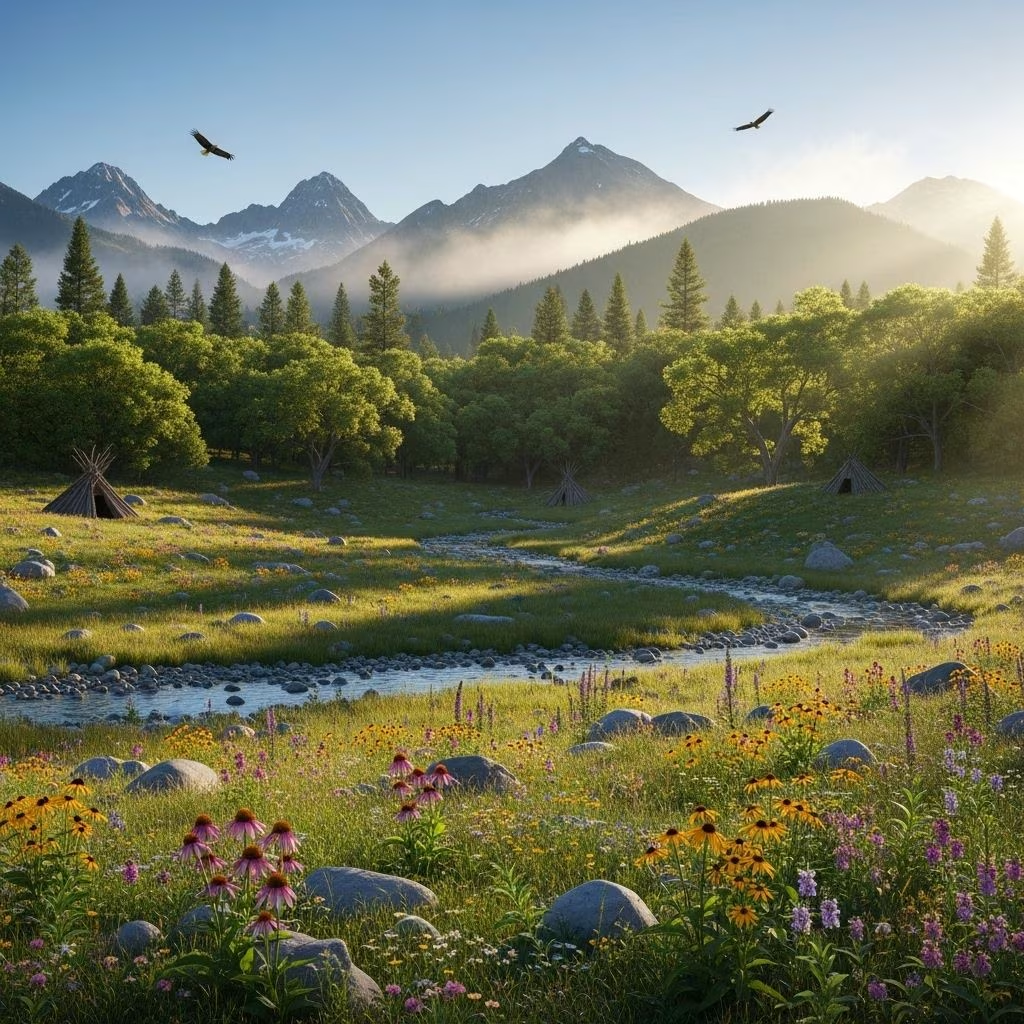
How Native Americans Stewarded Wild Lands for Millennia
Long before European settlers arrived, Indigenous peoples shaped and sustained North America’s wild landscapes through sophisticated land stewardship. Their practices not only fostered ecological health but also demonstrate alternative models to the Western concepts of wilderness and conservation.
The Myth of Untouched Wilderness
Many Americans are taught to see the great forests, prairies, and mountains of North America as vast, untouched wilderness. Yet, this perspective overlooks thousands of years of intentional land management by Native Americans. Indigenous people actively shaped these landscapes, using techniques finely attuned to local ecologies and cultural needs.
- Active management: Indigenous communities used fire, plant cultivation, and hunting to nurture biodiversity and promote ecosystem health.
- Living with the land: The relationship was not one of domination, but of reciprocity and respect, maintaining balance rather than maximizing extraction.
Stewardship as a Foundation
The word ‘stewardship’ only hints at the depth of Native relationships with land. For most Indigenous cultures, land was not a commodity or resource to be owned and exploited; it was a living relative, deserving care and respect. This worldview informed every aspect of land management, from gathering and burning to hunting and community governance.
- Ethical obligations: Many tribes embraced deep protocols comprising rituals, taboos, and rules for sustainable use.
- Generational knowledge: Skills and strategies for managing wild lands were passed down through stories, songs, and hands-on apprenticeship.
The Breadth of Traditional Management Practices
Burning: Cultural Fire for Ecosystem Health
Controlled burns, sometimes called ‘cultural burns’ or ‘good fire,’ were among the most vital tools of Indigenous land management across much of North America.
- Wildfire prevention: Regular, low-intensity fires removed underbrush and deadwood, reducing the risk of catastrophic wildfires.
- Habitat creation: Fire encouraged the growth of food plants (like berries), fostered large game populations, and maintained open grasslands.
- Regional diversity: While practices differed regionally, fire management was common from California’s oak woodlands to the eastern prairies to the pine forests of the Southwest.
Research shows that, for example, the ancestors of the Jemez Pueblo used intensive burning and wood collection over centuries. This created landscapes that burned often but rarely suffered massively destructive fires, increasing resilience against extreme events even under adverse climate conditions.
Plant and Forest Management
- Agroforestry: Many tribes managed wild landscapes as food gardens, selectively encouraging edible and medicinal plants, sometimes transplanting useful species or weeding out competitors.
- Girdling and thinning: Trees were selectively girdled or thinned to direct sunlight to useful plants or clear space for crops.
- Harvesting protocols: Gathering was often systematic and rotational, ensuring plants had time to recover and habitats remained robust year after year.
Sustainable Hunting and Fishing
- Game management: By using seasonal and selective hunting, tribes maintained healthy populations of deer, elk, salmon, and other key species.
- Fish weirs and traps: Complex fish traps and weirs not only provided food but allowed excess fish to bypass, supporting long-term abundance.
Cultivation and Early Agriculture
While often perceived as strictly hunter-gatherers, many Native American societies domesticated crops and integrated agriculture with traditional stewardship.
- Corn, beans, and squash: Widely grown in the Americas, these “Three Sisters” crops exemplify intercropping practices optimized for soil fertility and resilience.
- Clearing methods: Forests and meadows were opened by girdling, burning, and manual clearing to foster wild and domesticated food.
Case Study: The Jemez Plateau and Controlled Burning
The Jemez Mountains of northern New Mexico offer a detailed archaeological and ecological case study. Here, the ancestors of the Jemez Pueblo used a mix of intensive wood collecting and frequent small fires to shape local landscapes.
- These practices produced patchy, resilient forests less susceptible to catastrophic burns—even during dry periods.
- Ecological modeling and studies show that abandonment of Indigenous management, as occurred after European colonization, led to fuel build-up and a return of larger, potentially devastating fires.
Shaping Biodiversity: The Meadow, Prairie, and Forest
Prairie and Savanna Maintenance
- Fire on the Plains: Great Plains Native nations regularly used fire to maintain vast grasslands—fostering habitat for bison, elk, and a host of other species.
- Oak Savannahs: Tribes in the Midwest and Pacific Northwest sustained oak woodlands and savannas through burning, which supported acorns, wildflowers, and game.
Woodland and Forest Dynamics
- Preventing forest encroachment: Regular fire and selective tree removal kept meadows open, supported plant diversity, and made travel and hunting easier.
- Building materials: Managed woodlands supplied bark, timber, and other essentials for homes, tools, and basketry.
Interconnectedness: The Philosophy Behind Stewardship
Indigenous approaches were rooted in relationships—between humans, animals, plants, and the nonhuman world—rather than notions of domination or passive appreciation.
- Responsibility: Taking from the land meant giving back, whether through careful harvest, ritual, or stewardship activities.
- Invisibility of management: Many management techniques were so well integrated they became invisible to Western observers, contributing to myths of untouched wilderness.
Displacement and Forgotten Knowledge
The expansion of the United States brought profound disruption to Indigenous land management. Mass displacements, broken treaties, and exclusionary policies ejected tribes from their ancestral territories, and with them, centuries of ecological knowledge.
- Creation of National Parks: The establishment of protected areas like Yellowstone and Glacier National Parks often meant forcibly removing Native communities and suppressing their land management practices.
- Shift to suppression: Early park management sought to exclude fire and human intervention, ironically erasing the very forces that had long sustained those landscapes.
- Treaty rights ignored: Communities such as the Blackfeet negotiated to retain hunting, timber, and fishing rights, but these were often ignored, contributing to ecological and cultural loss.
Modern Conservation, Old Myths, and the Recognition of Indigenous Science
For much of the twentieth century, mainstream conservation agencies promoted the idea of nature as something best left alone—overlooking the careful Indigenous stewardship that shaped much of North America’s wild majesty.
- Only recently have ecologists and land managers begun to re-examine the importance of Indigenous practice, recognizing that exclusionary policies were often counterproductive, fostering fuel build-up and habitat loss.
- Restoration efforts increasingly turn to Native experts and traditional knowledge, especially in the context of wildfire prevention and resilient ecosystem management.
Modern Lessons for Sustainable Land Management
| Traditional Native Management | Conventional Western Management |
|---|---|
| Cultural burning & patchwork fire regimes to reduce hazardous fuels | Fire suppression—leading to fuel buildup and higher fire risk |
| Selective harvesting and reciprocal relationship with landscape | Maximizing yield and often extractive management |
| Integrated agriculture, hunting, and gathering | Separation of conservation from agricultural production |
| Multigenerational transfer of ecological knowledge | Scientific research, often disconnected from traditional experience |
Resurgence and Contemporary Partnerships
Across the United States and Canada, Indigenous nations are reclaiming their role as stewards of land. Programs led by tribal governments, sometimes in partnership with federal agencies, are reintroducing cultural burns, traditional gathering, and wildlife management on both tribal and public lands.
- Cultural burns in California: Tribal fire practitioners lead prescribed burns, restoring habitat and reducing catastrophic fire.
- Co-management partnerships: Increasingly, tribes are invited to collaborate in management plans for national parks, forests, and wilderness preserves.
Why Indigenous Stewardship Matters Today
- As catastrophic wildfires, species declines, and climate change threaten North American landscapes, traditional ecological knowledge offers proven, adaptive strategies for resilience.
- Restoring Native land management is not just an ecological imperative but also a matter of cultural restoration, justice, and healing.
Frequently Asked Questions (FAQs)
Q: Did Native Americans create and maintain their own wild landscapes?
A: Yes, Indigenous peoples actively shaped forests, meadows, and prairies through controlled burns, harvesting, and sustainable hunting, contradicting the myth of untouched wilderness.
Q: What is a cultural burn?
A: Cultural burns are intentional, controlled fires used by tribes to manage underbrush, promote plant health, and prevent destructive wildfires through patchwork burning practices.
Q: How did land loss affect Indigenous land management?
A: Forced removal and exclusion from ancestral lands ended traditional management, leading to habitat change, ecological decline, and loss of vital cultural practices.
Q: Are Indigenous practices being used today?
A: Yes, many land managers now acknowledge the value of Native ecological knowledge and collaborate with tribes to reintroduce traditional practices, especially in fire management and habitat restoration.
Q: What can we learn from Indigenous stewardship about sustainability?
A: Indigenous management demonstrates the value of low-impact, reciprocal land relations, rooted in observation and tradition, to create resilient and biodiverse ecosystems.
References
- https://scholarworks.umt.edu/cgi/viewcontent.cgi?article=1267&context=plrlr
- https://www.pnas.org/doi/10.1073/pnas.2018733118
- https://foresthistory.org/education/trees-talk-curriculum/american-prehistory-8000-years-of-forest-management/american-prehistory-essay/
- https://onda.org/public-lands-brief-history/
- https://www.universityofcalifornia.edu/news/how-indigenous-practice-good-fire-can-help-our-forests-thrive


