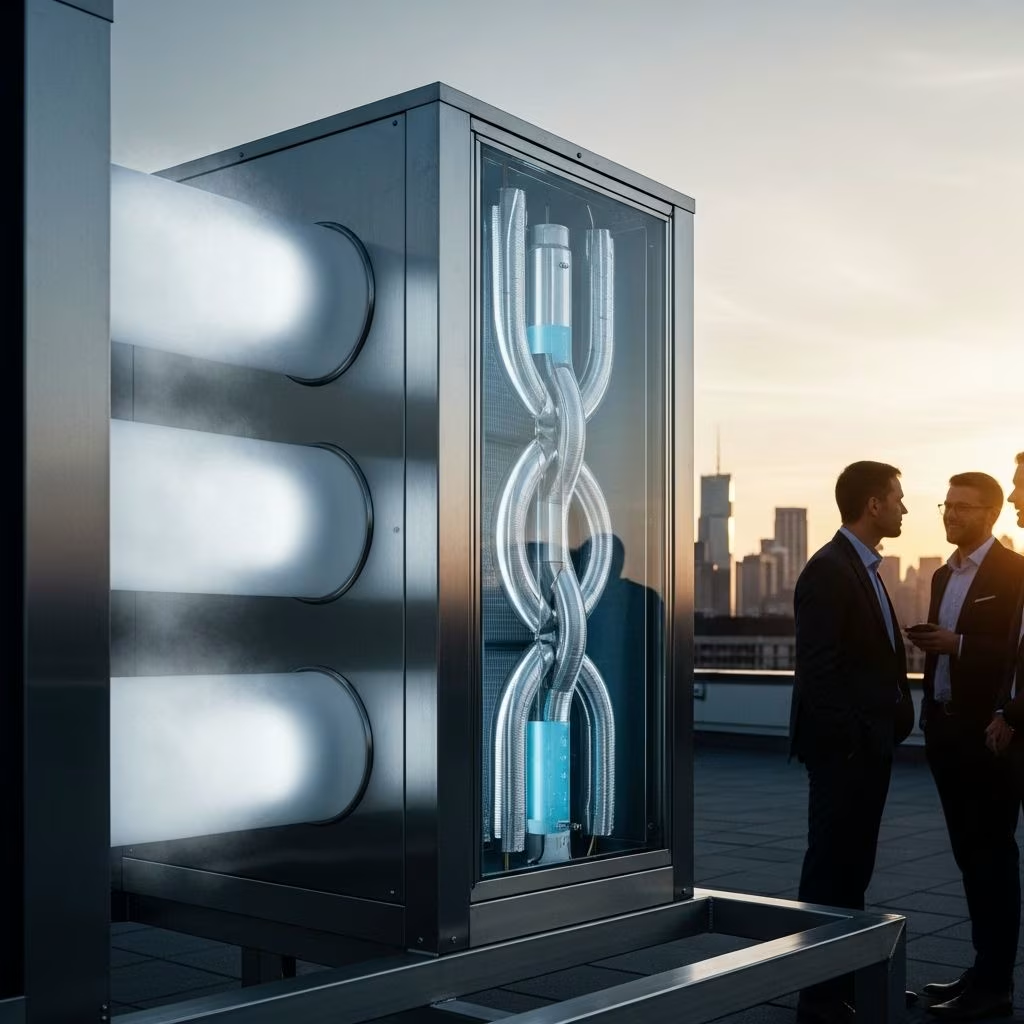
Revolutionizing Outdoor Cooling: The Rise of Liquid Nitrogen Air Conditioners
As global temperatures rise and the need for environmentally responsible technologies intensifies, innovation in climate control is taking remarkable new forms. One of the latest breakthroughs comes from Israel, where a startup has developed the world’s first liquid nitrogen-powered outdoor air conditioner—a device that promises silent, electricity-free cooling for outdoor spaces, with a dramatically reduced environmental footprint compared to conventional air conditioners.
Why Outdoor Cooling Needs Innovation
Traditional outdoor cooling methods rely on electric air conditioning units that consume substantial energy and emit polluting refrigerants, exacerbating both heat and greenhouse gas emissions. Cafés, restaurants, and public spaces face challenges as summer temperatures soar, making outdoor seating uncomfortable and unsustainable during peak hours. This situation called for an alternative—one that could keep patrons cool without contributing to the underlying problem of climate change.
Introducing the Liquid Nitrogen Air Conditioner
The invention by Green Kinoko, an Israeli startup, offers a fresh approach to cooling outdoor environments without wires, electricity, or greenhouse gas emissions. The device harnesses the physical properties of nitrogen—specifically, its behavior when transitioning from liquid to gas through rapid expansion. This process activates a mechanical engine within the unit, which blows nitrogen gas at sub-freezing temperatures into the surrounding area.
- Uses liquid nitrogen—a byproduct of hospital oxygen production
- No electricity required
- No greenhouse gas emissions or toxic refrigerants
- Silent operation and no added humidity
- Easy maintenance—replace nitrogen tanks every 7-10 days
How Does It Work?
The device is deceptively simple in design and function, built on well-established principles of textbook physics. It contains a tank of liquid nitrogen cooled to -196°C (-321°F). When released, the liquid nitrogen rapidly expands to nearly 700 times its original liquid volume as it becomes a gas. This expansion generates substantial pressure, which is channeled through a mechanical engine. The result is a gentle, silent jet of nitrogen cooled to around -10°C (14°F), which efficiently chills tables and outdoor areas.
| Feature | Liquid Nitrogen A/C | Traditional Electric A/C |
|---|---|---|
| Power Source | Liquid nitrogen expansion | Electricity |
| Environmental Impact | No greenhouse gases; inert nitrogen emission | High electricity use; polluting refrigerants |
| Installation & Wires | Standalone, portable, wire-free | Complex wiring and installation |
| Maintenance | Nitrogen tank replaced every 7-10 days | Regular servicing, filter/refrigerant replacement |
| Noise | Near silent | Often noisy |
| Humidity | No added humidity | Can add humidity, depending on technology |
| Cost Structure | Price similar to electric units; low operating cost | High energy and maintenance costs |
The Environmental Advantage
Green Kinoko’s air conditioner fundamentally changes the environmental equation for cooling:
- No electricity usage: Relieves pressure on power grids, especially during heatwaves.
- No refrigerant gases: Traditional air conditioners use gases (like HFCs) that are toxic and contribute to global warming. The nitrogen emitted by this new device is inert and already present in the air we breathe.
- No heat emission: Electric air conditioners expel hot air as waste, heating the environment; liquid nitrogen units do not.
- Byproduct use: The nitrogen, sourced as a byproduct from medical oxygen production, reduces industrial waste and cost.
Comparatively, traditional outdoor air conditioners are energy-intensive, inefficient in open spaces, and can inadvertently worsen environmental conditions they aim to mitigate.
Addressing Real-World Comfort
The breakthrough was inspired by everyday experience. Green Kinoko’s CEO, Tal Leizer, identified a growing problem during a particularly hot Roman summer, where outdoor cafés emptied as temperatures soared past 35°C (95°F). The need for a cooling solution that enabled comfortable outdoor living became urgent as climate records kept climbing and traditional technologies fell short.
Pilot Trials and Early Results
By September 2022, Green Kinoko prepared for public pilot tests at six restaurants in Tel Aviv, deploying twelve prototype units. Each unit included a self-contained tank for liquid nitrogen, with the initial trial set to gather critical data about usage, consumer experience, efficiency, and consumable requirements—before moving toward mass production and global adoption.
- Early prototypes demonstrated rapid local cooling, creating comfortable micro-climates without humidity or hazardous fumes.
- Units required nitrogen replacement every 7-10 days, depending on external temperature and frequency of use.
- Advocates note the solution works in diverse climates without modifying air moisture content, helping keep patrons comfortable in both muggy and dry conditions.
Market Potential and Future Scaling
Green Kinoko aims to produce the units at scale for Israel and the nearby United Arab Emirates, with ambitions for wider global expansion. The target price is competitive with existing electric air conditioning systems. The critical differentiator, however, is the operating footprint—owners benefit from lower energy use, minimal maintenance, and reduced environmental impact.
- Target markets: Restaurants, cafés, outdoor event venues, resorts, and public spaces facing heat challenges.
- Investor interest: The startup seeks partners for global market deployment and infrastructure expansion.
- Production readiness: Facilities established for larger rollout in the Middle East and beyond.
Challenges Ahead
As with any new technology, several factors will determine adoption and long-term success:
- Supply logistics: Reliable sourcing, storage, and delivery of liquid nitrogen will need scalable solutions.
- Consumer education: Operators and end users need to understand safety protocols and handling of cryogenic materials.
- Regulatory considerations: Compliance with environmental, workplace safety, and technical standards across different countries.
- Lifecycle analysis: Full assessment of the carbon footprint, including nitrogen production and distribution.
Comparing with Traditional Cooling
Electric outdoor air conditioners attempt to cool open areas by blowing cold air, but their reliance on high electricity input and the emission of waste heat and potentially harmful gases make them an unsustainable option—especially during climate emergencies when energy must be conserved. In contrast, Green Kinoko’s nitrogen-powered system solves multiple challenges simultaneously:
- Removes reliance on the electric grid during peak hours.
- Eliminates toxic refrigerant use which poses health and environmental risks.
- Reduces noise pollution in public spaces.
- Minimizes environmental footprint by using an inert, naturally occurring gas.
Scaling Up: Toward a Cooler Future
The innovation of liquid nitrogen climate control aligns with urgent international goals to phase out polluting refrigerants and decarbonize infrastructure. As cities grow denser and heatwaves become more intense, sustainable cooling technologies will be essential to maintaining public comfort and safety without damaging the planet.
- Global warming mitigation: Reduces temperature spikes by eliminating heat emissions from outdoor cooling.
- Urban livability: Makes outdoor public spaces, patios, and dining areas comfortable even on the hottest days.
- Adaptability: System works in a range of climate zones with minimal infrastructure impact.
Frequently Asked Questions (FAQs)
Q: How does the liquid nitrogen air conditioner work?
A: The device uses liquid nitrogen stored at -196°C. When released, the nitrogen rapidly expands into a gas, producing a jet of cold air at around -10°C, which cools the surrounding area without electricity or harmful emissions.
Q: Is using nitrogen gas safe for outdoor environments?
A: Yes. Nitrogen comprises about 78% of Earth’s atmosphere and is non-toxic and inert. The device releases nitrogen at safe volumes that do not risk asphyxiation or pollution.
Q: How often does the nitrogen tank need replacement?
A: Typically, tanks must be replaced every 7 to 10 days depending on usage levels and ambient temperatures.
Q: What makes this system more environmentally friendly than traditional air conditioners?
A: It operates without electricity, emits no greenhouse gases or toxic refrigerants, and does not contribute additional heat or moisture to the environment. The nitrogen used is a byproduct from medical processes, adding further sustainability benefits.
Q: Where are these air conditioners being tested?
A: The first public pilots took place in outdoor restaurants in Tel Aviv, Israel, with expansion planned for other regions facing similar heat challenges.
Q: Does it work in humid or dry climates?
A: Yes. Since the system does not modify air moisture, it works effectively in both humid and dry atmospheres, unlike many electric evaporative coolers.
Q: What are the cost implications?
A: The price is projected to be comparable to traditional electric outdoor air conditioners, but with lower operating costs and minimal maintenance requirements.
Conclusion: Cooling Without Compromise
The emergence of liquid nitrogen-powered air conditioners marks a major step forward for clean technology and urban comfort. By leveraging the principles of cryogenics and physical expansion, Green Kinoko’s innovation allows outdoor spaces to remain usable and pleasant, even in extreme heat, without adding to the planet’s environmental burden. As pilot projects pave the way for broader adoption, this technology could redefine how we keep cool in a warming world—silently, sustainably, and with a minimal footprint on Earth’s resources.
Further Reading & Resources
- Source: NoCamels – World’s First Nitrogen-Powered Air Con
- Source: IIFIIR – Testing a Prototype Outdoor Air Conditioner Using Liquid Nitrogen
- Source: HappyEcoNews – This Outdoor Air Conditioner Runs on Liquid Nitrogen
References
- https://nocamels.com/2022/08/worlds-first-nitrogen-powered-air-con/
- https://iifiir.org/en/news/testing-a-prototype-outdoor-air-conditioner-using-liquid-nitrogen
- https://happyeconews.com/this-outdoor-air-conditioner-runs-on-liquid-nitrogen/
- https://www.energyvanguard.com/blog/a-strange-silence-on-dry-ship-r-22-air-conditioners/
- https://www.greenbuildingadvisor.com/article/epa-warns-against-unapproved-refrigerants-in-air-conditioners