


Luxury Showers and Water Waste: The Hidden Cost of High-End Bathing
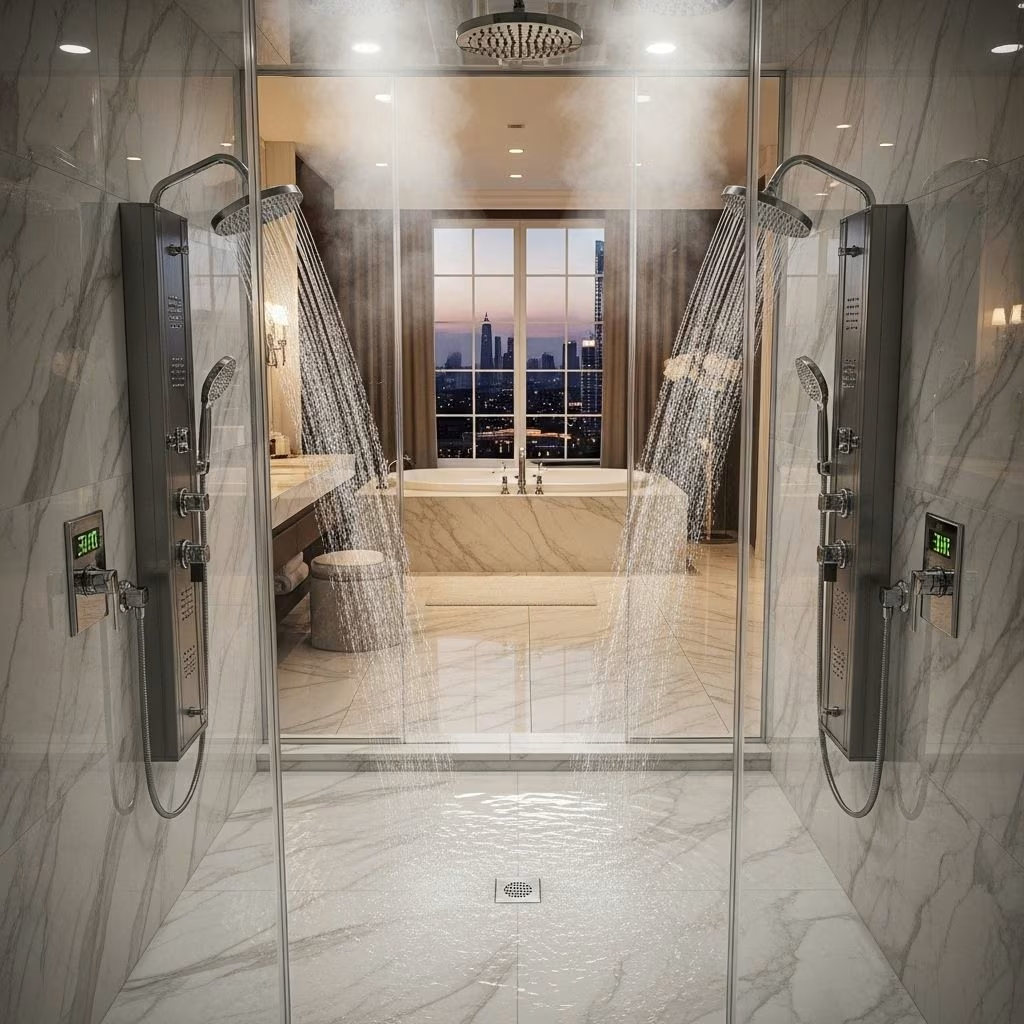
Luxury showers are fast becoming status symbols in high-end homes and hotels, featuring multiple jets, rainfall heads, programmable steam, and walls of cascading water. While these amenities promise ultimate self-indulgence, their true cost reaches far beyond the price tag—affecting water supplies, energy consumption, policy, and the future of environmental sustainability.
Understanding the Modern Luxury Shower Boom
The evolution of shower design has created a new market for what some call “carwash showers.” This term reflects setups involving numerous high-pressure jets, rain shower heads, digital controls, aromatherapy infusions, and heated seating—all designed to transform a bath into a spa experience. These amenities are marketed to affluent homeowners seeking more comfort and exclusivity in their bathrooms, and they’ve become a selling point in real estate listings for trophy homes.
- Multiple nozzles: It’s not uncommon to find five, eight, or even twelve jets in luxury showers.
- Digital and programmable features: From chromatherapy lights to voice-responsive controls.
- Increased water flow: Many luxury setups can deliver hundreds of liters per shower, far exceeding conventional low-flow standards.
While these systems offer relaxation and status, their water usage can be staggeringly high compared to standard showers, and they contribute greatly to household water and energy bills.
How Much Water Do Luxury Showers Actually Use?
The environmental impact of showering is often underestimated. A standard shower head in the U.S. typically uses a flow rate of 9 liters (2.5 gallons) per minute—with an average American shower lasting about eight minutes, this equates to roughly 70 liters (18 gallons) per shower. However, some high-end luxury showers push those numbers dramatically higher:
- Multiple jets: Running several heads at once can more than triple the total flow—some luxury showers can deliver upwards of 80-100 liters (20-26 gallons) per minute. A 10-minute “spa” session could use a staggering 800-1,000 liters (210-260 gallons) of water.
- Oversized rain heads: Large ceiling-mounted rain heads alone often exceed 20 liters (5 gallons) per minute.
The environmental effects extend to heating as well: all that hot water takes significant energy, raising a household’s carbon footprint.
The Policy Dilemma: When Water Conservation Goes Awry
In response to droughts and environmental pressures, many governments and regions have implemented plumbing standards to restrict showerhead flow rates—typically to around 2.5 gallons (9.5 liters) per minute. These conservation measures have effectively reduced average water consumption in the past decades. However, they have also triggered loopholes that allow luxury homes to bypass these restrictions:
- Manufacturers found ways to classify each showerhead or set of jets as separate “accessories,” not subject to the same aggregate flow restrictions.
- Wealthy homeowners install multiple heads: the law covers the maximum flow per nozzle, not the combined total, enabling so-called “carwash” configurations.
- Recent policy changes have even sought to ease regulations on showers, sparking controversy among environmentalists and water agencies.
This combination of regulatory oversight and consumer demand for opulence has led to showers that, while technically legal, can waste thousands of liters of water weekly in a single home.
Why Water Waste Matters: Environmental and Social Impacts
Showering isn’t just about personal hygiene—it’s a major part of household water use worldwide. In water-stressed regions such as California, the high consumption of luxury showers can have serious impacts:
- Water shortages: Drought-prone areas suffer most from excessive household water use, depleting aquifers and threatening local agriculture.
- Energy waste: Heating large volumes of water intensifies household greenhouse gas emissions, contributing to climate change.
- Inequality: The ability for wealthy homeowners to legally bypass conservation laws, while ordinary citizens must restrict use, deepens public resentment and contributes to “eco-classism.”
Environmental groups highlight the absurdity: while citizens are urged to take “navy showers” or switch off taps while soaping, some luxury homes use the equivalent of a household’s daily consumption in a single bathing session.
Water Use in Perspective: Standard vs. Luxury Showers
| Shower Type | Number of Jets | Total Flow Rate | Water Used in 10 Min |
|---|---|---|---|
| Standard Low-Flow | 1 | 9 liters/min | 90 liters |
| Basic Multi-Jet | 3 | 27 liters/min | 270 liters |
| Luxury ‘Carwash’ | 6-10+ | 60–100+ liters/min | 600–1000 liters |
This table demonstrates how quickly water use can escalate when multiple jets are running simultaneously.
The Myth of a Sustainable Luxury Bathroom
High-end bathrooms often incorporate eco-friendly features such as efficient lighting, recycled materials, or radiant heating. However, the environmental impact of excessive water use and heating can outweigh these advantages:
- Greywater isn’t always reclaimed: Very few homes reuse shower water for irrigation or toilet flushing, letting heated, potable water go straight to the sewer.
- Luxury systems run longer: Spa-like experiences mean showers last longer, compounding total waste.
- Energy demands scale up: Heating hundreds of liters per shower requires much more power, raising both utility bills and emissions.
Simply put, a green label here or there doesn’t offset the water and energy cost of using luxury systems.
Equity and Ethics: Who Gets to Waste Water?
In many drought-stricken areas, local governments call for household water rationing or enforce usage limits. Yet high-income residents who can afford to pay hefty bills, taxes, or fines continue to use water excessively—often for lawns, pools, and luxury showers. This inequity becomes more pronounced when regulations have built-in loopholes that benefit upper classes.
Points of concern:
- Social resentment: Ordinary residents are pressured to conserve, while the wealthy continue uninhibited usage.
- Resource allocation: Excessive luxury use can stress local infrastructure, affecting everyone.
- Policy loopholes: If rules are made with exemptions for “fixtures” rather than total household output, they favor those able to customize and overbuild.
Better Solutions: Reclaiming the Green Bathroom
Despite dire trends in luxury water usage, several approaches can help mitigate the impact—whether for standard homes or upscale residences looking to genuinely go green.
Smarter Shower Design
- Low-flow showerheads: Advanced aerating and laminar-flow heads deliver an effective, satisfying stream at a fraction of the water.
- Shower timers and monitors: Devices such as the Aguardio monitor track and even gamify water savings by alerting users to excess use or incentivizing shorter showers.
- Greywater systems: Collecting and reusing water from showers for flushing toilets or irrigation significantly reduces waste.
- Passive heating and solar water: Solar-powered water heaters cut emission from hot water use.
Sustainable Shower Habits
- Take shorter showers; 4-5 minutes can be more than sufficient.
- Only turn on shower jets or heads that are needed; avoid running all features at once.
- Install smart meters to monitor real-time water consumption.
Eco-Friendly Product Choices
- Methven Aurajet: Uses technology to maximize spray while minimizing flow, saving up to 60% water per shower.
- Hansgrohe EcoSmart: Offers a range of heads that combine comfort and efficiency, reducing usage and energy bills.
- Hudson Reed: Features air-induction tech to create powerful droplets with less water, and a sleek design aesthetic.
The Future of Showers: Policy and Innovation
For meaningful change, both public policy and private action are needed. This includes closing loopholes, incentivizing efficient design, and prioritizing water use where it matters most—health, hygiene, and ecosystem preservation. Innovation in bathroom design, especially from water-scarce regions like Japan, can offer inspiration for efficient yet comfortable bathing experiences.
- Revise regulations: Move beyond per-fixture rules to total water-per-shower or per-household limits.
- Tax water waste rather than water use: Provide incentives for greywater systems and efficient appliances.
- Promote education: Help consumers understand both the direct and indirect impacts of their water use—especially the energy “shadow” of hot water heating.
Frequently Asked Questions (FAQs)
Q: Why do luxury showers use so much more water than standard showers?
Luxury showers often feature multiple heads and jets—each designed to maximize water delivery and comfort. With several running at once, the total flow can multiply several times over a typical single-head, low-flow design.
Q: How does excessive shower water use affect the environment?
Excess hot water use consumes not only water—a limited resource in many places—but also large amounts of energy for heating. Disposing of this water into the sewer system places additional stress on municipal treatment, and increased greenhouse gas output exacerbates climate change.
Q: Are there luxury showers that are also eco-friendly?
Yes, some manufacturers are developing high-end designs that balance comfort with efficiency: using advanced spray patterns, minimizing flow, or integrating shower monitors and timers. However, the sustainability of a shower setup depends not just on its technology but also on user habits and total water consumption.
Q: What bathroom innovations can help reduce water waste?
Key solutions include installing aerating or laminar-flow heads, using greywater recycling systems for flushing or irrigation, adding timers and monitors, and opting for solar or passive hot water systems. Smart bathroom tech is increasingly available to consumers at many price points.
Q: What can individuals do to reduce shower-related water and energy waste?
Adopt shorter showers, avoid running all features simultaneously, choose efficient heads, and consider upgrading to smart water monitoring devices. Each change—big or small—can contribute significantly to household conservation efforts.
1. Source: playitgreen.com. See ‘Sustainable Showers 101: Clean and Green.’
2. Source: livinspaces.net. See ‘Rethinking the Modern Day Bathroom.’
3. Source: mrsteam.com blog. See ‘8 Tips for a Luxurious, Eco-Friendly Master Bathroom Remodel.’
4. Source: hospitalityupgrade.com. See ‘Definitely Doug 5/6/22: Taming the Water Beast.’
References
- https://playitgreen.com/sustainable-showers-101clean-and-green/
- https://livinspaces.net/design-stories/articles/rethinking-the-modern-day-bathroom-an-insightful-look-at-our-modern-day-bathrooms/
- https://blog.mrsteam.com/8-tips-for-a-luxurious-eco-friendly-master-bathroom-remodel
- https://www.hospitalityupgrade.com/techtalk/definitely-doug-5-6-22-taming-the-water-beast
- http://www.susted.com/wordpress/content/dissecting-the-average-shower-and-its-impact-on-the-planet-an-invitation-to-collaborate-part-one-human-water-usage-and-global-impact_2020_03/


