


Merced National Wildlife Refuge: California’s Unsung Sanctuary
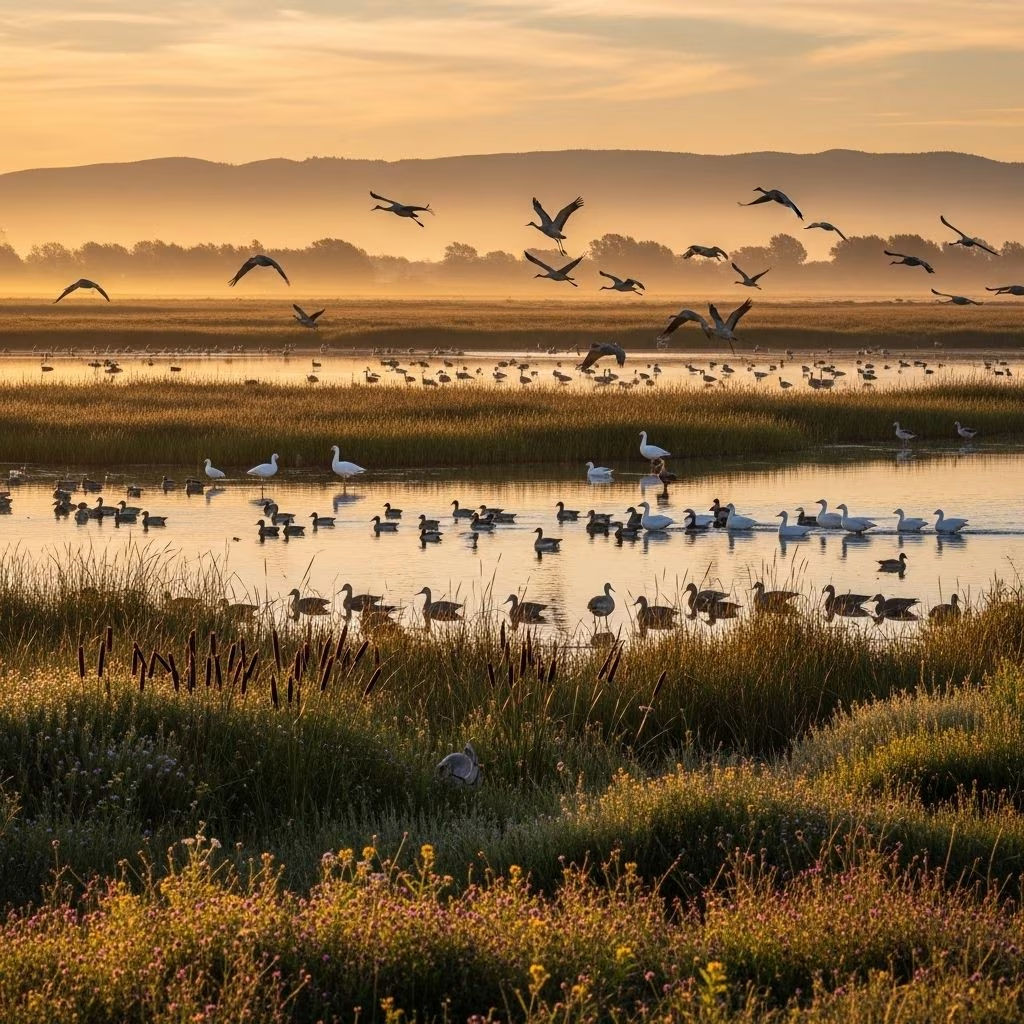
In the wide-open expanse of California’s Central Valley, nestled among seemingly endless stretches of farmland, lies an ecological treasure little known beyond avid birders and conservationists: Merced National Wildlife Refuge. This exceptional refuge preserves over 10,000 acres of critical wetland, grassland, and vernal pool habitats—offering winter sanctuary to hundreds of thousands of migratory birds while quietly supporting a thriving year-round community of diverse flora and fauna.
Origins and Purpose: From Crop Protection to Conservation
Established in 1951 under the Lea Act and Migratory Bird Conservation Act, the Merced National Wildlife Refuge was created during a time of tension between wildlife and agriculture. Each autumn, enormous flocks of waterfowl descended onto the fertile Central Valley farmland, drawn by abundant food supplies—and left farmers exasperated by the damage caused to their crops.
Today, the refuge’s dual mission reflects a collaborative solution:
- Attract wintering waterfowl away from neighboring croplands, significantly reducing crop damage by providing an alternative, protected haven.
- Serve as a strictly protected sanctuary for migratory waterfowl and a host of native wildlife species, ensuring the survival of key populations and habitats in a dramatically transformed landscape.
The Central Valley Context: A Rare Oasis for Wildlife
California’s Central Valley is one of the world’s most productive agricultural regions, yet the transformation of its natural landscapes has left less than 5% of the original wetlands intact. In this context, the Merced Refuge is both rarity and necessity. Situated at a crossroads of the Pacific Flyway—a vast migratory route stretching from Alaska to South America—it provides a crucial stopover and wintering ground for countless birds traveling thousands of miles each year.
Key Attributes of the Refuge
- Size: Over 10,260 acres (about 16 square miles) of protected habitat.
- Location: In Merced County, in the heart of California’s northern San Joaquin Valley.
- Habitat Types: Extensive wetlands, vernal pools, native grasslands, and riparian woodlands interspersed with actively managed agricultural lands.
The Marvel of Migration: Winter’s Aerial Spectacle
From late fall through early spring, the refuge undergoes a dramatic transformation. It becomes home to one of the largest wintering populations of lesser sandhill cranes and Ross’s geese in the entire Pacific Flyway. Every year:
- More than 20,000 sandhill cranes—with their bugling calls and graceful silhouettes—settle into the marshes and grasslands.
- Upwards of 60,000 arctic-nesting geese (including Ross’s, snow, and white-fronted geese) flood the skies and fields, joined by vast numbers of ducks and shorebirds.
- Thousands of ducks (notably pintails and green-winged teal), shorebirds, and wading birds find refuge, shelter, and abundant food in the wetlands.
This congregation includes a broad array of visitors:
- Lesser sandhill cranes
- Ross’s, snow, white-fronted, and cackling Canada geese
- Northern pintails, mallards, gadwall, cinnamon teal, shovelers, and numerous other waterfowl
- Wading species such as great egrets, herons, and American avocets
- Birds of prey, including Swainson’s hawk
Table: Highlight Species at Merced National Wildlife Refuge
| Species | Estimated Numbers | Season |
|---|---|---|
| Lesser Sandhill Cranes | 20,000+ | Oct – Mar |
| Ross’s Geese | 60,000+ | Oct – Mar |
| Snow & White-fronted Geese | 40,000+ | Oct – Mar |
| Swainson’s Hawk | Common (breeding season) | Apr – Sep |
| Tri-colored Blackbird | Up to 25,000 pairs (colonies) | Spring/Summer |
Habitats: Wetlands, Vernal Pools, Grasslands, and Riparian Woodlands
Wetlands
The centerpiece of refuge management comprises more than 2,000 acres of seasonal and semi-permanent wetlands. Through a careful regimen of water delivery and control, managers create a dynamic landscape rich in aquatic vegetation, such as swamp timothy and wild millet, that provides vital nutrition for waterfowl and shorebirds. These managed habitats are constantly adjusted to address the dietary needs and migratory timing of different bird species arriving throughout the year.
Vernal Pools: Seasonal Wonders
Unique to California’s landscape, vernal pools are shallow depressions underlain by clay that fill with winter rains and dry out in spring. In early winter, these ephemeral pools teem with fairy shrimp and tadpole shrimp, soon followed by amphibians such as the endangered tiger salamander.
As spring progresses and waters fade, these same pools stage a dazzling wildflower show:
- Goldfields
- Purple owl’s clover
- Butter-and-eggs
- Downingia
- Colusa grass (a rare California native)
This annual bloom inspired John Muir to declare the valley floor as “the floweriest part of the world.” The rings of color bordering each pool reflect the unique adaptations of each wildflower to subtle changes in water and soil chemistry.
Grasslands and Managed Pastures
Native grasslands and over 500 acres of irrigated pasture are interspersed with refuge wetlands. Beyond simply preserving native species, these grassland habitats are actively managed—sometimes with the help of controlled livestock grazing—to:
- Control invasive weeds
- Maintain low grass for goose grazing
- Encourage thriving native flora and fauna
300 acres of croplands—corn and winter wheat—are cultivated within the refuge through local farming partnerships, providing nutrient-rich forage for migratory populations and helping to ensure birds depart with ample reserves for their northward journeys.
Riparian Woodlands
These vital, tree-lined corridors offer shelter and nesting opportunities for songbirds, raptors, and mammals. The mixture of dense thickets and open glades is a lifeline in an otherwise arid landscape, supporting species diversity and ecological health.
Year-Round Wildlife: Beyond the Big Flocks
While the spectacle of winter migration dominates much attention, Merced National Wildlife Refuge provides for a diversity of wildlife throughout the year. Notable breeding and resident species include:
- Swainson’s hawk, marsh wren, burrowing owl, and tri-colored blackbird (an at-risk colonial songbird).
- Small mammals such as coyotes, ground squirrels, desert cottontails, beaver, and long-tailed weasels.
The refuge’s efforts to balance naturally occurring and managed habitats create a mosaic where intricate food webs and predator–prey relationships thrive.
Management: Science, Art, and Partnership
Stewarding the delicate interplay of habitats and wildlife at Merced Refuge is a complex endeavor. The sanctuary operates with a blend of scientific know-how, adaptive management, and creative problem-solving, overseen by a dedicated staff from the U.S. Fish and Wildlife Service.
Key management strategies include:
- Rotating water levels in marshes to maximize food resources through the growing cycle.
- Collaborative agreements with local farmers for crop cultivation and irrigation.
- Using livestock grazing (cattle and sheep) as a tool to create productive grasslands while controlling invasive species.
Human Connection: Visitor Access and Recreation
The Merced National Wildlife Refuge welcomes the public to experience this vibrant landscape, especially during the peak migration season from October through March. Its accessibility makes it an inviting destination for:
- Birdwatching and wildlife photography—enormous flocks and serene landscapes attract enthusiasts from across California.
- Auto tour routes and observation decks—providing unobtrusive but intimate observation opportunities.
- Seasonal interpretive programs and educational visits.
Visitor amenities are intentionally light on infrastructure in order to preserve the wild character of the refuge and minimize human disturbance. The best times for observation are dawn and dusk, when bird activity is at its peak and light plays across the marshes and fields.
The Broader Picture: Conservation Beyond the Refuge
The refuge is part of the larger San Luis National Wildlife Refuge Complex—a network of sanctuaries that collectively shield vital remnants of the Central Valley’s original habitats. Yet, the challenge remains significant:
- Climate variability, water scarcity, and changing land use continue to threaten both managed and wild habitats.
- Collaborations between conservationists and the agricultural community remain critical to sustaining migratory bird populations and biodiversity in the region.
Merced Refuge stands as a model of how scientific management and community partnerships can create lasting, shared benefits—for wildlife, agriculture, and future generations seeking solace in nature.
Frequently Asked Questions (FAQs)
Q: When is the best time to visit Merced National Wildlife Refuge?
A: Visit between October and March to witness the full migration spectacle: tens of thousands of cranes and geese, along with diverse flocks of ducks, shorebirds, and raptors.
Q: What wildlife can I expect to see year-round?
A: While winter brings peak bird numbers, visitors can see breeding Swainson’s hawks, tri-colored blackbirds, burrowing owls, songbirds, mammals, and reptiles throughout the year.
Q: Are there facilities and trails for visitors?
A: The refuge offers an auto tour route, observation decks, and simple interpretive displays. Visitors are encouraged to stay on designated paths to avoid disturbing wildlife.
Q: How is the refuge managed in cooperation with local agriculture?
A: Local farmers work under agreement with sanctuary staff to cultivate crops that support migratory birds, while livestock grazing is used to improve grassland quality and control invasive species.
Q: Why are vernal pools important here?
A: Vernal pools host unique life forms such as fairy shrimp and rare amphibians, and support spectacular wildflower blooms—contributing to food webs and local biodiversity in spring.
Plan Your Visit: Final Thoughts
Whether you are a seasoned birder, a photographer seeking stunning winter skies, or simply in search of a quiet encounter with nature, the Merced National Wildlife Refuge offers a rare window into California’s wild heart. Here, amid the chorus of cranes and the tapestry of spring wildflowers, the resilience and beauty of a restored landscape come vividly to life—reminding us that in the midst of our most altered places, wildness still finds a way.
References
- https://www.fws.gov/refuge/merced/about-us
- https://en.wikipedia.org/wiki/Merced_National_Wildlife_Refuge
- https://fresnoalliance.com/merced-national-wildlife-refuge-is-a-valley-treasure/
- https://stateparks.com/merced_national_wildlife_refuge_in_california.html
- https://www.tripadvisor.com/Attraction_Review-g32706-d2540029-Reviews-Merced_National_Wildlife_Refuge-Merced_Merced_County_California.html
- https://mercedcountytimes.com/a-look-inside-the-merced-national-wildlife-refuge/
- https://www.birdingplaces.eu/en/birdingplaces/united-states/merced-national-wildlife-reserve


