


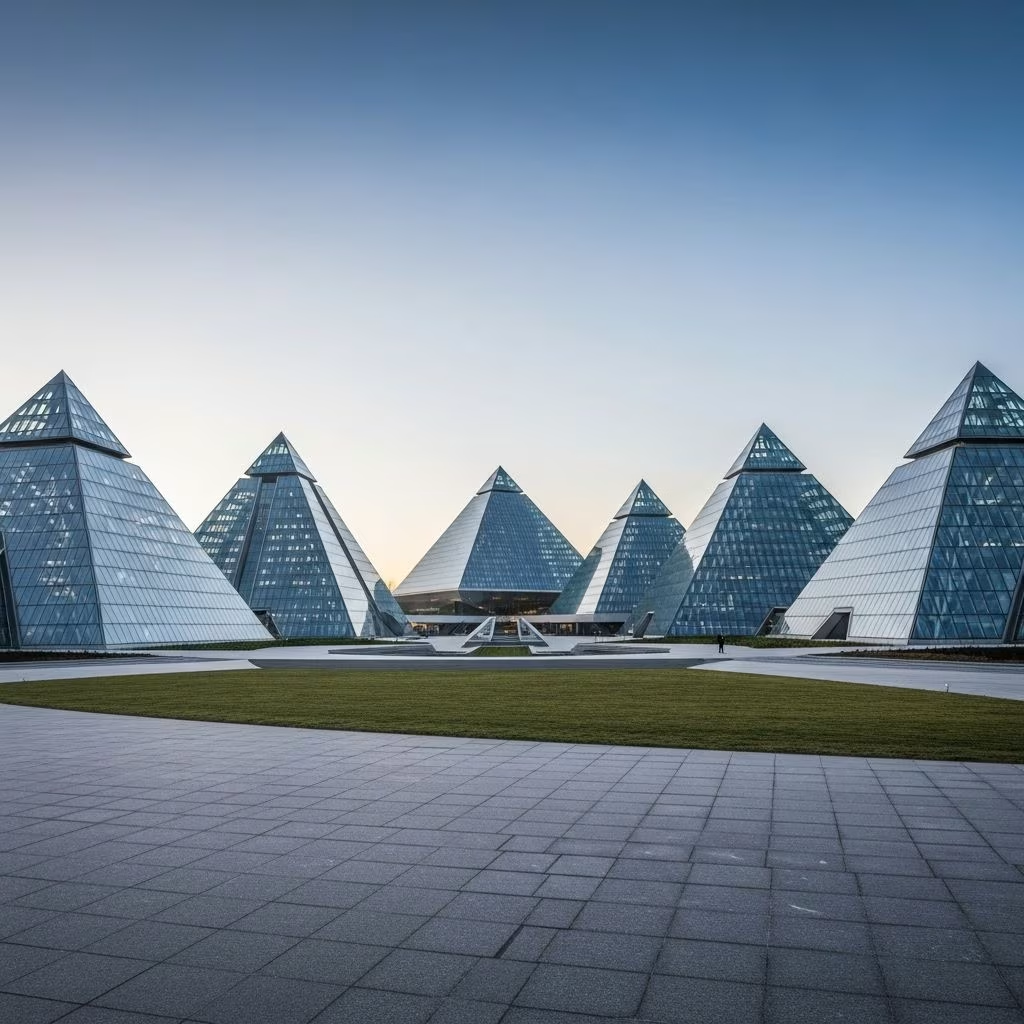
The pyramid—a structure of enigmatic beauty and an architectural marvel—has fascinated humanity for thousands of years. From the timeless stones of Giza to futuristic glass and steel creations, the pyramid’s form continues to inspire bold new visions in contemporary design. This article explores great modern-day pyramids from every corner of the globe, examining their striking appearance, ingenious engineering, and manifold cultural resonances.
The Enduring Legacy of the Pyramid
The pyramid’s distinctive geometric form—broad base narrowing to a single point—symbolizes endurance, ambition, and connection between earth and sky. But these are no mere imitations of ancient masterpieces. Today, architects use cutting-edge techniques and dramatic new materials to reinterpret the pyramid for the 21st century.
- Historical resonance: From Egypt to Mesoamerica, pyramids historically served as tombs, temples, and symbols of power.
- Modern interpretations: Whether civic centers, museums, hotels, or eco-havens, new pyramids redefine purpose while retaining timeless wonder.
- Design diversity: Glass, steel, living plants, and more—today’s pyramids blend ancient form with strikingly modern functions and aesthetics.
Iconic Modern-Day Pyramids Worldwide
Contemporary pyramids appear across all continents, testament to the form’s universal appeal. This section showcases some of the world’s most remarkable examples, each with its unique vision.
The Louvre Pyramid (Paris, France)
Few modern pyramids have achieved such instant global recognition as the Louvre Pyramid, designed by renowned architect I.M. Pei.
- Inaugurated: 1989
- Function: Main entrance to the Musée du Louvre
- Material: 673 glass panes; steel and aluminum
- Significance: The pyramid starkly contrasts with the Renaissance palaces of the Louvre, symbolizing France’s embrace of modernity amid profound heritage. It is the focal point for millions of annual visitors.
- Cultural impact: Initially controversial, the pyramid is now seen as a Parisian icon, exemplifying harmonious integration of old and new.
Luxor Hotel & Casino (Las Vegas, USA)
The dazzling black glass Luxor Hotel brings the mystique of ancient Egypt to the neon heart of Las Vegas.
- Opened: 1993
- Structure: 30 stories; 350 feet tall
- Features: Beam of light atop the pyramid visible from space; interior atrium is one of the world’s largest
- Design: Replicates Egyptian motifs, with massive statues and murals throughout
- Notability: An enduring Vegas landmark that fuses kitsch with epic scale
Transamerica Pyramid (San Francisco, USA)
The unmistakable Transamerica Pyramid is both a symbol and a centerpiece of the San Francisco skyline.
- Completed: 1972
- Height: 853 feet (260 meters)
- Innovations: Tapered design maximizes natural light and wind resistance, while its aluminum spire is visible for miles
- Role: Headquarters for Transamerica Corporation; remains one of the most distinctive office towers in the U.S.
| Pyramid | Location | Primary Use | Year Opened |
|---|---|---|---|
| The Louvre Pyramid | Paris, France | Museum Entrance | 1989 |
| Luxor Las Vegas | Las Vegas, USA | Hotel & Casino | 1993 |
| Transamerica Pyramid | San Francisco, USA | Office Tower | 1972 |
| Palace of Peace and Reconciliation | Astana, Kazakhstan | Civic Center | 2006 |
| Memphis Pyramid | Memphis, USA | Sports/Entertainment | 1991 |
The Ryugyong Hotel (Pyongyang, North Korea)
The Ryugyong Hotel in Pyongyang soars above the city, exuding both ambition and eerie emptiness.
- Height: 1,082 feet (330 meters); 105 stories
- Construction history: Began in 1987, stalled for years; facade completed in 2011 but interior remains unfinished
- Design: Stark, reinforced concrete and mirrored glass exterior, with a sharply pointed apex
- Reception: Often dubbed the world’s tallest unoccupied building
The Palácio do Planalto (Brasília, Brazil)
Oscar Niemeyer’s influential pyramid design in the heart of Brasília represents both national pride and architectural audacity.
- Use: Part of Brazil’s presidential complex
- Design traits: Pristine geometric proportions and white surfaces, blending modernist minimalism with symbolic formality
Palace of Peace and Reconciliation (Astana, Kazakhstan)
The Palace of Peace and Reconciliation is a beacon of harmony and spirituality in Kazakhstan’s capital.
- Opened: 2006; designed by Sir Norman Foster
- Purpose: Hosts Congress of Leaders of World and Traditional Religions, as well as cultural events
- Features: Triangular glass sails; interior incorporates conference halls, opera house, exhibition spaces
- Sustainability: Energy-efficient systems and daylight maximization
Memphis Pyramid (Memphis, USA)
Once a venue for concerts and sports, the Memphis Pyramid now enjoys new life as a sprawling entertainment complex and retail center.
- Height: 321 feet (98 meters)
- History: Opened in 1991 as an arena; later transformed into Bass Pro Shops Outdoor World, including hotel, indoor swamp, bowling alley, and observation deck
- Cultural nod: Homage to the city’s ancient Egyptian namesake
The Slovak Radio Building (Bratislava, Slovakia)
This inverted pyramid flips tradition upside down for one of Europe’s boldest postwar landmarks.
- Completed: 1983
- Effect: Dramatic cantilevering creates a dynamic, gravity-defying effect; widely recognized for its unique silhouette
Callejón de Huaylas Pyramid (Yungay, Peru)
This little-known structure references ancient Andean pyramids and the region’s mountainous backdrop, underscoring how local history shapes design interpretation.
Pyramids for Culture, Worship, and Civic Life
Some modern pyramids are places where communities gather, ideas flourish, and spirituality thrives, continuing age-old traditions in updated forms.
- Church of Saint-Pierre (Firminy, France): Le Corbusier’s last masterpiece, completed in 2006, with an angular, concrete pyramid form that celebrates both modern art and the sacred.
- Acros Fukuoka (Fukuoka, Japan): This step-pyramid integrates nature and city life, featuring a lush rooftop park and eco-friendly terraces housing a cultural center.
Pyramids for the Planet: Sustainability and Innovation
Forward-thinking architects leverage the pyramid’s stability to create buildings that champion environmental sustainability.
- The Solar Pyramid (UK, unbuilt): Envisioned as the world’s largest solar collector, using the pyramid’s tiered faces to generate monumental amounts of clean electricity.
- The Eden Project (Cornwall, UK): Not strictly a pyramid, but its iconic domes are inspired by natural geometries, echoing the functionalism of ancient pyramids in their habitat and energy efficiency.
- Green Pyramid House (Mexico): Eco-residence concept with fully vegetated tiers, rainwater catchment, and energy-efficient building techniques.
These innovative projects underline the enduring practicality of the pyramid shape, from natural insulation to maximum sun exposure for renewable energy.
Why Does the Pyramid Thrive?
- Structural efficiency: The shape distributes weight evenly, making pyramids some of the world’s most stable forms.
- Symbolic power: Pyramids evoke connections to ancestry, immortality, and aspiration.
- Design flexibility: Modern pyramids range from towering skyscrapers to earth-bermed eco-lodges and everything in between.
- Visual drama: They capture the imagination, lending instant monumentality to any project.
Pyramid-inspired Design Beyond Buildings
The pyramid inspires not only monumental structures but also modern furniture, urban parks, public sculptures, and even futuristic urban planning concepts. Its compressed lines and rising silhouettes are perennial favorites among designers daring to challenge conventional forms.
Frequently Asked Questions (FAQs)
Q: Why do architects continue to build modern pyramids?
A: The pyramid shape is both ancient and futuristic—famed for stability, efficient load distribution, dramatic skyline impact, and symbolic associations with endurance, ambition, and transcendence.
Q: What makes a building a ‘modern pyramid’?
A: A modern pyramid uses the classic geometric form or motif—sometimes in full, sometimes as a dramatic inspiration—crafted with contemporary materials and construction techniques. Functions and details vary immensely, from offices to hotels to places of spiritual gathering.
Q: Are modern pyramids environmentally sustainable?
A: Many recent pyramid projects incorporate sustainable technologies such as solar panels, natural ventilation, green roofs, and water collection systems, using the pyramid’s shape to optimize ecological performance.
Q: Do all modern pyramids copy ancient Egyptian style?
A: Not at all. Some, like the Luxor or Memphis Pyramid, directly reference Egypt, but others fuse influences from all ancient cultures or take a wholly abstract approach, integrating regional and contemporary motifs.
Q: Which is the tallest modern pyramid?
A: The Ryugyong Hotel in Pyongyang, North Korea currently holds the title, at 1,082 feet (330 meters)—vastly taller than any ancient pyramid and most modern skyscrapers.
Conclusion
From radiant glass monuments in Paris to gravity-defying civic structures in Bratislava, the modern pyramid is far more than a nostalgic gesture. These bold works reinterpret our shared architectural heritage, bridging past and future while experimenting with culture, technology, and sustainability. The pyramid continues to be an emblem of our passion for building not just shelter, but meaning, on a monumental scale.


