


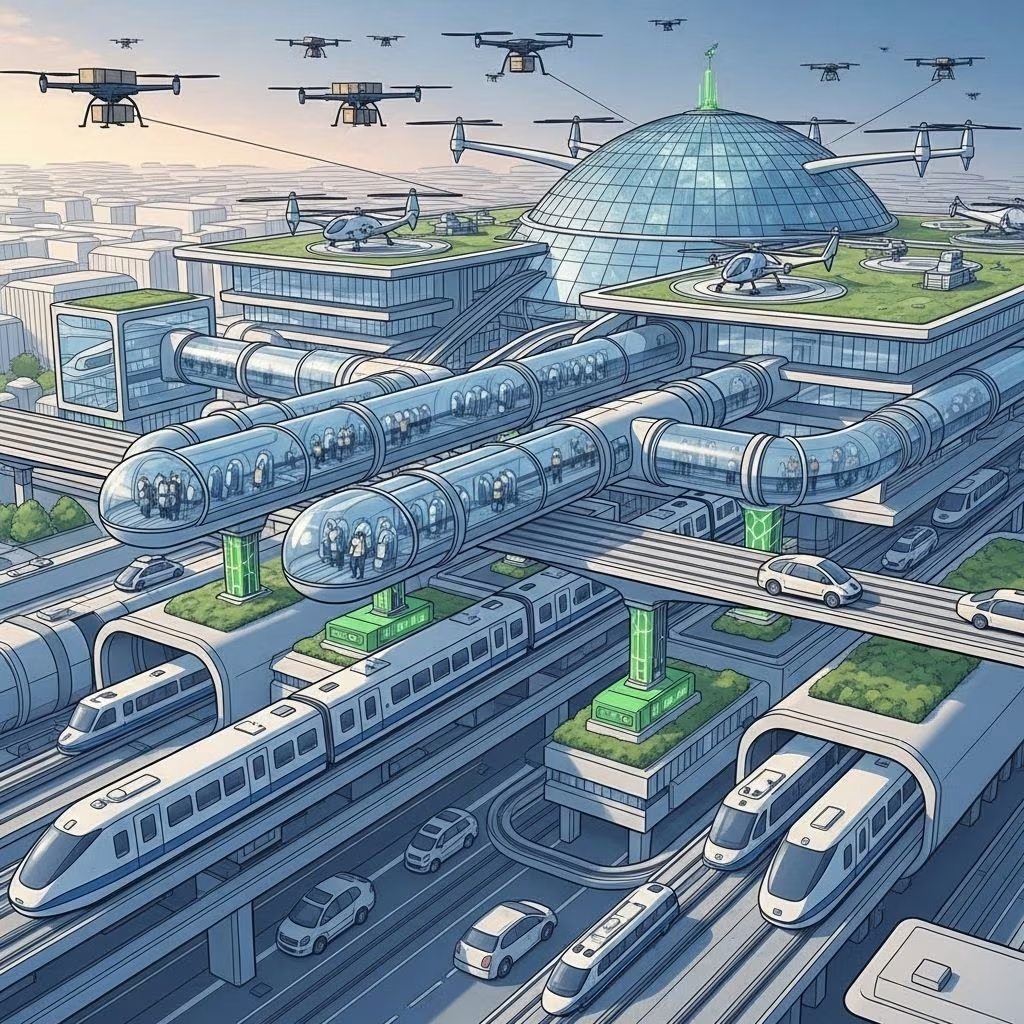
The Vision of Silicon Valley
Silicon Valley has long been the epicenter of technological innovation, with its influence extending far beyond the digital realm. In the context of transportation, Silicon Valley’s vision often revolves around high-tech solutions like electric cars, self-driving vehicles, and futuristic modes of transport such as the Hyperloop. However, as Paris Marx critically argues in Road to Nowhere, these solutions often overlook broader societal and environmental issues.
Criticisms of Silicon Valley’s Approach
Marx’s critique centers on the idea that Silicon Valley’s focus on technological fixes ignores the root causes of transportation problems, such as pollution, congestion, and inequality. These issues are not solely technical but also deeply political and social. The emphasis on electric cars, for instance, does little to address the core problem of car dependency and the sprawling urban landscapes it fosters.
Environmental Concerns
While electric vehicles are touted as a green alternative, they do not address the core environmental issues of resource extraction, manufacturing emissions, and the disposal of batteries. Moreover, the infrastructure required to support wide-scale adoption of electric vehicles (e.g., charging stations) is significant and energy-intensive.
Social Inequities
Another critical aspect is the social impact of Silicon Valley’s transportation solutions. Ridesharing services, for example, offer convenience but at the cost of exacerbating labor exploitation and perpetuating existing inequalities. The promise of self-driving cars similarly overlooks the fact that they will likely benefit the wealthy more than the marginalized.
Alternative Visions for the Future
Marx advocates for a shift towards more collective and democratic approaches to transportation, emphasizing public transit and urban planning that prioritizes walking, cycling, and community needs. This involves reclaiming public spaces from the dominance of private vehicles and fostering more equitable, sustainable urban environments.
Examples of Success
- Oslo’s Bicycle Initiatives: By prioritizing cycling infrastructure, Oslo has significantly reduced reliance on cars, improving air quality and enhancing urban livability.
- Paris’s “15-Minute City” Concept: This initiative aims to create walkable neighborhoods where all daily needs are within a 15-minute walk, promoting local economies and community interaction.
Reclaiming Public Spaces
Marx’s call to action involves not just criticizing current trends but also imagining and building alternative futures. This includes reasserting public control over urban spaces and ensuring that technological advancements serve the broader public good rather than private interests.
Frequently Asked Questions (FAQs)
Q: What are the main criticisms of Silicon Valley’s transportation solutions?
A: The criticisms focus on their failure to address environmental and social issues, such as pollution, inequality, and labor exploitation.
Q: What alternatives does Paris Marx propose for transportation?
A: Marx advocates for a shift towards public transit, cycling, and walking, emphasizing more equitable urban planning that prioritizes community needs.
References
- https://librarianshipwreck.wordpress.com/2022/08/12/where-were-going-well-probably-still-need-roads-a-review-of-paris-marxs-road-to-nowhere/
- https://proteanmagstaging.wpcomstaging.com/2022/06/29/review-paris-marxs-road-to-nowhere/
- https://en.wikipedia.org/wiki/Road_to_Nowhere_(Paris_Marx_book)
- https://overland.org.au/2022/11/reclaiming-our-cities-on-parix-marxs-road-to-nowhere/
- https://jacobin.com/2022/08/paris-marx-road-to-nowhere-silicon-valley-transportation-book-review/
- https://citylights.com/new-nonfiction-in-hardcover/road-to-nowhere-future-of-transportati/
- https://journals.sagepub.com/doi/full/10.1177/14614448221127227
- https://www.londonreviewbookshop.co.uk/stock/road-to-nowhere-what-silicon-valley-gets-wrong-about-the-future-of-transportation-paris-marx


