


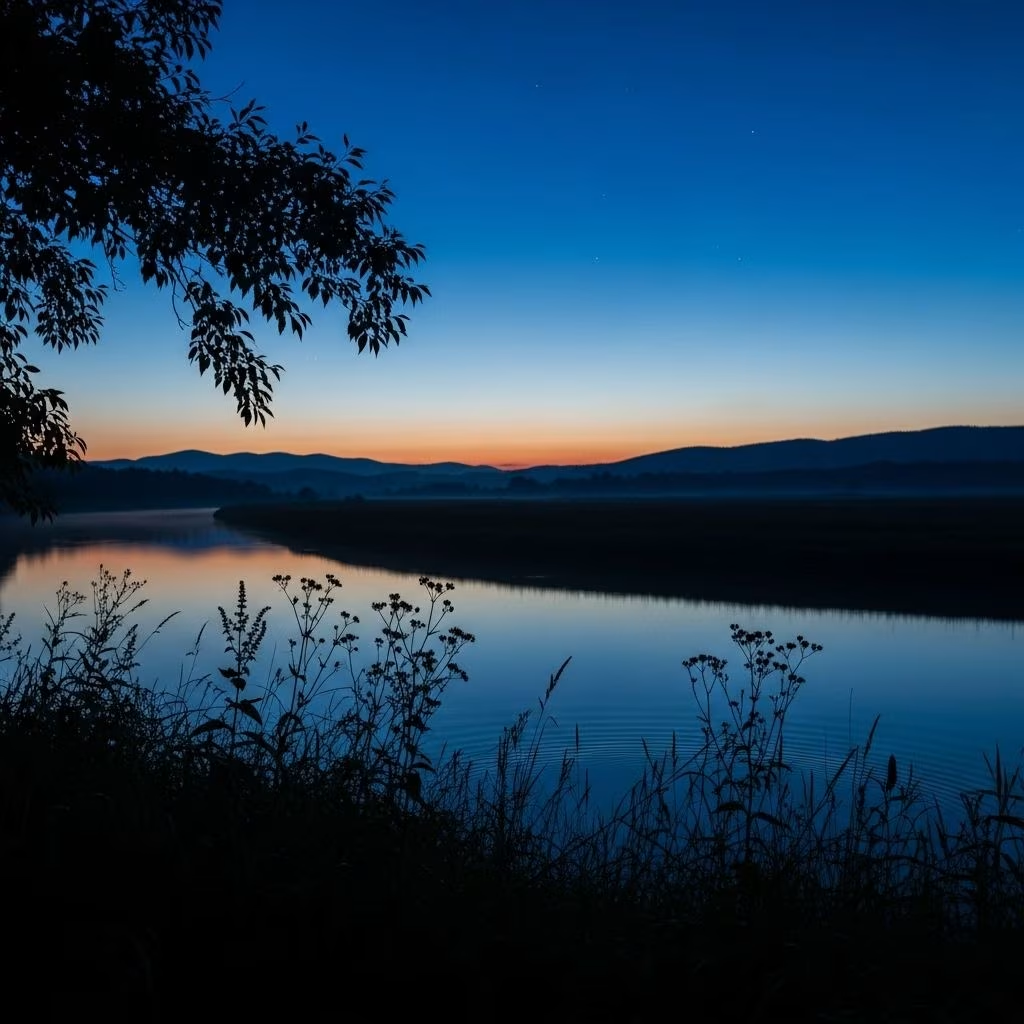
The Blue Hour: A Captivating Intersection of Art and Nature
The fleeting moments between daylight and darkness form a magical threshold known as the blue hour. During this tranquil interlude, a unique symphony of blue emerges in the natural world, casting a serene, almost mystical glow over landscapes and living creatures alike. French illustrator and author Isabelle Simler renders this time of day with a lyrical and scientific precision in her acclaimed work, The Blue Hour, inviting readers to bask in nature’s rarest color.
Defining the Blue Hour
As the sun sets and night approaches, the atmosphere is suffused with subtle but radiant shades of blue. This interstitial time – neither truly day nor fully night – is celebrated in cultures worldwide for its aesthetic and contemplative qualities. Photographers and artists revere the blue hour for its unique light, which imbues scenes with depth and tranquility. Simler’s exploration captures the essence and science behind the phenomenon, merging poetic narrative with factual observation.
Isabelle Simler’s Artistic Vision
Isabelle Simler, renowned for her evocative picture books, brings over twenty years of experience as an illustrator and author. Her talent is evident in the cross-hatched style and minimalist prose that characterize The Blue Hour, making each page an immersive celebration of shade, shape, and silence. Simler’s work has earned accolades and features in the Society of Illustrators’ “The Original Art” exhibition, and she continues to be celebrated for her gentle, educational books that span subjects from wild cats to dreamy landscapes.
- Title: The Blue Hour
- Author/Illustrator: Isabelle Simler
- Acclaimed for: Stunning cross-hatched illustrations, lyrical minimalism, educational content
- Audience: All ages
A Palette of Blues: Nature’s Rarest Pigment
Opening with a palette of thirty-two named shades, Simler’s book invites readers to appreciate blue in its many incarnations — from the porcelain blue of a forget-me-not to the midnight blue of a silent ocean. The blue hour is more than a visual phenomenon; it’s a celebration of the science and artistry behind the pigment. Intriguingly, blue is rare in nature; most animals, plants, and minerals that appear blue do so by reflecting certain wavelengths, not producing blue pigment themselves.
| Shade of Blue | Characteristic | Examples |
|---|---|---|
| Cornflower Blue | Soft, botanical, delicate | Cornflowers, forget-me-nots |
| Klein Blue | Bold, iconic, saturated | Recent art movement, deep blue birds |
| Indigo | Mysterious, deepening twilight | Blue racer snakes, evening sky |
| Turquoise | Vivid, aquatic | Sardines and shallow seas |
| Porcelain Blue | Gentle, understated | Glass snail shells |
The Menagerie of Blue: Creatures and Landscapes
Simler’s illustrations chronicle a vast array of blue-toned flora and fauna, each species selected for its uncommon connection to the blue spectrum. The book serves as both a naturalist’s reference and a cinematic lullaby, presenting each creature in peaceful interplay with its twilight environment. Below are some of the standout species featured in Simler’s journey:
- Blue Morpho Butterfly: Its iridescent wings shimmer against the dawn’s blue morning glory.
- Arctic Fox: Traverses icy landscapes, its coat shimmering silver-blue in the last light.
- Blue Poison Dart Frog: Croaks brightly in South American forests, an electric splash behind water lilies.
- Blue Racer Snake: Coiled in tree branches, blending with evening shadows.
- Blue Jay: Rests on ice-coated branches, vocalizing as daylight wanes.
- Blue Heron: Still and regal beside tranquil waters.
- Glass Snail: Nearly translucent, its shell refracting the ambient blue light.
The book’s final pages dissolve into silence as night consumes the last traces of blue, leaving only echoes and memories of a world transformed by the hour’s gentle chromatic magic.
Botanical Blues: Flowers in Twilight
Beyond animal life, Simler showcases a selection of blue-tinted blossoms thriving at dusk:
- Forget-me-nots
- Bluebells
- Cornflowers
- Violets
These flowers add aromatic layers to the blue hour, scenting the air as light fades and the world slows before darkness falls.
Educational Value and Emotional Resonance
Though The Blue Hour is often presented as a children’s picture book, its universal appeal lies in its gentle wisdom and visual artistry. Reviewers have praised its value for readers of all ages, from soothing bedtime companions to educational references on shade and biodiversity. The book serves multiple purposes:
- Gentle Bedtime Story: The tranquil progression from light to dark calms and reassures, ideal for winding down.
- Artistic Inspiration: The use of myriad blue tones and minimalist prose cultivates aesthetic appreciation.
- Scientific Curiosity: Introduces readers to rare phenomena in color science and natural history, supplemented by world maps of animal habitats.
- Global Perspective: The selection of species from all continents fosters an inclusive view of Earth’s diversity.
Behind the Science: Why Is Blue So Rare?
The striking dominance of blue during dusk belies its true rarity in the natural palette. Most of nature’s blue is due to the physics of light reflection, not pigmentation. Animals, plants, and minerals reflect the blue part of the visible spectrum, resulting in vibrant blues without any blue pigment — a fascinating twist that merges biology and optics.
- Blue pigments are chemically difficult to produce and are rarely found in living organisms.
- Structural coloration, such as microscopic scales on butterflies or birds, bends and scatters light to produce blue.
- Water molecules and atmospheric conditions during dusk enhance blue wavelengths, filling the environment with richer blue hues.
Cross-Hatched Technique: Visual Storytelling
Simler’s illustrations rely on a distinctive cross-hatching method that layers varying blues, lending depth and movement to each image. Combining minimalist text with visual complexity, her artwork creates emotional resonance without overwhelming detail, promoting both restful contemplation and keen observation.
Mapping the Blue: Where Do These Animals Live?
One unique feature of The Blue Hour is its concluding global map, pinpointing the habitats of each blue animal depicted. This geographical reference extends the book’s educational scope, encouraging readers to learn about world ecosystems while appreciating the poetry of dusk.
- North America: Blue jay, blue heron
- South America: Blue poison dart frog, glass snail
- Europe: Forget-me-not, cornflower
- Africa: Vulturine guineafowl (noted for their striking plumage)
- Arctic: Arctic fox
- Oceans: Sardines, blue whale
Critical Reception and Impact
The critical response to Simler’s work has been overwhelming positive, with reviewers highlighting:
- Radiant Artwork: Caldecott-worthy illustration quality.
- Minimalist Prose: Lulling, poetic lines that enhance bedtime ritual.
- Educational Versatility: Suitable for libraries and personal collections alike.
- Universal Appeal: Appreciated by adults and children for its gentle rhythm and soothing tone.
Selected Reviewer Insights
- “Each page is a gentle treasure … a tranquil celebration of nature.”
- “The illustrations are enchanting, worthy of admiration after a long day.”
- “A perfect bedtime story that also introduces the blue hour phenomenon.”
How The Blue Hour Inspires Eco-Consciousness
By combining factual content with artistry, Simler’s work fosters a sense of wonder and stewardship for the natural world. The fleeting beauty of the blue hour becomes a metaphor for environmental mindfulness, encouraging readers to savor and protect Earth’s delicate transitions.
- Highlights the rarity and interdependence of blue species
- Broadens awareness of global biodiversity and conservation needs
- Promotes gentle curiosity and respect for everyday natural phenomena
Frequently Asked Questions (FAQs) About The Blue Hour
What defines the “blue hour”?
The blue hour is the period of twilight between sunset and nightfall, when the remaining sunlight scatters through the atmosphere to produce a deep blue illumination across the sky, water, and land.
Is blue really rare in nature?
Yes; blue rarely occurs in natural pigments. Most blue in animals, plants, or minerals arises from structural coloration, with tiny scales or layers reflecting blue wavelengths rather than emitting blue pigment itself.
What age group is The Blue Hour intended for?
While published primarily for children (ages 4–8), the book’s artistry and lyrical text offer appeal for adults as well, making it suitable for all ages.
Which blue animals and flowers are included in the book?
The book features blue morpho butterflies, Arctic foxes, blue poison dart frogs, glass snails, blue jays, blue herons, forget-me-nots, cornflowers, violets, and more.
How is The Blue Hour educational?
It introduces readers to shades of blue, global biodiversity, and the scientific principles behind color in nature. The world map at the end locates featured animals and plants, encouraging further exploration of habitats and conservation.
Legacy and Related Works
The Blue Hour stands as a testament to the power of art and science in introducing readers to the fragile beauty of twilight. Simler’s gentle style invites readers to seek parallels in other works, such as Maggie Nelson’s essays on blue, or other nature-inspired picture books like The Lost Spells. Her ongoing projects, such as Topsy Turvy (exploring mimicry in insects), further display her talent for blending artistry with ecological insight.
Where to Experience Isabelle Simler’s Art
Simler’s works are widely available and frequently featured in design and nature blogs, exhibitions, and bookstores. Her site and social media provide updates on new releases and works-in-progress. The lasting resonance of The Blue Hour lies in its ability to gently awaken appreciation for the overlooked transitions and shades that define each day.
Conclusion: Savoring the Beauty of the Blue Hour
In The Blue Hour, Isabelle Simler extends an invitation to pause and behold nature’s rarest colors, transforming a fleeting moment into a lasting source of reflection and wonder. Whether appreciated for its educational depth, calming narrative, or stunning visual craft, Simler’s illustrated homage to dusk continues to inspire curiosity and reverence for the natural world.
References
- https://www.themarginalian.org/2021/01/14/the-blue-hour-isabelle-simler/
- https://www.thisiscolossal.com/2021/01/blue-hour-isabelle-simler/
- https://www.goodreads.com/book/show/32956666-the-blue-hour
- https://kidsbookaday.com/2017/05/25/the-blue-hour-by-isabelle-simler/
- https://fischbuchfinds.wordpress.com/2021/08/26/the-blue-hour/


