The Environmental Costs of Cotton
Cotton is often perceived as a natural, sustainable fabric—soft, breathable, and biodegradable. Yet, beneath this innocent surface lies a complex web of environmental issues. From water-guzzling fields to chemical-laden runoff, the journey of cotton from field to fabric is riddled with significant environmental costs. This article dives deep into the true footprint of cotton, critically examining its effects on ecosystems, climate, and communities, and charts potential pathways toward a more sustainable future.
Why Focus on Cotton?
Cotton is the world’s most widely used natural fiber, found in everyday clothing, home textiles, and countless other products. Its cultivation covers about 2.5% of the world’s arable land, involving millions of farmers, particularly in developing countries. However, the sheer scale of cotton production brings about profound ecological challenges that stretch far beyond the fields.
Water Usage: Cotton’s Thirsty Nature
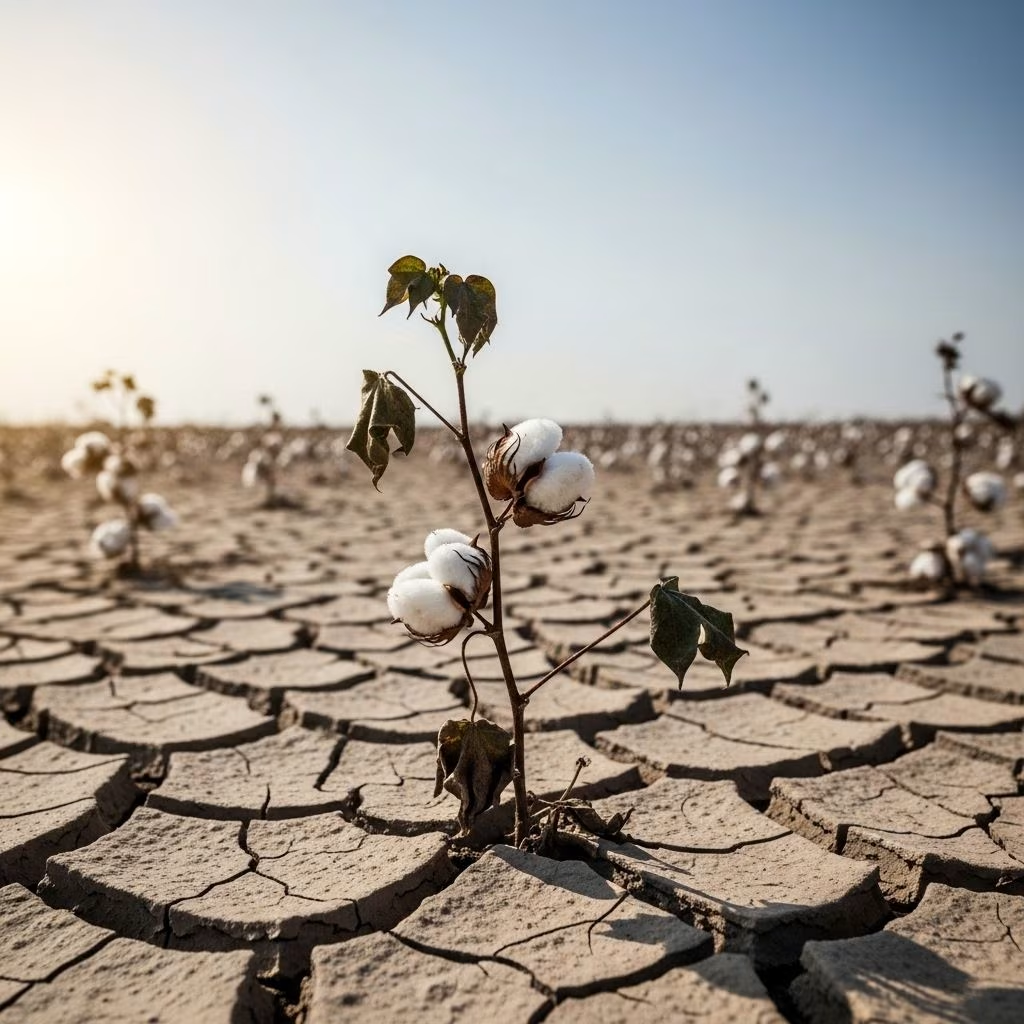
Cotton is known as a thirsty crop. About 50% of all textiles manufactured worldwide contain cotton, and the water needed to sustain this demand is immense.
- It takes about 2,700 liters of water to produce a single cotton T-shirt—enough drinking water for one person for over two years.*
- Between irrigation for the plants and water used in processing (such as dyeing), these requirements have a massive impact on local and global water supplies.
Regions heavily involved in cotton cultivation often face water scarcity. One stark example is the Aral Sea basin in Central Asia. Years of intense water withdrawal for cotton irrigation led to one of the world’s greatest environmental disasters: the Aral Sea shrunk by 85% of its volume, wiping out local fisheries and communities.*
Consequences of Cotton’s Water Consumption
- Depletion of rivers, lakes, and groundwater
- Drinking water scarcity for local populations
- Habitat loss for aquatic and riparian species
Locally, cotton’s intense water draw can lead to environmental collapse, while globally, it contributes to rising competition for freshwater—a resource in ever-shorter supply.
Pesticide and Chemical Pollution
Despite being natural, conventional cotton is among the world’s most chemically intensive crops.*
- It accounts for about 6% of global pesticide use and 16% of all insecticides.
- These substances leach into soil, water, and air, harming humans and ecosystems alike.*
Health impacts include:
- Acute and chronic illnesses among farm workers (e.g. cancer, respiratory issues, neurological effects)
- Long-term chemical residues lingering in soils and water, infiltrating communities and the wider food chain
- Chemicals from cotton dyes and processing may cause allergies and hormonal disruptions in consumers
Environmental Effects
- Soil degradation due to high chemical and water loads, leading to reduced soil fertility over time
- Biodiversity loss: Pesticides don’t discriminate—beneficial insects, birds, and aquatic life are often collateral damage
- Greenhouse gas emissions: Pesticide and fertilizer production, as well as land conversion, contribute to increased emissions
Land Use and Biodiversity Loss
Cotton cultivation is a driver of large-scale land transformation. Valuable ecosystems—grasslands, wetlands, forests—are converted to agriculture, resulting in:
- Loss of wildlife habitat
- Fragmentation of ecosystems, reducing their resilience and ability to support diverse species
- Reduced capacity for carbon sequestration, increasing net carbon emissions
This landscape change, coupled with chemical runoff, severely compromises local biodiversity. Not only do plants and animals reside in these terrains, but local people also depend on ecosystem goods and services that are depleted or destroyed by large-scale cotton production.
Soil Degradation
Conventional cotton farming often relies on monoculture—cultivating the same crop repeatedly over large areas. Combined with intensified irrigation and chemical inputs, this is a recipe for soil degradation:
- Salinization: Over-irrigation leads to a dangerous buildup of salts in the soil, reducing growth for cotton and all other crops
- Nutrient depletion: Frequent harvesting without crop rotation strips vital nutrients from the earth
- Soil erosion: Land left bare between growing seasons is vulnerable to wind and water erosion
The impact is long-term. Degraded soils are less productive and often become unusable, pushing farmers to clear new areas of land, perpetuating a destructive cycle.
Is Cotton Biodegradable? The Biodegradability Challenge
Unprocessed cotton fiber is fully biodegradable and compostable, returning to the soil natural elements with minimal impact. However, this is rarely the case for finished products:
- Cotton garments are often treated with chemicals, dyes, flame retardants, or combined with synthetics such as polyester
- These treatments inhibit natural decomposition and introduce persistent pollutants into the environment
Fast fashion has exacerbated the issue, saturating markets with cheap textile blends (“polycotton”—typically 65% cotton, 35% polyester), many of which persist in landfill for decades.
Cotton, Fast Fashion, and Waste
The rise of fast fashion—rapid, low-cost manufacture and consumption of clothing—has magnified cotton’s environmental toll:
- Increased demand for conventional cotton (rarely organic or sustainable) to keep prices low
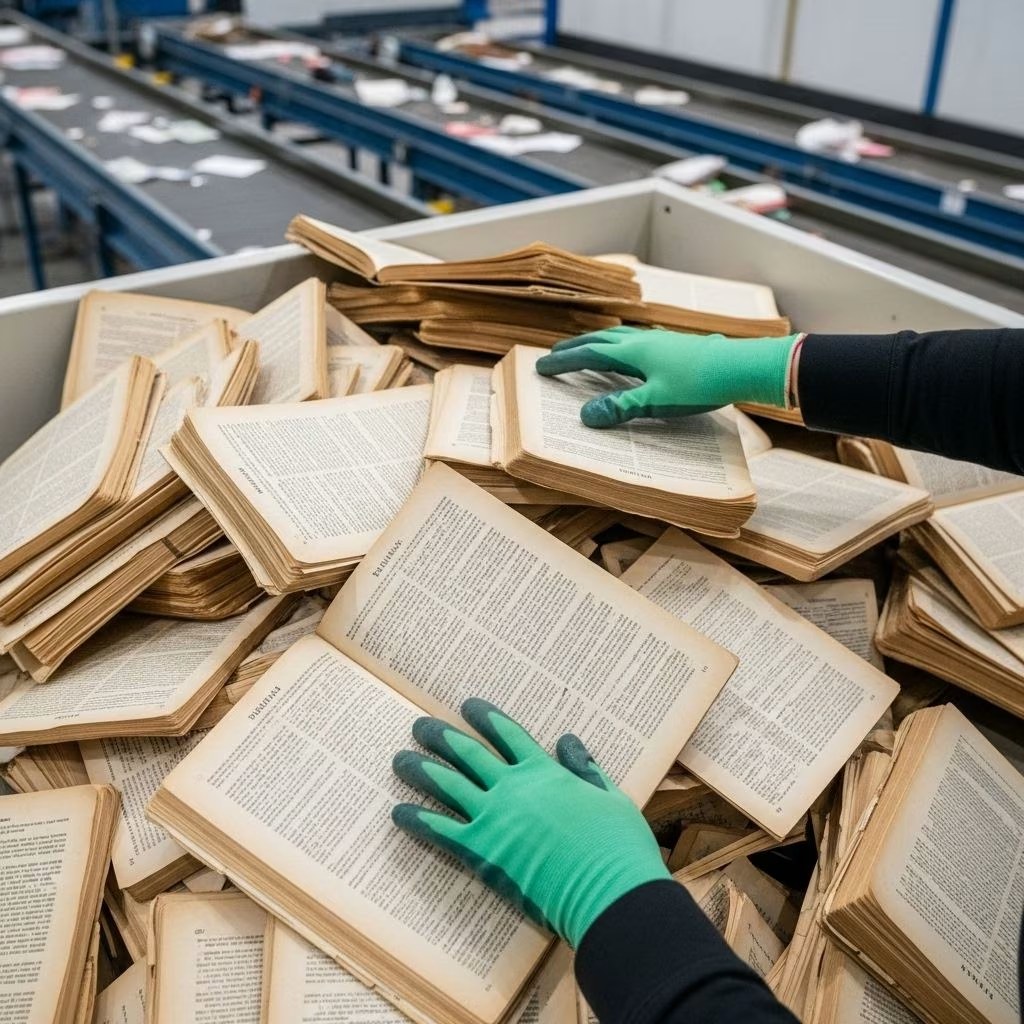
- Massive textile waste: discarded cotton and blended garments clog landfills, where chemical-laden cloth leaches toxins into soil and water
Textile waste management is a growing challenge worldwide, with environmental and social costs extending far beyond the shop floor.
Genetically Modified Cotton
The proliferation of genetically modified (GM) cotton—engineered to resist pests or tolerate herbicides—has reshaped the environmental picture in some regions. Advocates claim that GM cotton requires fewer pesticides. However, evidence suggests new issues:
- Herbicide-resistant weeds, leading to heavier chemical use over time
- Unknown long-term ecological impacts on non-target species and soil health
- Threats to smallholder farmers through increased seed costs and corporate control
Organic cotton, by contrast, prohibits genetic manipulation and synthetic chemicals, offering a potential alternative for sustainability.
Organic Cotton: A Sustainable Alternative?
Organic cotton is grown without synthetic pesticides, insecticides, or fertilizers, and GMO seeds are banned. Its environmental advantages include:
- Significantly reduced chemical pollution
- Lower water usage (especially when rain-fed, not irrigated)
- Improved soil health through crop rotation and organic amendments
- Protection of farm worker and community health
Yet, organic cotton is not a universal solution. Yields are often lower than conventional cotton, potentially requiring more land to produce the same amount of fiber. Still, its long-term benefits to soil, water, and people form the cornerstone of more responsible cotton cultivation.
Industry Initiatives and Innovations
The textile industry is increasingly aware of cotton’s environmental costs, prompting innovations and shifts toward sustainability:
- Brands adopting water-saving technologies for cotton processing (e.g., waterless dyeing)
- Better Cotton Initiative (BCI): Aims to make cotton production more sustainable at scale, including improvements in soil health, water management, and farmer livelihoods
- Promoting recycled cotton and fiber blends to reduce virgin resource use
- Certifications (e.g., Global Organic Textile Standard – GOTS) that verify eco-friendly practices
Consumer support for brands with transparent, sustainable sourcing is a major driver of industry change.
What Can Consumers Do?
- Choose certified organic or recycled cotton where possible
- Support brands with transparent supply chains and sustainability initiatives
- Wash clothing less frequently and in cold water to reduce micro-shedding and water/energy use
- Buy fewer, higher-quality garments to minimize textile waste
- Recycle or donate unwanted cotton clothing
Individual actions, when multiplied across millions of consumers, influence the entire textile supply chain and can drive broader environmental stewardship.
Table: Comparing Conventional and Organic Cotton
| Criteria | Conventional Cotton | Organic Cotton |
|---|---|---|
| Water Use | Extremely high; often relies on irrigation | Lower; often rain-fed, no synthetic chemicals |
| Pesticide/Herbicide Use | Heavy use of synthetic chemicals | Prohibited; natural alternatives used |
| Soil Health | Degradation, salinization | Maintained or improved through rotation, compost |
| Ecological Impact | Biodiversity loss, water pollution | Fewer negative impacts, improved biodiversity |
| Yield per Acre | Generally higher | Lower, but less damaging |
Frequently Asked Questions (FAQs)
Q: Is all cotton bad for the environment?
A: Not all cotton is equally harmful. Conventional cotton has a high environmental footprint due to water and chemical use, but organic and rain-fed cotton options are significantly more sustainable.
Q: Why does cotton use so much water?
A: Cotton’s high water usage stems from both crop irrigation and the manufacturing process. In arid regions, cotton farming can deplete rivers, lakes, and aquifers.
Q: What are alternatives to conventional cotton?
A: Alternatives include organic cotton, recycled cotton fibers, and other natural fibers such as hemp and linen which use less water and fewer chemicals.
Q: Does buying organic cotton always guarantee sustainability?
A: While organic cotton greatly reduces chemical and water impacts, sustainability also depends on social factors, energy use, and transportation. Certifications and supply chain transparency are key.
Q: Can consumers help lessen cotton’s environmental impact?
A: Yes. Choosing organic or recycled cotton, purchasing from responsible brands, and supporting recycling efforts all contribute to a more sustainable cotton life-cycle.
* Data and examples sourced from multiple environmental and textile industry resources.
References
- https://www.projectcece.com/blog/445/is-cotton-bad-for-the-environment-the-no-fluff-truth/
- https://www.eco-stylist.com/a-guide-to-the-most-and-least-sustainable-fabrics/
- https://www.greenchoices.org/green-living/clothes/environmental-impacts
- https://stephenleahy.net/tag/cotton/
- https://one-more-tree.org/blog/2024/09/27/the-hidden-environmental-cost-of-fast-fashion/