


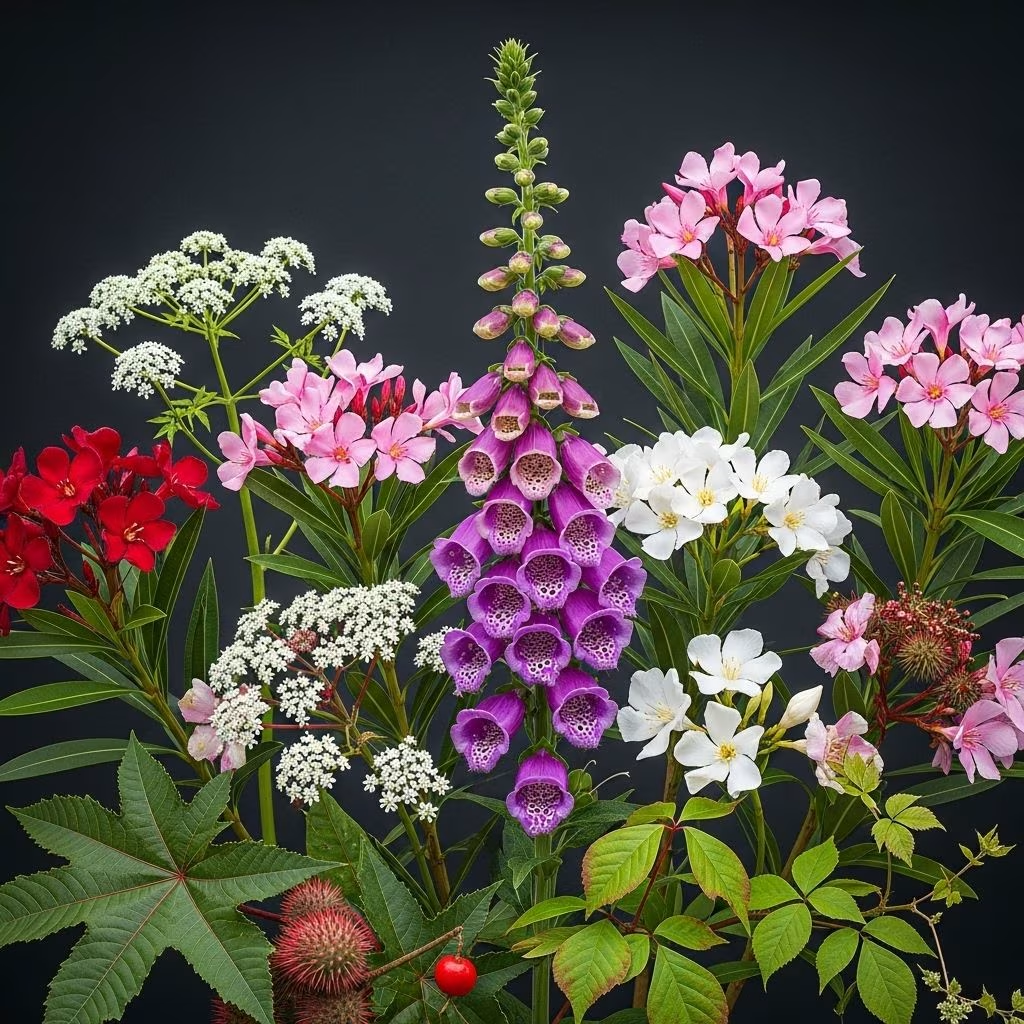
Beautiful But Lethal: The Most Dangerous Plants in the U.S.
Nature is filled with fascinating and breathtaking flora, but not all beauty is benign. Across the United States, a striking variety of plants conceal potent toxins that can endanger humans, pets, and livestock. This extensive guide delves into some of the most visually stunning, yet dangerously poisonous plants found nationwide. Learn how to recognize them, understand their toxic properties, and take precautions to avoid their hidden risks.
Why Some Plants Are Poisonous
Plants synthesize toxins primarily as a defense mechanism against herbivores, insects, and competition. These compounds can have potent effects on the nervous system, heart, or other bodily systems, affecting animals and humans alike. Many of these toxic plants are native to the U.S., while others have arrived as ornamental imports. Regardless of origin, being able to identify them is crucial for personal safety and ecological awareness.
1. Castor Bean (Ricinus communis)
Castor bean is prized for its tropical look, featuring large, glossy leaves and spiky fruit pods. However, it contains ricin, among the most lethal plant toxins known.
- Toxic Parts: All parts, especially the seeds
- Symptoms: Nausea, severe abdominal pain, vomiting, diarrhea, and potentially fatal organ failure
- Notes: Even tiny amounts of ricin can be deadly if chewed and ingested
2. Oleander (Nerium oleander)
Considered one of the most poisonous plants commonly cultivated for landscaping, oleander stands out with its lush evergreen foliage and showy clusters of pink, red, or white flowers.
- Toxic Parts: All parts, including flowers and leaves
- Symptoms: Arrhythmia, vomiting, diarrhea, slowed heart rate, and in severe cases, death
- Special Risk: Even inhaling smoke from burning oleander can be fatal
3. Water Hemlock (Cicuta spp.) & Poison Hemlock (Conium maculatum)
Both water hemlock and poison hemlock are notorious for their resemblance to Queen Anne’s lace or wild carrot, but their toxins make them among North America’s most lethal wild plants.
- Toxic Parts: All parts, most notably roots
- Symptoms: Rapid onset of seizures, abdominal cramps, respiratory failure, death even after a small dose
4. Foxglove (Digitalis purpurea)
Foxglove displays tall spikes covered in bell-shaped, purple or pink flowers. It contains digitalis glycosides, chemicals still used in regulated forms to treat heart conditions, but deadly in natural concentrations.
- Toxic Parts: Leaves, flowers, seeds
- Symptoms: Nausea, vomiting, irregular heart rhythms, hallucinations, death
5. Angel’s Trumpet (Brugmansia spp.)
This ornamental shrub dazzles with large, pendulous trumpet-shaped flowers in white, yellow, or pink. Its beauty hides a potent neurotoxin.
- Toxic Parts: All parts
- Symptoms: Dry mouth, confusion, hallucinations, paralysis, death
6. Jimson Weed (Datura stramonium)
Jimson weed shows off sharply pointed seed pods and white to purple trumpet-shaped blooms. Used historically for various purposes, the plant contains tropane alkaloids that cause severe poisoning.
- Toxic Parts: All parts, especially seeds and leaves
- Symptoms: Delirium, hallucinations, hyperthermia, convulsions, possible death
7. Autumn Crocus (Colchicum autumnale)
With delicate purple, pink, or white blooms, autumn crocus resembles the harmless spring crocus but contains colchicine, a toxin which can cause systemic organ failure.
- Toxic Parts: All parts, especially bulbs
- Symptoms: Gastrointestinal distress, organ failure, death
8. Mountain Laurel (Kalmia latifolia) & Sheep Laurel (Kalmia angustifolia)
Native to the eastern U.S., mountain laurel and its cousin sheep laurel are evergreen shrubs with beautiful star-shaped pink, white, or purple blooms. Their leaves and flowers are highly toxic to livestock and humans.
- Toxic Parts: Leaves, flowers
- Symptoms: Salivation, vomiting, incoordination, spasms, coma, death
- Livestock Impact: Most poisonings occur in winter and early spring when other food is scarce
9. Lily of the Valley (Convallaria majalis)
Don’t let the delicate fragrance and dainty white bells of lily of the valley fool you—this plant possesses cardiac glycosides powerful enough to stop a heart.
- Toxic Parts: All parts
- Symptoms: Nausea, vomiting, slowed heartbeat, cardiac arrest
10. Nightshade Family (Atropa belladonna, Solanum, Datura, Nicotiana)
This broad plant family includes notorious species like belladonna (deadly nightshade), jimson weed, and angel’s trumpet. All are known for their attractive fruits or blooms and potent neurotoxins.
- Toxic Parts: Leaves, berries, roots
- Symptoms: Dilated pupils, dry mouth, hallucinations, seizures, death
11. Delphinium & Larkspur (Delphinium spp.)
The tall, spiked blue and purple flowers of larkspur and delphinium are a favorite for ornamental borders, yet a cocktail of alkaloids makes every part toxic, especially to grazing livestock.
- Toxic Parts: Entire plant
- Symptoms: Muscle weakness, coordination loss, paralysis, death
12. Bleeding Heart (Lamprocapnos spectabilis)
Renowned for their heart-shaped pink blossoms, bleeding hearts conceal isoquinoline alkaloids in their roots and foliage.
- Toxic Parts: Roots, foliage
- Symptoms: Tremors, convulsions, skin irritation if handled excessively
13. Lupine (Lupinus spp.)
Lupines add vivid blues and purples to American prairies but harbor alkaloids that can endanger both humans and animals.
- Toxic Parts: Seeds, pods, leaves
- Symptoms: Digestive upset, difficulty breathing, convulsions, seizures
14. Wild Parsnip (Pastinaca sativa)
Often mistaken for harmless Queen Anne’s lace, wild parsnip releases a sap that reacts with sunlight to cause severe skin burns.
- Toxic Parts: Sap, all aerial parts
- Symptoms: Blisters, severe rashes, skin discoloration (photodermatitis)
15. Showy Crotalaria (Crotalaria spectabilis)
Also called rattlebox, showy crotalaria is found primarily in the southern U.S. Its seeds and other parts contain alkaloid monocrotaline, especially toxic to livestock.
- Toxic Parts: All parts, seeds most potent
- Main Victims: Chickens, horses, cattle, swine; occasionally affects humans
- Symptoms: Liver damage, respiratory distress, death with high exposure
16. Sicklepod and Coffee Senna (Senna obtusifolia & Senna occidentalis)
These annual weeds are prolific in fields and roadsides across the South, harboring toxins particularly in seeds that pose threats to livestock and, in rare cases, humans.
- Toxic Parts: Seeds and pods
- Symptoms: Muscle tremors, weakness, digestive distress, potentially fatal in large amounts
17. Rhubarb (Rheum rhabarbarum)
While the stalks of rhubarb are edible, its broad leaves contain oxalic acid and anthraquinone glycosides.
- Toxic Parts: Leaves
- Symptoms: Breathing difficulty, kidney damage, death in extreme cases
18. Daphne (Daphne spp.)
Growing as a small shrub with fragrant pink or white flowers, daphne bears small, attractive berries packed with deadly toxins.
- Toxic Parts: Berries, bark, leaves
- Symptoms: Burning in mouth, vomiting, severe digestive upset, heart problems
Other Noteworthy Dangerous Beauties
- Night Blooming Jasmine (Cestrum nocturnum): Extremely toxic to pets; vomiting, seizures are common symptoms
- Yellow Jessamine (Gelsemium sempervirens): All parts contain alkaloids capable of causing respiratory failure
- Dogbane (Apocynum cannabinum): Looks like milkweed and contains cardiac glycosides
Toxic Plant Table: Quick Reference for Identification and Symptoms
| Plant | Main Toxins | Dangerous Parts | Key Symptoms |
|---|---|---|---|
| Castor Bean | Ricin | Seeds, all parts | Vomiting, diarrhea, organ failure |
| Oleander | Cardiac glycosides | All parts | Heart arrhythmia, vomiting, death |
| Water Hemlock | Cicutoxin | Roots, all parts | Seizures, respiratory failure |
| Foxglove | Digitalis glycosides | Leaves, flowers | Heart disturbance, hallucinations |
| Angel’s Trumpet | Scopolamine, atropine | All parts | Delirium, paralysis |
| Lily of the Valley | Convallatoxin | All parts | Vomiting, cardiac arrest |
| Bleeding Heart | Isoquinoline alkaloids | Roots, foliage | Tremors, convulsions |
| Wild Parsnip | Furanocoumarins | Sap, all parts | Blisters, skin burns |
Protecting Yourself, Children, and Pets
- Always teach children not to touch or ingest unknown plants, berries, or mushrooms.
- Keep pets supervised and discourage grazing in areas where toxic plants are common.
- Wear gloves when gardening, especially around known toxic plants.
- If exposure or ingestion occurs, contact Poison Control immediately and, if necessary, seek medical help. Early intervention can save lives.
Frequently Asked Questions (FAQs)
Q: What should I do if I think someone has eaten a poisonous plant?
A: Call Poison Control (1-800-222-1222) or seek emergency medical assistance. Do not induce vomiting unless directed by a professional. Save a sample of the plant for identification.
Q: Can simple contact with these plants cause harm?
A: For some species (like wild parsnip or poison ivy), skin contact can cause irritation or burns. Others are mostly dangerous if ingested, though sap or pollen can be harmful to sensitive individuals.
Q: Are pets and livestock at risk?
A: Absolutely. Many toxic ornamental and wild plants are routinely eaten by curious pets, while livestock may ingest dangerous species when forage is limited.
Q: Are there non-toxic alternatives for these ornamental plants?
A: Yes, many beautiful native and non-toxic plants are suitable for landscaping, such as sunflowers, marigolds, and bee balm, which also benefit pollinators.
Conclusion
Stunning gardens and wild places across the United States are home to a remarkable variety of poisonous flora. By cultivating awareness and learning to recognize these plants, we can enjoy their beauty safely and help protect ourselves, our children, and our animals from their hidden dangers.
References
- https://carteret.ces.ncsu.edu/wp-content/uploads/2013/05/Poisonour-Plants-of-the-Southern-United-States.pdf?fwd=no
- https://www.backyardgardenlover.com/beautiful-but-deadly-18-gorgeous-plants-with-a-dangerous-side/
- https://www.goodhousekeeping.com/home/gardening/advice/g1174/deadly-poisonous-plants/
- https://www.gardenia.net/guide/poisonous-flowers-plants-toxic-beauty-in-your-garden
- https://www.veolianorthamerica.com/common-poisonous-plants-and-plant-parts


