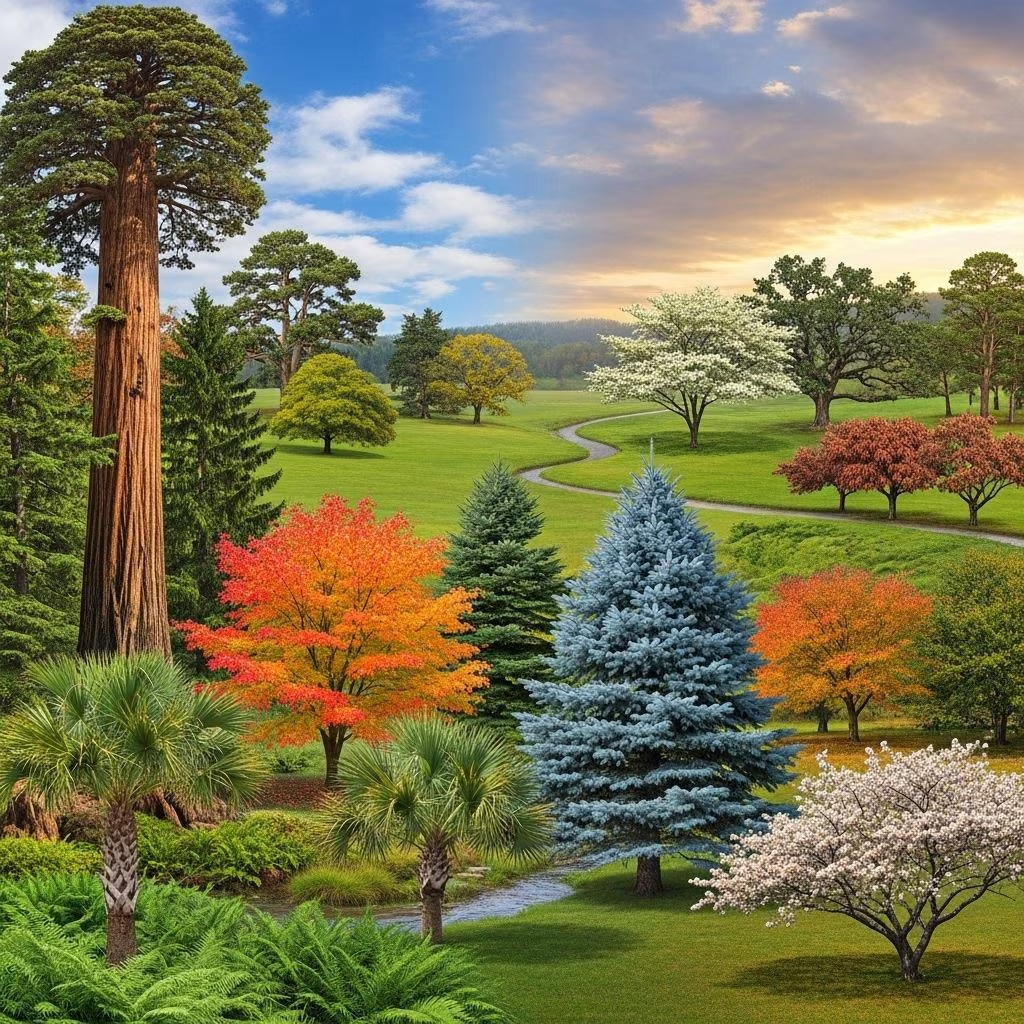
Each U.S. state honors a specific tree, recognizing both its cultural importance and ecological role. These trees are more than botanical emblems—they represent unique aspects of regional history, identity, and biodiversity. This comprehensive guide explores every state tree, their histories, fascinating facts, and conservation notes, offering a journey through the country’s living symbols.
Why Do States Have Official Trees?
State trees serve as a natural symbol, complementing birds, flowers, and other official icons chosen to represent state heritage. Dating back to the 19th and early 20th centuries, these selections encourage conservation, botanical education, and state pride.
- Origins: The concept began in 1893, parallel to the rise of state flowers at the World’s Columbian Exposition in Chicago.
- Purpose: State trees highlight species native to the region or with deep historical roots in local economies, traditions, and ecosystems.
- Legislation: In most cases, state legislatures chose the tree through public campaigns involving schoolchildren, botanists, and natural resource departments.
How State Trees Are Selected
Selection processes vary by state, but typically include:
- Public input via votes or contests, especially among schoolchildren
- Recommendations by state forestry associations, botanists, or environmental groups
- Legislative recognition through state law
Some states selected trees with both symbolic and practical value, such as timber species or those essential to native wildlife. Others chose unique or rare species to draw attention to regional biodiversity.
List of U.S. State Trees by Region
The table below provides an overview of each state tree, along with its scientific name and a distinctive fact.
| State | Tree | Scientific Name | Key Fact |
|---|---|---|---|
| Alabama | Longleaf Pine | Pinus palustris | Critical for the endangered red-cockaded woodpecker |
| Alaska | Sitka Spruce | Picea sitchensis | One of the tallest tree species on Earth |
| Arizona | Palo Verde | Parkinsonia florida | State’s name means ‘green stick’ for its green trunk |
| Arkansas | Loblolly Pine | Pinus taeda | Dominates Southern U.S. pine forests |
| California | Coast Redwood | Sequoia sempervirens | Tallest living tree species |
| Colorado | Colorado Blue Spruce | Picea pungens | Famous for its silver-blue needles |
| Connecticut | White Oak | Quercus alba | The famous Charter Oak played a role in state history |
| Delaware | American Holly | Ilex opaca | Known for glossy leaves and red berries |
| Florida | Sabal Palm (Cabbage Palm) | Sabal palmetto | Exceptionally hurricane-resistant |
| Georgia | Live Oak | Quercus virginiana | Famous for expansive, moss-draped branches |
| Hawaii | Kukui (Candlenut) | Aleurites moluccanus | Imported, but integral to Hawaiian culture |
| Idaho | Western White Pine | Pinus monticola | Source of high-quality, lightweight wood |
| Illinois | White Oak | Quercus alba | Also Connecticut’s tree, prized for hard wood |
| Indiana | Tulip Tree | Liriodendron tulipifera | Tall and fast-growing, also Indiana’s state flower |
| Iowa | Bur Oak | Quercus macrocarpa | Resistant to fires and drought |
| Kansas | Cottonwood | Populus deltoides | Fastest-growing native tree in Kansas |
| Kentucky | Tulip Tree | Liriodendron tulipifera | Same as Indiana’s; has distinctive tulip-shaped leaves |
| Louisiana | Bald Cypress | Taxodium distichum | Thrives in swamps and floodplains |
| Maine | E. White Pine | Pinus strobus | Key to shipbuilding in colonial times |
| Maryland | White Oak | Quercus alba | One of the most widespread state trees |
| Massachusetts | American Elm | Ulmus americana | Famous for its vase-like canopy |
| Michigan | White Pine | Pinus strobus | Once drove the state’s lumber industry |
| Minnesota | Red Pine | Pinus resinosa | Also called Norway pine |
| Mississippi | Magnolia | Magnolia grandiflora | Known for large white fragrant flowers |
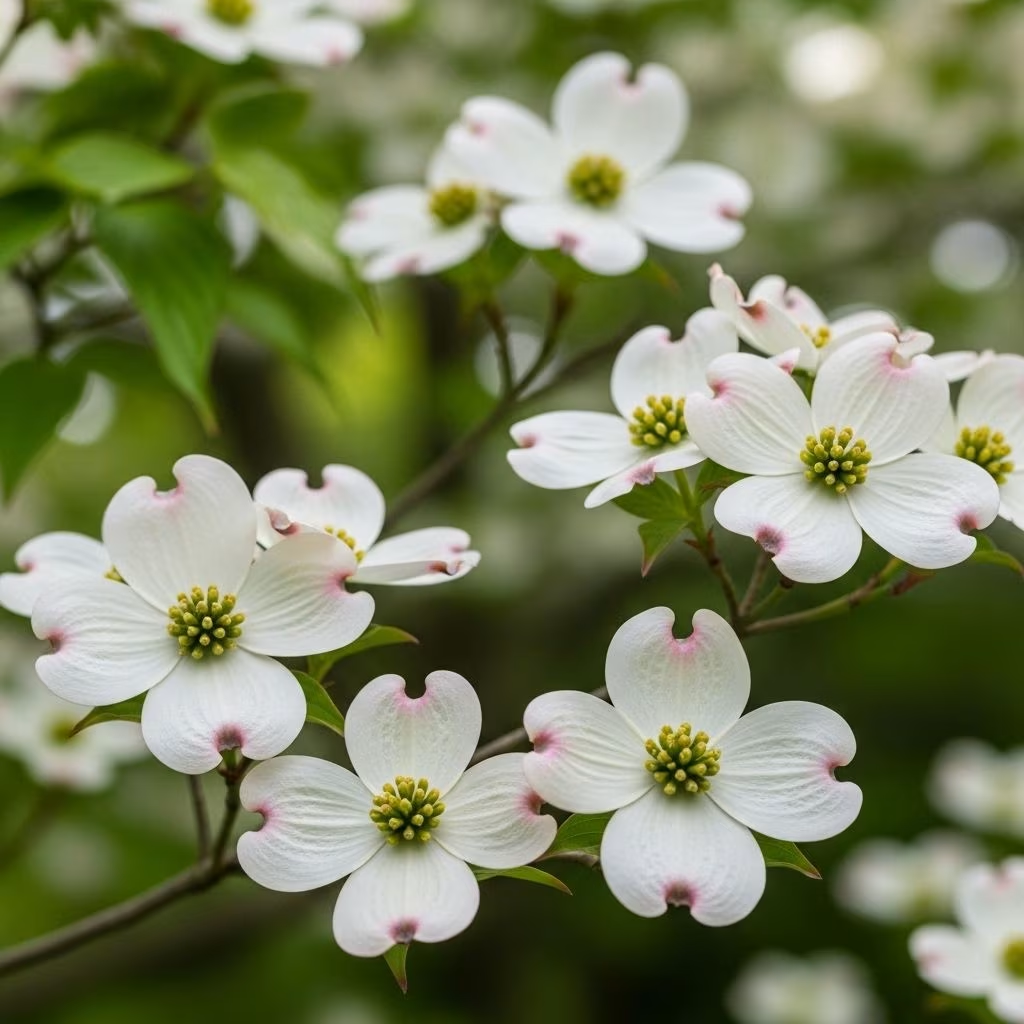
| Missouri | Flowering Dogwood | Cornus florida | Blooms vibrant pink and white in spring |
| Montana | Ponderosa Pine | Pinus ponderosa | Tall, hardy, and fire-adapted |
| Nebraska | Cottonwood | Populus deltoides | Popular shade tree for plains homesteads |
| Nevada | Singleleaf Pinyon | Pinus monophylla | Yields edible pine nuts |
| New Hampshire | White Birch | Betula papyrifera | White bark used for writing by native peoples |
| New Jersey | Northern Red Oak | Quercus rubra | Valuable for furniture manufacturing |
| New Mexico | Piñon Pine | Pinus edulis | Famous for edible pine nuts |
| New York | Sugar Maple | Acer saccharum | Maple syrup tradition started here |
| North Carolina | Pine | Pinus spp. | Pine forests cover much of the state |
| North Dakota | American Elm | Ulmus americana | Once the most common street tree in the U.S. |
| Ohio | Ohio Buckeye | Aesculus glabra | State nickname derives from this tree |
| Oklahoma | Redbud | Cercis canadensis | Blooms dazzling pink in early spring |
| Oregon | Douglas-fir | Pseudotsuga menziesii | Key lumber species; not a true fir |
| Pennsylvania | E. Hemlock | Tsuga canadensis | Important for wildlife and water quality |
| Rhode Island | Red Maple | Acer rubrum | Brilliant fall colors |
| South Carolina | Sabal Palm | Sabal palmetto | Also the state tree of Florida |
| South Dakota | Black Hills Spruce | Picea glauca var. densata | Unique to mountainous Black Hills |
| Tennessee | Tulip Poplar | Liriodendron tulipifera | Valued for straight trunks and yellow wood |
| Texas | Pecan | Carya illinoinensis | Produces the official state nut |
| Utah | Blue Spruce | Picea pungens | Adapted to mountain climates |
| Vermont | Sugar Maple | Acer saccharum | Autumn maple displays draw tourists |
| Virginia | Flowering Dogwood | Cornus florida | Breathtaking springtime blossoms |
| Washington | Western Hemlock | Tsuga heterophylla | Iconic evergreen of Pacific Northwest forests |
| West Virginia | Sugar Maple | Acer saccharum | Maple syrup is a local tradition |
| Wisconsin | Sugar Maple | Acer saccharum | Also the official state tree for two neighbors |
| Wyoming | Cottonwood | Populus deltoides | Key to riparian habitats nationwide |
Interesting Patterns and Stories
- Sugar Maple is the state tree of four states: New York, Vermont, Wisconsin, and West Virginia.
- White Oak is honored by three states, emphasizing its versatility and historical significance.
- Some states chose trees rare outside their borders, like the Pecan in Texas and the Kukui in Hawaii.
- States with similar climates often select related species (ex: pines of the Southeast).
The Ecological Importance of State Trees
State trees are often keystone species, playing crucial roles in their local ecosystems. They provide habitat for birds, insects, and mammals, stabilize soils, influence water cycles, and contribute significantly to carbon sequestration and biodiversity.
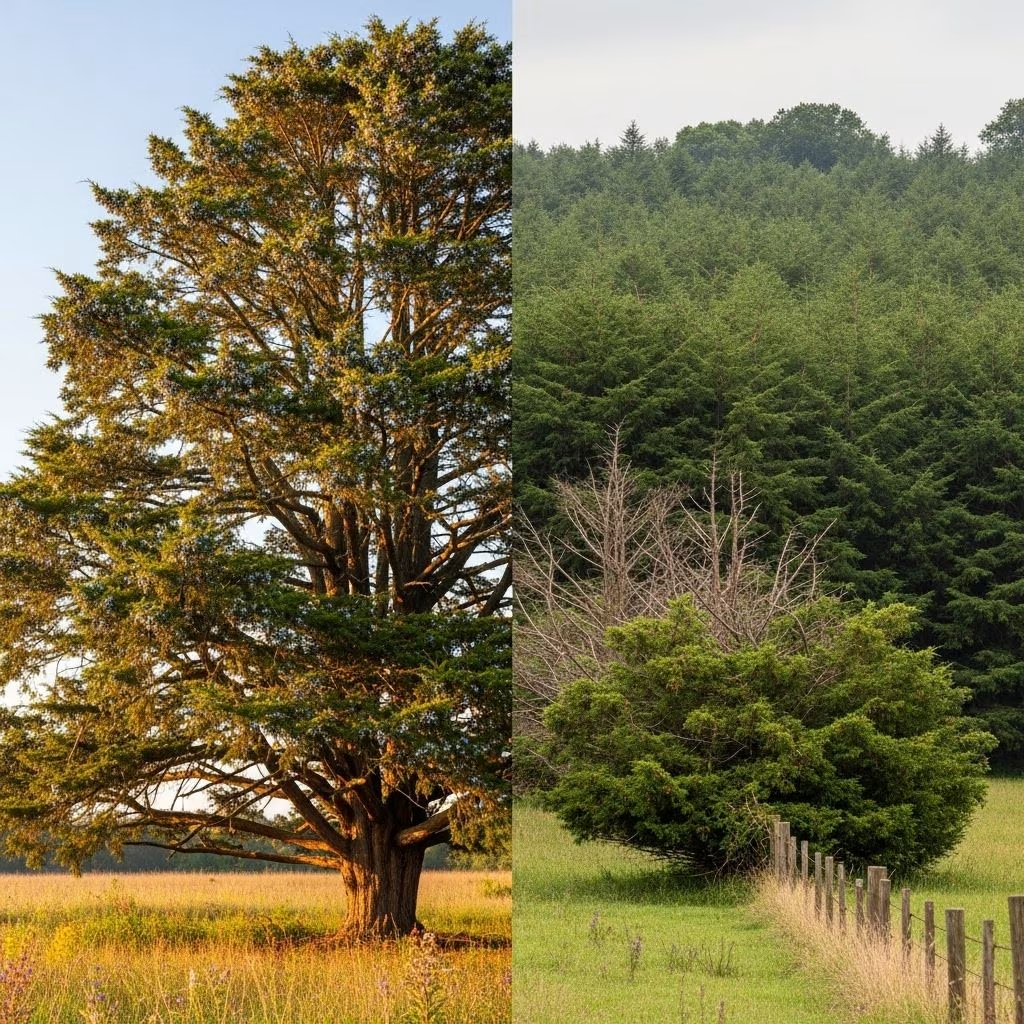
- Conservation: Many state trees, like the American elm and Eastern hemlock, face threats from disease, invasive species, and climate change.
- Restoration: Several states invest in planting and protecting their state trees to maintain both biodiversity and state character (e.g., Vermont’s maple reforestation efforts).
- Education: State trees are tools for environmental education, often featured in school curricula and botanic gardens.
How to Identify Your State Tree
Recognizing your state tree requires observing key features:
- Leaf type (broadleaf or needle, shape, and size)
- Bark characteristics (color, texture, thickness)
- Fruit, nut, or cone type
- Habitat and growing region
- Flowering season or autumn color
Many state forestry departments and local parks offer guides and public events on tree identification, encouraging communities to appreciate and protect their local giants.
Conservation Success Stories and Ongoing Challenges
State trees illustrate both conservation achievements and ongoing threats. Some once-threatened species—like the American chestnut—are targeted by ongoing efforts to breed blight-resistant individuals. Others, such as redwoods and longleaf pine, have made comebacks thanks to protected parklands and restored habitats.
- Redwoods in California have benefited from expanded reserves and public awareness.
- Longleaf Pine restoration in the Southeast supports endangered wildlife.
- White Ash and American Elm face ongoing challenges tied to invasive pests and diseases.
Get Involved: Celebrate and Protect Your State Tree
Anyone can become a steward of their state tree:
- Plant state tree seedlings in your yard or as part of community greening projects
- Join local conservation societies dedicated to native trees
- Attend or organize tree walks to educate others about local flora
- Advocate for state and city policies that protect mature trees and urban forests
Frequently Asked Questions (FAQs)
Which state tree is the rarest?
Hawaii’s Kukui tree (Aleurites moluccanus) stands out as rare in the continental U.S. and is deeply woven into Indigenous Hawaiian culture, but other states like Nevada (Singleleaf Pinyon) also have species strongly tied to their unique environments.
Why do some states share the same state tree?
Species like the Sugar Maple and White Oak are widespread and ecologically valuable across several regions, often resulting in multiple states adopting the same iconic tree.
Can I nominate a tree to become my state’s tree?
While most states already have established state trees, you can participate in local awards or registries, and sometimes lobby for state symbols if advocates gain enough public and legislative support.
How are state trees protected from environmental threats?
State forestry programs, non-profit organizations, and community volunteers monitor, plant, and protect native tree populations through restoration, pest management, and education initiatives.
Where can I see my state tree in person?
State trees populate local forests, parks, and historic sites. Local forestry departments or botanic gardens can point you to notable specimens, or you can enjoy them by exploring state or national parks where they are abundant.
Further Resources
- State forestry department websites and outreach programs
- Botanic gardens featuring regional collections
- Online tree identification guides, such as the Arbor Day Foundation or U.S. Forest Service resources
- Local naturalist groups and tree-planting events
References
- https://www.treehuggerpod.com/episodes/climate-ready-forests
- https://ancientforestalliance.org/big-trees-bring-out-our-inner-tree-hugger/
- http://thepatriotwoodwiki.org/United-States-of-America-State-Trees
- https://daily.jstor.org/the-tree-huggers-who-saved-indian-forests/
- https://www.patagonia.com/stories/the-original-tree-huggers/story-71575.html