


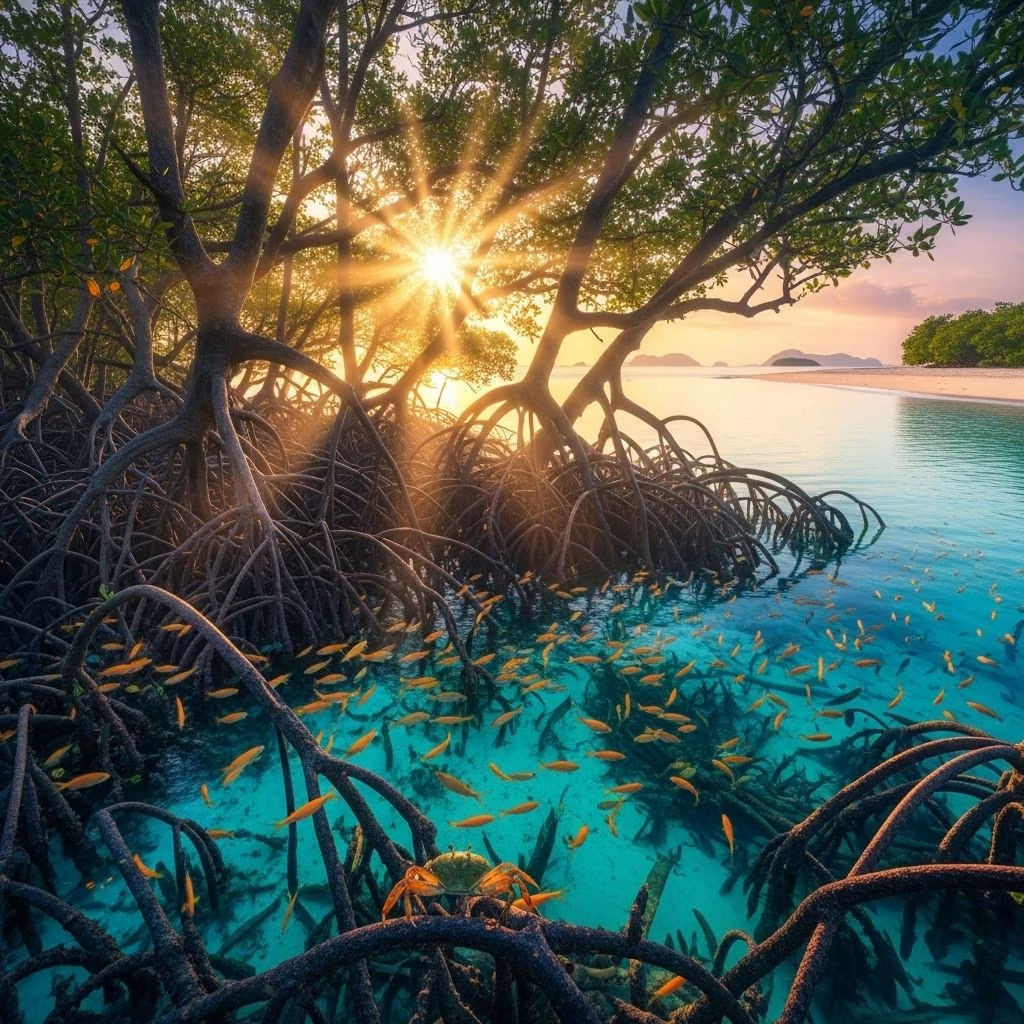
What Is Blue Carbon?
Blue carbon refers to carbon dioxide (CO2) that is captured and stored by the world’s ocean and vegetated coastal ecosystems, such as mangrove forests, saltmarshes, and seagrass meadows. These habitats act as powerful natural carbon sinks, storing carbon both aboveground and predominantly belowground in soil and silt—sometimes as deep as six meters beneath the seabed.
The term blue carbon distinguishes these oceanic and coastal sinks from ‘green carbon,’ which is stored on land in forests and plants. Blue carbon ecosystems cover approximately 50 million hectares globally, nearly twice the size of the United Kingdom. They function as critical allies in regulating Earth’s carbon balance and mitigating climate change impacts.
How Blue Carbon Ecosystems Work
- Vegetation Capture: Plants like mangroves, saltmarsh grasses, and seagrasses absorb atmospheric CO2 through photosynthesis.
- Long-Term Storage: Fallen leaves, plant material, and organic matter are buried in underwater soils and sediments, sequestering carbon away from the atmosphere for centuries to millennia.
- Global Coverage: These vital habitats are found along coastlines on every continent except Antarctica.
The carbon stored in blue carbon ecosystems is not just held in living plants; a much more substantial amount is locked in the soils and sediments beneath them. The ability of these habitats to trap and store carbon for such extended periods far exceeds most terrestrial forests.
Key Blue Carbon Ecosystem Types
- Mangrove Forests: Coastal wetlands dominated by salt-tolerant trees and shrubs. They act as buffer zones, preventing storm surges and erosion while providing significant carbon storage.
- Saltmarshes: Grass-dominated flats found along intertidal coasts. They efficiently capture carbon in densely packed soil layers.
- Seagrass Meadows: Underwater meadows that support diverse marine life and capture carbon both in plant material and sediments.
| Ecosystem | Carbon Storage Location | Estimated Area Worldwide | Additional Benefits |
|---|---|---|---|
| Mangrove Forests | Mainly belowground (soil/silt) | ~15 million hectares | Coastal protection, fish nurseries |
| Saltmarshes | Soils, root matter | ~5.5 million hectares | Flood mitigation, water filtration |
| Seagrass Meadows | Soils, plant detritus | ~30 million hectares | Biodiversity, shoreline stabilization |
Why Is Blue Carbon Important?
The critical significance of blue carbon can be summarized by its direct and indirect value to climate, ecosystems, and human society:
- Climate Mitigation: Marine and coastal ecosystems absorb and keep vast amounts of carbon out of the atmosphere, directly reducing the concentration of greenhouse gases.
- Heat Absorption: Oceans absorb roughly 90% of excess heat caused by climate change and 23% of CO2 emissions resulting from human activities. Blue carbon habitats increase this overall buffering capacity.
- Coastal Protection: Mangroves, saltmarshes, and seagrasses protect shorelines from erosion, storm surges, and sea-level rise, while also providing habitats for a wide array of species.
- Biodiversity Support: These areas serve as nurseries for commercially important fish and shellfish and harbor rare, threatened wildlife.
- Clean Water Provision: Vegetated coastal zones filter pollutants, improve water quality, and sustain resource availability for local communities.
Threats Facing Blue Carbon Ecosystems
Despite their remarkable benefits, blue carbon ecosystems are among the most threatened environments on Earth:
- Coastal Development: Expansion of urban and agricultural areas often leads to habitat loss and fragmentation.
- Pollution: Runoff containing pesticides, plastics, and industrial waste degrades water quality and disrupts plant growth.
- Deforestation: Removal of mangroves and marsh vegetation for aquaculture, farming, or timber erases these crucial carbon sinks.
- Sea-Level Rise and Climate Change: Increased flooding, shifting salinity, and higher water temperatures strain the adaptive capacity of coastal habitats.
- Overfishing and Unsustainable Practices: Disruption of ecosystem balance impacts the health and regenerative ability of blue carbon sites.
It is estimated that vegetated coastal habitats have shrunk between 25% and 50% in the last 50 years, drastically reducing global carbon sequestration capacity. When these ecosystems are destroyed, vast reservoirs of stored carbon can be released back into the atmosphere, exacerbating climate change.
Emerging Science and Perspectives on Blue Carbon
Blue carbon science is a relatively new and rapidly evolving field. Originally, it focused mainly on vegetated coastal wetlands, but recent research explores broader definitions and new ecosystems:
- Macroalgae (Seaweed): While macroalgal beds capture significant carbon, their role as long-term carbon sinks is less understood and not yet included in official greenhouse gas inventories.
- Unvegetated Mudflats and Water Columns: These environments may store and transfer carbon but require more research and monitoring before being fully incorporated into blue carbon frameworks.
- Deep Sea Carbon: Beyond coastal areas, deep ocean sediments also play a part in long-term carbon storage, though with different dynamics and measurement challenges.
Blue carbon research encourages collaboration across disciplines—bringing together scientists, conservationists, and policymakers to improve measurement methods, expand the ecosystem scope, and inform better management strategies.
The Co-Benefits of Preserving and Restoring Blue Carbon Ecosystems
Protection of blue carbon sites brings cascading benefits:
- Resilience to Climate Change: Communities and wildlife gain needed protection from rising seas, storms, and environmental stress.
- Ecosystem Services: Blue carbon zones provide clean water, food resources, tourism opportunities, and raw materials.
- Livelihood Security: Healthy coastal ecosystems sustain fisheries and aquaculture, boost local economies, and secure food sources.
- Restoration Success: Restoring mangroves, saltmarshes, and seagrass meadows can quickly revive carbon sink capacity and biodiversity.
Challenges and Uncertainties in Blue Carbon Science
- Measurement Complexity: Quantifying carbon fluxes and long-term storage, especially in macroalgal and deep ocean settings, presents scientific hurdles.
- Policy Gaps: Despite the recognized benefits, several ecosystems (e.g., macroalgae) are not yet included in national greenhouse gas inventories due to documentation gaps and lack of consensus.
- Management Limitations: Effective conservation requires coordination among governments, local communities, and researchers to address diverse threats.
- Restoration Feasibility: Not all degraded sites can be successfully restored, and efforts may need ongoing monitoring and adjustment.
Addressing these challenges will be crucial for maximizing the climate and ecological benefits offered by blue carbon systems in coming decades.
Policy, Conservation, and Future Directions
Various international and national initiatives are underway to boost blue carbon protection:
- The Blue Carbon Initiative: Partnerships among conservation NGOs, governments, and scientists to conserve and restore the world’s mangrove, saltmarsh, and seagrass habitats.
- Recognition in Climate Agreements: IPCC guidelines now include coastal blue carbon ecosystems, prompting greater inclusion in climate policies and financing.
- Community Engagement: Coastal populations are being empowered to help monitor and restore blue carbon sites, integrating environmental management with local livelihoods.
- Research and Innovation: Emerging studies refine blue carbon accounting and explore novel carbon markets for incentivizing protection and restoration.
Table: Blue Carbon in Climate Policy
| Policy Area | Blue Carbon Action | Expected Outcome |
|---|---|---|
| National Climate Plans | Include blue carbon ecosystems in greenhouse gas inventories | Supports emissions reduction targets |
| Restoration Programs | Expand mangrove planting, saltmarsh recovery | Boosts ecosystem resilience and carbon storage |
| International Funding | Resources for blue carbon science, conservation, and management | Accelerates protective action |
| Community Science | Empower local monitoring and stewardship | Improved outcomes, social benefits |
Frequently Asked Questions (FAQs)
Q: What distinguishes blue carbon from green carbon?
A: Green carbon is stored in terrestrial forests and soils, while blue carbon is captured and stored in oceanic and coastal vegetated habitats like mangroves, saltmarshes, and seagrass meadows.
Q: Why are mangrove forests especially important in the blue carbon cycle?
A: Mangrove forests sequester carbon in both plant biomass and deep soils for centuries or longer, with the highest density of carbon storage among all coastal habitats.
Q: How does destroying blue carbon ecosystems impact climate?
A: It releases vast stores of previously trapped carbon (CO2) back into the atmosphere, increasing greenhouse gas concentrations and accelerating climate change.
Q: Are all marine ecosystems considered blue carbon sites?
A: Not all—current science recognizes vegetated sites like mangroves, saltmarshes, and seagrasses. Macroalgae and deep-sea carbon sinks are still being studied for their long-term storage potential.
Q: What actions help protect blue carbon ecosystems?
A: Effective protection includes habitat preservation, pollution reduction, reforestation and restoration, sustainable coastal development, and policy inclusion in climate action plans.
Takeaway: Blue Carbon’s Role in Earth’s Future
Blue carbon ecosystems are vital climate solutions. Safeguarding, restoring, and expanding them will help stabilize our atmosphere, protect natural coastlines, nurture biodiversity, and support communities worldwide. While science continues to advance, immediate action by governments, organizations, and citizens is essential to preserve these irreplaceable natural resources for generations to come.
References
- https://www.worldbank.org/en/news/feature/2023/11/21/what-you-need-to-know-about-blue-carbon
- http://www.iaea.org/newscenter/news/what-is-blue-carbon
- https://www.jpi-oceans.eu/en/blue-carbon
- https://www.nature.com/articles/s41467-019-11693-w
- https://pmc.ncbi.nlm.nih.gov/articles/PMC6451379/
- https://oceanservice.noaa.gov/facts/bluecarbon.html
- https://www.thebluecarboninitiative.org/about-blue-carbon
- https://lamont.columbia.edu/news/what-blue-carbon-and-how-can-it-help-fight-climate-change
- https://estuaries.org/coastal-blue-carbon/blue-carbon-science-projects/


