


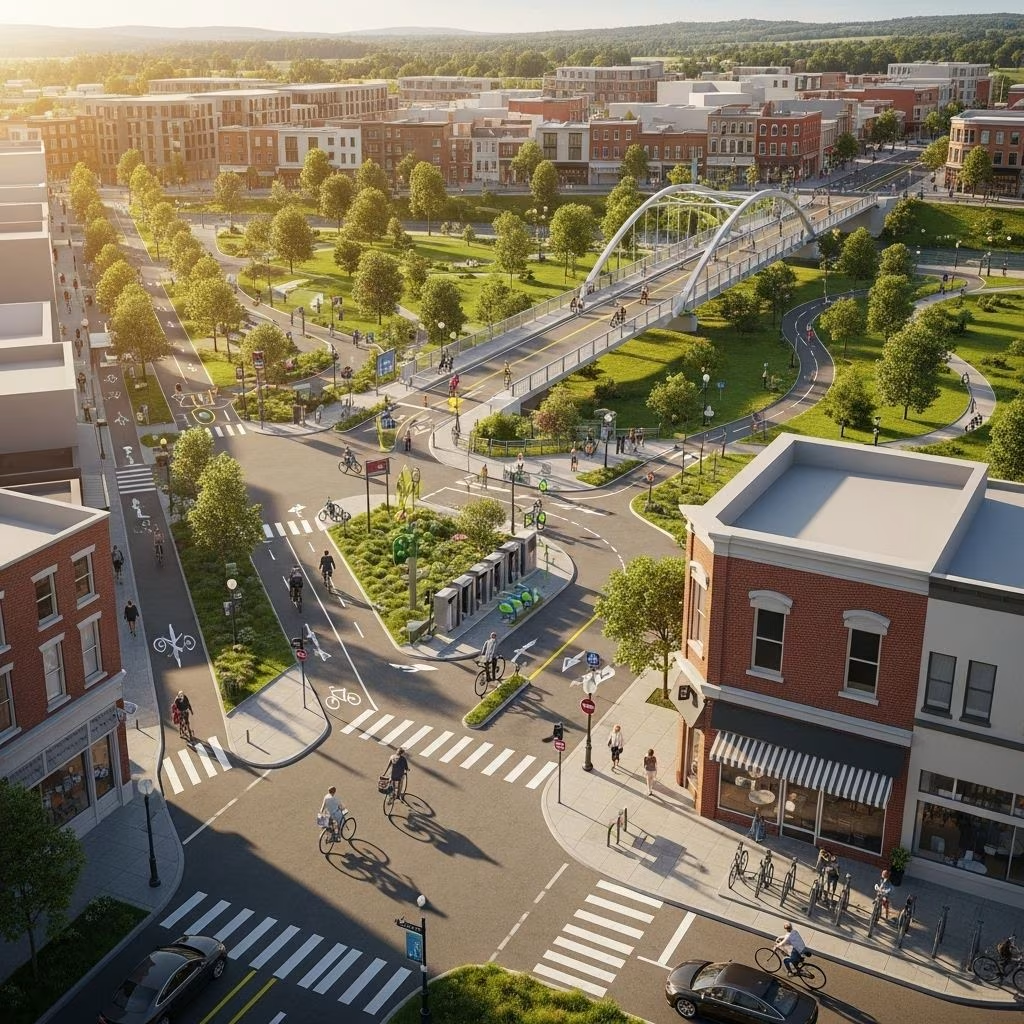
What Makes a Bike-Friendly Town?
Biking has transformed urban and suburban landscapes. A bike-friendly town not only makes cycling accessible but also encourages a shift toward more sustainable, healthy lifestyles. The movement is about smart planning, community engagement, and infrastructure choices that prioritize cyclists’ needs as a central element of urban mobility.
Understanding Bike-Friendly Towns
At its core, bike-friendliness means creating environments where cycling is a safe, practical, and attractive option for people of all ages. Such towns are designed around the idea that bicycles are not merely recreational tools, but viable means of transportation that can coexist and thrive alongside other modes.
Core Ingredients of Bike-Friendly Towns
Developing a truly bike-friendly environment involves a strategic interweaving of several key components:
- Comprehensive Networks: Continuous and protected bike lanes, trails, and paths connecting homes, businesses, parks, and schools. Networks should minimize conflict points with vehicles and pedestrians.
- Traffic Calming: Implementing speed limits, pedestrian islands, raised crosswalks, and curb extensions to slow motor vehicle traffic and reduce risk to cyclists.
- Bicycle Parking: Abundant, secure, and visible bike parking at common destinations, public transport interchanges, and workplaces.
- Integration with Transit: Facilities for carrying bikes on public transit and connecting bike paths to bus and train stations.
- Community Programs: Support for bike education, repair workshops, bike-sharing systems, and cycling campaigns that foster adoption and inclusivity.
- Governance and Advocacy: Active local government policy and strong advocacy organizations pushing for safer streets, equitable investment, and long-range planning.
Key Features in Detail
1. Protected Bike Infrastructure
The backbone of every bike-friendly town is a network of protected bike lanes and off-road paths. These facilities, separated from vehicular traffic by curbs, bollards, or landscaping, provide a sense of safety that encourages more people to ride. The best towns invest in seamless connectivity, where cyclists can navigate the area with minimal interruption and maximal security.
- Dedicated bike paths and bridges connect main neighborhoods and business districts.
- Protected intersections and roundabouts facilitate safe turning and crossing.
- Maintenance of surfaces, lighting, and visibility measures ensures year-round usability.
2. Urban Design and Land Use
Bike-friendly towns recognize the importance of compact, mixed-use development. When distances between home, work, shopping, and recreation are short, cycling becomes a natural choice. Smart street design also widens sidewalks, improves crossings, and limits curb cuts—creating welcoming conditions for pedestrians and cyclists.
- Encouraging high-density housing near transit and cycling corridors.
- Zoning regulations to prioritize active transportation modes.
- Designing public spaces that invite gathering and social riding.
3. Traffic Regulation and Enforcement
Reducing motor vehicle speed to safe levels is pivotal. Bike-friendly towns often use:
- Speed limits set at 20-30 km/h (12-20 mph) in residential and mixed-use zones.
- Enforcement of no-parking zones in bike lanes to ensure unobstructed flow.
- Traffic cameras and patrols targeting dangerous driving behaviors.
4. Access to Bike Parking and Amenities
Riders need safe places to secure their bikes. Best practices include:
- Install bike racks at every major destination, especially at schools, workplaces, shops, and transit stops.
- Provide covered bike storage, lockers, and even showers at community hubs.
- Promote availability of repair stations and tools in public places.
5. Bike Sharing and Incentives
Publicly accessible bike-sharing systems lower barriers to entry and substitute car trips. Towns at the forefront of this movement have:
- Well-placed bike share docks throughout urban core, suburbs, and at transit hubs.
- Easy-to-use apps and payment systems.
- Low or subsidized pricing to encourage broad participation.
- Incentives for bike commuting, such as tax breaks or rebates, employer support, and public recognition campaigns.
6. Education, Culture, and Community Engagement
Biking culture blossoms where towns support education and promote social cycling. Community-led efforts drive change from the grassroots level:
- Bike safety classes in schools and for adults.
- Family-oriented events like group rides, festivals, and open-streets days.
- Partnerships with local businesses for “bike to shop, bike to work” campaigns.
- Active advocacy groups working with policymakers.
The Benefits of Bike-Friendly Towns
Enabling more people to bike brings a ripple of positive outcomes for individuals and society:
- Environmental Sustainability: Fewer car trips mean lower emissions, less noise, and reduced air pollution. Streets with more cyclists and fewer cars facilitate a cleaner, calmer urban atmosphere.
- Public Health: Cycling provides everyday exercise opportunities, counteracting sedentary lifestyles and reducing chronic disease risk. Enhanced social connectivity brings mental health benefits. E-bike riders, studies show, often get exercise levels similar to regular cyclists.
- Traffic Congestion: More bikes on the road free up space for motorists, reduce rush hour delays, and allow cities to recapture street space for parks, cafes, and pedestrians.
- Economic Vibrancy: Bike-friendly streets see higher retail spending and greater support for local businesses, as cyclists tend to make smaller, more frequent purchases. Cost savings from reduced car dependence also circulate into the local economy.
- Equity and Inclusion: Affordable mobility options allow access to jobs and services for all income levels, promoting social cohesion and opportunity.
Challenges and Solutions in Creating Bike-Friendly Towns
Building bike-friendly environments comes with obstacles—political, spatial, and social:
- Overcoming Car Dominance: Redesigning roadways often faces resistance from drivers and established stakeholders.
- Funding and Investment: Cycling infrastructure can be sidelined in municipal budgets unless advocacy is strong and data supports its benefits.
- Spatial Constraints: Retrofitting bike lanes into older cities with limited road width demands creative solutions, like road diets or repurposing underused lanes.
- Safety Perception: Ensuring that cycling feels—and is—safe requires consistent citywide effort.
Solutions include ongoing public engagement, demonstration projects, pilot programs, and clear communication of the benefits for everyone—not just cyclists, but businesses, families, and motorists too.
Global Examples: Leaders in Bike-Friendly Urbanism
Some cities have set a gold standard for bike-friendly design and policy. Here are a few leading examples:
| City | Key Features | Success Metrics |
|---|---|---|
| Amsterdam, Netherlands | Extensive network, bike priority signals, seamless connections to transit | 40% of commutes by bike, lowest crash rates |
| Portland, Oregon, USA | Protected bike bridges, bike-friendly urban planning | Double-digit ridership for work and errands |
| Copenhagen, Denmark | Bike superhighways, climate-adaptive infrastructure | Over half of residents bike daily |
| Vancouver, Canada | Repurposed vehicle lanes for protected cycling, integrated bike counters | Year-on-year increase in bike volumes |
These cities show that sustained investment and policy attention pays off in huge cycling uptake and public satisfaction.
How to Make Any Town More Bike-Friendly: Action Steps
- Conduct community surveys to identify cycling barriers and priorities.
- Develop a master plan for a citywide, protected bike network.
- Pilot temporary bike lanes or open-streets events to demonstrate impact.
- Partner with transit agencies for first/last-mile cycling connections.
- Offer incentives for bike commuting and retail trips.
- Measure progress with bike counters, surveys, and crash statistics.
- Listen and adapt policies with feedback from residents, businesses, and advocacy groups.
Frequently Asked Questions (FAQs)
Q: Why is protected bike infrastructure so important?
Protected infrastructure greatly reduces the risk of collisions and makes cycling attractive for more age groups, promoting safety and accessibility.
Q: Can bike-friendly policies coexist with car use?
Yes. By reallocating space and slowing traffic in targeted zones, towns can support cycling, walking, and driving in harmony.
Q: Are bike share programs effective in smaller cities?
Bike share programs work well when placed near transit lines, busy retail areas, and universities, and when pricing and convenience are targeted for local needs. Even smaller towns can benefit, with systems boosting urban mobility options.
Q: What’s the best way for neighborhoods to promote cycling?
Start small: Hold group rides, advocate for safe routes to schools, and partner with local businesses for cycling incentives. Success grows with visible leadership and consistent grassroots action.
Q: Do bike-friendly towns see economic benefits?
Numerous studies show that reduced car dependence leads to savings for residents and increased spending at local businesses—all while supporting vibrant, active streets.
Final Thoughts
Bike-friendly towns are about more than cycling—they embody a vision for livable, inclusive, and sustainable communities. They demonstrate how strategic planning, social engagement, and a willingness to prioritize human-scale transport can reshape the future of cities and towns for the better.
References
- https://www.youtube.com/watch?v=hkX-ylFDV0s
- https://land8.com/5-examples-of-better-bike-infrastructure-tree-hugger/
- https://chem.tti.tamu.edu/strategy/promote-bike-sharing/
- https://www.bikehugger.com/posts/issue-02-urban-issue/
- https://forums.electricbikereview.com/threads/study-finds-that-e-bike-riders-get-as-much-exercise-as-riders-of-regular-bikes.29249/


