What Would Happen If Everyone Went Vegan?
Imagine a world where every single person adopts a vegan lifestyle overnight. The implications touch almost every aspect of society: the environment, animal agriculture, global health, and even socioeconomics. While it’s unlikely this could happen instantaneously, considering the trajectory of current trends and the urgent need to address climate change, the question remains both hypothetical and deeply relevant. This article will explore the sweeping consequences if humanity went vegan, covering land use, the fate of domesticated animals, human health, employment, ecosystem effects, global food security, and the psychological and ethical ramifications of such a seismic shift.
Environmental Impacts of Going Vegan
Shifting to a plant-based global diet would dramatically restructure land use, greenhouse gas emissions, water consumption, and biodiversity.
Reduction in Greenhouse Gas Emissions
- Animal agriculture is one of the largest contributors to greenhouse gases like methane, nitrous oxide, and carbon dioxide. Research shows livestock farming emits more greenhouse gases than all forms of global transportation combined.
- Removing farmed animals from the food system could reduce total food-related greenhouse gas emissions by upwards of 56%. This would be the single most substantial action to curtail climate change at the individual and collective level.
- Methane emissions, especially from cattle, would plummet, slowing global warming and reducing the immediate climate risk.
Land Use and Rewilding Opportunities
- Currently, animal agriculture occupies roughly 83% of global farmland while providing only about 18% of calories consumed by humans.
- Shifting to plant-based food could free up more than 75% of this land, a territory equivalent to the combined size of the USA, China, Australia, and the EU.
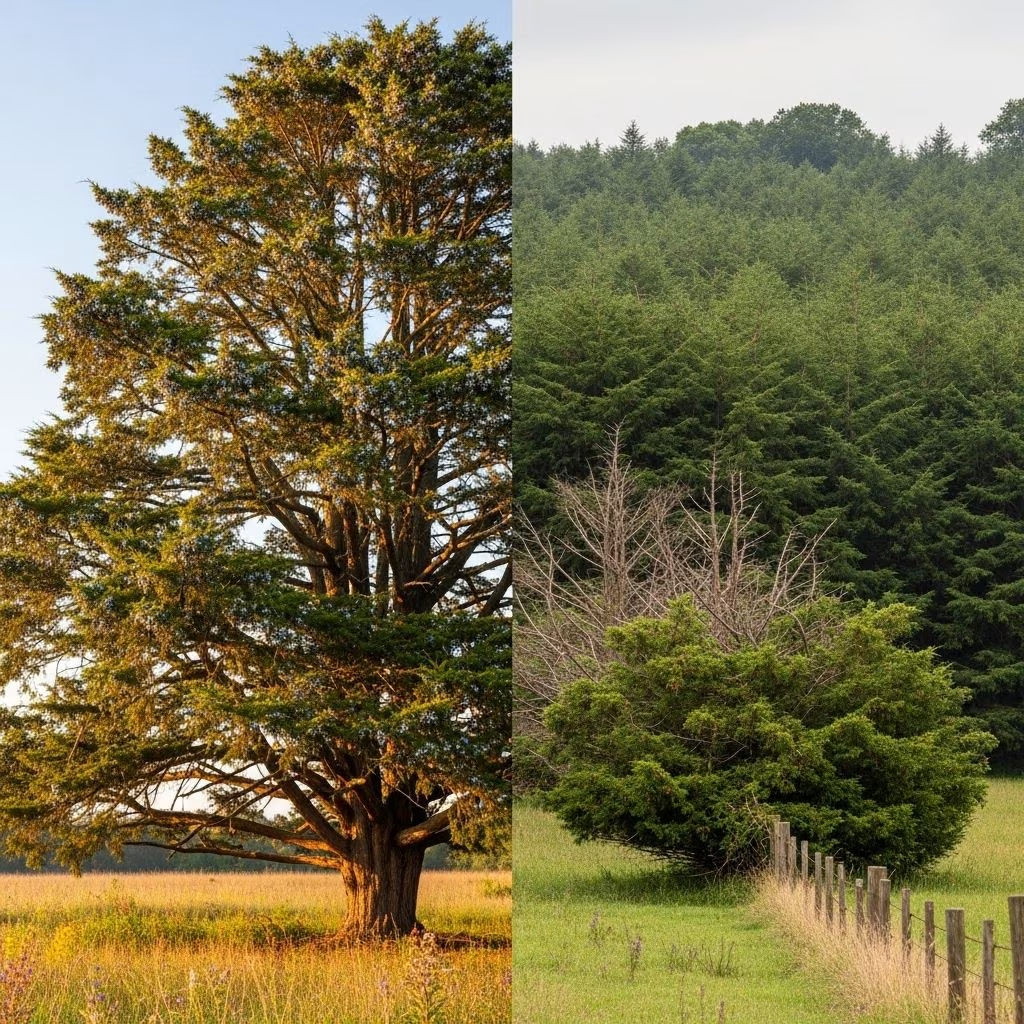
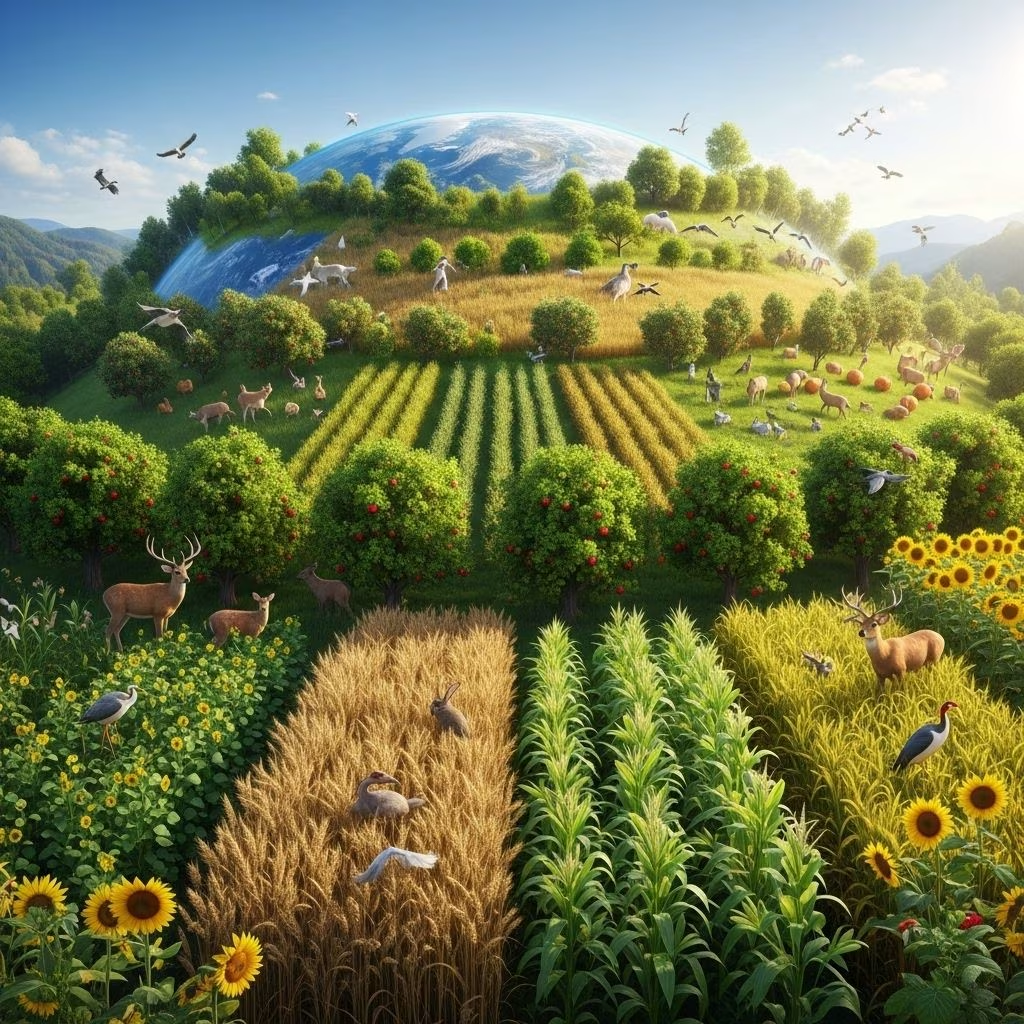
- This newly available land could be rewilded, restoring forests, savannas, wetlands, and promoting biodiversity recovery on a historic scale.
- Natural carbon-sequestering landscapes such as forests and peatlands would have the opportunity to regenerate, drawing carbon dioxide back from the atmosphere.
Water and Soil Restoration
- Meat and dairy farming are responsible for significant freshwater withdrawal and pollution through manure, antibiotics, and hormones.
- Plant-based diets require dramatically less water, and the absence of livestock reduces nutrient pollution that leads to dead zones in rivers, lakes, and oceans.
- Soil degradation from overgrazing would decrease, allowing topsoil to rebuild and decreasing the risk of desertification.
The Fate of Farmed Animals
Eradicating animal agriculture brings profound changes to billions of domesticated animals.
- Immediately, slaughter would cease and breeding operations would halt. Farmers would return animals intended for slaughter back to their farms.
- Animal populations would begin a gradual decline, as the cessation of forced breeding means fewer animals are born into captivity each year.
- Sanctuaries may play a larger role in caring for remaining farmed animals, but accommodating billions is impractical; most remaining animals would live out their lives on repurposed farms or sanctuaries until their natural deaths.
- The suffering of animals bred for food—including pain, confinement, and routine killing—would drastically drop after the initial transition period.
Economic and Social Changes
A global shift in diet would trigger rapid and disruptive changes in employment, rural economies, and food supply chains.
Impact on Jobs
- Major disruption would hit sectors related to livestock production, including farmers, abattoir workers, feed producers, veterinarians specializing in livestock, leather tanners, and dairy processors.
- Many agricultural workers would need to retrain for plant-based agriculture, ecosystem restoration, or new industries related to plant foods and sustainable technologies.
- Some transition could be gradual, but in a hypothetical overnight change, robust government support, retraining programs, and substantial investments would be necessary.
Rural Communities and Culture
- Rural regions built on livestock farming would face considerable upheaval, with economic uncertainty and cultural shifts needed to reimagine rural life and land use.
- Some farms could convert to animal sanctuaries, agrotourism, rewilding projects, or growing high-value crops, such as legumes and specialty produce.
Global Food Security
- Transitioning to plant-based diets would allow the world to grow enough food for its population using a fraction of the current agricultural land.
- Much of the plant calories today are consumed indirectly (fed to animals)—liberating these resources (cereal, soy, maize) would combat hunger and improve food equity globally.
Human Health Implications
Eating vegan could reshape public health on a large scale, but not without new challenges to overcome.
- Plant-based diets are associated with lower rates of heart disease, type 2 diabetes, certain cancers, and obesity.
- Reducing zoonotic disease risks; most pandemics (avian flu, swine flu, SARS) originate from animal farming. Eliminating animal agriculture decreases the risk of new, deadly pathogens jumping to humans.
- Need for proper nutrition education: Risk of vitamin B12, iron, omega-3, and calcium deficiencies without careful dietary planning.
- Potential to reduce antibiotic resistance problems, as industrial animal agriculture is a major contributor.
Biodiversity and Ecosystem Restoration
One of the most profound impacts of veganism would be on Earth’s biodiversity and the restoration of natural habitats.
- Cessation of deforestation for grazing and feed crops would slow species extinction rates dramatically.
- Fallow land could regenerate, supporting pollinators, predators, and native flora and fauna.
- Some concerns exist with mass, fast reforestation: monoculture tree planting can hurt local ecosystems. Careful restoration using native species and respect for natural habitats would be essential.
- With less pressure on habitats, endangered wildlife populations could recover, supporting a healthier, more balanced biosphere.
Table: Animal Agriculture vs Plant-Based Diet Impacts
| Factor | Animal Agriculture | Global Vegan Diet |
|---|---|---|
| Greenhouse Gas Emissions | 56–58% of food contribution | Up to 70% reduction |
| Global Farmland Use | 83% | 20% (by some estimates) |
| Water Consumption | Extremely high | Up to 50% less |
| Caloric Efficiency | Low: 18% of calories | High: Most crops go to direct consumption |
| Biodiversity | Drives extinction and habitat loss | Potential for large-scale ecosystem recovery |
Ethical and Psychological Effects
Ending animal exploitation would deeply affect collective attitudes toward animals, our relationship with nature, and individual mental health.
- Billions of animals would be spared suffering and violent death annually.
- Many humans would experience a sense of relief, reduced cognitive dissonance, and psychological benefit from living in greater alignment with widely held moral values.
- The legacy of industrial animal farming—environmental destruction, loss of wild species, and the normalization of animal suffering—would be a stark point of reflection for future generations.
Realistic Challenges and Limitations
While the benefits are substantial, the transition to a vegan world presents real hurdles:
- Some regions with marginal land unsuitable for crops have relied on animal grazing for subsistence.
- Cultural diversity and longstanding culinary traditions may resist rapid or universal change.
- Possible food system shocks—careful, phased transitions would likely be less socially disruptive.
- Local economies dependent on animal industries would suffer unless given meaningful alternative opportunities.
- Proper plant-based nutrition education would be necessary to maintain optimal public health.
Frequently Asked Questions (FAQs)
Would rewilding all pasture create new problems for native species?
It could, if rewilding is handled poorly or only with single-species tree planting. Successful habitat restoration must consider native ecology and support a wide range of species, not just trees. Reintroducing predators and varying habitats can improve ecosystem balance and biodiversity.
What happens to all the farm animals if everyone stops eating them overnight?
Farm animals will not be instantly released into the wild but cared for on farms and sanctuaries until passing naturally. Without active breeding, populations would decline organically each year.
Would everyone be healthier on a vegan diet?
A well-planned vegan diet is healthy for most people and linked to lower rates of chronic disease. However, it requires attention to nutrients like B12, iron, and omega-3. Malnutrition could occur without education and fortified foods.
How quickly would environmental benefits be realized?
Immediate drops in emissions could be measured within months, but full habitat and climate recovery would take years to decades, depending on restoration practices and natural regeneration.
Are plant-based diets really more efficient?
Yes. Plants convert sunlight into food energy much more efficiently than feeding plants to animals and then eating animal products. Most farmland use and calories lost in conversion can be reclaimed with plant-based diets.
Conclusion: A Vision for the Future
Though a sudden, universal shift to veganism is improbable, even a substantial movement in this direction stands to benefit the planet, human society, and its fellow Earthlings. The environmental, health, and animal welfare gains would be transformative, though not without difficult transitions and the need for careful management to avoid new, unforeseen challenges. The power of dietary choices, collectively, may be humanity’s most immediate tool for tackling climate change, restoring ecosystems, and creating a more humane world.
References
- https://veganfta.com/blog/2022/02/03/what-would-happen-if-everyone-became-vegan-overnight/
- https://imananimaltoo.com/2020/02/17/confession-of-a-tree-hugger/
- https://www.earthisland.org/journal/index.php/magazine/entry/becoming-a-vegan-treehugger/
- https://www.tandfonline.com/doi/full/10.1080/14649365.2021.1975164
- https://pmc.ncbi.nlm.nih.gov/articles/PMC8970843/
- https://scienceline.org/2015/07/do-i-have-to-be-vegan-to-combat-climate-change/