


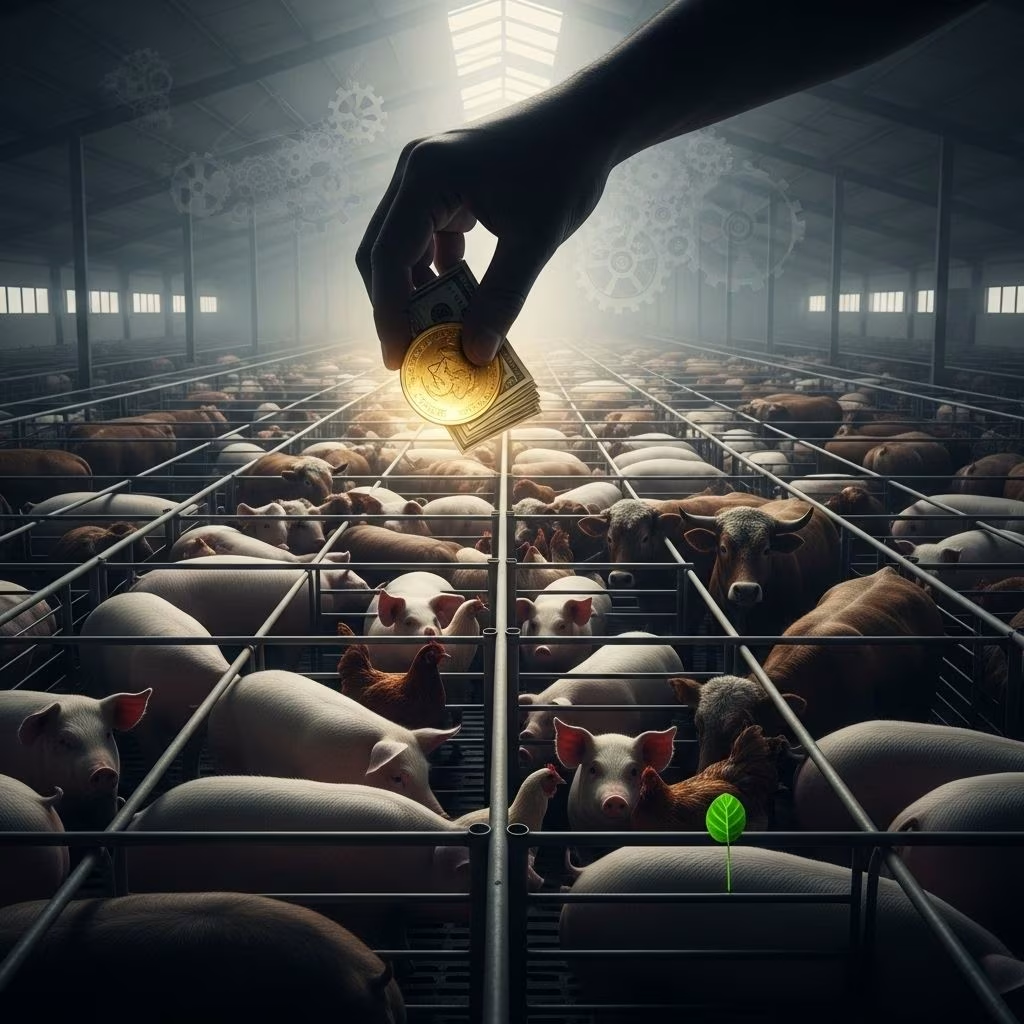
Why Do We Have Factory Farming?
Factory farming, also known as industrial agriculture or Concentrated Animal Feeding Operations (CAFOs), is the dominant method for producing meat, dairy, and eggs in many countries today. By focusing on scale and efficiency, factory farms have transformed food supply chains — but not without significant consequences for animals, ecosystems, rural communities, and consumer health. Understanding why factory farming has come to dominate modern agriculture requires looking at the economic motives, technological innovations, societal shifts, and ongoing debates about sustainability and ethics.
What Is Factory Farming?
Factory farming refers to the industrialized, high-intensity rearing of animals for food and other products. Animals are kept in confined spaces where conditions are optimized for mass production and profit, often at the expense of their welfare and environmental health. The core characteristics include:
- Large scale: Tens of thousands of animals (chickens, pigs, cows, fish) are raised together.
- Confinement: Animals often live indoors for life, in cages or crates that restrict movement.
- Efficiency: Facilities prioritize rapid growth, high yields, and cycle times for cost reduction.
- Reliance on technology: Automation, antibiotics, and feed additives are routine.
More than 70% of animals in some regions are raised in factory farm settings, with hundreds of ‘mega-farms’ operating globally. Many factory farms also raise animals for non-food products like fur.
Core Reasons Why Factory Farming Became Dominant
Several interconnected factors drove the rise of factory farming over the past century:
- Population Growth: As the global population increased, demand for affordable, accessible protein soared.
- Economic Competition: Fierce competition pressured producers to innovate ways to deliver meat and dairy at the lowest cost.
- Technological Advances: Mechanization, chemical additives, selective breeding, and intensive feed systems made it possible to raise vast quantities of animals rapidly.
- Lower Food Prices: Industrial agriculture reduced consumer costs, especially benefiting low-income households.
- Profit Motives: Maximizing efficiency, minimizing inputs, and increasing output improved margins for farmers and agribusinesses.
- Global Trade: Improved transport and cold storage allowed food to be shipped internationally, so producers scaled up to serve these markets.
Ultimately, factory farming emerged to meet the growing demand for inexpensive animal protein and to capitalize on economies of scale and technological change.
Pros of Factory Farming
| Pros | Details |
|---|---|
| Increases food production | Large-scale operations allow quick, massive output to meet global demand. |
| Lowers consumer costs | Efficient production and distribution systems make food more affordable for more people. |
| Encourages technological advancement | New machines, feed formulations, and processing technologies improve productivity. |
| Creates employment opportunities | Farms, processing facilities, and supply chains directly employ millions. |
| Prolongs shelf life of food | Improved transport and storage enable global distribution and reduced food waste. |
Cons and Controversies: Why Factory Farming Is Problematic
While factory farming provides economic and logistical advantages, it brings serious ethical, social, and ecological costs:
- Animal Cruelty: Animals in factory farms often endure confinement, mutilation, and unnatural living conditions, severely compromising their welfare.
- Environmental Damage: Large animal populations generate substantial waste, leading to water, air, and soil pollution. Ammonia and particulates from these operations cause human respiratory issues (e.g., asthma, bronchitis).
- Health and Safety Risks: Confinement increases the need for antibiotics, promoting antibiotic resistance and the spread of pathogens.
- Rural Economic Decline: Factory farms can devastate rural economies, reducing farmer incomes, worsening labor conditions, and intensifying local pollution.
- Impact on Small Farms: Small-scale producers struggle to compete with corporate factory farms that benefit from economies of scale, lowering market diversity and farmer independence.
Environmental Impact: Pollution, Land Use, and Climate
Factory farms release vast amounts of manure, antibiotics, hormones, and other chemicals that harm ecosystems. Key issues include:
- Water contamination: Manure runoff pollutes streams, rivers, and groundwater.
- Air pollution: Methane, ammonia, and other gases reduce air quality and contribute to climate change.
- Habitat loss: Large land footprints for corn, soy, and animal housing displace wildlife.
Overall, factory farming is linked to significant biodiversity loss and contributes heavily to greenhouse gas emissions.
Animal Welfare: Living Conditions and Ethics
Most factory farm animals spend their entire lives in crowded, often unsanitary conditions. Common practices include:
- Pregnant pigs kept in gestation crates too small to turn around.
- Chickens packed in stacked cages, limiting movement and natural behaviors.
- Cows raised in feedlots instead of pastures, consuming grain rather than grasses.
- Routine antibiotic and hormone use to accelerate growth and prevent disease.
These conditions suppress natural instincts and cause chronic stress, which leads to compromised immune systems and higher rates of illness.
Human Health Concerns
- Antibiotic resistance: Overuse of antibiotics in factory farms allows bacteria to evolve resistance, threatening public health globally.
- Pathogen spread: Dense animal populations facilitate the spread of viruses and zoonotic diseases, increasing pandemic risks.
- Food safety: Poor hygiene and crowded conditions raise the risk of contamination (e.g., E. coli, Salmonella) in food products.
- Nutritional quality: Factory-farmed products may have reduced nutritional value due to artificial diets and rapid growth cycles.
Societal and Rural Impacts
- Economic centralization: Factory farming networks concentrate power among large corporations, undermining local farmers.
- Rural decline: Loss of small farms leads to reduced community investment, fewer local jobs, and increased poverty.
- Worker conditions: Jobs on factory farms are frequently unpleasant, unsafe, and poorly paid.
Why Factory Farming Persists Despite the Problems
Factory farming endures because market forces prioritize cheap, abundant food and readily available animal protein. The negative externalities — animal suffering, pollution, public health risks — are rarely factored into the price consumers pay. Most alternatives, such as organic or pasture-based farming, cost more and cannot easily serve mass demand. Additional factors include:
- Lack of regulation: Legal standards often lag behind scientific knowledge on welfare and environmental impact.
- Consumer habits: Many people are unaware of production methods, or prioritize affordability over ethical or ecological concerns.
- Policy inertia: Governments promote food security and low prices, sometimes subsidizing industrial methods.
Alternatives and the Future of Food Production
If current trends continue, the harmful effects of factory farming will grow. Still, there are promising alternatives and potential reforms:
- Regulatory reforms: Stricter controls on pollution, animal husbandry, and resource use could mitigate the worst effects.
- Shift to plant-based diets: Reducing demand for animal products would decrease the need for factory farms and lower environmental pressures.
- Support for small/medium farms: Policies and consumer choices favoring smaller-scale, diversified agriculture can restore rural economies and improve welfare standards.
- Innovations: Lab-grown meat, vertical farming, and sustainable aquaculture offer potential to produce food more responsibly over time.
Ultimately, public awareness, policy change, and technological innovation will shape the next era of food production.
Frequently Asked Questions (FAQs)
Q: What is the main reason for the rise of factory farming?
A: Factory farming became popular to meet rising populations’ demand for cheap animal products, enabled by new technology and driven by competition among producers to cut costs.
Q: Are there any benefits of factory farming?
A: Yes. It makes food more widely available, lowers consumer costs, spurs technological innovation, and creates jobs. These advantages are why factory farming persists despite ethical concerns.
Q: What are the biggest problems with factory farming?
A: The major issues are poor animal welfare, significant environmental pollution, increased disease risk, rural economic decline, and negative health impacts on consumers.
Q: Does factory farming help or hurt rural communities?
A: Factory farming often undermines rural economies by centralizing profits and driving out small, independent farmers, while also worsening pollution and working conditions.
Q: Is there a solution to the problems associated with factory farming?
A: Alternatives include stricter regulations, supporting local farms, reducing meat consumption, transitioning to sustainable agriculture, and developing new food technologies.
Conclusion: Rethinking Our Food Choices
Factory farming emerged in response to the necessity for cheap, abundant food and has transformed global agriculture. While its benefits are clear in terms of output and efficiency, the costs — to animals, the planet, and society — are becoming increasingly difficult to ignore. Transitioning toward more ethical, sustainable food systems will require coordinated change at the consumer, producer, and policy levels.
References
- https://thehumaneleague.org/article/what-is-factory-farming
- https://www.mossyoak.com/our-obsession/blogs/the-pros-and-cons-of-industrial-agriculture
- https://www.indeed.com/career-advice/finding-a-job/industrial-farming
- https://pmc.ncbi.nlm.nih.gov/articles/PMC9757169/
- https://www.ethicalconsumer.org/food-drink/what-factory-farming-why-it-problem
- https://www.aspca.org/protecting-farm-animals/factory-farming-environment
- https://geopard.tech/blog/why-might-industrial-agriculture-be-problematic/
- https://www.foodfacts.org/articles/closer-look-at-factory-farming
- https://www.foodandwaterwatch.org/2024/10/09/factory-farms-rural-america/


