


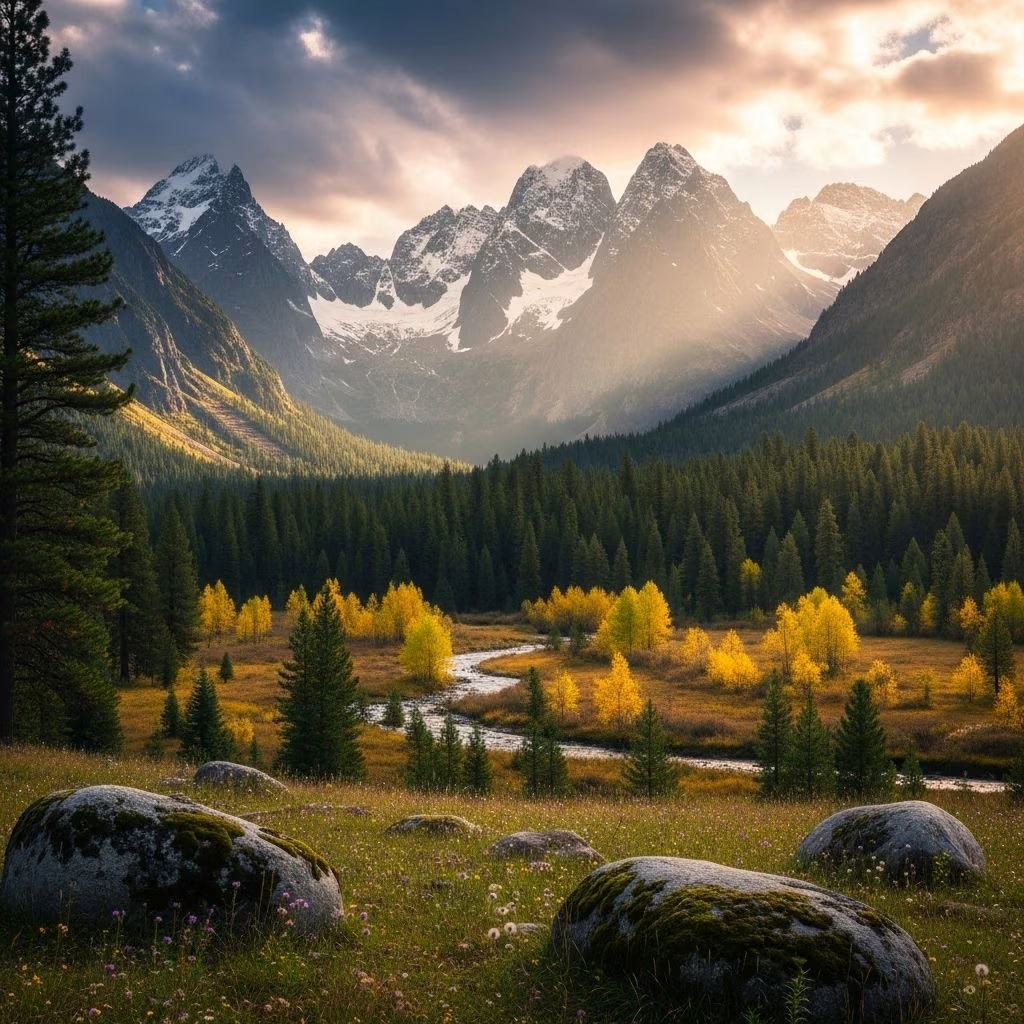
What Is a Wilderness Area?
A wilderness area is a region preserved in its natural state, largely free from human development and commercial activity. These areas are vital sanctuaries for biodiversity, scientific study, and tranquil recreation. Human activities within wilderness areas are strictly limited, prioritizing ecological integrity and maintaining the landscape as untouched as possible.
Defining Wilderness: Key Characteristics
- Natural Integrity: Wilderness areas retain their primeval character, exhibiting minimal evidence of human influence.
- Legal Protection: These sites are defined and safeguarded by law, often managed by national agencies or as part of global conservation efforts.
- Biodiversity Hotspots: Home to diverse plant and animal life, often including rare or endangered species that thrive due to reduced disturbances.
- Minimal Infrastructure: No roads, permanent buildings, industrial pipelines, or powerlines are permitted.
Wilderness is not synonymous with absolute untouched purity—a region may show signs of historical human activity or minor impacts, but significant development is absent. Some indigenous communities continue traditional activities within wilderness areas, their stewardship helping preserve ecological balance.
Legal Foundations and Protection Mechanisms
The United States and the Wilderness Act of 1964
The legal recognition of wilderness areas began with the landmark Wilderness Act of 1964 in the United States. This Act established the National Wilderness Preservation System, authorizing Congress to designate federal lands as wilderness areas. The Act’s core definition is:
“A wilderness, in contrast with those areas where man and his own works dominate the landscape, is hereby recognized as an area where the earth and its community of life are untrammeled by man, where man himself is a visitor who does not remain.”
—Wilderness Act, 1964
- Size Requirement: Typically, at least 5,000 acres in the U.S.
- Activities Allowed: Scientific study, non-mechanized recreation (hiking, horseback riding); no vehicles or industrial infrastructure.
- Management: Over 800 areas jointly managed by agencies including the U.S. Fish and Wildlife Service, National Park Service, Bureau of Land Management, and U.S. Forest Service.
International Definitions and Protections
- IUCN Classification: Wilderness areas fit into global protected area schemes, emphasizing intact ecosystems and low-impact human activity.
- WILD Foundation’s Definition: Intact, undisturbed wild places that are legally protected and open to indigenous use or low-impact recreation.
- Marine Wilderness: Increasing attention is paid to marine environments, though only about one-eighth of ocean wilderness remains unimpacted.
Why Wilderness Areas Matter
- Habitat Protection: These regions preserve essential habitats for wildlife, contributing to ecological balance and species survival.
- Biodiversity & Genetic Conservation: They protect genetic diversity, supporting species difficult to conserve elsewhere.
- Scientific Research: Minimal human interference allows for study of untouched ecosystems.
- Recreation & Solitude: Wilderness areas offer spaces for hiking, camping, and experiencing nature’s restorative qualities.
- Spiritual & Cultural Value: Many wildernesses hold spiritual or iconic importance, particularly for indigenous peoples.
- Climate & Environmental Health: Large, untouched tracts act as carbon sinks and influence hydrological cycles.
Wilderness Areas Versus Other Protected Regions
| Attribute | Wilderness Area | National Park/Reserve |
|---|---|---|
| Level of Development | Minimal, no roads/buildings | May have roads, facilities |
| Legal Restrictions | Strictest, often by Congress or statute | Varies; managed for both conservation and recreation |
| Human Activity | Non-mechanized recreation, scientific research | Permits more extensive recreational use |
| Management Agencies | Federal agencies, often cooperatively | Federal, state, or local agencies |
| Biodiversity Conservation | Highest priority | High, but not exclusive |
Notable Historical and Contemporary Examples
Gila Wilderness, New Mexico, USA
This was the first administratively protected wilderness area in the United States, designated in 1924 at the urging of Aldo Leopold. Encompassing 750,000 acres of the Gila National Forest, it set a model for subsequent protection systems.
Steens Mountain Wilderness Area, Oregon, USA
Explicitly referenced in federal law, Steens Mountain is managed to preserve its ecological integrity and natural beauty.
Marine Wildernesses
While terrestrial wildernesses are relatively more prevalent, only a small fraction—around 13%—of marine environments remain unimpacted, highlighting urgent conservation needs.
Other Examples
- Denali Wilderness, Alaska: Features iconic landscapes and crucial habitat for large mammals.
- Bob Marshall Wilderness, Montana: Renowned for pristine forests and solitude in the Rocky Mountains.
- International Wildernesses: Protected areas in Africa, Australia, and the Amazon display differing management philosophies but similar conservation goals.
Wilderness Area Management: Challenges and Controversies
- Human Encroachment: Urbanization and resource extraction threaten existing wilderness boundaries.
- Climate Change: Alters habitats, species composition, and ecosystem function—even in protected areas.
- Balancing Use and Protection: Striking an equilibrium between recreation, indigenous rights, and strict preservation is ongoing.
- Fragmentation: Infrastructure sometimes borders or intrudes on protected areas, reducing overall ecosystem integrity.
- Resource Management: Agencies must respond to invasive species, fire, and changing environmental conditions without compromising the wilderness ideal.
How Are Wilderness Areas Designated?
In most countries, designation involves legislative action or executive decrees. The U.S. system relies on Congressional statutes, usually following scientific surveys and public consultation. Globally, wilderness might also be protected under international conventions such as UNESCO World Heritage Sites or the International Union for Conservation of Nature (IUCN) classification.
- Legal Instruments: Laws and regulations define boundaries, permissible activities, and enforcement measures.
- Public Engagement: Input from conservationists, indigenous groups, and local communities informs final designation and management plans.
- Regular Review: Protected status and boundaries may be reviewed and adjusted in response to environmental changes and social needs.
Frequently Asked Questions (FAQs)
Q: What is the strictest rule of wilderness area protection?
A: Wilderness areas prohibit all mechanical vehicles and commercial activities, ensuring land remains as natural as possible. Only non-mechanized recreation and scientific research are allowed.
Q: Can indigenous populations inhabit or use wilderness areas?
A: Yes, many wilderness areas allow traditional indigenous use, recognizing their role in maintaining ecological balance and stewardship.
Q: How much of the Earth’s surface is considered wilderness?
A: Rough estimates indicate about one-quarter of terrestrial surfaces remain wilderness, but these areas are rapidly diminishing due to ongoing human impacts. Marine wilderness is even less prevalent, at just 13.2% unimpacted.
Q: How does a wilderness area differ from a national park?
A: National parks often have roads, infrastructure, and more extensive recreational activities, while wilderness areas maintain stricter prohibition on development and mechanized access.
Q: Are wilderness areas important globally?
A: Yes. Wilderness areas are crucial worldwide for biodiversity preservation, climate regulation, and natural heritage, although exact legal frameworks may vary by country.
Key Takeaways
- Wilderness areas are legally protected environments where nature thrives with minimal human interference.
- These areas are essential for protecting biodiversity, maintaining cultural and spiritual heritage, and offering natural spaces for recreation and scientific exploration.
- The legal framework for designation and management varies globally, but the underlying purpose—to safeguard natural ecosystems—remains consistent.
- Challenges include climate change, human encroachment, and the need to balance preservation with responsible use and indigenous rights.
Additional Resources
- International Union for Conservation of Nature (IUCN) Protected Area Categories
- WILD Foundation – Wilderness Advocacy and Definitions
- U.S. Wilderness Act of 1964 – Full Text and Agency Guidelines
- UNESCO World Heritage Sites
- National Park Service – List of Designated US Wilderness Areas
References
- https://legal-resources.uslegalforms.com/w/wilderness-area
- https://en.wikipedia.org/wiki/Wilderness
- https://wild.org/defining-wilderness/
- https://www.fws.gov/law/wilderness-act-1964
- https://study.com/academy/lesson/what-is-wilderness-definition-problems-preservation.html
- https://www.merriam-webster.com/dictionary/wilderness%20area
- https://wilderness.net/learn-about-wilderness/designation.php
- https://dictionary.cambridge.org/us/dictionary/english/wilderness-area


