5 Simple Ways to Improve Your Grip Strength—And Why It Matters
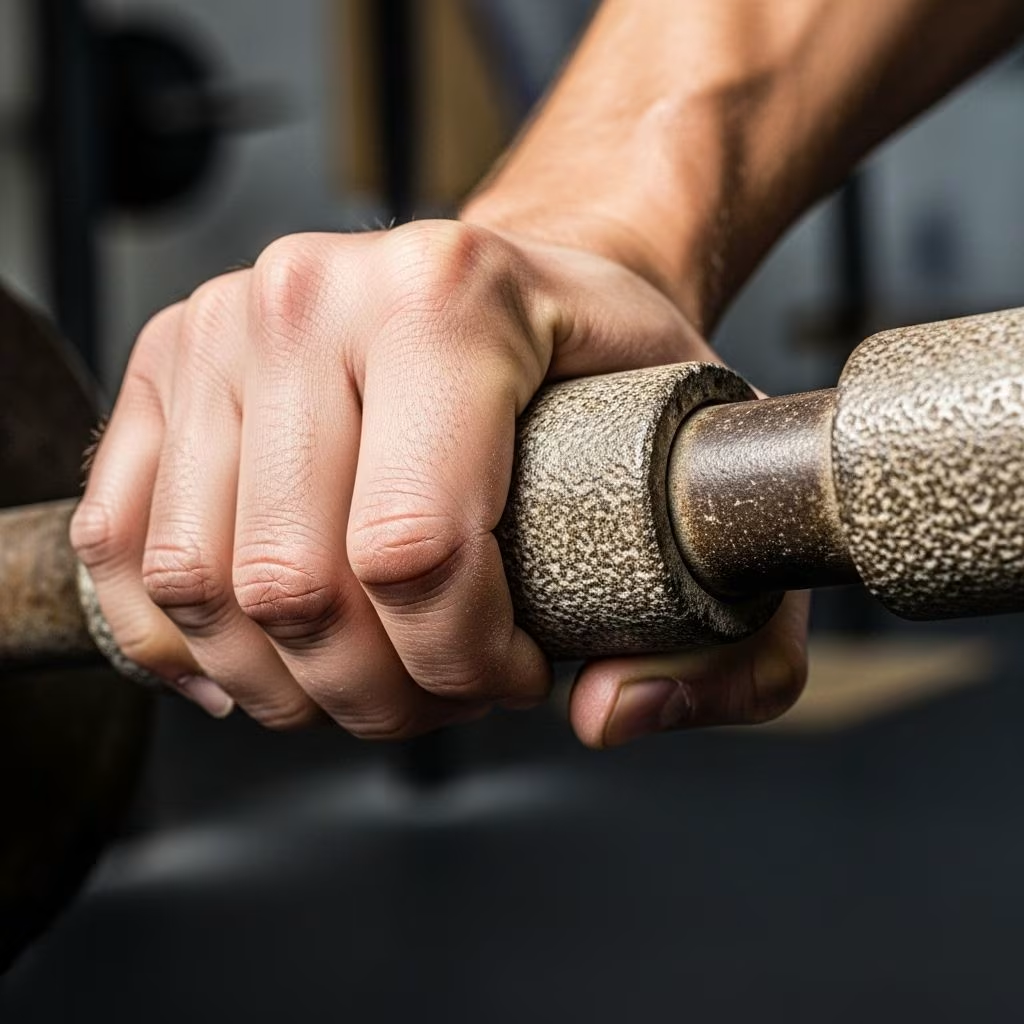
Grip strength is more than just the ability to open stubborn jars or carry heavy grocery bags. Increasing research and fitness expertise show that grip strength plays a vital role in functional health, longevity, and injury prevention. It influences everything from your independence in daily life to your potential risk for falls and frailty as you age. This comprehensive guide explains how grip strength impacts your well-being, and reveals five practical, accessible ways to build a stronger grip using common household items or simple tools.
Understanding the Importance of Grip Strength
Most people only think about grip when it fails—struggling to unscrew a jar, fumble a heavy suitcase, or notice a sluggish handshake. But grip strength is directly linked to muscle, nerve, and overall health. According to fitness professionals, actively training your grip can:
- Increase the function and endurance of your hand, wrist, and forearm muscles.
- Support nerve health by encouraging strong neural connections from the shoulder and neck, where many key nerves originate.
- Reduce the risk of injury and improve athletic performance—especially in sports or activities demanding pulling, lifting, or fine motor skills.
- Contribute to healthy aging and longevity, as studies suggest that weaker grip may be associated with higher mortality rates in older adults.
A strong grip can also empower daily independence. Simple actions—opening doors, typing, gardening, or carrying groceries—become easier as hand and forearm endurance improves. Studies even indicate that monitoring grip strength is a practical way for doctors and researchers to track muscle health and estimate future well-being in aging populations.
How Grip Strength Relates to Your Overall Health
Medical and fitness communities increasingly view grip strength as a benchmark for health. Recent research, including an analysis published in the Journal of Strength and Conditioning Research, found that people with weaker grips faced a 45% higher risk of mortality over a 12-year period, when compared to peers with stronger grips. While grip alone does not determine overall life expectancy, it remains a significant, accessible marker of muscle function and physiological aging.
A healthy grip isn’t achieved by chance—it requires regular, intentional training just like any other muscle group in your body. Fortunately, most exercises to boost grip are easy, quick, and don’t need expensive equipment. Below are five highly effective ways to improve grip strength at home or at the gym, plus additional tips for building and maintaining strong, functional hands for life.
5 Easy and Effective Ways to Build Grip Strength
Before you start, remember that form and consistency matter. Staying mindful of your wrist, shoulder, and even neck position ensures you’re not just squeezing with your hand muscles, but also connecting properly throughout your upper body. Try incorporating these grip-strengthening exercises into your weekly routine, starting with lower intensity and gradually increasing as your endurance grows.
1. The Classic Squeeze: Tennis or Racquetball Exercise
How it works: Squeezing a softball-like object (such as a tennis ball or racquetball) is one of the most efficient ways to work on your crushing grip — the pressure you generate when closing your fingers against resistance. This method can be done anywhere and is gentle on your joints if you’re new to hand exercises.
- Hold a tennis ball or racquetball in your palm.
- Squeeze the ball as hard as you comfortably can, holding the tension for a few seconds before releasing.
- Repeat this action for 1 minute per hand, performing 2–3 sets for each side.
- Focus on slow, controlled squeezes rather than quick, jerky movements.
Benefits: Enhances grip, finger, and palm strength, and can even relieve some hand stress at the end of a long workday.
2. The Towel Wring: Twisting for Endurance
This home-friendly approach builds both strength and endurance in fingers and wrists, also involving your forearms. Imagine wringing every last drop out of a soaked towel — the twisting motion trains a mix of grip types, not just crushing but also supporting and pinching.
- Soak a hand towel in water, then hold it with both hands at each end.
- Wring the towel as hard as you can, twisting in opposite directions, until the towel feels dry.
- Soak and repeat for 3 sets, alternating direction between sets.
Pro Tip: For extra challenge, use a thicker or larger towel.
3. The Farmer’s Carry (With Household Items)
This classic gym move can be performed at home using grocery bags, buckets of water, or heavy books. Farmer’s carries train your ability to support and sustain grip under load, building overall hand and forearm endurance.
- Fill two sturdy bags or buckets with a challenging (but manageable) weight.
- Stand upright, shoulders square and core tight, and hold one weight in each hand at your sides.
- Walk slowly for 30–60 seconds without dropping or setting down the weights. Focus on keeping wrists neutral and hands firmly gripping the handles.
- Repeat 2–3 times, adjusting weight as strength improves.
Tip: Try switching grip styles or swap dominant/non-dominant hands between sets to balance muscle development.
4. The Dead Hang: Simple Yet Powerful
All you need for this is a sturdy pull-up or hanging bar—many parks or gyms have them, or consider an over-the-door variation at home. Dead hangs develop both supporting and crushing grip—that ability to maintain hold when your full body weight is working against your hands.
- Grab the bar with both hands, palms facing away or toward you, arms fully extended.
- Engage your shoulders and core. Let your feet leave the ground, hanging so your body is relaxed but your grip is active.
- Hold for as long as you can, aiming for 20–60 seconds, working up to two or three sets.
- If you’re just starting, consider a partial hang with toes grazing the ground.
Safety: Always use a secure, weight-rated bar and start with short durations if you have shoulder or wrist concerns.
5. The Rubber Band Finger Extension
Grip isn’t just about squeezing; you need balanced strength. Using a sturdy rubber band, you can counter fatigue and improve finger extensors, reducing cramping and supporting healthy hand function.
- Place a thick rubber band around all five fingertips (thumb included), with your hand partially closed.
- Spread your fingers outward, against the resistance of the band, as wide as possible.
- Slowly return to starting position. Repeat 10–15 times for each hand, doing 2–3 sets per session.
This move develops the often-neglected muscles on the back of your hand and forearm, protecting against muscle imbalance.
The Different Types of Grip Strength
To improve functional strength and prevent injury, it’s helpful to understand the three primary types of grip involved in daily tasks:
- Crush grip: The power of squeezing objects in your palm—think shaking hands or holding a hammer.
- Pinch grip: Using your fingers and thumb to hold flat or thin objects, like picking up a book or holding a key.
- Support grip: The ability to sustain holding objects for an extended period—important for carrying groceries or hanging from bars.
Each of the exercises above targets one or more of these critical grip varieties. For best results, rotate between exercises that emphasize different grip types.
Optimizing Your Training: Practical Tips & Set Recommendations
- Consistency is key. Aim for 2–3 grip sessions per week, and let your hands recover between intense workouts.
- Progress gradually. Start with lighter resistance or shorter durations, adding more reps or time as your strength builds.
- Incorporate variety. Use different hand positions (overhand, underhand, pinch, open hand, fingertip) and grip types in your routines for well-rounded development.
- Modify exercises to your skill level. Beginners or seniors can start with lower resistance (softer balls, lighter weights, or shorter hangs).
Health experts recommend working up to 3–4 sets of each grip exercise, with 8–12 repetitions where appropriate, or 20–60 seconds for static holds. Always listen to your body—if you feel pain (not just muscle fatigue), stop and rest before resuming.
Why Position and Posture Matter
Grip strength is not isolated to your fingers; nerve signals originating from your neck and shoulders control much of your hand’s function. When practicing grip exercises, keep shoulders relaxed and neck neutral—poor posture can compress nerves and limit the benefits of your training.
For optimal results:
- Maintain good shoulder alignment when gripping or lifting.
- Avoid slouching or tensing your neck unnecessarily.
- Engage your upper back and core as you work your hands—the entire kinetic chain matters!
Grip Strength, Longevity, and Overall Health
While grip strength correlates with overall health and lower fall risk, it is one piece of a larger fitness puzzle. Regularly practicing these exercises can support muscle tone and function, especially as you age, but should be complemented by general physical activity, balanced nutrition, and resistance training for best results.
If you are concerned about declining hand strength, unexplained weakness, or pain, consult with a healthcare or rehabilitation professional before starting new routines.
Frequently Asked Questions (FAQs)
What muscles are involved in grip strength?
Grip strength relies on several muscle groups, including the forearm flexors and extensors, the thenar muscles at the base of your thumb, intrinsic hand muscles, and supporting muscles in your wrist and upper arm.
Can grip strength predict health outcomes?
Studies suggest that lower grip strength may indicate an increased risk for frailty and mortality, serving as a marker of overall muscle and nerve health—though it should not be looked at in isolation from other health measures.
How often should I train grip strength?
Experts recommend practicing grip exercises 2–3 times per week, allowing for rest and recovery between sessions.
Do I need special equipment?
No—most exercises featured here use household items like tennis balls, towels, or grocery bags. Specialty grip tools can add variety but are not required, especially for beginners.
What if I experience pain during grip training?
Stop immediately and assess your technique. Persistent pain may indicate an overuse injury or underlying issue and should be evaluated by a healthcare provider.
Grip Strength Training At-a-Glance: Quick Reference Table
| Exercise | Equipment Needed | Grip Type Targeted | How Often |
|---|---|---|---|
| Tennis Ball Squeeze | Tennis ball/racquetball | Crush | 2–3x per week |
| Towel Wring | Wet towel | Crush, Support, Pinch | 2–3x per week |
| Farmer’s Carry | Weighted bags/objects | Support | 2–3x per week |
| Dead Hang | Pull-up/hanging bar | Support, Crush | 2–3x per week |
| Rubber Band Extension | Rubber band | Finger extensor | 2–3x per week |
With steady practice and small daily tweaks—using your non-dominant hand, mixing up grip types, or carrying groceries differently—you can build powerful hands and healthy muscles that serve you for years to come.
References
- https://www.prevention.com/fitness/fitness-tips/a63096794/improve-grip-strength-exercises/
- https://www.prevention.com/fitness/a20483155/5-simple-ways-to-improve-your-grip-strength/
- https://www.prevention.com/health/a65125207/grip-strength-test-predicts-how-long-you-live-study/
- https://www.prevention.com/fitness/a20476258/strengthen-your-grip-in-3-minutes/
- https://www.prevention.com
- https://pmc.ncbi.nlm.nih.gov/articles/PMC10777545/
- https://www.prevention.com/fitness/a65819320/how-to-do-a-pull-up-age-50-plus/