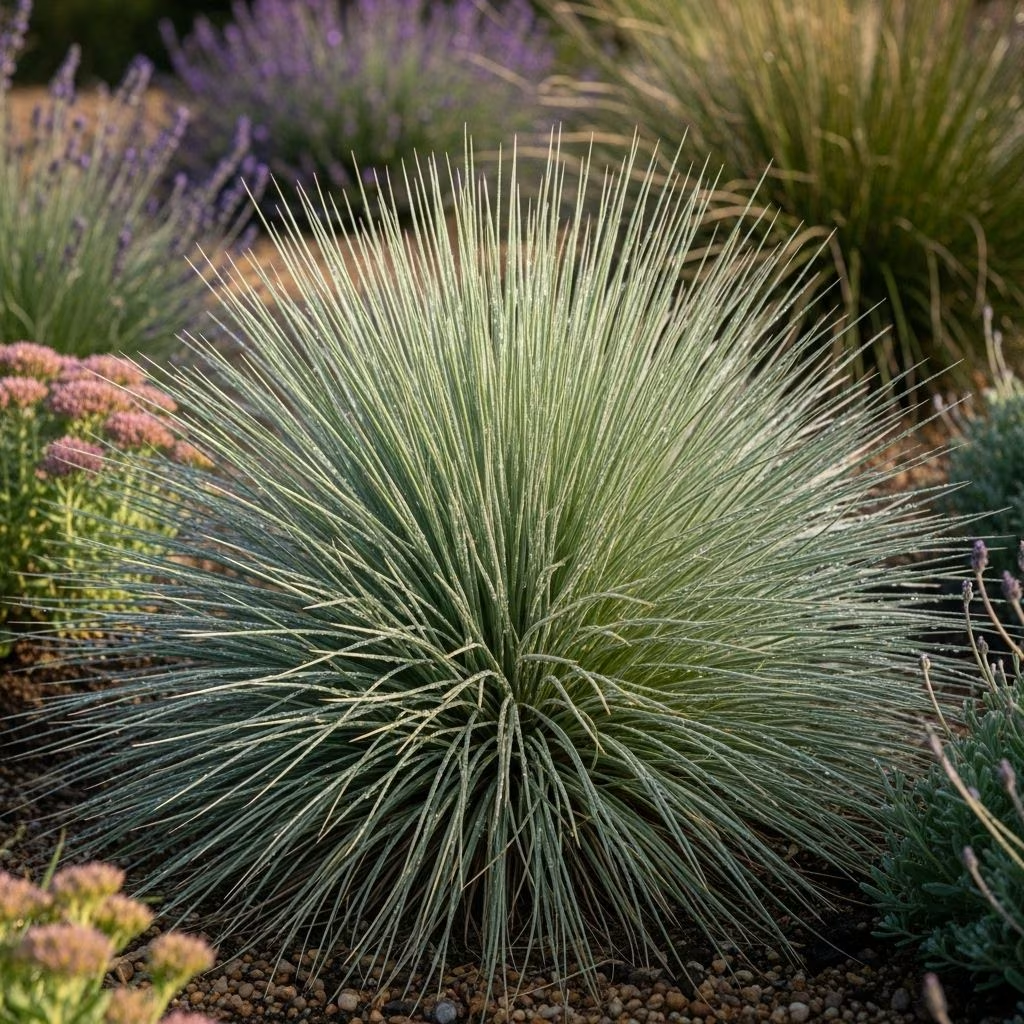
Gardening 101: Silver Tussock (Poa cita)
Silver tussock (Poa cita) is a robust and versatile evergreen grass native to New Zealand’s rugged landscapes. Popular with both professional landscapers and home gardeners, Silver tussock offers a graceful alternative to invasive ornamentals, creating movement, texture, and subtle beauty in diverse garden settings. Its drought tolerance and minimal requirements make it an ideal feature for low-maintenance gardens, xeriscapes, and naturalistic plantings.
What Is Silver Tussock?
Silver tussock is a large, long-lived tussock grass forming upright clumps of extremely fine, silvery-green leaves that arch and sway beautifully in the wind. As the foliage matures, it develops attractive tawny tones. Flower stems appear from early summer into autumn, bearing loose sprays of bronzed inflorescence.
- Native range: New Zealand, from alpine regions to coastlines
- Botanical name: Poa cita
- Growth habit: Bunch-forming perennial grass in the family Poaceae
- Mature size: 2–3 feet tall (60–90 cm) and 1–2 feet wide (30–60 cm)
- Foliage: Silvery green, aging to tawny
- Flower: Loose, arching sprays of bronzy heads
The Appeal of Silver Tussock
Silver tussock stands out for its gentle movement and subtle, neutral color that complements most palettes and fits into contemporary, naturalistic, or cottage landscapes. It blends seamlessly with modern architecture or wilder surroundings and pairs well with both bold and muted garden companions.
A Safe Alternative to Invasive Grasses
Popular ornamental grasses like Nassella tenuissima (Mexican feather grass) have been classified as invasive in many regions, spreading rapidly via wind and water and displacing native species. Silver tussock offers the same breezy elegance without the invasive tendencies, remaining well-behaved within landscape boundaries.
| Feature | Mexican Feather Grass (Nassella tenuissima) | Silver Tussock (Poa cita) |
|---|---|---|
| Native Range | Mexico, parts of US Southwest | New Zealand |
| Invasive Potential | High in some regions (e.g., California) | Low; well-tamed and non-invasive |
| Growth | Self-sows aggressively | Forms stable clumps |
| Hardiness | Moderate | Very hardy: 10–15°F (-12 to -9°C) |
Designing With Silver Tussock
Whether mass planted or used as individual specimens, Silver tussock brings movement, texture, and year-round color. Its adaptability makes it suitable for:
- Meadow plantings: Mixed with other grasses and wildflowers for a naturalistic look
- Modern landscapes: Creates minimal, architectural structure
- Coastal gardens: Tolerates wind and salt spray
- Xeriscapes: Ideal for drought-prone areas
- Roadsides & large-scale developments: Used for erosion control and as an aesthetic buffer
- Containers: Adds height and softness to mixed pot arrangements
Tip: Silver tussock’s neutral tones accentuate colorful perennials and bold foliage in companion plantings.
Companion Plant Ideas
- New Zealand flax (Phormium)
- Echoes of purple sage or lavender
- Wildflowers such as native daisies, asters, or poppies
- Shrubs with contrasting forms (e.g., Hebe, Pittosporum)
Natural Resilience and Adaptability
Silver tussock thrives under harsh conditions and neglect, making it a preferred choice for challenging environments:
- Drought tolerance: Survives extended dry spells due to deep roots
- Wind & coastal exposure: Handles strong winds and salt-laden air
- Poor soils: Prefers lean, well-drained soils and can grow where few others can
- Frost hardy: Evergreen even after hard frosts
This adaptability means Silver tussock can flourish from alpine climates to exposed cliffs along the coast, fitting both garden and wild landscapes.
Planting and Care
Site Selection
- Light: Prefers full sun, but tolerates partial shade
- Soil: Performs best in poor, well-drained soils; avoid heavy clay and waterlogged areas
- Spacing: Allow 80cm (approx. 2.5 feet) between clumps for mature spread
Planting Steps
- Dig a hole twice as wide and as deep as the root ball.
- Backfill with lean soil, amending only if drainage is poor.
- Position the tussock, spreading roots gently, and fill in around, firming the soil.
- Water deeply once after planting; afterwards, only as needed during extended drought.
Ongoing Maintenance
- Watering: Minimal once established; rain is usually sufficient
- Pruning: Remove old or tatty foliage in late winter or early spring to rejuvenate clumps
- Division: Every 4–6 years if clumps outgrow their space (optional)
- Fertilizing: Not necessary; excess nutrients may reduce elegance
Silver tussock is remarkably resilient and rarely suffers from pests or diseases. Its ease of care makes it ideal for gardeners seeking a fuss-free landscape.
Environmental Benefits
As with other tussock grasses, Silver tussock brings valuable ecological benefits:
- Soil stabilization: Deep roots prevent erosion on slopes or in windy sites
- Habitat creation: Shelter and food for insects, birds, and small mammals
- Drought resistance: Deep roots access water even in dry seasons
- Supports native mycorrhiza: Promotes healthy soil ecology
Common Questions
Q: How fast does Silver tussock grow?
A: Silver tussock grows quickly, showing good form within two years of planting, and will develop into mature clumps in 3–4 years.
Q: Does Silver tussock require much water?
A: No; once established, it is extremely drought hardy and thrives on minimal supplemental watering.
Q: Is it invasive?
A: Unlike some ornamental grasses, Silver tussock does not self-seed aggressively and stays where it is planted.
Q: Can I grow Silver tussock in a container?
A: Yes, provided the container is large, well-drained, and receives plenty of sun. It makes an attractive vertical accent.
Q: How do I maintain clumps for best appearance?
A: Trim out any dead or weathered foliage annually; replace or divide clumps every several years if needed.
Q: Is Silver tussock suitable for wildlife gardens?
A: Yes, it provides shelter and foraging for beneficial insects, birds, and small creatures.
Differentiating Silver Tussock From Other Tussocks
While many grasses are generically called ‘tussocks,’ not all are alike. For instance, Serrated tussock (Nassella trichotoma), typically considered a noxious weed in some regions, appears similar but is highly invasive and damaging to pastures.
| Feature | Silver Tussock (Poa cita) | Serrated Tussock (Nassella trichotoma) |
|---|---|---|
| Native Range | New Zealand | South America; invasive in Australia, NZ |
| Leaf Texture | Fine, soft, silvery | Thin, tightly rolled, harshly serrated |
| Growth Habit | Graceful clumps, ornamental | Dense clumps, unpalatable, weed |
| Flower Appearance | Loose bronzed sprays | Purple to golden, weeping flower heads |
| Status | Desirable ornamental | Noxious weed |
Silver Tussock in Sustainable Gardens
Because it thrives with minimal inputs and supports local ecology, Silver tussock is a model for sustainable landscaping:
- Requires little to no irrigation once established
- Resists most pests and diseases naturally
- Survives in poor soils without fertilizer
- Promotes biodiversity and soil health
Inspirational Planting Ideas
- Mass Plantings: Create an undulating ribbon in larger landscapes or open blocks for commercial/council use
- Boundary Edges: Line driveways, walkways, or property lines
- Accent Groups: Cluster small groups in challenging spots where other plants fail
- Pond and Stream Banks: Erosion control and a soft frame for water features
- Xeriscape Borders: Frame dry garden beds, rock gardens, and gravel paths
Frequently Asked Questions (FAQs)
Q: What makes Silver tussock so drought hardy?
A: Deep, extensive root systems enable Silver tussock to access water far below the soil surface, making it resilient during extended dry periods.
Q: Does it suit heavy clay soils?
A: Silver tussock prefers well-drained—often poor—soil. It may struggle in heavy or waterlogged clay, so improve drainage before planting.
Q: How do I propagate Silver tussock?
A: Propagation is usually by seed or by division of mature clumps. Seeds germinate best in well-drained, lightly covered trays; divisions transplant easily in cool weather.
Q: Will deer eat Silver tussock?
A: It’s generally unpalatable to grazing animals, making it useful in areas where wildlife browsing is a challenge.
Q: Is Silver tussock evergreen all year?
A: Yes, Silver tussock remains evergreen in most regions, displaying silver or tawny tones even during cold winters.
Q: Can it be paired with wildflower meadows?
A: Absolutely. Silver tussock provides structure and movement alongside flowering meadow plants, helping to blend transitions between garden and natural areas.
Conclusion
Silver tussock (Poa cita) is an excellent ornamental grass for modern, natural, and water-wise gardens. Its resilience, ease of care, and subtle beauty make it a staple for anyone seeking to design low-input, ecologically sensitive, and aesthetically pleasing outdoor spaces. Whether gracing expansive landscapes or adding a vertical accent to patio containers, Silver tussock delivers grace and utility while honoring the spirit of New Zealand’s wild countryside.
References
- https://greenmachine.nz/collections/poacita
- https://www.gardenista.com/posts/gardening-101-silver-tussock/
- http://serratedtussock.com/wp-content/uploads/files/Serrated-Tussock-National-Best-Practice-Management-Manual.pdf
- https://grownative.org/native_plants/tussock-sedge/
- https://en.wikipedia.org/wiki/Tussock_grass