


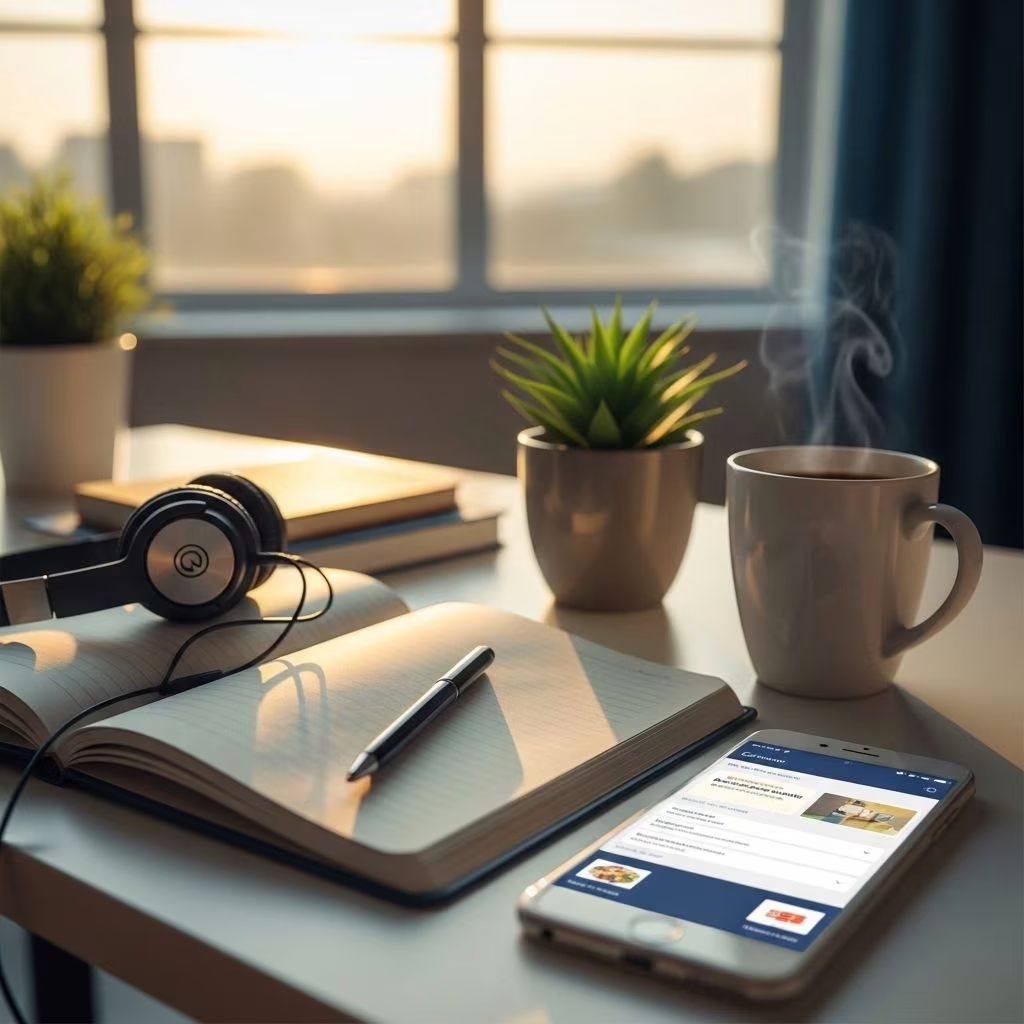
Imagine waking up each morning and, before the day sweeps you into its current, making measurable progress in a new language. While finding substantial, uninterrupted time might seem impossible, dedicating the initial 15 minutes of your morning to focused language study has proven transformative for learners worldwide. This article reveals how to capitalize on those precious morning moments, why this method works, and practical strategies to ensure every minute drives your skills forward.
Introduction: The Power of Morning Minutes
You don’t need hours of daily study to see real advancement in a new language. Scientific research and language coaching experts agree: the key to making surprising progress lies in consistency and focused repetition—not in marathon sessions. That’s why starting your mornings with just 15 minutes of targeted practice can, over time, yield profound results for learners at any proficiency level.
Life gets busy, and motivation can dip as days progress. But by building language learning into the very start of your day, it becomes a habit—one that’s hard to skip or avoid, and that energizes your mind for everything that follows.
Why Your Brain Loves Morning Language Learning
There are compelling neurological and psychological reasons to place language learning first thing after waking up:
- Fresh Cognitive Resources: After a good night’s sleep, your brain is rested, neural pathways are primed for new information, and distractions are minimal.
- Hormonal Boost: Morning cortisol peaks increase mental alertness and boost memory encoding—ideal for vocabulary retention and pattern recognition.
- Increased Willpower: Willpower and self-control are like muscles that fatigue. Using them early ensures follow-through on your most ambitious learning goals before decision fatigue sets in.
- Priming for the Day: Beginning your day with learning primes your mind for curiosity and engagement in language throughout the rest of your activities.
Key Principles for a 15-Minute Morning Routine
Successful language learners embody these principles in their morning routines:
- Consistency: It’s better to study for 15 minutes every morning than to cram for hours once a week.
- Simplicity: Focus on one or two micro-skills each morning, such as listening, reading, or reviewing vocabulary.
- Preparation: Decide what you’ll study the night before—set out resources, load up apps, or queue up a podcast so you don’t waste precious willpower in the morning.
- Accountability: Track your results, even if it’s just a checkmark or jotting a single achievement in a journal.
Step-by-Step Guide: Your 15-Minute Morning Routine
Here’s a highly effective breakdown for language self-study in the first 15 minutes of your day. Adjust the timing to fit your needs and preferences:
| Time (Minutes) | Activity | Purpose |
|---|---|---|
| 0-3 | Warm-up: Review flashcards or simple vocabulary | Activate prior knowledge, ease into learning |
| 4-7 | Listening: Short podcast/audio or video | Tune your ear to the target language, natural context exposure |
| 8-11 | Speaking/Shadowing: Repeat phrases or practice aloud | Boost pronunciation, fluency, and memory |
| 12-13 | Reading: News article, email, or dialog | Expand vocabulary, see grammar in action |
| 14-15 | Journal or Progress Note: Write a sentence, question, or summary | Active output, reflection, promote retention |
Tip: Adjust segment times to match skill focus or tackle a particular weakness. For instance, you may spend more on listening one day and on writing the next.
Maximizing the Benefits: Tips & Tools
- Set a Clear Wake-Up Trigger: Place your chosen study material by your bed or in your morning space. Or use an app with a learning alarm that opens directly to your content.
- Combine Physical & Mental Activation: Splash cold water on your face or do light stretching to wake your body, then transition immediately to your learning session.
- Plan the Night Before: Spend 1-2 minutes before bed laying out a mini-plan for the next morning—what topic, material, or skill you will tackle. This helps avoid decision fatigue and increases follow-through.
- Minimize Distractions: Silence notifications and let others at home know you’re taking a few undisturbed minutes for yourself.
- Utilize Technology: Use language learning apps, digital flashcards (e.g., Anki, Quizlet), or podcasts tailored for learners at your level.
- Track Your Streak: Use habit tracker apps or a physical calendar to mark each day’s completed session—it’s motivating!
Common Morning Language Activities
Rotate or combine these activities to keep your morning sessions productive and engaging:
- Vocabulary Boost: Learn and review 5–10 new words using flashcards or apps. Focus on pronunciation and using the words in a sentence.
- Reading Bite: Read a short news story, blog post, or comic in your target language. Finish by summarizing the main point in your own words.
- Mini Writing Task: Write your day’s to-do list, a short journal entry, or a single paragraph, aiming to use a recent word or grammar point.
- Listening Practice: Listen to a brief podcast, conversation, or news segment—repeat key phrases or jot down unfamiliar words.
- Grammar Snap: Skim a grammar rule or tense, and try creating one or two example sentences out loud.
- Speaking Practice: Find audio to shadow (imitate), ask yourself a daily question in the language, or practice short recorded responses.
Sample 15-Minute Rotation Options
- Monday: Vocabulary, listening, speaking
- Tuesday: Reading, writing, grammar
- Wednesday: Listening, speaking, vocabulary
- Thursday: Grammar, reading comprehension, speaking
- Friday: Free practice (any activity you enjoy most)
Staying Motivated & Tracking Progress
Consistency is the foremost driver of language mastery. Use these strategies to keep yourself motivated:
- Motivation Journal: Maintain a simple language learning journal. After each session, write a short reflection: What did you learn? What felt easier or harder today?
- Celebrate Small Wins: Reward yourself after a streak—perhaps treat yourself to a favorite coffee, song, or episode in your target language.
- Connect with a Language Buddy: Share your daily achievements or new words learned via message or a quick voice note.
- Visual Progress Trackers: Use stickers, a habit tracker app, or a wall calendar to visualize your completed sessions—it’s extremely validating!
- Set Realistic Micro-Goals: Instead of “be fluent this year,” try “finish one short story,” or “have a 2-minute conversation next month.”
Routine Variations for Busy Schedules
Life is unpredictable, but language progress doesn’t have to slip. Here are ways to pivot your 15-minute routine when mornings get busy:
- On Commute: Listen to a podcast or news summary in your target language while driving or on public transport. Shadow (repeat aloud) whenever possible.
- Integrated Practice: Narrate your own morning activities in the language: “I am making coffee,” “I am brushing my teeth.”
- Physical Chores + Language Input: Pair easy household routines (tidying, making the bed) with language listening or repeating activities.
- Micro-Learning Apps: Use apps like Duolingo, Babbel, or Memrise that are designed for short, impactful study bursts. Even one or two modules can give a solid morning spark.
- Extend When You Can: On less busy mornings, add a few extra minutes to a favorite activity, or review your progress journal.
Frequently Asked Questions
Q: Can you really make progress in just 15 minutes a day?
Yes—scientific research and extensive practical experience show that regular, focused exposure leads to sustained progress, especially in vocabulary retention and listening ability. The key is daily repetition, which builds strong memory associations.
Q: What if I’m not a morning person?
Most people can adapt by starting with small changes, such as waking up just 10–15 minutes earlier. The success of the routine comes from building it into your morning as a first priority, which can itself become energizing. If mornings truly aren’t possible, try a similar routine during another low-distraction period.
Q: How do I avoid getting bored?
Rotate activities frequently, use authentic materials (music, news, podcasts), and work with topics that interest you. Keeping sessions short and varied prevents fatigue and boredom.
Q: Should I focus on one skill per session, or mix it up?
Both approaches work. Many learners find that mixing two complementary micro-skills—such as listening and speaking, or reading and vocabulary—yields a strong sense of accomplishment and reinforces retention. Others prefer deep focus on a single area for a week at a time.
Q: What materials are best for beginners?
Use graded readers, beginner-level podcasts, language-learning apps, and children’s stories. The key is comprehensible input—material you can mostly understand but that still challenges you a little.
Conclusion: The Ripple Effect of 15 Minutes
Your first 15 morning minutes can redefine your language learning journey. By consistently investing this short window of time, you awaken not just your brain but your long-term potential in a new language. The compounding effect—week after week, month after month—will astonish you. Start tomorrow. Prepare your first activity tonight. With every sunrise, you’re not just beginning your day, but building new bridges to understanding, connection, and confidence in your chosen language.
References
- https://5minutelanguage.com/2015/02/08/the-miracle-morning-of-language-learning/
- https://www.youtube.com/watch?v=rZmZWgdodZQ
- https://www.youtube.com/watch?v=dkMWQ2MMmMQ
- https://shows.acast.com/lep-learn-english-podcast/episodes/15-minute-daily-english-language-learning-routine
- https://www.youtube.com/watch?v=GSRCsJhBN9Q
- https://www.youtube.com/watch?v=wo_oy_uIYf8
- https://www.levelupenglish.school/podcast174/


