


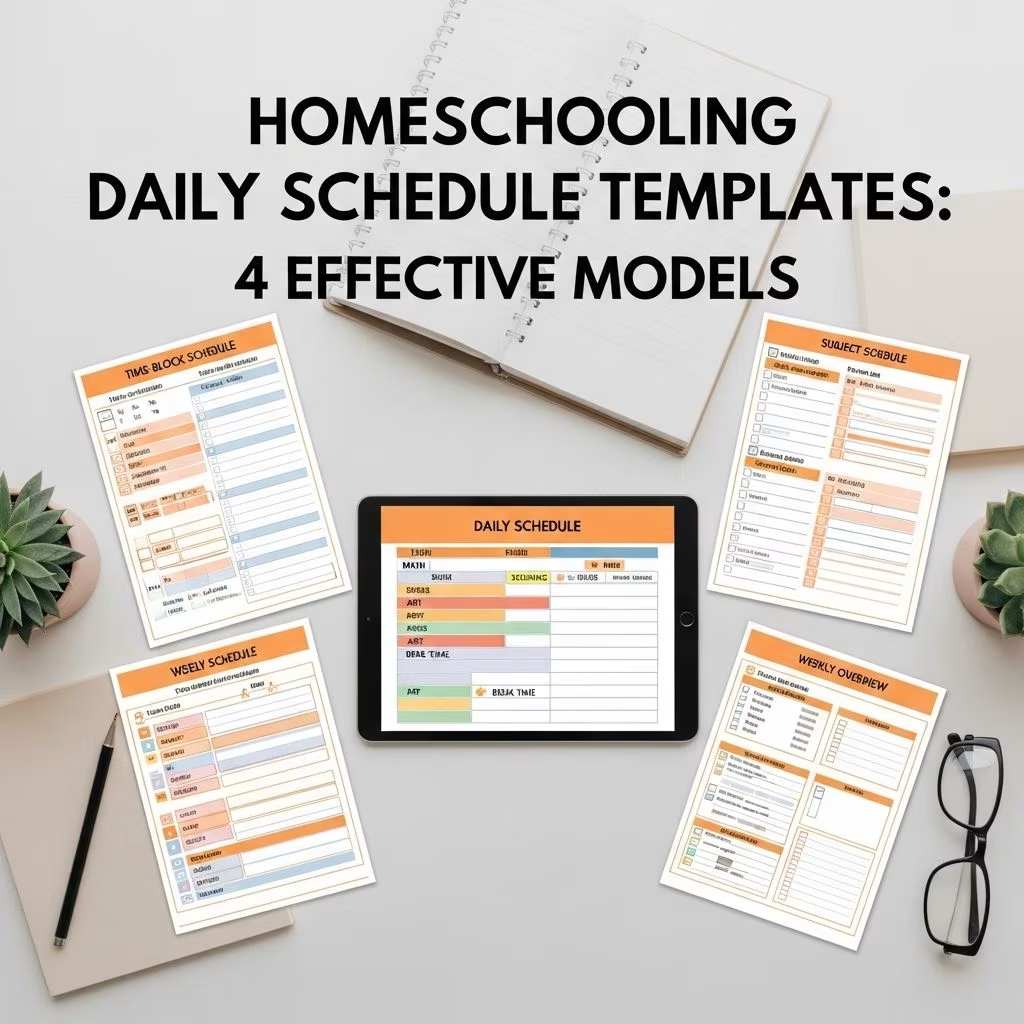
Building a sustainable, engaging, and productive homeschool routine requires intentional planning and a schedule that plays to your family’s strengths and rhythms. While every homeschool experience is unique, four primary schedule models have proven effective for a wide range of families. This comprehensive guide details each model, offers implementation strategies, practical templates, and answers common questions to help parents create a balanced and flexible learning environment.
Introduction to Homeschool Scheduling
Homeschooling gives families the freedom to tailor education to the child’s academic goals, interests, and life circumstances. However, without a thoughtful daily schedule, the benefits of homeschooling can quickly be undermined by disorganization or burnout. Developing a routine is not about rigid constraints but about providing enough structure for consistent progress while allowing for the flexibility home education offers. Schedule templates serve as foundational blueprints that you can adapt as you learn what works best in your household.
Why Use Homeschool Schedule Templates?
- Organization: Keeps track of lessons, breaks, chores, and family activities for seamless days.
- Accountability: Allows students and parents to see at a glance what needs to be done and what has been completed.
- Progress Monitoring: Ensures all subjects and skills are addressed without falling behind curriculum goals.
- Customization: Easily adapts to each child’s learning pace, the parent’s work schedule, and changing family needs.
- Reduces Stress: Minimizes last-minute scrambles and frustration for both adults and students.
Selecting the Right Schedule Model
Families thrive with different approaches. The models presented below represent the spectrum from structured to flexible. Consider your child’s age, your family’s daily obligations, learning preferences, and the level of accountability you and your learners need. Most families blend elements from several models as they discover what works best through experience.
Model 1: Traditional Block Schedule
Best for families who: Prefer a predictable routine, use structured curricula, or need to accommodate working parents.
The Traditional Block Schedule is similar to a classic school timetable. Each subject is assigned to a specific time block, and the family follows the same order most days.
| Time | Activity/Subject |
|---|---|
| 8:00 – 8:30 | Breakfast & Morning Chores |
| 8:30 – 9:00 | Group Reading / Morning Meeting |
| 9:00 – 10:00 | Math |
| 10:00 – 10:15 | Short Break/Snack |
| 10:15 – 11:00 | Language Arts |
| 11:00 – 11:45 | Science |
| 11:45 – 12:30 | Lunch/Free Time |
| 12:30 – 1:15 | History/Social Studies |
| 1:15 – 2:00 | Electives (Art, Music, Foreign Language) |
| 2:00 – 3:00 | Independent Work/Outdoor Time |
Benefits:
- Easy to implement with packaged curricula
- Clear expectations provide comfort for kids who like routines
- Makes time management and accountability straightforward
Challenges:
- Less flexibility for spontaneous activities or outside appointments
- May not suit children who struggle with transitions
Model 2: Relaxed or Flexible Schedule
Best for families who: Value routine but need the freedom to adapt day-to-day, have young children, or variable parent work hours.
The Relaxed or Flexible Schedule loosens the structure of fixed time blocks. Instead, it prioritizes tasks in sequence, allowing for greater responsiveness to each day’s needs.
- Assigns periods (e.g., Morning, Midday, Afternoon) rather than specific times
- Subjects are completed in order, but not strictly at set hours
- Allows for larger breaks, movement, errands, or integrating school with daily life
Sample Relaxed Schedule:
- Morning: Breakfast, reading aloud, math
- Midday: Science or history, snack, outdoor time, chores
- Afternoon: Language arts, art, and project work
- Evening: Family time, enrichment activities, or catching up as needed
Benefits:
- Reduces stress around time management
- Accommodates unpredictable schedules or varying energy levels
- Ideal for families with younger students or variable employment hours
Challenges:
- Easier to let important subjects slip if not carefully tracked
- Can become disorganized without oversight or routines
Model 3: Chunked Daily Schedule
Best for families who: Want balance between structure and adaptability, or need to accommodate life’s interruptions.
The Chunked Schedule divides the day into logical “chunks”—such as Morning, Learning, Lunch, Afternoon, and Evening—and builds simple routines inside those blocks.
- Morning Chunk: Routine (make beds, breakfast, family devotion, morning chores)
- School Chunk: Core academic work (math, reading, writing, unit studies)
- Lunch Chunk: Meal prep, lunch together, cleanup
- Afternoon Chunk: Science, arts, hands-on projects, outdoor play, free time
- Evening Chunk: Family activities, winding down, reading aloud before bed
Benefits:
- Routines within chunks ensure consistency without rigidity
- Supports children in developing independence within familiar frameworks
- Helps parents manage both learning and daily household duties
Challenges:
- Requires discipline to keep each chunk focused on its purpose
- Lack of time-specific anchors may lead to drift if not carefully managed
Model 4: Spiral or Loop Schedule
Best for families who: Need maximum flexibility, juggle multiple ages, or want to avoid strict time demands.
The Spiral or Loop Schedule does not assign subjects set times or even specific days. Instead, it puts all subjects or activities in a loop, and you simply “do the next thing.” When life interrupts, you pick up where you left off.
- Subjects/activities are placed in a list to rotate through at whatever pace the family sets
- No need to “catch up” if a day is missed; just continue the loop
- Works exceptionally well for families with varied schedules or frequent outside commitments
Sample Spiral Schedule Loop:
- Math
- Science
- Language Arts
- History
- Art/Music
- Field Trip or Outdoor Activity
For example, if you do Math on Monday, Science on Tuesday, then spend Wednesday on outside appointments, you return to Language Arts on Thursday—not worrying about lost time or reshuffling a whole week.
Benefits:
- Ultimate flexibility to respond to life’s needs
- No stress around “falling behind”; just move to the next subject
- Perfect for families who travel or have unusual work/life patterns
Challenges:
- Requires a method for tracking what comes next in the loop
- Long-term planning required to ensure all subjects receive adequate attention
Tips for Customizing Your Homeschool Schedule
- Start Simple: Choose or create one template, trial it for a week or two, and note what flows or stalls.
- Involve Your Kids: Ask for feedback. Older children, especially, often have opinions about routine and productivity.
- Review & Adjust: Check progress weekly or monthly, and tweak as necessary to prevent burnout or boredom.
- Balance Academics and Life: Build in time for household chores, movement, creative breaks, and downtime; home education must fit into real life to be sustainable.
- Remember Legal Requirements: Align your plan with your local homeschool regulations, as some states or countries require attendance records or structured curricula.
- Use Visual Aids: Post your schedule in a visible location, use color coding, and portable checklists for accountability.
Sample Templates and Printables
There are numerous online resources offering downloadable and customizable homeschool schedule templates, both for daily and weekly planning. Many are editable to match your family and easily printable for convenience and display.
Ideas for Personalizing Your Template:
- Add family-specific time chunks (e.g., therapy appointments, parent work calls)
- Include student checklists for daily assignments and chores
- Color-code subjects for visual learners
- Digital planners can include links to online lessons or resources
Recommended Resources for Templates:
- Editable word processor templates
- Free printable planners and checklists online
- Customizable schedules on platforms like Canva
Frequently Asked Questions (FAQs)
Q: Do I need to follow the same daily schedule every day?
A: While consistency helps, one of the strengths of homeschooling is the ability to adjust your schedule as needed. Some families thrive on identical routines; others change schedules by day or season. Start with a base template, and evolve as you learn what works best for your family.
Q: How many hours should my child be doing schoolwork each day?
A: The required hours vary by state and child’s age. Generally, elementary children may need 2–3 focused hours, while middle/high schoolers may spend up to 5. Don’t overlook that learning in the home often happens faster than in classroom settings, and activities like reading aloud, nature walks, and cooking often count as educational time.
Q: What if my child finishes work earlier than the schedule allows?
A: Early finishers can pursue enrichment activities (music, coding, crafts), independent reading, or family chores. Homeschooling allows children to move at their natural pace; productivity isn’t always measured by the clock.
Q: How do I keep multiple children with different needs on track?
A: Use group lessons for subjects like history or science, and plan independent study or centers for staggered work times. Schedules with “chunks” or “loops” are particularly helpful for large families.
Q: Where can I find free or customizable homeschool schedule templates?
A: Many websites offer free downloadable and printable templates suitable for all schedule models. Examples include TemplateLab, The Good and the Beautiful, Not Consumed, or platforms like Canva and Teachers Pay Teachers.
Conclusion
There is no one-size-fits-all homeschool schedule. Start with one of the four tested models—Traditional Block, Relaxed, Chunked, or Spiral/Loop—customize it as needed, and allow your family’s unique rhythm to guide continuous improvement. Remember, the right schedule is the one that enables joyful, consistent, and meaningful learning together.
References
- https://templatelab.com/homeschool-schedule/
- https://www.thehomeschoolmom.com/arranging-strong-week-homeschool-schedule/
- https://www.goodandbeautiful.com/blogs/inspiration/scheduling
- https://www.notconsumed.com/best-homeschool-schedule/
- https://www.canva.com/templates/s/homeschool/
- https://www.teacherspayteachers.com/browse/free?search=homeschool+schedule
- https://ahundredaffections.com/free-printable-homeschool-weekly-daily-schedule-planner-template/
- https://myhomeschool.com/homeschooling/resources/homeschool-planner/
- https://theleadlearnermom.com/our-homeschool-schedule/


